On a dark winter night in 1945, a shout rang out on the banks of the Nisqually River.
You're under arrest!
Billy Frank Jr., just 14 at the time, called back, Leave me alone!
I live here! before being hauled off to a holding cell.
He didn't know it then, but his arrest was one of the earliest battles in what would later be known as the Fish Wars.
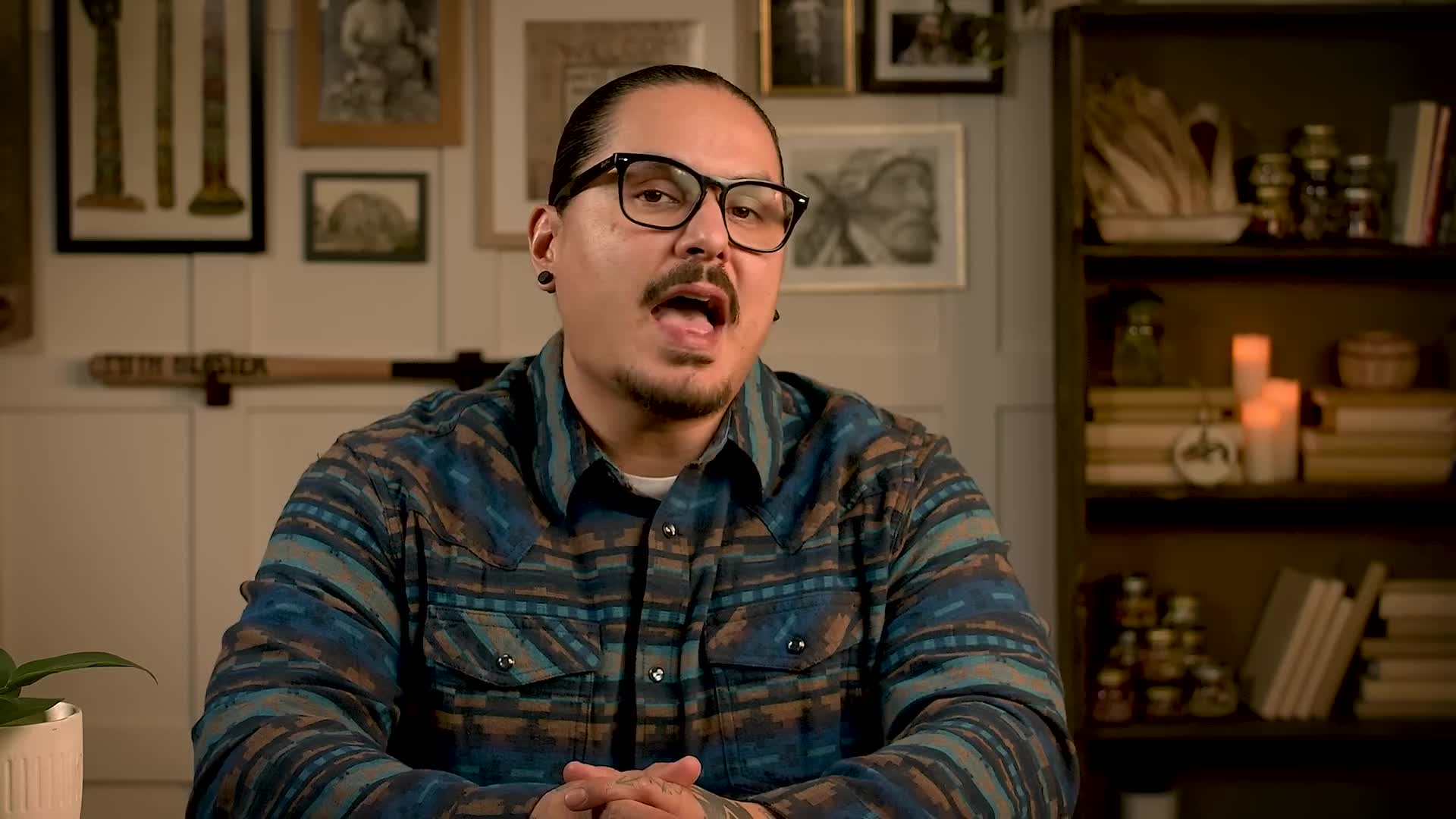
Hi, I'm Che Jim, and welcome to Crash Course Native American History.
That night on the river, Frank Jr was checking his fishing nets, just like his ancestors had done for generations.
He was a member of the Nisqually Nation, one of many in the Pacific Northwest that fished the rivers there for ages.
It was his first time being arrested, but it wouldn't be the last.
In the years to come, he'd be handcuffed at least 50 more times, threatened and harassed too many times to count, and he'd inspired dozens of others to join him in his non-violent resistance.
See, for Native people, the food you eat defines who you are, and not in a health-conscious you-are-what-you-eat kind of way.
Frank Jr. and other members of the Nisqually had a strong connection to the fish they ate.
For them, salmon were gifts from the Creator to be honored and protected, even if that meant facing jail time.
But to understand how it ever came to that, let's take a step back.
In Episode 2, we talked about sovereignty, the right of Native Nations to govern themselves.
Today, we're going to talk about a different kind of self-governance, food sovereignty.
The right of Native Nations to use the foods that have sustained their communities since time immemorial.
Before Europeans arrived, natives from coast to coast had their own distinct, culturally defined behaviors, beliefs and attitudes surrounding their traditional foods.
Their menus were local and seasonal, rotating among hundreds of different kinds of plants and animals.
Like the Algonquin, tribes knew June as the strawberry moon, the month that marks the beginning of berry season.
And the Shawnee knew September as the Paw Paw Moon, the month when you can enjoy an enormous custardy fruit that's like the mango of the Midwest.
Native peoples also stockpiled certain foods to enjoy year-round.
Like many in what's now California, created a flour out of raw acorns by drying shelling, smashing and flushing out their bitterness.
Then, they'd use it to whip up a batch of soup, bread, or mush.
Other native nations, like the Haudenosaunee and Cherokee, depended on corn grown either on its own or closely planted with beans and squash.
They knew these crops as the three sisters because, like family, they protected each other and grew better together.
Unlike the two brothers, orange juice and toothpaste, which are sworn enemies.
But all that changed when Europeans began colonizing the land we now call the United States.
In just over 300 years, Native nations across the country lost 99 of the lands where they hunted fished, gathered and grown food for longer than anyone can remember.
And between the 19th and 20th centuries.
As the US government forced Native people off their lands, they used federal boarding schools to eradicate their cultures altogether.
Native children were separated from their families, their languages, their traditions and their foods.
Students in boarding schools were often fed low-quality rations and punished if they ate anything they'd personally grown while laboring on the school farms.
At the same time that native people were being separated from their traditional foods, settlers were exploiting those food sources in unsustainable ways.
Like traditionally, the Great Sioux called themselves Pitayoyate or Buffalo Nation, leaving buffalo as a source of everything they needed to survive.
What they ate, what they wore, how they sheltered themselves.
They even played an important role in their creation story.
In the early 19th century, at least 30 million buffalo roamed the plains.
But as railroads expanded west, hunters on those trains killed the herds en masse.
The numbers vary, but by 1887 it's likely that fewer than 100 individual buffalo remained in the wild.
Not only did this eliminate a traditional food source for many, but for groups like the Great Sioux, it destroyed their way of life too.
And that destruction was often the point.
American soldiers were ordered to kill every buffalo on site because, quote every buffalo dead was an Indian gone.
The US government knew that without the Buffalo, Native Americans would starve, which meant that they would be more willing to sign treaties and hand over land to them.
Which brings us back to Billy Frank Jr. and the fish wars.
In the mid-19th century, the Nisqually and other native nations who had defined themselves as salmon people signed treaties with the US government, ceding millions of acres of land in what's now Washington state.
But they signed under a few big conditions, including that they'd keep the right to fish there, just as they always had.
But thanks to decades of logging mining, commercial fishing and other man-made activities, by the mid 20th century the salmon population was collapsing just as the buffalo had done before them.
And under state laws passed to protect the fish, law enforcement started cracking down on fishing, But not in the offshore spots where bougie fishing boats were catching most of the salmon.
They disproportionately monitored the riverbanks where native people and their nets took in less than 5 of the annual catch.
Because that's fair.
And that's how Frank Jr. first got arrested for fishing.
Which, at the time, he didn't consider to be a political act.
It was more about having something to eat.
But the arrest didn't stop.
Frank Jr. and the other native fishers knew the history of their treaty rights.
They knew exercising those rights was legal according to the US government, but illegal according to state law.
And they knew that having access to fish supported their health, their cultural identity and their survival.
And well, that's all pretty political.
So the fish wars began.
By the 1960s, Frank Jr and other Native activists were taking part in nonviolent acts of civil disobedience, which is when people intentionally break laws as a form of protest.
They staged demonstrations, including fish-ins, where they asserted their treaty rights.
They faced sabotage and violence from non-Native fishermen and clashes with state police.
But they also attracted nationwide attention, drawing support from celebrities like Marlon Brando.
And Frank Jr. got arrested.
A lot.
He was good at it.
I was not a policy guy, he once said.
I was a getting arrested guy.
Then, in 1974, he and other Native activists finally got their day in court.
In a landmark decision called the Bolt Decision, the judge upheld the treaty rights and ruled that Native nations in Washington were entitled to half of the harvestable catch.
Can we make some noise for this huge win?
And that brings me to an important point.
Food sovereignty really can't be separated from regular sovereignty.
When communities can't practice their traditional foodways or access high-quality foods, like we saw with the Great Sioux and the Nisqually, the health and well-being of those communities suffers.
While it doesn't always lead to civil disobedience, like in the fish wars, every native nation in the US has experienced some type of disruption to their traditional food systems.
And often those distinct experiences bleed together into a common story, one about separation and resilience.
Take fry bread, for example, a delectable deep-fried dish of flour, salt water and baking powder that's a staple at Pow Wow's.
But the dish itself has a complicated past.
Freiburg's origins likely trace back to the 1860s, when the US government forced thousands of members of the Navajo Nation to leave their homelands.
Hundreds died on that nearly 500 kilometer journey to a reservation in what's now New Mexico, and the survivors found the land wasn't good for growing their traditional staples of corn beans and squash.
So the government rations of white flour, sugar, and lard helped them make the dough for fry bread.
Other native nations, who were given similar rations, started leaning on fry bread too.
Some native people today see fry bread as a reminder of how traditional food systems have been torn apart, contributing to high rates of diabetes, heart disease and other chronic illnesses.
But to others, fry bread represents comfort and resilience wrapped up in one making something out of nothing and stretching it far enough to feed everybody.
We can find that same resilience that ignited the fish wars and brought us fry bread in the many native food initiatives happening across the United States today.
The Muckleshoot Food Sovereignty Project, for example, hosts harvest festivals, maintains a community garden and teaches tribal members how to prepare salmon and elk.
The Cherokee Nation shares free heirloom seed packets with their members, encouraging them to grow and eat the same crops as their ancestors.
And the Three Sisters Project at Iowa State University partners with native gardeners to study how growing corn, beans and squash together nourishes people, plants and the soil.
Plus, native chefs have been making their mark in the culinary world, opening restaurants, publishing cookbooks and working to bring traditional foods into the limelight, like Mariah Gladstone, a member of the Blackfeet and Cherokee Nations and the host of Indigikitchen, an online cooking show.
She shares traditional food knowledge, teaching viewers how to make pinnaken and balsamic minnowmen with dandelion greens.
For thousands of years, Native nations hunted fished, grew and gathered food that sustained their communities and the places where they lived.
Under colonization, they face violent disconnection from those food systems and witness many of their food sources disappear.
But native people also recognize that when you nourish a community, you support its ability to exist now and in the future.
And that's why many native nations have fought to keep traditional foods in their communities or are working to put them back.
Today, the salmon in the Nisqually River still face threats from dams, habitat destruction and over-harvesting.
But the state of Washington now co-manages the river and the fish alongside the Nisqually and other native nations.
And as for Billy Frank Jr, he remained active in protecting the tribe's treaty rights until his death in 2014.
A year after his death, he was awarded the Presidential Medal of Freedom and a National Wildlife Refuge was named in his honor.
In our next episode, we'll go back in time to Native Americans' first contact with Europeans.
I will see you then.
Thanks for watching this episode of Crash Course Native American History, which was filmed at our studio in Indianapolis Indiana, and was made with the help of all these nice people.
If you want to help keep Crash Course free for everyone forever, you can join our community on Patreon.