
[The Amazing Journey: Understanding Earth's Water Cycle Through Storytelling]-[Water's Amazing Journey _ SciShow Kids]
📋 Summary
The Amazing Journey: Understanding Earth's Water Cycle
In this episode of SciShow Kids, the hosts introduce the complex concept of the Earth's water cycle using a creative pedagogical approach: a play. By personifying the stages of the water cycle, the show breaks down how water is "constantly being recycled" through four fundamental scientific processes: evaporation, condensation, precipitation, and collection.
The Four Stages of the Water Cycle
1. Evaporation: The Transition to Gas
The cycle begins with the sun, which provides the necessary energy to heat the water on the Earth's surface. As the water warms, it undergoes a transformation from a liquid into a gas known as "water vapor." This process, identified as "evaporation," causes the water to rise high into the atmosphere, effectively beginning its journey away from the ocean's surface.
2. Condensation: Forming Clouds
As the water vapor ascends, it encounters the cooler temperatures of the upper atmosphere. This cooling triggers "condensation," the process where water vapor "turns from a gas back into a liquid." During this stage, the molecules stick together to form small droplets. These droplets accumulate to create clouds, which the narrator notes come in various forms, such as "feathery cirrus clouds" and "fluffy cumulus clouds."
3. Precipitation: Returning to Earth
Once the water droplets within a cloud become too large and heavy to remain suspended, the cycle moves into the "precipitation" phase. The narrator explains that "what once went up must now come down." Precipitation manifests in various forms—such as "rain, hail, and snow"—depending on atmospheric variables like temperature and cloud type. This stage marks the return of water from the sky back to the Earth's surface.
4. Collection: The Final Resting Place and Runoff
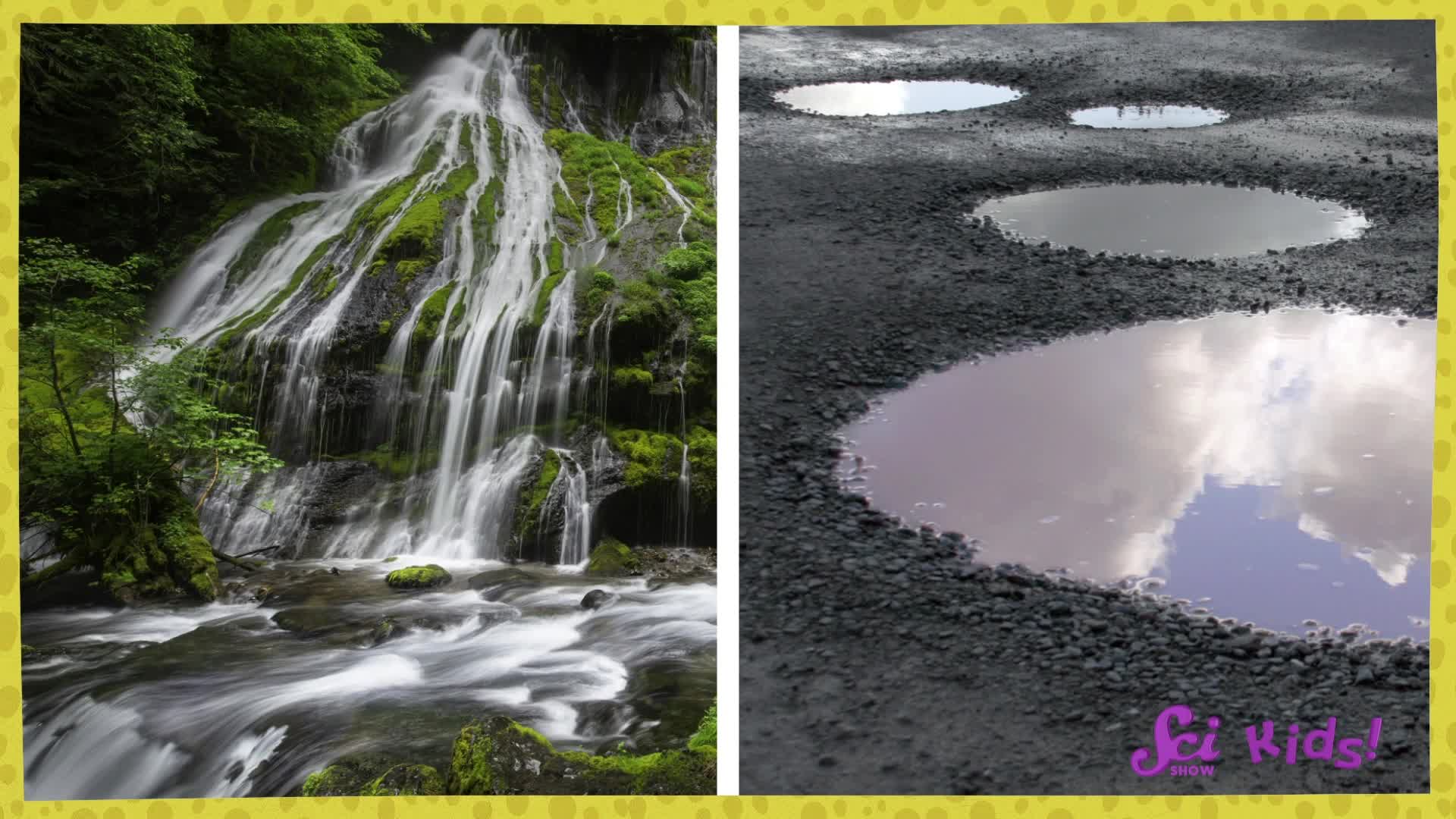
Upon reaching the ground, the water enters the final stage: "collection." This term encompasses the various paths water takes once it lands. It may settle into a "large lake or flowing river," become trapped in a "glacier or polar ice cap," or sink into the dirt. A key component of this stage is "runoff," which occurs when water "runs down mountains and hills into streams," eventually flowing back into the ocean.
Conclusion: The Cycle Continues
By utilizing a play as a "model," the hosts effectively demonstrate how scientists simplify complex natural phenomena. The cycle is circular, meaning that once the water returns to the ocean through collection, it is ready to begin the process over again. This narrative not only helps Squeaks remember the terminology but serves as an engaging educational tool for viewers to understand the continuous and vital journey of water across our planet.
Deep Learning with ListenLeap


