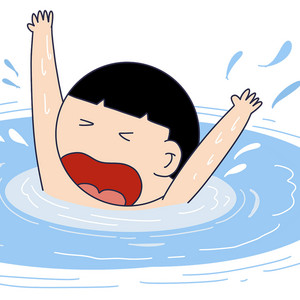
Kids love summer, sun, fun, and no school.
But water can be tricky, and drowning is one of the biggest risks for children in China.
Today we talk about how to enjoy summer safely and keep kids protected around water.
And once upon a time, bras were designed to please others.
Today, they're designed to please us. In China's female undergarment market, wire-free, no-size styles are rewriting the bra rules.
Comfort, confidence, and self-care are the new sexy.
We take a look behind the rise of the feel-good broth.
Coming to you live from Beijing, this is Roundtable.
I'm He Yang. For today's program, I'm joined by Steve Hatherly and Yushan in the studio.
First on today's show, it may have passed Liqiu, the start of autumn on the traditional Chinese calendar.
But with the heat still strong and summer activities in full swing, summer fun isn't over.
Kids are still swimming, heading to water parks and cooling off by rivers.
Here's the tough truth, though. Every year in China, tens of thousands of children lose their lives to drowning.
The good news though, many of these accidents are preventable.
In this discussion, we'll look at the warning signs we often miss and explore practical steps parents, teachers and kids can take to safe Well, to stay safe around water.
Why is drowning such a serious issue we need to pay attention to, especially in the summer months?
Yeah, when this term comes out, it almost reminds us that it's something that you want to save in your folder to watch when necessary or when you have the need to maybe go approach to somewhere by the sea, but actually the drowning, the risk posed by drowning is everywhere.
And the term itself, drowning, is a life threatening emergency where the airway gets blocked by water. or sometimes by another liquid, leading to a lack of oxygen in your body.
So the process happens really fast. As little as two minutes a person can lose consciousness and within four to six minutes after you've you started to feel drowning, the brain and nervous system in your body may suffer irreversible damage.
And once drowning sets in, the outcome is often deadly.
And like you mentioned He Yang, There are official data suggesting that approximately 360,000 people die from drowning worldwide each year. with children accounting for around 45% of that number.
That's just affecting a lot of young people, even young adults, I'll say.
Yeah, it's the perfect time of year, I think, to be talking about this because we're in the midst of vacation season, right?
A lot of people are traveling to beach locations or lake locations for their summer fun.
So it is an important time to keep up to date on what we can do to protect ourselves and the statistics as As scary as they are, I think it's important to know these, too, because they help us remember.
There was a report from CNR China National Radio. that said about 59,000 people die from drowning in China every year.
That's a really... a surprisingly high number.
And miners, Yushan, you gave the statistics globally. for children involved in these fatal accidents.
Well, here in China, minors account for 95%.
And that's shockingly much higher, almost twice as higher as the international percentage.
Yeah, actually drowning has become the leading cause of abnormal death among children here in the country.
So this is a very... serious issue. And also when you look at the China figure, if 95% of these unfortunate drowning fatal incidents involve children, then Well, looking at numbers clearly brings the advantage of bringing in zero in precise solutions in my opinion so then if so many kids are involved so unfortunately in these incidents then really nipping it in the bud to Protect the children from going into the waters in an unsafe manner is a very important thing to keep in mind.
And I said it's the summertime, people are traveling to the beach, but it's not just the ocean where these accidents occur.
It's also rivers and artificial ponds and reservoirs. accidents occur in these areas as well or even swimming pools in some cases you would assume one would assume that in nearby swimming pools there are all sorts of swimming coaches and safeguards surrounding the area, but it's probably not as safe as we would think.
I remember my personal experience from when I first tried to study, learn how to swim, I almost drowned.
It felt like an immersive long time that I was staying underwater and I was trying to float up, but nobody saw me.
And eventually one coach finally noticed me and reached over a pole to have me pull near the shore. in a way and that was like very very much a nightmare for me and I tried to quit swimming afterwards but still I managed to go back After, you know, parents suggesting that you need to learn the skill as a start.
I mean, that's enough to put a lot of people off of swimming for the rest of their lives, right?
Yes, indeed. And I think it's really important that you've raised that yes, swimming pools are supposed to be safe, but they're not 100% safe.
And also, I guess for anybody, just try to picture that situation.
You don't really wanna risk it. even if there's one life slip in the cracks.
But I'm sure the swimming pool and the lifeguard are liable if that's the situation.
But it's really also interesting if we can go through some of the, well, you guys did mention some of these most risky areas.
And I think they kind of surprise some of us to a certain extent, because like rivers, reservoirs, I mean,
Well, if you look at China, there are coastal cities and there are residents in those areas, but for the majority of the citizens in this country, A lot of us live far away from the sea, but it doesn't mean you don't want to get into the water.
And then reservoirs have surprisingly become...
Often people kind of go against the rules though, but these are places that sometimes kids would go swim and also these little rivers or ponds that just happen to be nearby.
This sounds more like... maybe kids who live in the rural areas.
But also when I think about this, even in Beijing, there's the Mount, the Moat River that is like, that was built to protect the Forbidden City, for example.
And, oh, also there's one that runs through the city and passes Summer Pass. which is beautiful.
The canals, right, you're talking about?
Yeah. Yeah, and I remember seeing their sign saying, No swimming.
But I saw a whole group of, like, grandpas and, you know, they certainly are in better physical condition than I am.
They go swimming every day there and they're not supposed to.
You talk about riverbeds. For example, I remember growing up in Canada, going swimming in the rivers near where I lived.
And the dangerous thing about rivers is that even if the water, sometimes the rapids can be really fast and strong and dangerous, right?
But even if they're not, River beds are often quite uneven, right?
The nice thing about... many beaches is that when you walk into the water, it's a gradual decline, right?
And the water slowly gets deeper. deeper not not every beach there are some beaches where that's the opposite as a matter of fact but The riverbeds, there are often rocks on the bottom, and then it'll be shallow, and then you take another step, and all of a sudden it's very deep.
And so what you can't see... is oftentimes the more dangerous thing.
And apart from that, you see a lot of news that's reporting that people getting muscle cramps when they're swimming. not only swimming, especially in, say, natural bodies of water where the surface water temperature usually differs from that from a deeper So the deeper you go, the colder it gets, and that coldness may trigger the muscle cramps, making it really hard for you to swim and increasing the risk of drowning as well.
So yeah, all of these making playing outdoor or swimming outdoor kind of dangerous, especially if there are signs out there reminding people that you shouldn't be swimming in these areas, even though those areas are kind of open and made convenient for you.
And swimming pools, too, they seem a lot safer, right?
Because they're more... predictable, I suppose.
But for new swimmers in swimming pools, you have to learn how to breathe properly when you're swimming. especially if you're swimming laps or trying to swim laps or something like that.
And if you take a breath at the wrong time, breathing through your nose or through your mouth at the wrong time, then you're going to get a, uh, a mouthful of water and swallow it, and then that causes panic, right?
And when people start to panic, then you're in a whole new different kind of... area of behaving and thinking and reacting.
And that's where things can get dangerous too.
Yeah, and sometimes, especially during summertime, the swimming pools they can get extremely crowded.
And this raises the chances of just people, coalitions and just gathering together in limited area within the swimming pool where accidents may happen and you might be just unaware by the surrounding and drag down or hurt and fail to float back up due to all kinds of accidents and also sometimes when trainees especially the new beginners learning to swim suddenly push themselves too hard in the water or when beginners they panic it really just made you lost at that moment.
And sometimes there are certain, say, swimmer's practicing different ways of swimming, there is one way where you face is facing up to the sky.
I don't know how it's called. Backstroke.
Backstroke. And so, yeah, one is doing that.
And then imagine the other one just doing a usual swim where a lot of water is pushed towards your face and you just without seeing what's going on around you, it's really easy for you to choke on water.
So all of these are the accidents that may occur seemingly safe swimming pool environment.
Yes, and to become a good swimmer or a qualified swimmer, you're supposed to be able to fend off those situations, right?
But, um... Yeah, there are some places that are particularly dangerous for children, and this is being announced by the Ministry of... emergency management.
Do you think these are possible places worth the red flags?
Yeah, I do, because 90% of child drowning incidents occur in seemingly safe and familiar environments.
And I think the key point there is when you feel when, when the area seems safe to you, then your guard is down.
Right. Um, And when the area is familiar to you, then your guard is down.
And that's why a lot of these accidents will take place at public places. where you might wear a swim ring or rings on your arms, the little floaties, the flotation devices if you're learning.
When kids feel comfortable, they can come off and not go back on.
Drains from swimming pools can sometimes be really powerful.
The force of water from different things like water slides or things at theme parks can be really dangerous as well.
There's always a potential for danger when you're around water and the the more comfortable you are, then the more potential for danger perhaps there can be.
Even at home, I think I found this very astonishing thing because you would assume that it's just a simple bath within the bathtubs where in a bus kit or something but well this is mostly for toddlers who are very very young children I believe but If not emptied or covered promptly after use with water left in the bathtubs and the child left unattended, let's say, it can really cause infants and young children to accidentally fall in.
And given their very limited knowledge for swimming, it's really dangerous for them too.
And what's caught more attention in China in recent years has been the natural waters, rural fish ponds, reservoirs, riversides, or even construction pits that happen to be filled with water.
And I think the key here is also when kids go in there unsupervised and that's when, you know, if danger happens and then They cannot save themselves without adult help, that kind of thing.
And something that surprises many people is that drowning often happens. silently.
Yeah. So what exactly is silent drowning?
Well, we see it on the news or not on the news.
Pardon me. We see it in the movies, don't we?
And on TV shows. When someone is struggling in the water, they'll raise their hands up out of the water and shout, help, help.
Well, oftentimes that's exactly the opposite of what happens.
When a drowning victim is choking on water, it can cause spasms and it can make your throat lock automatically. and that makes it impossible for the person to call for help and then instinctively of course because your body is beginning to sink so instinctively your arms will push down on the water to try to lift yourself up out of the water.
So if you're using your arms for that, That means you're not using your arms to wave, right?
So what we see in the movies and on television is often just for dramatic effect.
And when a person is... struggling to keep their head above water and breathe. then a survival mechanism kicks in, right?
And you prioritize breathing over over other functions like speaking or shouting out because, again, you've gone into full panic mode.
There are some things here that I wanted to share because we always expect, oh, if somebody's in trouble in the water, they're going to be screaming and waving their hands.
But again, that's not always the case. So here are some things that you can look if you happen to be in the water with other people and you look and you see somebody doing these types of things, then you might want to pay close attention and make sure that they're okay.
Things like if their head is low in the water or their mouth is just at water level, if their head is tilted back with their mouth open, if their hair, now this is an interesting one, if their hair is covering their eyes and their forehead, and they're not doing anything to move it, well that's an unnatural behavior, isn't it?
So that can be a sign that they might be in some trouble.
Not using their legs. They're more vertical in the water can be a sign.
Trying to swim, but they're making the swimming motion, but you can kind of see that they're not really going anywhere.
That can be a sign as well. So those are some things that you can pay attention for if you happen to be swimming around other people.
The one that I can imagine is just from say videos I've seen before when people are trapped during swimming, they make really big splashes of water, try to attract as many attention as possible.
That's like something with the left of the strength they have that they can manage to do.
But a lot of the times, like you mentioned, Steve, people, they probably don't have any gestures.
So it's really important for people around the water to notice in time if there are any unnatural say stillness in the swimmer and sorry to interrupt and that's why silence or a lack of like movement or water sounds or playing sounds, a lack of those things can be a signal that something's wrong.
And this is one of those perfect examples of how misleading the TV shows, the drama has been.
This episode features in a lot of shows when TV has portrayed it completely false.
Yeah. There's something else I'd like to talk about if you don't mind.
It's called a rip current. Have you ever heard of that before?
This happens typically, it can happen in lakes, but typically it happens in the ocean and And this is when water flows away from the shoreline of the ocean to back into the ocean. at a higher speed and in a very specific space.
So think about think about a a rectangle, like maybe 80 feet wide, and then from the shore, going straight back, there will be a strong current of water that can be really fast... and faster than an olympic swimmer sometimes and it'll pull you straight out now a rip current isn't across the whole beach.
And if you don't know how to look for it, then you're not gonna see it and you're not gonna notice it, right?
But if you get caught in it, it will pull you straight back into the ocean.
And there's not much you can do about it no matter how strong a swimmer you are.
And that's a big mistake that people make sometimes because when they feel they're getting pulled... then the instinct is to swim straight towards the shore, right?
But that's a mistake. Do not do that. You're gonna spend all of your energy and you could end up in trouble.
So what they say is just go with the water, allow it to take you because a rip current doesn't pull you down, it just pulls you out.
So let it pull you out and then don't swim straight back into the shore.
Swim to the side. Swim parallel to the beach to get out of the rip current.
And then you can start to swim back towards the shore.
These things are really, really dangerous.
They can occur... when you don't even realize it.
And I just wanted to bring that up today because I think for... people who aren't experienced swimmers.
And I think a lot of people when they go to the ocean, when they go to the beach, they're on vacation.
They'll go in the water. They feel, oh, I'm close to the shore.
This is the safest place I can possibly be, right?
Sometimes that's not the case. So please listen to the lifeguards at the beach.
If there are red flags on the beach, it means don't go in the water.
Those are not a joke. They're there to protect you, so please be aware of those things as well.
That's such great information to have. And also for, well...
Should you also suggest people not just to go into the natural water areas?
If the red flags are there. But sometimes there aren't red flags.
There might be a sign sometimes, but I imagine this to be more like in rural China, when It's hot, there's a river, and it looks calm on the surface, but I've read so much about how scary and powerful when you're like caught in the undertow and then the toe is like, that tide that carries you away, that's really scary.
Anyhow, so my question here is like... Because sometimes it feels like it's really just... it's like a everyday leisure thing.
Oh, what danger can it be? Just go for us. swim in in the river but for you know sometimes if it's in the rural areas or or whatnot Should you just not advise people to jump into the, I don't know.
I mean, if the sign is, because the sign isn't always there.
That's my question. Sure, yeah. In Nova Scotia, where I'm from, oftentimes it's in the forest or in the woods, right, where these rivers are.
Yeah, those kind of things. Yeah, it's always better to...
Just heed on the side of caution, I guess.
But, you know, the point about the red flags, I wanted to say that so strongly is because.
A lot of people go to Southeast Asia for their summer vacation, right?
And I was in Thailand and the red flags were on the beach. they were up on the beach and you know people tons of people going in the water anyway now the lifeguards didn't they didn't stop people from going in the water but they're there, and I notice the lifeguards are screaming at people.
I mean, screaming at the tourists, right?
And kicking them off the beach. because they were ignoring the lifeguard's whistle, right?
And the whistle was meant to say, don't go out that far, come back in now.
The waves were quite big that day. And my reaction was, wow, I can't believe the lifeguards are treating the tourists like that.
Well, I came back here and about a week or two later, I think it was two or three people lost their lives at the same beaches that we were at.
For exactly those reasons that I'm talking about.
You see the flags and you think, oh, everything's fine.
It's fine. There's tons of other people in the water.
Nothing bad can happen. That's why these lifeguards were screaming at people.
Because they're trying to protect you. So again, if you see those flags and you are not a strong, strong swimmer, it's best to avoid the water altogether, I think. yeah and a lot of the times when we were kids we were brought out to have a nice summer vacation near the beach and There we were fearing that the biggest danger in the water could be sharks, and yet it's the very water body that we were in, that's probably the most dangerous part.
So it's really important for us to learn how to maybe rescue ourselves or be careful or at least remind ourselves or learn certain skills just to get prepared.
Yes. So how do we respond? How can we protect ourselves or safely rescue someone else?
You guys mentioned a couple of things, but what's the one or two points that you would really like to drill it down into our listeners' minds right now. yeah well first of all is of course to try try to learn and practice basic swimming skills and Well, I'm really fortunate in a way that even though I was kind of traumatized by my drowning experience, but I was still brought back and managed to learn all the necessities regarding swimming but it's really important here knowing how to swim and also knowing how to handle muscle cramps when it happens and most importantly, learning how to just remain calm when any accident happens.
A lot of times we see people panic when they get choked with water or when they get trapped or whatever scenarios.
Panic, they only make things worse and it speeds up your breathing, it drains your energy and it causes you to sink even faster before you realize it.
So while we learn to swim, it's also a very important class I remember from early childhood experience that we need to learn how to breathe because you know in a certain say head gesture tilting the head backwards It's easier for the mouth and the nose to stay above the water surface and to be able to, say, breathe in certain ways.
So these are all very important tips. Yeah, don't panic, right?
That's... Gosh. Easier said than done, especially in... the water like that it's almost impossible not not to do that right um try to signal someone if you can yeah, breathe, breathe, try to breathe properly.
But yeah, We say, oh, that's easier said than done, but I think reminding yourself of these things before you get in the water is a really...
Good idea, because those things will be at the forefront of your mind, right?
Yeah, if you do find yourself in trouble, try to get onto your back.
Right. Not your stomach. Keep your head up out of the water and try to keep your nose and lips above the surface of the water and just breathe calmly. and those are good tips too.
But if you're serious about it, I mean, investing in some swimming lessons is not a waste of money, right?
It's a really, really good idea. And becoming aware of these things, how you can help yourself and how you can help other people in these situations is a great idea.
Yeah. And I just to watch the, sorry to interrupt your quick notion, just watched a New Zealand made some lifeguards, um, video on youtube earlier this morning they suggest you know when you're swimming in say open water bodies or in an ocean it's suggested that you bring one of those They call it the tow floats, or the floating tow, like a little airbag that you can put your cell phone or snacks in, and it stays floating on the water, and it just... maybe hangs on your shoulder or on your wrist somehow.
And while you're swimming, it comes with you.
You're tolling that little bag with you.
That little bit of airbag Right next to you might act as a lifesaver when it's necessary.
Yeah, that can help with buoyancy a lot.
Even something like an empty water bottle can help you with buoyancy.
Oh, good to know. But I can't really imagine myself going swimming with a water bottle on my back.
Yeah. But also in China in the last 10 years or so, for a few summers, I remember reading these articles or news reports about a group of teenagers hang out by the sea and then one friend got sort of trapped into a tide and pulled away.
And then the friends wanted- This was in the ocean?
In the ocean, yeah. And the friends go to- Sounds like a rip current, doesn't it?
Yeah, something like that. And then the friends were the only people there without a Coast Guard, without an adult there. and they try to go save their friend and somebody loses their life.
So let's say if you see this happening and as an average person who knows how to swim, if you don't know how to swim, I think it's just stay on the shore, stay safe.
Okay. Um, I don't know if some people out there would be like me, who would go through this sort of mental tug of war.
Like, how equipped am I to go save someone else and sure maybe i know how to swim but i have not saved anybody i've not taken like uh lifeguard lessons either.
And, or maybe are there other things you can do to, either going into the water or not, maybe throw them a rope.
But if you don't have the rope, I'm not sure how to handle that situation.
And also, I think nowadays, maybe this is a sign of progress in China that we're not subtly promoting sacrifice for the good anymore and when people are actually talking about practical tips of well, sometimes maintaining your own safety is important as well.
And it's not adding to the casualty either.
So I mean, there are some interesting factors that go on into how people's mindset might have evolved a little bit regarding this issue of seeing someone in that dire situation yeah I mean we don't We don't all have access to jet skis, but I've watched plenty of videos from Hawaii and Where the lifeguards, that's how they rescue people, is on a jet ski and they'll go near them and toss them something that they can hold on to and then pull them away. to safety.
Approaching someone who is in a dire situation in the water can often be very, very dangerous for you.
I did take lifeguard training in Canada.
And I remember this like it was yesterday.
One specific day of training was approaching someone who was panicked.
And so when somebody is panicking in the water, they're not thinking about you.
Their number one instinct is to bring themselves up out of the water.
So when you approach them, what they will do is they will push you down.
They will try their best. to push you down.
And you want to talk about superhuman strength, right?
They become like 10 times stronger And then you're having to fight with them, right?
And this is why you talked about that story where someone else tragically lost their life.
I'm guessing that's exactly... What happened?
So if possible, look for something that you can give the person like a long stick. or just something that they can hold on to for a flotation device or something that you can offer them to help pull them back.
That's probably the safest thing to do. Yeah, many times being a good swimmer doesn't equal you are going to be a good rescue swimmer. there's a huge difference, a huge gap between those two and it's really worth testing your towing ability in a safe pool to understand just how say capable you are in those situations before just hastily entering the water and thinking that you can help someone.
And this summer, in some places, AI and drones are already being used to detect and prevent drowning accidents. effective do you think these tools can be?
Well, I was super surprised when I first read about this.
Apparently, state grid Jiangsu, which is One of the largest provincial power grid companies of the State Grid Corporation of China, they started a pilot area in the city of Shuzhou in eastern China's Jiangsu Province. for a drowning prevention platform that's working with local authorities to connect A total of 736 surveillance cameras near rivers, lakes, reservoirs, other high-risk waters.
I would assume that in Jiangsu Province, there's a lot of natural bodies of water and This platform was launched on July 1st after testing and it's already issued 110 plus alerts during its trials and over 64% of those involve children getting danger or getting risky in the water.
Yeah, I didn't know about this, about the use of drones in rescue operations, but these drones... can be used to deliver equipment like flotation devices, right?
They can drop them in the water for for people in need.
They can also apparently identify behavior that is abnormal for someone swimming and Translate that abnormal behavior into an alert and for someone who can help immediately.
I thought that was really good. And so I did another search about this and I found that This is a headline from Euronews from July of 2022.
Lifeguard drone. saved a drowning 14-year-old on a beach in Spain.
So these are obviously, even if there's only one case of success, those are obviously very useful tools.
Yes, and summertime is a time for freedom, play and joy in the water and safety is the priority here. drowning happens quickly and often without a sound yet with awareness supervision and a few simple skills it is one of the most preventable tragedies enjoy the water but remember a watchful eye is the best life jacket a child can have coming up.
Who would have thought the bra section at the mall could be replaced with no-size bras and viral marketing?
New undergarment brands in China are proving us wrong.
And how did they grow so fast online? Stick around everybody.
We'll be back after this break.