Hello and welcome to the NVIDIA AI podcast.
I'm your host Noah Kravitz. Let's talk wastewater.
Wastewater is any water that has been contaminated by human use.
Wastewater comes from individual households.
It comes from communities. We often call that sewage.
And then of course there's industrial wastewater.
Wastewater can contain physical, chemical, and biological pollutants. including such delightful but undrinkable substances as human waste, food scraps, oils, soaps, and chemicals.
The thing with wastewater is that cities and towns and industries of all kinds are constantly taking water from lakes and rivers, like the Mississippi River here in the U.S., treating it and returning it to nature, which begs the question, is that safe to do?
For years, scientists answered that question by sending wastewater samples through the mail to labs for analysis.
No, I'm not making that up. They sent dirty water through the mail.
But my guests today have figured out a better way to analyze wastewater to determine what, if anything, it's safe to do with.
Brian Arndt is managing consultant with Ramble, one of the world's longtime wastewater industry leaders. and Robin Schlenge is a senior data scientist with Ramble.
Brian and Robin are here to talk about OpsEyes, their solution for using AI to analyze wastewater. and I hope keeping more of it out of the postal system.
Gentlemen, welcome, and thank you so much for joining the NVIDIA AI podcast.
Thanks, Noah. It's great to be here. Really excited.
Hi, Noah. Thanks. Thank you. We're recording this first thing on a Monday morning here in California.
But you guys are calling in from different places and different time zones.
So just to set the stage, Brian, where are you?
I'm in Franklin, Tennessee. And Robin? I'm in Berlin in Germany, which is quite late in the evening by now.
So we appreciate your making it work with the time zones.
And then, of course, it's an AI podcast, which means we can't get our audio things right on the first try.
Thanks for working with us and all that behind the scenes stuff, which our editor will probably edit out because nobody needs to hear that.
And so here we go. So let's talk, if you would, first give us a little bit of a better definition, if you don't mind, of what wastewater is and how it comes to be and just all of that, because I've glossed over it.
Cause that is not my field. Um, And then maybe you can get into telling us what Opsize is.
Sounds great. So wastewater really is any water we've dirtied up.
Uh, somehow or some way it's everything from the runoff in a farmer's field to. like you said, the sewage, but especially nowadays, industry uses a ton of water because we have to clean things, we have to process things, we have to remove impurities.
So everything from mining, you running the, the mind material and you're separating it with water, oil, the very first thing they do to produce crude oil. into gasoline is they run it past a unit called a desalter and extract all the salt.
So now I've got nasty, salty, oily water.
As you can imagine, nobody really wants to drink that stuff.
Right. And so typically what happens? What do they do with it?
So we discovered kind of by accident that if you put wastewater in a lagoon full of with a dirt liner, which is a terrible idea we've learned since then.
But at the time, this is what they did. The bacteria in the soil would actually come out and eat all the contaminants in the wastewater.
So these bacteria basically evolved in the wastewater to eat the contaminants.
And so then we started doing that on purpose.
Right. Um, and so over the years, now we have big metal tanks and big concrete tanks and we don't, you know, contaminate our groundwater anymore, but these bacteria. will eat just about anything.
One of my favorite bacteria groups lives on cyanide, right?
If you can imagine. In a steel mill, you make cyanide as a byproduct in the water.
And if we don't clean it up, it goes right in the river.
But these guys, literally that's all they eat all day long is cyanide.
So, I mean, that sounds, you know, in theory, like an okay solution.
Is it, is it workable or why have we gotten to the point where we're looking for something better?
Pretty good. But the problem is, okay, so you've got this, bacteria culture.
And that bacteria culture is all that's keeping your wastewater from basically going in the river untreated.
And so you have to really kind of baby this bacteria culture because if it dies or if you lose it or if you're not feeding it right, you won't be able to treat your wastewater.
So the big thing. with our product and what we've been trying to solve for years is you have to make sure you're giving it the right set of nutrients, the right environment, Um, all those kinds of things, just like almost everything on earth.
We always joke bacteria made of a hundred carbons to five nitrogen to one phosphorus.
And if you mess up that ratio. because your feed doesn't have it or whatever, all the bacteria will get up and leave and try to find a better environment.
Right. But the first thing they'll do is you'll evolve the wrong types.
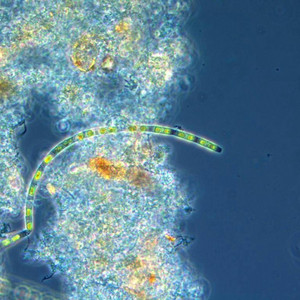
And you can see it with a microscope if you look, but that's a really hard skill.
And so traditionally that's where we would send these samples out.
So you would send a sample to a lab and go, Uh, you know, you've grown a bunch in a car.
Do you guys, you're getting way too much oil and grease or, you know, Hey guys, you've, you've messed up your thyrus count is through the roof. is your phosphorus pump working?
And so is this sort of the last step before the water is deemed safe and returned to the river or what have you?
This is a lot more like you're checking your engine.
So this is the process that is the core of wastewater treatment.
Every wastewater plant in the world, pretty much. has these bacteria in them if they're treating anything with a carbon molecule because it's just the easiest and cleanest and safest way we've found so far to do this.
Right. but then all of our other tests are reactive.
So one of the rough things about wastewater is you put the water in the river and then you find out later how you did.
Right. So there's lots of safeguards. We work really hard at making sure it's safe, but you also want any advantage you can get, you know, because all the wastewater operators live where they we at work and you don't want to be drinking that stuff either.
Right. Yeah. And is this, you know, I was, I was kind of, um, knowing that I was maybe being a little bit hyperbolic, but is it really that for years the test would be the water would be gathered up? sealed up, sent through the mail because there were only so many labs in the country or in the world, and then you'd kind of wait for the results?
Was that actually what was going on everywhere?
So what we do is we do process monitoring.
Part of the problem is the equipment to actually test water is really expensive.
Okay. So a lot of places can't afford the very expensive stuff.
So what you do is you ship water for bacteria analysis, you ship water for what's called BOD, which is how much oxygen those stuff is going to take up.
But those tests take like seven days. So no matter what you're doing, you got to wait seven days to find out how you did for that example, right?
Right. So we've tried to invent things that work better, but yeah, when I've run wastewater plants, basically you've got all your process controls, you're doing the best you can, but you, every week you. pack up a cooler full of stuff and you mail it off.
And then a week later you find out if you did okay.
So at some point somebody thought there's got to be a better way.
Right. Talk about that moment and what happened.
Well, this was a very personal moment for me because one of the things that happens if a wastewater plant goes bad is it starts foaming.
So to set the scene, I'm at a landfill, which already is an amazingly interesting and smelly place.
We're treating the leachate. So all the stuff that is percolated through your trash is coming to me.
And the wastewater plant starts foaming over.
It isn't just like a little light fluffy foam.
So this wastewater plant is overflowing and it's gotten to about two feet deep. of leachate, foam, bacteria and et cetera.
And I'm waiting on my sample to come back to tell me what's wrong.
Because I know something's wrong, obviously, right?
That's really blazingly obvious. But I don't know what to fix.
I'm treating the symptoms, but you know, right.
So that was the Genesis for me of there's got to be a better way to do this crap.
I mean, you know, I just, I don't want to be knee deep in wastewater crap anymore.
We eventually got that cleaned up. We got the results five days later.
It was a relatively easy fix once we knew what was wrong, but you know, there were lots of buttons and levers I could push.
So then a few years later though, I was talking to my brother, who's a doctor and he's a radiologist.
And he was telling me all about how x-rays are being read by AI.
And an x-ray is a two dimensional image basically.
And in my head that immediately went to the slides, which is what we use, you know, microscopy slide. to read this thing.
And I'm like, man, if it can read that, because that's really hard to read compared to a squiggle of bacteria that's very much a defined shape.
We can do this. I can finally fix this problem.
So I was super excited. And that's kind of where Robin and his team come in because I went, hey, guys.
Help. And so how long ago is this? So we've started trying to develop the AI about two years ago.
Now we went through an innovation accelerator inside the company.
Got connected with Robin and his group and started trying to figure it out.
So this was about 2018, 19? Yeah. Yep. Okay.
And so, Robin, you came in to save the day.
What'd you guys do? I wouldn't put it like that.
Well, first of all, I think it's much easier to read an x-ray than a between all those squiggly lines.
I have to interrupt you real quick. I can't help myself.
We never do plugs on the show, but we had a great episode that...
As we're recording, this just went live with a company called Cure AI, using AI to read medical imaging.
So go check that out. Thank you, Brian and Robin, for the setup for my self-promotional plug.
And now I'll stop interrupting you. No, it's perfect.
Also, I wouldn't say it's easy to read an x-ray.
I think it's just a bit easier than the bacterial filaments.
So when we came in, and just to mention it, the team, that's three people and one of them worked on drone footage before and was doing deep learning to detect vegetation and another one was working on driverless cars with road detection and all of those things.
So we had quite some chops. when it came to computer vision.
And then we came in and Brian and his team introduced us to the bacterial filaments and the world of funny shapes that look like railroad tracks with or without hairs and stuff like this.
So we were a bit worried that this might be much harder than anticipated.
So what we did was we convinced Brian and his colleagues to collect and label thousands of images because the spread of different shapes, of different colors, of different backgrounds in the images that we saw was huge.
Right. In AI and deep learning, it's all about the quality and the amount of data that you have.
I think that's a given. So yeah, thankfully they did that over a couple of months, collecting slides from friendly wastewater treatment plants and grew some of their own.
And we set up some tools that would help them doing the labeling.
And at some point we had enough to start working on prototypes.
What we did was looking at those images, and we first started with just detecting what kind of bacteria is on an image, so typical object. detection stuff.
So everyone, I guess, knows it by now where you have these funny projects, you get a an image of a dog and you get asked, is this a dog or a cat?
And you just respond with, that's a dog.
And we thought that might be good enough if we can do that for the different kinds of bacteria.
So getting an image and we can say, oh, that's nocardia.
By the way, nocardia is the only type of bacteria that I can remember.
So I'm going to just mention that one. It's better.
I had an E. coli or not joke on the tip of my tongue, but I was pretty sure E. coli has nothing to do with this, so I didn't want to make it.
Actually, that's one thing we want to look at in the future.
Believe it or not, right now, people basically mail those samples out to and count them.
Okay. So there you go. Yeah. All right. Any entrepreneurs listening equal or not, you know, have at it.
Yeah. Everything gets small and wiggly, just do it.
Yeah, but it turned out that just detecting the objects was not good enough.
Because there are two kinds of things that go wrong here.
And the one is there might be many different types of bacteria in an image.
That's the first one. You might have several different bacteria in your wastewater sample.
And the other one, and that's much more important, is that it's really important how much of each single bacteria you have.
So that's called the abundance. So how many single organisms of a given type of bacteria do you have in your wastewater?
And Brian is the expert here on why this is important.
But for us, that was, okay, we need to somehow count them as well.
And now there's actually a big problem because bacteria are single-celled organisms.
And the single cells, they are just blobs.
So it's really hard to see the difference between a single blob of nocardia and a single blob of or something.
I know two of them. Well, I spent a couple of months on looking at some of them.
But I only know how Nocardion looks by now.
So how large are the images that you're looking at?
I think, Brian, you mentioned looking under a microscope.
So are these sort of microscope slide size images?
Or I'm just trying to get an idea of how many... squiggly things you're needing to sort through.
So anywhere between one to three and thousands.
Right. Of course. And the thousands and the one to three is actually when you're in trouble.
To me, it's an interesting thing of some is good.
None and lots are both really bad. So you determine that it wasn't enough just to say, do we have one or not?
You need to look for abundance. Other factors.
Right. So then what happened with your training?
Yeah, well... We talked to Brian that he might have to redo some, at least, if not all of the labeling.
Because what they had done up to this point, and we're talking months here, right?
Yeah. was just classifying the images, really.
So just telling us what is on the image.
But what we figured out that we probably need is masks.
So masks is really just a fancy term for coloring in the actual bacteria on the image with a given color per type.
That's a very non-technical explanation, but that's pretty much what it comes down to.
And you can imagine with thousands of filaments on an image, That takes a while.
But on the flip side, the quality of the data that you get from this is much, much higher.
So you need fewer images with masks than you need with, say, just labels to train the machine learning models that we wanted to get at in the end.
It took more time to label an image or to mask an image.
But in the end, I think it saved us time to do it because...
With those masks, the predictions became really good really fast.
And so how long was it before you had something up and running, whether just at Brian's facility or broader, that you felt confident about? hey, this is giving us actionable results?
So we built a first prototype, I think three or four months in. with a couple of hundred images.
And we thought that was doing okay. It was just working on, I think, two or three kinds of bacteria that we saw by that point.
But it was okay. It told the difference quite well.
It actually found something, so it also knew when it was not seeing any of the bacteria.
Right. That was also an important thing.
Yes. And that made me... at least quite confident that the way we were on was a good one and it just was about getting more and maybe better data.
But I think Brian might have a different view on that.
This was definitely a collaborative effort, and it was very frustrating for both sides, I think, at points, because...
We don't really speak the same language.
Our microbiologists, the guys who do this for a living right now, They've been doing it for years and years.
And so it's really easy for them to describe exactly like Robin saying, this one looks exactly like railroad tracks.
This one looks like hockey pucks. Right.
And they could describe in detail what the AI should be looking for, but they had trouble understanding that that's not how an AI learns because they're used to teaching students.
And then on the other guy's side, you know, Robin and Fabian and crew were very, very polite in putting up with us telling him it looks like a stack of hockey pucks.
Why can't you figure that out? And so where are we at now as we're speaking in kind of late February 2021?
Do you have a system up and running? Are you... testing?
Are you relying on it? Has it eradicated all the foam from around your waiters?
Where are we at with it? So we have a commercial release already Super excited about that.
And we've got it running at several wastewater plants.
We're a super conservative industry. This is going to take a long time to get people to embrace change. because we've got a lot of safety issues, right?
Sure. We have to make it right. So, and the other thing is we have a very traditional show me culture in the wastewater industry.
So, I'm really looking forward to COVID being over and being able to go and actually show people that this works.
Right, right, right. The traditional way you sell something in wastewater is you show up at the conference and let everybody play with it.
Yeah. Right. So I'm curious, is wastewater relatively the same everywhere?
And I ask that kind of knowing if wastewater from a chemical plant is going to be wastewater from you know a domestic household of four it's going to be different but I mean broadly speaking speaking?
Are the issues people are dealing with in Tennessee similar to the ones in Berlin, similar to the ones in California, or does it vary widely?
It does vary a good bit. And A lot of it is actually the climate you're in.
New York, for example, has a huge water surge late spring. when all that snow melts and all the salt goes with it.
So they have a real problem with, they get a whole bunch of crap that, you know, here, if I get a, you know, a few inches of snow, We just closed the state for a few weeks.
So yeah, it ends up being quite different.
And then the source water is actually an interesting thing to me.
We find that depending on which side of the Mississippi you're on, you get very different water.
Phosphorus is a problem on my half, but not on your half.
Interesting. We're speaking today with Brian Arndt and Robin Schlenga.
Brian and Robin are with a company called Rumble, who is one of the world's longtime... wastewater industry leaders.
And we're talking about OpsEyes, their newly developed system for using AI to analyze waste pictures of wastewater to determine what's going on, how to turn the wastewater into cleaner, healthier, reusable water, all of this doing AI and imagery and the internet instead of literally packing up coolers full of wastewater. sending them through the mail and waiting upwards of a week to get the results back, while in some cases, as Brian explained, you may be standing in knee-deep foaming water that clearly is waiting for you to do something.
It's really cool stuff, and I'm curious about how you both kind of got into your respective fields, and then you mentioned how you kind of came together, and Brian, your doctor, brother and his use of AI to analyze imagery was involved.
But maybe kind of go back a little bit and give us... a little bit of idea of your professional background.
Brian, maybe we'll start with you. How did you get into wastewater?
So I was a chemical engineer undergrad and I was sure I was going to go work in the oil industry and whatnot back 20 years ago.
Did you grow up in Tennessee? Just ask. I did.
Okay. One of the cooler things, my mom worked for Vanderbilt, the hospital, and they'll basically let you go for free if your parents worked there for long enough.
Right. So that was a great start. to my education and the price was right.
But so then when I was getting out of school, I also really wanted to travel and see the world.
And there was this tiny little firm in Brentwood.
Uh, that was later bought by ramble that I started with.
I still go to the same office, but they traveled all over the world and did wastewater and.
They needed chemical and process engineers to fix this stuff.
And I mean, this sounded like a heck of a deal, right?
I get to travel the world. Like I want, I get to see all kinds of cool places.
And I get to clean up the environment while I'm doing it.
And they're going to pay me. There you go.
So I was super happy with that deal. And so that was 20 some odd years ago?
Yep. And we've changed the name on the door, been bought a few times, but I still report to the same guy who hired me 20 years ago.
And that's pretty typical in our group. We have lots and lots of people.
I'm still almost the new guy. That's awesome.
It's a rarer thing these days, so it's very cool to hear about.
Robin, have you always been on the tech side of things?
How did you get into working with Ramble?
I wouldn't say tech side so much, actually.
I became pretty involved in physics in college.
I guess, high school equivalent here in Germany.
Okay. And then I went to uni, studied physics, did a bachelor's and then a master's in something... weird that's called theoretical and mathematical physics, which is if you think physics is about describing nature, mathematical physics is proving that the equations that you use Makes sense.
I think that was a bit even too nerdy for me.
Nonetheless, I stayed at uni for a while, did some research, some teaching.
And my office mate actually founded an AI company in that time.
And he pulled me into the entire machine learning thing.
And of course, if you study physics, you have... quite a lot of exposure to the statistics side of it and also to the programming side of it.
So there was a lot I could build on. And then, yeah, I... learned that stuff on my own, left uni, worked for a digital education company first for a while because I figured that all this machine learning and data science and AI, from what I saw, wasn't used in stuff that really interested me.
So there are cool approaches in finance, for instance, but I'm not much into finance.
Right. stumbled upon Rumble, which allowed me to use those powers for good, if you want.
So we can use machine learning and digital solutions for stuff like upsize, but we also do it, for instance, predict the water consumption of a city, which helps them to better control their pumps and stuff like this.
So it's really sort of a digital dream come true where you can use the nerdy data stuff to actually do something that helps people and the society and maybe even the environment.
That's really cool. Absolutely. So Robin, to get a tiny bit into the technical weeds here, so to speak, can you tell us a you're using GPUs in the stack, but if GPUs made a difference, you know, day to day and in the work you're doing in the training in particular.
Oh yeah, absolutely. So, We kept training a new model every week for a while.
Well, we actually trained more than one but One was always going to be the one that we present to Brian and the rest of the team.
And as the amount of data that we got grew and the model that we trained became more complex, the turnaround times just didn't work anymore.
Sure. So we scaled up our machine. So we used a machine in the end that had Tesla GPUs which brought down the training time from without a GPU, it was a couple of days, just for transfer learning, if that makes sense to everyone, to a couple of hours.
Nice. So there was a huge turnaround and we could train much more many more models each day and communicate much more broadly with Brian and the team about how the experiments are going.
I'm kind of seeing this parallel in my head between, you know, mailing it through the post office and then switching and then switching to GPUs and, you know, kind of these... big leaps in crunching down the amount of time this whole process takes, which is what we aim for.
Absolutely. And we're using GPUs on the production as well.
So on the website, if you use Opsize, you will get results quickly because the GPUs power up just the recognition as well.
So it's not just on training, it's also in the operating model.
So that reminds me to ask, how long is the process now from when I take a... And how does the process work?
Does it... If I'm in a wastewater treatment facility, I take a picture of the water and send it?
What's that? Step one, you actually get a sample.
Cause this is what we do every day. And then you walk in your lab and you put it on the microscope and we have an attachment where you just attach your cell phone to the microscope.
Okay. take four pictures, mail them to us via the website, And then in about three or four minutes on average right now, we turn around the report.
That's fantastic. We say like 10 to 12 minutes because the lawyers made us.
Yes, always better to under-promise than over-promise, right?
Are there other similar projects? And forgive me, I don't know much about water management and the world's water systems. and such.
But are there other similar applications of AI, deep learning, machine learning that Ramble's working on in areas other than wastewater?
Yes. Well, even in wastewater. Even in wastewater, yeah.
Right now, another big thing that's kind of come along that we realized we have to fix is hazardous algae blooms.
Mm-hmm. Um, and so basically this is the algae blooms in your lake.
It puts out a whole bunch of toxins and. being exposed to those toxins will give you cancer.
The current methodology is your drinking water guy looks at the water, determines if it looks green or not, and then decides to treat it based on that.
We'd like to make that a little more scientific than looks green or not.
Sure. Stack of hockey pucks. Right. Well, and that's the same similar thing.
So this is an easy move for us. We already know how to do a lot of stuff thanks to Robin's team's work.
We just need to get another set of training data and then Robin will wave his hands and it will magically all fix from my point of view.
It's always good to have a teammate with that power.
It's a good thing. Yeah. But then also similarly, we're looking at all across the industry.
I know I have another colleague who's interested in increasing railroad uptime by monitoring basically all the pieces of the railroad.
So the physical switches, the engines and et cetera, and doing a deep dive on data in that field.
Right, right. Yeah, and we also, maybe I can mention those looking into lots of time series stuff.
I mentioned the prediction of the drinking water before.
That's also machine learning, right? So we're using machine learning, deep learning to predict something that is a time series.
And we're doing similar things with wastewater treatment plants, again, to predict what chemicals they have in their wastewater.
There's lots of applications of machine learning in the engineering field, context that seems to just now start to being really looked at much.
Machine learning, at least from my point of view, has been used a lot in marketing and in computer vision.
And now there's more and more demand from actual engineering departments in the company that really have a need.
And that might be something that you can solve with computer vision, but it's often something that you can at least partly solve with machine learning.
Text analysis is another typical example.
Lots of documents fly around everywhere.
And at some point, it's just not feasible to do it by hand anymore.
So that's something where natural language processing is something we use for projects of all kinds by now.
Very cool. at the risk of putting you on the spot here we always kind of like to wrap up these shows with kind of a future-forward-looking question or line of conversation.
And when we're talking about water and talking about... cleaning up water, and then you mentioned, Robin, drinking supplies and how much people are drinking, that kind of thing.
You know, there's a lot of talk in the news lately with good reason about climate change and about potentially water scarcity coming into the future.
Is this an area where machine learning and some of these techniques or even things that you're learning now, you might be able to apply this going forward?
So my answer would be yes. One thing that is huge with water and wastewater is the energy and the power you need to clean it up.
A great story to me is we've gone from being a huge energy suck.
We use massive amounts of energy, which all came from coal-fired power plants. to now the goal when you build a wastewater plant is it should produce energy as it runs.
Got it, which is great. I think this is another thing where... as the wastewater industry, we need to move to, you know, instead of just dumping it in the river can we put it back in the aquifer we got it from?
Because that's a huge thing is aquifer recharge and salt intrusion.
And I think we're also doing some pretty interesting stuff with modeling that salt intrusion and such.
Very cool. I think machine learning and lots of the digital tools that get available every day can definitely help in those climate change kind of situations.
I would be cautious, though. I would think that especially machine learning is a very energy intensive kind of thing.
Right. And if you're just training models willy-nilly all the time, you burn so much energy that might not actually be used well.
So I think people have to be cautious about the way they use their tools more and more to combat climate change.
And of course, even if you use renewable energy, clean energy, green energy to power your data centers. you're still using energy that could be used in a different way.
And that's something where I think most people working in machine learning don't really look at so far.
And that's something I would, having this podium here, I would advise everyone to think about, do we really have to train this model again and use so much energy to do it, it's often the answer will be yes.
But maybe sometimes it's no, and that's just a question that should be somewhere in people's minds.
Amen. That's sage advice. I know there's a blog post in the works, so by the time people are listening to this, you may be able to go to the Nvidia blog. and learn a little bit more about the work that Brian and Robin are doing and about Opsize.
But are there other places, the Ramble blog?
I don't know if there are research blogs.
You mentioned that Opsize, there's a commercial release.
Are there other places online where listeners can go to learn more about the work that you're doing?
I got to plug Optize.com, which is our website where you can get our services, obviously.
Perfect. But then Ramble's company website also has releases on this and we do a lot on LinkedIn because that's where we can reach our clients.
Yes. People are out there looking for new wastewater techniques.
One of the things I love about my industry is how collaborative and helpful we are.
You know, Robin was telling you about the samples we got.
One of the coolest things I thought about this was we offered a bounty on wastewater bacteria.
We'll give you a $500 Amazon gift card if you get us a bottle of bacteria we need.
We got lots of bottles of bacteria. Nobody wanted the gift card.
Nice. They just wanted to help. Yeah. That's one of the things that comes up constantly, particularly in the scientific community, is that collaboration is key to research, and it's great to hear about.
Well, gentlemen, thank you. Thank you for traversing the time zones and all of that stuff to make this happen.
And more importantly, thanks for... getting in there in the wastewater and cleaning it up to benefit the rest of us.
Appreciate you coming on. the show to talk about the work you're doing and look forward to hearing, hearing more about your progress.
Thank you, sir. That's been quite fun. Thank you, Noah.
Thank you. Thank you. Thank you.