This is their worst strategic nightmare come true.
I don't think anyone is fearful anymore.
Bring it on. China's rise, especially in the technology sector, somehow teared down this kind of superstition of American technology.
We're also going to see the continual moves by countries around the world to hedge and to diversify.
This kind of sanctions is just to force them to develop a whole lot different ecology.
Unfortunately, this is a hallmark of American policy -making in that its actions tend to undermine long -term American interests.
the chat lounge chat lounge chat lounge the chat lounge unpacks views and opinions on hot issues in a more casual way.
Welcome to the chat lounge.
I'm Ti -Yun, with me to analyze whether Washington can stall China's chip rise, Andy Mark, a Senior Research Fellow at the Center for China and Globalization, Dr. Zhiqian, a fellow of the Belt and Road Research Center at Minsu University in Beijing, and Dr. Warwick Powell, an Adjunct Professor at Queensland University of Technology in Australia.
Thank you all for coming back to the show, gentlemen.
So let's first comb through the Trump administration's recent moves to contain China's chip development.
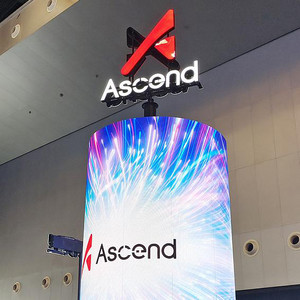
And among the latest, a global ban on Huawei's Ascend AI chips.
Well the Bureau of Industry and Security under the U .S. Commerce Department said using Huawei Ascent chips violates US export controls.
So let me start with Andy.
Why now and why Huawei again?
Well thanks for having me on.
So Tuyen, I think this is an incredibly important question because it's so easy to get caught up in the back and forth or the daily tick -tock of the China -U .S. trade competition technology rivalry.
But to really understand what is motivating the U .S., I think we have to go back in history.
The U .S.'s campaign to stop China from getting access to or developing advanced semiconductors really just reflects one single overriding geopolitical imperative and that is to preserve global American military supremacy while minimizing the risk of American casualties.
And this began back in the Vietnam War when for the first time in history Americans sitting in their living rooms could watch the brutality of combat unfold on the nightly news.
Images Hundreds of body bags returning home, children burned by napalm, villages reduced to rubble, eroded public support for the war and ultimately drove Lyndon B.
Johnson from office.
This again happened in 1993, in the Battle of Mogadishu, sometimes known as Black Hawk Down, when 18 special operations American soldiers were killed and their bodies were dragged through the streets of Somalia.
This also, within months, led to a somewhat described as a humiliating American withdrawal.
This lesson has been seared into the memories of American policymakers that the American public has little tolerance for foreign wars that produce dead or wounded Americans.
What the U .S. did is they shifted to a new model of warfare, fought at a distance powered by silicon or chips.
So, drones, satellites, and now today, AI systems have become substitutes for boots on the ground, giving the US global military reach. When I was at the RAN Corporation, it was called the ability to reach out and touch someone, meaning to kill anyone in the world whenever you wanted without domestic political cost. And it is precisely this model that China's technological rise threatens.
And this is whether or not despite China's peaceful intentions, because of its population, 1 .4 billion people, its discipline, its industrial capacity, China, which was once able to fight the U .S. to a standstill in Korea, is now racing towards parody or even surpassing the U .S. in the very technologies that have allowed the U .S. to be militarily dominant.
So, for American strategists and politicians, whether this is the Trump administration, the Biden administration, even going back to the Obama administration, this is their worst strategic nightmare come true.
A future war that cannot be fought remotely and cannot be contained cheaply and cannot be won without bleeding.
So, this is really again the existential nightmare that is motivating this recent set of actions by the BIS.
And of course, you have to understand that BIS is really just an arm of the US government, and this is being driven by this strategic fear.
Yeah, you lifted this competition to a strategic level from the very beginning.
Yes, that's probably the root cause.
But the SENS series chips, are they so powerful?
I think most of those chips are for civilian use, right?
And also the SENS series, yes, they have been widely used in China for now.
AI training and inference, but at least for now, they can't compete US chips like the dominant one, NVIDIA's chips, whether it's performance or its market share, in all aspects.
But probably Professor Powell, you can help us understand how threatening, if you will, Huawei's ascend chips are to US national security, like Andy just mentioned.
There are two issues here, one is the sense in which the United States sees its post -war dominant position as being challenged.
So for the best part of the last 80 years the United States has been able to operate within a mental framework if you will or a policy framework that sees the United States at the centre of the global economic system and it is able to sustain that position in the global economic system by virtue of United States dominance in a few key areas.
One of course has been in the provision of global liquidity through the role of the US dollar as a global reserve.
A second one and related to this question of technology is of course the military primacy of the United States across the globe.
The United States has over 800 military bases across the and it has the only naval infrastructure that can occupy three parts of the world in a sense all at once.
So the Atlantic, the Pacific and also of course, now into the Middle East region.
So the American Navy has been a clear demonstration of American military prediction underpinning all of this is the role of technology.
The United States has been a global leader in technology through research and development, and ultimately into the development of hardware and more recently in software.
And its control over key technologies is part and parcel of how it has maintained its position of global dominance.
Huawei has challenged that Huawei has challenged that not only with the ascent ship but this goes back say eight to ten years where Huawei as a company began challenging American technologies right across the board and so the United States in the first Trump administration actually initiated the moves to strangle Huawei as a key enterprise or corporate node within the overall Chinese technology development ecosystem.
That attempt has failed miserably.
Huawei not only pivoted out of the mobile handsets game, which is where it was being targeted, into the development in areas such as automation, robotics, 5G, industrial 5G, moving on to 6G, but now is acting as a central piece of a national ecosystem and enabling the scaling and advancement of Chinese microprocessor or semiconductor technologies and this underpins the ability of China's own ecosystem to not only be hardware independent but also operating system independent and eventually AI independent in a way that undermines the foundations of the American political economy and military industrial
preponderance. Right, and from a Chinese perspective then, Dr. Chui, do you think it's more about market share or business or about national strategy or national security?
Well, I think it's probably both.
Well, American has been doing this for a very long time.
I think, try to make sure that they still dominate the whole technology area, is always and continuously to be their very persistent purpose nationwide, from the government to the Silicon Valley, the defense, the military, and industrial complex. Everybody is trying to do that for a very, very long time because ever since the Second World War, America fully understands that dominating technology supremacy is actually the only way not only to make sure that America has hegemony all over the world, but also will dominate the capital market.
The reason why I think American stock market, financial market can stay at such a large size with such a height, I think technology dominance and the expectation of people from all over the world created by that kind of overwhelming technology power actually contributed to that kind of phenomenon.
It's not only because America has very good technology, but people's expectation and people sometimes a delusion about American technology make sure that, you know, their capital market actually can develop into such a height.
But I think China's rise, especially in the technology sector, somehow, you know, tear down this kind of superstition of American technology.
For example, recently, China's J -10 CE fighter jet shows up and it's been beating down many European fighters, and also even the Russian defense missile systems. And suddenly the whole world, they call it a deep -seek moment of the military industry.
They suddenly realize that Chinese fighter jets are such a good product.
And European fighter jets actually are sharing technology with the United States, so people who started to imagine what if the F -16 in the hands of the Indian Air Force compete with trying to do J10CE, what will be the outcome?
And well, if that happened, American military complex probably will face another downturn in stock market.
And also similar situation have happened already with the deep seek at the beginning of the year.
And when deep seek is just a rise up in American, you know, technology companies focusing on AI, like open AI and some other companies.
They also faced a very, very huge down pressure on other stock prices or the financing bargaining power.
So I don't think the American government, business society, or anyone would like to see that happen again.
So I think more comprehensive, overwhelming, and wide ranging, strong hand against Chinese technology will surely happen.
It is about defense power and also it is about the business benefit.
So I assume in the future, you're going to see more things like that happen between these nations again.
The Chat Lounge. The Chat Lounge unpacks views and opinions on hot issues in a more casual way.
Indeed apart from curbing Huawei, the Trump administration is also trying another method which is work with Middle -Eastern nations like the United Arab Emirates recently to jointly curb China's and tech ambitions.
So Andy, how unusual does such an alliance seem to you?
Well I think it's easy if we only read Western media headlines to think that the UAE, KSA, the Kingdom of Saudi Arabia are tilting towards the United States.
But I think the reality is far more complex and much more nuanced.
And I help but think of Charles Dickens who wrote, it was the best of times, it was the worst of times when I think about the GCC countries because it's the best of times because they are being courted by both the United States and China.
And of course that's a good position to be in, but at the same time, it is the worst of times for them because again, the U .S. is a vitally important country for this part of the world, especially when it comes to military security.
At the same time these countries recognize that their stupendous oil wealth is going to run out and they have to transition.
And one of the important transitions is new energy.
And here it is without question that China is the leader.
And, of course, China and the U .S., again, as I said earlier, are peer competitors when it comes to artificial intelligence, and in some areas look at DeepSeek, not just from a technological perspective, but from a business model perspective, it is open source, meaning anyone can use it for free.
So this, then, makes it the worst of times for these countries, because if they antagonize or alienate one of these countries, it could have very dire repercussions.
So they have to, I think, strike a very skillful and careful balancing act.
And it's fascinating to watch. I think there in terms of diplomatic skill, these countries are among the best, very sophisticated, very knowledgeable, very visionary and from a political governance perspective more like China than the US in that their leadership is able to articulate and implement over not just years but decades long -term political goals.
So again I think it's the best of times and it's the worst of times for these countries and I would not put too much weight into this notion that the UAE and and other countries in the GCC are tilting towards the United States.
They certainly are looking to work with the US to benefit from the US.
But at the same time, they also recognize China's importance.
Right. Very delicate situation they have to handle in the coming years indeed.
Then let's zoom in to this AI campus the US and the UAE are planning to build.
It will span some 26 square kilometers with a power capacity of up to five gigawatts, reportedly enough to support approximately two and a half million of Nvidia's top tier B200 AI chips.
And it will be developed by UAE state owned G42, but operated by US firms. Dr. Powell, from your perspective, how significant is this project?
Help us understand that, because I think you from University of Technology, you must be more familiar with this kind of a campus than us.
What's happening across the globe is a progressive decentralisation of technological capability right throughout the value chain from research and development all the way through to manufacturing hardware, operating computational resources, and developing and deploying applications.
This is actually running counter to the efforts of the United States to assert their ongoing RC monopoly over the aspects of the technology stack.
So what we're seeing in the Gulf State region is, of course, distinct and clear moves to build localized capability in physical hardware terms as well as in human capacity terms. The recent decisions really reflect I think not only the delicate balance that Andy spoke about but actually a concerted and clear -sighted strategy from the Gulf States to slowly but surely inoculate themselves from the risk of American censure and they do that actually by swapping dollars for physical things.
It is better to have physical things in your control than to have a lot of that are subject to sanctions and confiscations in the United States.
And that's exactly what we're seeing.
We're actually seeing the ongoing processes of de -dollarization on the one hand.
On the other hand, we are seeing the development of comprehensive ecosystems that will mobilise renewable energies to drive these computational resources forward. And those renewable energy capabilities are underpinned by Chinese technologies.
We're seeing the development of human ecosystems to anchor sustained research and development and the ability to create and implement applications that enterprises and individuals and communities will find useful.
Remember what's happened with the deep seek moment is that the commercial moat and the legal moat that sat around OpenAI and its large language model disappeared, and once DeepSeep made its model open source, it was followed by a number of other open source models.
The importance of this cannot be understated.
Open source models enables anybody in the world, so long as they have the know -how to deploy those models on their own devices and then on top of that build their own applications.
In other words the ability of the United States big tech business model to function as an extension of American foreign policy is being undermined so whilst the Gulf states are successfully balancing the ego imperatives of the American executive.
They are nonetheless moving clearly in the direction towards their own relative autonomy and their own capacity building in what I've called digital Westphalia.
The idea that each nation state and region will develop its own technical and non technical ecosystems that will protect themselves from the interference of others.
While at the same time enabling deepening cross jurisdictional interoperability.
That's where I think this is all going.
Well, probably it's like what you just said, it's quite important for them to carry out such research in Gulf region.
But there's another practical question.
The campus is located in Abu Dhabi, a desert area, right?
Maybe this question is a bit silly.
But in my understanding, when it comes to chip making or study to say the least. It needs a lot of water and is it an ideal place to set up such a campus and would it cost hugely, Dr Powell?
Look, access to water is as you say critical but more critical actually is access to cheap energy because with cheap energy you can move water, okay.
So the most critical precondition of these initiatives is actually the ability to implement very very low -cost energy systems. And I don't just mean the cost of building these energy systems but it's the long -run efficiency energy systems, measured in terms of energy return on energy investment.
And that's the one thing that the Gulf states actually have in their favour the ability to in particular implement significant solar systems and the unit costs of the solar energy that is being collected already in the Gulf states is substantially lower than the cost in many other parts of the world and once you have low energy costs you can actually move water so whilst proximity to water would be ideal with low energy you can pump.
Right thanks for the clarification and Dr. Chu from the Chinese side, do you think Beijing will be concerned about the latest development between the U .S. and Middle East countries?
Do you agree with Andy that that doesn't mean both countries are tilting towards Washington in this regard?
Well, I agree. Number one, I don't think Beijing is quite worrying about the whole attitude from America.
All right. The reason why is that we've been facing this kind of situation actually for a very, very long time.
I think Huawei's issue has been going on for, like, several years.
And also one of the CFO has also been detained by American legal agencies in Canada.
And also it took years to solve the kind of problem.
And also Huawei has been sanctioned over the access towards many markets, so they cannot sell their 5G devices to many countries.
And also, more than that, a lot of countries get the false propaganda from America, that is, Huawei's devices are hurting their national security and also even sending the virus to the public.
So, a lot of people, a lot of countries, even though they're not having this kind of sanction, they are allowed to buy Huawei product, but they choose not to buy it because of this false information.
And also, Huawei has been forbidden to get access to a lot of the product, for example, the Android system.
They say they are an open source platform, to provide to any kind of filmmakers who want to use Android system.
But they basically, you know, try to rule out Huawei devices.
And also the Google Play system cannot be stored on Huawei phone.
This is not required by Chinese government, but by Google the company itself.
So it makes Huawei very, very difficult to survive.
And also many, many of the apps, like Forbidden Huawei, like Skype, like many other, you know, very normal, ordinary apps, they all try to rule out Huawei.
But you see what happened today.
Huawei is not dying.
Huawei has been thriving.
They're doing pretty well.
These kinds of sanctions just forced them to develop a whole lot different ecology.
They have their own OS system, the Harmony OS, Harmony OS PC.
So they can link their smart home devices, mobile phone and PC and data terminals and to form the synergy, to make everything to work with each other seamlessly.
So actually using Huawei is a pretty good experience.
I think they only have one big problem that is that they're too expensive.
So that's the reason I don't want to buy the full package of the services.
It's really expensive, because they never lack of customers, you know, good products, never lack of market demand.
That's why Washington is so afraid of… Yeah that's the reason why I think they've got full resources to draw on their own set of computers.
This has been the Chap Lounge.
Check out how Beijing may counter move when we come back.
seventh month all the magpies fly up to heaven and form a bridge so many amazing worlds to discover.
I want a new palace said King Mu of Joe one day.
Chinese folk tales retold for audiences today.
Will, Will you marry me he asked and with little hesitation she said yes five thousand years of amazing Chinese folk tales.
My father must not go to war.
Someone must take his place.
You'll find Chinese folk tales, season three, wherever you discover your favorite podcasts.
Welcome back to the NAFTA lounge.
We continue our chat on how Washington's new measures may choke the rise of China's chip industry and reshape the global semiconductor landscape.
Dr. Che, will you please continue?
Do you think Beijing might be concerned that the UAE or the Middle East has firmly aligned with the U .S. in the global chip race?
Talk about the Middle East. I think major Middle East countries have a major shift in their national strategy.
Saudi Arabia, UAE, Qatar, those are, you know, main player in the golf club.
They realize the whole world has been changing.
On one hand, themselves are changing because the oil has been draining out, depleting, and oil prices have been suppressed to a rather low level.
So many of the golf countries are just facing a break -even point.
So they're not earning as much as the cash as they used to do in the past. and the petrodollar system are also not that stable as before, because the ruling power or the hegemony of the United States are not as big as before.
They also try to find out the other way to sustain their whole economy and their lifestyle.
That's the reason why they started to look around.
Where should I develop, how can I develop my own modernized industry, digital economy, any green energy if my, you know, oil runs out.
For example, like Saudi Arabia—everybody knows that they are famous for their endless quote -unquote oil and gas, but a lot of people don't understand that Saudi Arabia actually have more of the natural green energy resources.
Like, they have very vast desert with endless, very harsh sunshine that can be translated into very cheap green energy with the solar panel because the desert are free and sunshine are free.
So basically, if they can have acres and acres and acres of the solar farm, they will have endless powers too, like Paul just mentioned.
They can have fresh water, they can have their own modern industry to build EV, to build AI.
I think Ben Solomon Jr., the King has been trying to seeking to do that.
And meanwhile, I think Americans, Israel policies are always a, you know, time bomb, TikTok -ing in the middle list. That being making the middle list of major countries not very comfortable, like all the time, not very comfortable.
So I think that because of that, they have to make some other choices, but that does not necessarily mean they have to break down with America, with his traditional friendship or traditional economic and a defense tie immediately, I think they will try to find a midway, a balance point between so that they can be more independent and stand in a more, you know, favorable position to themself.
So I think that's gonna be the future of the middle -listed country, probably is gonna choose.
Right and actually Dr. Chu already mentioned, And he's quite optimistic that Huawei wouldn't be like what it faced last time, wouldn't be in a devastating situation like what it experienced last time.
But Dr. Powell, do you share similar views?
Or do you see the Chinese tech giant will have to face another difficult period this time, and it's probably not so rosy the road ahead?
ahead. Well there's no doubt that when the Americans apply pressure to markets around the world to not force people or to strongly discourage others from purchasing and implementing certain technologies that, you know, there will be challenges.
There's no doubt about that.
But having said that I think the world has changed fundamentally from what it was 10 years ago or 20 years ago.
The ability of the United States to impose sanctions across the world and for those sanctions to be successful has diminished significantly and we have seen that actually in the case of Huawei itself the attempts to sanction Huawei and to reduce Huawei's access to technologies and curtail its ability to develop markets has failed miserably over the course of the last eight to years.
So far we will need to confront new challenges but I believe that the operating environment globally is very different today.
The United States simply is not as influential or as powerful as that once was.
Malaysia is a case in point where in the last 24 hours it has made clear that as part of its own national strategy of developing Malaysia itself as a key pivot point in global data centre, infrastructure and also in its own development of artificial intelligence services, it will implement Chinese based AI models operating on ass in chips and use that as a foundation to develop Malaysia's own AI models.
So countries like Malaysia are simply not going to bend to Washington's will and I think we're going to see a lot more of that.
We're seeing it in the trade environment where attempts by Washington to strong -arm countries around the world to break away from their trading relationship with China has fallen flat.
And of course, in the last three years and arguably back to 2014, American and Western allied sanctions against Russia have also failed miserably.
what these attempts to do to stifle other country's development is create good reasons for everyone else to collaborate because they realize that collaboration is the strongest and best way of ensuring that they cannot fall victim to America's strong arm tactics and bullying.
So Huawei will have challenges without a doubt but I'm actually very confident that its own internal capabilities together with the ecosystem in China itself as well as the dynamics of the global political economy will make it possible for Huawei to continue to expand and to bring value to people across the globe especially in the Global South.
I believe Malaysia is an important market for Huawei but what about the European Union you know the United States biggest ally there It's also a critical market for the Chinese tech giant.
Do you expect they will say no to US global ban this time or will…?
The Europeans have a different set of challenges, of course.
So a number of countries in Western Europe went along with the bans of Huawei 5G technologies over the course of the last 10 or so years.
But Europe has reached a critical crossroads in its own position insofar as information technology is concerned and ultimately in terms of AI.
The Americans have over the course of the last 15 years ultimately dominated the European market undermining European national information technology sovereignty.
This situation is not sustainable for Europe.
If Europe wants you find a new pathway of economic development that grabs the opportunities of digitalization, AI, information technology, data, IOT and all the rest rather than being at the beck and call and subordinated to the interests of Washington and the corporate powers that Washington supports, Europe will need to find its own way.
and that may include developing frameworks that enable Europe to interoperate with multiple technology vendors and systems. But Europe cannot sustain its quality of life and its economic vitality if it continues to allow itself to subordinate its critical digital infrastructure and services to interests of American big take.
Indeed actually, we haven't seen any objection or any counteracts from Huawei so far but what we've seen interestingly is the US chip maker Nvidia they've been complaining about how this US global ban could affect its market share so Andy isn't it ironic that Washington's policies haven't affected or hurt what it intends to that much, or at least for now, but it's already triggered some negative impact on its own chip maker.
Well, you know, Tu Yoon, I think that unfortunately, this is a hallmark of American policymaking in that it is myopic or short -sighted in that its actions tend to undermine long -term American interests.
So look again at so -called liberation day as the most recent example and I think Jensen Huang's recent statement complains criticism the American policy towards China really says it all.
He said that NVIDIA had 95 % market share, it's now down to 50%.
Now why does this matter so much?
Because companies like NVIDIA, like Falcom, have to invest an enormous percentage of their revenue in R &D to fund the next generation of chips, the next generation of technologies.
So this not only creates the incentive and the space for companies like Huawei to accelerate their own development.
But at the same time, it undermines the long -term competitiveness of American chip companies as well.
So sometimes I've heard this described, these US actions are not only self -defeating, but actually cause enormous collateral damage to American tech companies to the global south that are depending on access to high quality inexpensive advanced technologies like 5G base stations.
All these other technologies that Huawei has developed including the Ascend ship, the chat lounge.
The chat lounge unpacks views and opinions on hot issues in a more casual way.
It seems Beijing wouldn't sit idly watching its own companies being bullied by others.
So when responding to the US global ban, China's Commerce Ministry has made it clear that any organization or individual that implements or assists in the implementation of the US measures is suspected of violating China's anti -foreign sanctions law and other laws and regulations and will have to bear corresponding legal responsibilities.
So Dr. Chu, what kind of illegal responsibilities could there be and what kind of countermeasures might we expect from Beijing then?
Well, I think Beijing will never sub -cont to United States attitude.
Actually, what I know is that after this Geneva talk, America just to break down their promises on extra tariff, not only the tariff, but also on some other targeted tools.
So for example right now they've been targeting at the Harmony Alaska, targeting Huawei product.
And many other things that are coming as really being and making Beijing not very happy.
So I think many of these countermeasures is already on the way.
So at legal level, we will have our own version of law -armed jurisdiction.
Right now, for example anti -foreign sanctions law, this will actually try to seek all kinds of the legal responsibilities against any organizations or individuals try to aid American sanction measures, for example, forbidden them to have business operations in China, forbidden them to join a Chinese government project or bidding auction, or even entering China.
Furthermore, we can freeze their assets in China, and even wider we can just rule them out in all kinds of the economic operations in China related to businesses for example in Hong Kong, Macau, or some third -party countries where there are Chinese programs in there, they probably cannot join a business as well.
And in trade, China can also do things to American companies as well.
For example, if America truly were forbidden or sanctioned any companies or individuals are using Huawei product or vice versa.
We were going to have to do the things again, to Apple, to Maekron, to many other semiconductor makers.
At least, I think under the above the 7 nanometers.
China right now have all kinds of the replacement made in China.
So I actually a lot of people have misunderstanding.
They are saying, well, if China has been sanctioned by America, China will have no semiconductors or chips to use.
That is totally a misunderstanding because right now, China can make all kinds of the chips and semiconductors.
But only like latest top -notch technologies are yet to be mastered by us like two nanometers, something like that.
But if we're talking about just functioning, I think China can perfectly functioning and also the costs are very, very low for China to sustain the kind of strategy.
And more than that I think China can do lots of countermeasures just to support the enterprises under the sanction.
For example, support Huawei, support DJI and support CATL and BYD.
So I think we can do a lot of things because China itself is a very large market, 1 .4 billion population.
and Belt and Road Initiative are covering, you know, very, very large global South territory.
For example, right now we have seven billion people on the earth and about five billion actually are covered by the Belt and Road Initiative.
So, just to consider this market.
So the old paradigm is going to be shifted and I think America needs to face that reality.
I think China never wants confrontational tensions with America.
Actually, this can be a very large market.
We can join hands and build together.
But if you choose to do this kind of strong arming, try to overwhelm China, I think China will fence off all this kind of behavior by itself.
You mentioned a lot of countermeasures that China can take.
But more directly, could Beijing restrict imports of Nvidia chips in response, you know further cut it market share in China to like Andy just mentioned to less than 50 percent.
Oh yes, of course. This has already been in the discussion on the top leadership, Apple, NVIDIA, Micron and AMD, so on the Texas devices as well as for the Qualcomm.
There is a very long list and they've been ruling out what kind of things can be made in China already and what kind of the aspects are not yet.
So we will see. That's true.
Andy, your expectation?
Well, I think, again, you know, we pay a lot of attention to this kind of tit for tat tactical reactions.
And that is important.
But I think also it's important to understand there's a Chinese saying to take the firewood from under the cauldron.
And we need to understand the importance of new technologies is not so much their discovery, but their adoption and their diffusion.
So whoever can put to use in the broadest possible set of scenarios any new technology, steam power, electricity, AI, will be the big winner.
and China again to go back to Warwick's point that we cannot underestimate the importance of open source for deep -sea for Alibaba's QN etc in that what this is doing is this is going to accelerate global adoption and diffusion of Chinese AI models so we will see I believe an explosion of new apps both digital AI apps as well as embodied AI apps all around the world because these platforms are made available at essentially zero cost. And why I say this is taking the firewood from under the cauldron is that many almost every major American AI company relies on very high profits to fund there are indeed.
So, what this means is that this eventually will erode the, we can think of it, perhaps, as monopoly of rents, to use an economics term from these American companies.
So, I think, watch how this unfolds.
Yeah, that's my next question, how will this unfold?
How is the US -China rivalry over AI chips reshaping the future of the global semiconductor industry, then?
Andy, we start from mute.
Sure, so just to maybe briefly recap what I said.
I think how it's shaping this is that we have to watch who is driving and winning the adoption and the diffusion of artificial intelligence around the world.
And I believe that China's decision, or the decision of many Chinese companies to make their models open source will be a very very powerful force shaping the outcome of this competition or this rival.
Dr. Powell what's your expectation?
How do you see this unfolding?
I think for the near term we can expect the rivalry to intensify.
The United States has a clear pattern in the way that it conducts itself globally when a set of prohibitions against others doesn't work the tendency is to double down, though intensification of the rivalry so to speak is likely to be the main feature of the foreseeable future.
Now what does that mean?
Well from the Chinese point of view it will I think mean a continued commitment of national resources to sustain and to develop the comprehensive ecosystems and the reason why comprehensive ecosystems is actually the foundation of long -term competitiveness and long -term resilience in this area is that a single focus on one element of the technology and information technology data digitalization world really leaves one vulnerable through all of the other aspects of the supply chain, which means we have to be concerned about the material aspect, such as the critical minerals and the rare earth technologies,
the processing of those, the refinement and the availability.
We need to be concerned about the ongoing development in research and development.
We need to be concerned about how that translates into materials science know -how in energy use, in the use of new materials to fabricate the tools and technologies that are needed.
We also are very interested in the ongoing development of energy efficiency systems because at the heart of all of this, the development of an information economy is fundamentally an energy question.
There's no point having the most expensive and the world's leading chips, if at the same time, the energy input cost for a computational output is high relative to other opportunities.
And one of the areas where China is particularly good at is optimising the input -output relationship, such the efficiency of computation for a given amount of informational capability and energy input and algorithm, it's able to do a lot more than is being done elsewhere.
And the Deep Seek case is the perfect example of that, where it managed to achieve better outcomes on less advanced technologies by having smarter algorithms. So I think we are going to see more competition.
We're also going to see, as Andy mentioned, the continual moves by countries around the world to hedge and to diversify.
There is absolutely nothing in it for any country in the world to lock themselves into a proprietary ecosystem and that is exactly what is on offer from American big tech. What's on offer from technology is open source capability and that's the fundamental difference so for people around the world who don't have the depth of R &D and the training and the graduates coming out of the universities don't actually run comprehensive smart systems for critical minerals and rare earths.
Or for those people, what they need access to, technologies upon which they can build their own solutions.
Where they are digitally sovereign and that is the choice that the world now faces and I'm quite confident that most countries in the world will actually choose the pathway of national sovereign development.
Right, so you also agree that what the Trump administration is doing to curb China's AI chip industry will actually, or accelerate China's rise as a chip powerhouse?
Yeah, as they say, Fung Ma Guo, and I don't think anyone's fearful anymore.
Right. Bring it on.
It's better for the world that the world gets to see exactly what the opportunities are and what the risks are.
The veil has been lifted and we can be thankful that the pretense of the liberal international order has been dropped and we see the naked power ambitions of Washington to rebuild American primacy globally and to undermine the capacity of countries to find their own autonomous and sovereign pathways to development.
Nobody wants to go back to a world where they are subordinated to the wishes and whims of Washington's political players or the corporations that Washington supports.
So bring it on. Fair enough.
And last but not least, Dr. Chui, please?
Well, I think this is just a development of a circle, a business circle, economic circle.
A lot of people are thinking we're doing a lot of choices facing a lot of things uncertain right now.
But everything, every reason behind everything here is just one that is the economic downturn global wide that kind of the downturn economy wise has been decided the cake we're looking into to grow bigger and bigger does not growing anymore and we need to cut the cake bigger for ourself that cost all kinds of the tension turbulence everywhere so I think we need to jump out of the circle and view everything from holographic point of view, to see what's really happening.
And then you will understand President Xi Jinping's comment on this is actually a human community with shared fate.
Nobody is just different from the others or more superior or undirling of the others.
But we are just equal people, the same people, with a shared fate.
So only by hand in hand and shoulder by shoulder together, we can jump out of this circle.
we try to refuse to be a puppet of the time, of the business circle, but be a self controlling independent human being by ourselves.
So that is very important, it's very deep.
Just consider about that.
Why 20 years ago you wouldn't have the kind of thought.
Why today you will have the kind of thoughts.
So I think the current problem and challenge we face together are just short term.
We are very optimistic for human being as a whole in the future, because in the longer run or future generations, once they find the methodologies to jump out of the circle, they will know that actually we have more choices than we thought we should have. It's like thousands of years ago, they only know to kill each other through war, but now they know they have trade, they have international platform, they have technology.
So in the future we will have more things than today where we have, and we will have better solutions and better choices, wiser choices, than we can make today.
That's quite philosophical, and very big, hopefully.
Washington would realize that at an early date.
On that note, we wrap up our chat for this session.
Many thanks to Dr. Qiu Chau, fellow of the Belton Road Research Center at Mainsford University, Dr. Warwick Powell, adjunct professor at Queens Lynch University of Technology, and Andy Mock, senior research fellow at the Center for China vocalization.
The show is available on all major podcast platforms. Please email us your comments at radio at cgtn dot com.
I'm Tien, thank you for listening.
Join us again for more Chat at the Chat Lounge next week.
Bye! The best military commander is not he who fights a hundred battles and wins every one of them.
The best military strategy does not lead to the desiccation of the enemy's capital city.
Decoding the art of war will help you understand why there's no art in war and how Sun Tzu stayed undefeatable using the science of war with fun stories and insightful breakdown of famous battles.
Find Decoding the art of war wherever you listen.
Stepping to the world of timeless elegance with Mrs. Spring Fragrance, a captivating audio book by Edith Eaton, read by Manling.
Experience the lively, yet complex lives in Chinese -American communities at the turn of century as Edith Eaton's delicate prose weaves together themes of tradition, change, love and identity.
Follow the journey of Mrs. Spring fragrance and witness the struggles and fights of those living on a rapidly changing exotic land while holding on to their cultural traditions or more importantly to their identities.
And please, it's hardly believed that his daughter was seriously opposed to becoming the wife of such a good looking, prosperous young merchant as Wall -E.
Join Books and Beyond for Mrs. Spring Fragrance.
Let the stories come to life in your imagination.
Subscribe to Books and Beyond for free on your favorite podcast platforms or log on to radio .cjtn .com for more.
you