Thank you for joining us for today's Spotlight program.
I'm Joshua Leo.
And I'm Liz Waid.
Spotlight uses a special English method of broadcasting.
It is easier for people to understand, no matter where in the world they live.
In the 1840s, the Vienna Lying-In Hospital had two child-birthing areas.
Pregnant women could come to these different rooms to have their babies.
In one room, midwives cared for mothers during the childbirth process.
Midwives are women who receive training in health services to help pregnant women.
In the other room, medical students helped the pregnant mothers to birth their babies.
Older doctors observed, helped and advised these students.
But studies comparing these two different rooms showed tragic and frightening results.
Women giving birth in the room with the midwives died about 2 to 3 percent of the time.
But in the room where students and doctors assisted the women, the rate was much higher.
Ten percent or more of the women giving birth died.
No one could offer a satisfying reason for this huge difference in death rates, except for Ignaz Semmelweis.
He was a doctor working at the Vienna Lying-In Hospital.
Dr. Sammelweis observed that many of the medical students received training in the autopsy room.
There, they learned by studying dead bodies.
After working in the autopsy room, they would assist in the child-birthing rooms.
Dr Semmelweis believed that the students were carrying small particles from the dead bodies on their hands.
He believed that the particles were causing infections in the pregnant women.
Many people did not believe this idea.
They believed that sickness was caused by God, or simple chance.
Dr. Sammelweis suggested a simple experiment.
Students were washing their hands, but their hands still carried a bad smell.
Dr. Sammelweis suggested that the students wash their hands with chlorinated lime.
This powerful washing soap could kill bacteria and viruses.
This solution worked.
After a short time, death rates in the student's child-birthing room fell to the same level as in the midwife's room.
This is an important event in the history of medicine.
Dr. Semmelweis was not the first or only doctor to suggest this kind of theory.
But his case showed a strong link between washing hands and staying healthy.
After this experiment, other doctors and scientists proved that Dr. Semmelweis was correct.
They proved that very small creatures like viruses and bacteria germs were the cause of disease and sickness.
This is the germ theory of disease.
Today, doctors and other health experts everywhere agree with the germ theory of disease.
They agree that avoiding or killing germs is the best way to avoid disease.
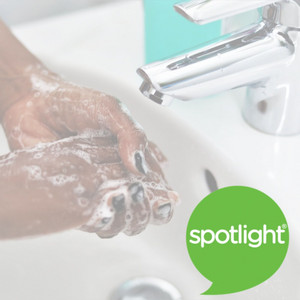
And they agree that the best way to avoid and kill germs is by washing your hands.
In a health care situation, it is best to kill germs with antibacterial soap.
But if you use the correct method, even just plain soap and water can wash most germs off a normal person's hands.
Sadly, it is still common today for people to get infections from visiting the hospital or health care centre.
Why?
Well, hand washing may just seem like too much work for health workers who are already busy.
This is also true outside the healthcare industry.
Handwashing offers many wonderful proven results.
But many people still avoid this simple process.
That is why many groups are currently working to spread information about handwashing.
They are working to make hand washing a normal, everyday part of people's lives.
The Karachi Soap Health Study showed what providing hand washing education in a community can do.
The Journal of the American Medical Association tells about this experiment.
Public and private groups joined together to perform the study.
Researchers studied families in four different areas of Karachi, Pakistan.
In all, the researchers studied over 900 households or families.
Each chosen family had at least two children younger than 15 years old.
And at least one child was younger than five.
Living conditions for each family were similar.
Most families had a toilet.
Families could usually easily get soap for a good price.
In these communities.
Many people did wash their hands with only water for special religious customs.
But washing hands with cleaning soap was not common at any time.
In these communities, washing hands was not a common, everyday part of people's lives.
Researchers put each family into a particular group.
One group received a supply of powerful antibacterial cleaning soap.
Another group received a supply of plain or simple soap.
Both of these groups also received hand-washing education in their homes.
The final group was the control group.
The control group did not receive any soap from the researchers.
The families in this group did not receive any hand washing education.
They just lived their lives normally.
Researchers could compare results of the other groups to the control group.
This would tell them if soap and hand washing education made a difference in people's health.
The study lasted for one year.
The study trained local people to educate the families about hand washing.
These field workers visited each family once every week.
They encouraged the families to follow a particular method for washing their hands.
They encourage the families to wet their hands, use enough provided soap to make a thick lather or covering and then rub their hands together with the soap for 45 seconds.
Field workers encouraged families to repeat this process after using the toilet and after cleaning waste from a baby.
They also encouraged families to wash their hands like this before preparing food, eating or feeding babies.
Mostly field workers encouraged families in the study to make hand washing a habit, something they would do often, every day.
After the study, researchers compared the three groups.
The health of families in the control group did not change.
But families who received soap and hand-washing education showed great improvement in health.
Children in these families had 53% fewer cases of diarrhea than the control group.
Babies in these families had 39% fewer days of diarrhea than babies in the control group.
These results were similar in groups with plain soap and antibacterial soap.
There are 101 ways that you could get clients for your agency, coaching or consulting business, but there are three to avoid.
Number one sending thousands of cold emails and following up like a madman, hiring an army of appointment setters and posting on social media every damn day.
If you're doing one of these three things, or all of these three things, and you're not getting clients, i want you to listen to me, because i've got 17 unique ways that you can use to get hundreds and hundreds and hundreds of appointments every single month with ideal clients for your business, And I created this ad and the training that follows to explain how I can help you get 20 new high ticket clients in the next 180 days.
Guaranteed, no joke.
I want you to watch the training because you will get value from it.
Let's get started.
Hey, my name's Charlie Morgan.
I've got an important message for you, and it's that you do not need to bombard your niche with cold emails and endless follow-ups to get clients.
And you certainly don't need to hire an army of appointment setters, and you most certainly do not need to go spending a fortune and paying upfront to some random appointment setting agency that, let's be honest, is not even gonna deliver results.
And I know that you don't have to do any of this because I didn't do any of this.
And last month I made $800,000 and it wasn't just me.
All of my clients did the same thing.
They're using the same systems that I've used to build multi seven and eight figure businesses with a predictable, reliable way of client acquisition.
And all they had to do was use the right system.
And I'm going to share this system with you on the next page.
So here's what I'm asking.
My massive request from you is that you click or tap the button below so I can share the system with you.
And basically on this page I will reveal all my secrets around how you can get ideal client leads to actually book calls with you.
At least 100 per month guaranteed.
So you can sign your next 20 high ticket clients in the next 180 days.
What you're seeing on the screen here is my promise, my guarantee, my offer, so to speak, my life's work, and you will love it.
All of this to say, I'm not asking you to buy anything.
All I'm asking is you say maybe.
Because if I'm wrong, you'll lose 10 minutes.
But what if I'm right?
So click that button below and I will see you on the next page.
Some people just know they could save hundreds on car insurance by checking Allstate first.
Like, you know, to check your outfit first before meeting your girlfriend's family.
So check Allstate first for a quote that could save you hundreds.
The experiment at the Vienna Lying-In Hospital and the Karachi Soap Health Study in Pakistan show that hand washing can produce quick and amazing results.
Clearly, hand washing is an important thing to do.
But surprisingly, many people still do not do it.
Let's change that.
Wash your hands well and often.
Encourage the people around you to do the same, for everyone's health.
Do not spread sickness and disease.
Instead, spread the good news about washing your hands.
The writer and producer of today's program was Liz Waid.
Computer users can hear more programs, read our scripts and see our word list on our website at wwwradioenglishnet.
This program is called, Washing Hands Works.
If you have a question or comment for Spotlight, you can email us at radio at radioenglish.net.
We hope you can join us again for the next Spotlight program.
Goodbye.