
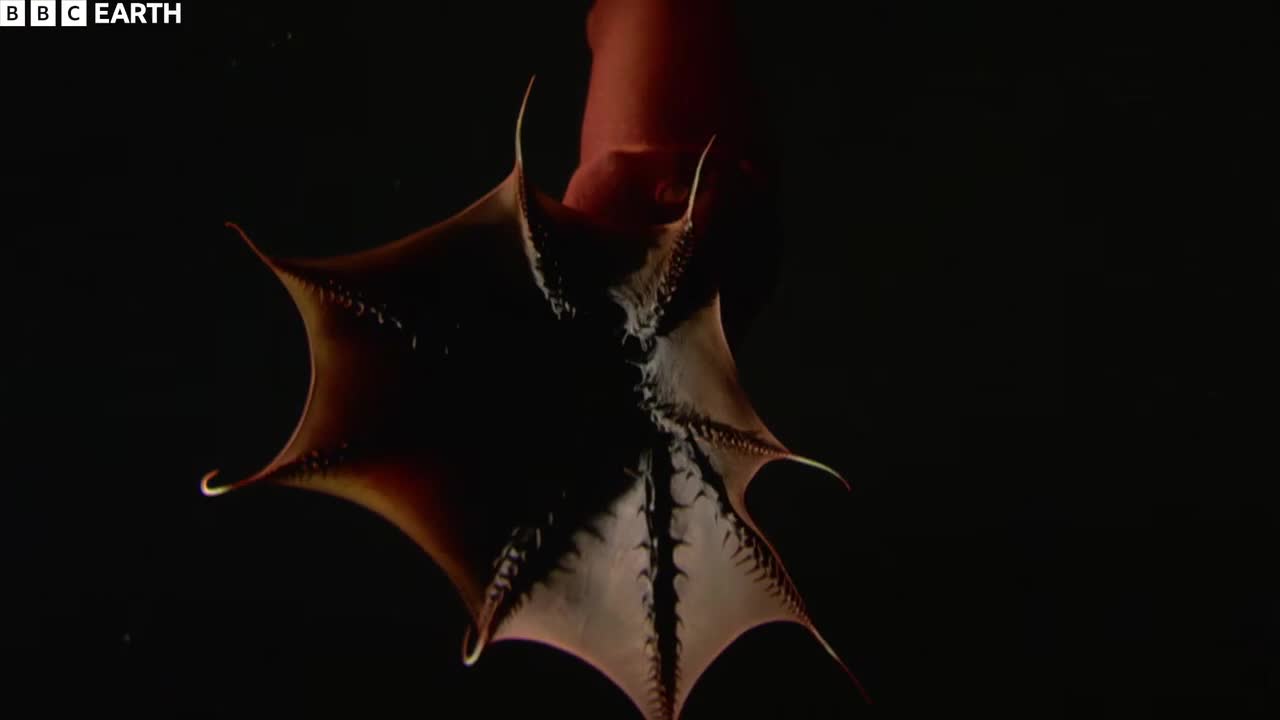
[The Enigmatic Defense Mechanisms of the Vampire Squid: Vampyroteuthis Infernalis]-[The Vampire Squid From Hell | 20 Years of Planet Earth | BBC Earth]
📋 Summary
Introduction to the Deep-Sea Enigma
Within the vast, mysterious realms of our oceans exists a creature often described as "the weirdest in this world of the strange." Known scientifically as Vampyroteuthis infernalis, or the "vampire squid from hell," this cephalopod defies conventional expectations of deep-sea life. Unlike its more aggressive or flighty relatives, the vampire squid exhibits a unique, calculated temperament when faced with external stimuli. The provided transcript highlights that when researchers or predators "disturb it," the creature does not engage in a frantic escape; instead, "it only retreats a little distance," showcasing a stoic nature that distinguishes it from other marine organisms.
Sophisticated Bioluminescent Strategies
One of the most fascinating aspects of the vampire squid is its mastery of light. In an environment defined by the absence of sunlight, the creature has evolved to utilize "lights of its own." The primary mechanism for this is the use of "bioluminescent bacteria" which "shine from pockets on its arms." This biological adaptation serves a critical tactical purpose: it is designed specifically "to confuse its predators." By manipulating these light sources, the squid creates a sensory distraction that allows it to navigate the darkness while simultaneously confounding those that seek to hunt it.
The Art of Deceptive Anatomy
Beyond mere bioluminescence, the anatomy of the vampire squid is expertly tuned for survival. The transcript notes an intriguing feature that often leaves observers questioning their own perception: "Are those eyes?" In reality, the visual markers observed on the creature are not sensory organs but rather "spots at the end of its mantle." This is a brilliant evolutionary deception. Should a predator attempt to attack the squid, it is likely to target these prominent spots. By positioning these markers at the extremity of its body, the squid ensures that "a bite there would leave the head unscathed." This anatomical safeguard allows the creature to survive potentially fatal encounters by sacrificing a non-vital part of its physiology.
The Ultimate Vanishing Act
The culmination of these defense mechanisms—the bioluminescent confusion and the decoy mantle spots—results in a highly effective survival strategy. As the predator becomes disoriented by the light displays or distracted by the decoy spots, the "threat diminishes." Ultimately, this allows the Vampyroteuthis to execute its final, graceful maneuver: it "disappears into the blackness." This ability to dissolve into the deep-sea environment, leaving the predator with nothing but empty water, solidifies the vampire squid’s status as one of the ocean's most elusive and perfectly adapted survivors. Its reliance on subtle light manipulation and anatomical misdirection provides a masterclass in deep-sea evolutionary biology.

Deep Learning with ListenLeap


