Discussion keeps the world turning.
This is Roundtable.
You're listening to Roundtable.
I'm Ye Honglin with Lai Ming and Yu Xun.
The global push for carbon reduction is reshaping supply chains in unexpected ways.
As aviation looks for viable paths to decarbonize, attention has turned to materials that already exist within our everyday life.
Waste, once treated as an endpoint, is increasingly viewed as a starting point.
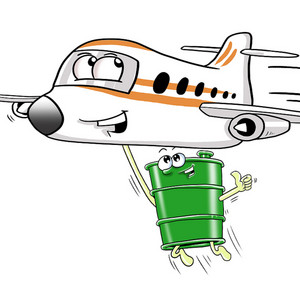
China's used cooking oil is being elevated into a prized raw material for sustainable aviation fuel.
Are environmental goals, industrial capacity, and global demand happily colliding here?
And imagine a familiar street corner at dusk.
Someone is setting up a folding table.
A small crowd gathers.
Phones come out.
QR codes are scanned.
But this isn't food or toys.
It's AI helping you mix a custom perfume, practice a billiard shot or play a game of chess against a robotic arm.
The most advanced technology of our time has quietly stepped off the cloud and onto the sidewalk.
Are you tried?
Have you tried any of this just yet?
Let's talk about the AI powered street stalls.
But before that, The story of sustainable aviation fuel is often told through emissions charts and policy documents.
But at its core, it is also a story about perception.
What society once considered dangerous, useless or disposable can, under new pressures, become valuable and even strategic.
Fuel.
Examples illustrate this transformation more vividly than the changing fate of use the cooking oil.
Now we fly off. or use the cooking oil.
What is happening here?
It is quite new to me, to be honest.
At a recent multinational cooperation meeting Yufeng, who is the president of Honeywell China, which is a global industrial technology and engineering company, Share that the price of these gutter oil in China has more than quadrupled over the last two years.
And over the past two years the price of gutter oil has surged from around 1000 yuan per ton to over 6000 yuan per ton.
But not purchased by restaurants.
No, by a lot of these industrial and aviation companies.
So, first of all, gutter oil is sourced from discarded cooking oils, basically.
You can extract them from the daily waste or just oil from animal or plant sources.
They generate it during catering services that just don't meet food safety standards, as well as, as I mentioned, oils extracted from just general kitchen waste or separated from these waste water using oil water separators or grease traps basically not healthy for human to eat, but maybe very healthy for other industrial companies for the planet.
Yeah, they are doing something that, or they're making it into sustainable aviation.
Feel that SAF is the key term here.
What is SAF?
Well, that's sustainable aviation fuel.
And Yu Feng said there is huge demand for sustainable aviation fuel, or SAF globally, which is why the price of gutter oil or used cooking oil has gone up in price to about 2000 per tonne.
For the same reason, China became the world's largest exporter of used cooking oil in the year of 2023.
According to data from China's General Administration of Customs, in the year 2023, China exported over 2 million tons of cooking oil used cooking oil which accounted for more than half of the country's total production.
And SAF is a type of liquid fuel for commercial planes that can cut carbon dioxide emissions by up to 80.
And we need to be clear is that airplanes flying on SAFs they still emit in the same way as they fly on other regular aviation fuel.
But the making of SAF, the process of it helps reduce carbon emissions.
It can be used, like Yusheng said earlier, from using waste fats, oils and greases, municipal waste, agricultural leftovers and even non-food crops grown on marginal land.
Corn is famously a source of aviation fuel in this sense, and SAF can also be produced synthetically through a process that captures carbon directly from the air, so the making of SAFs can contribute to the reduction of carbon dioxide emissions in the air.
And the reason that makes SAF sustainable is that their feedstocks don't compete with food crops or require extra resources like water or land.
They're also not linked to environmental issues like deforestation, loss of soil productivity or biodiversity.
So, in contrast to fossil fuels, which releases CO2 as well, SAFs essentially recycle CO2 which has been absorbed by the biomass used in the feedstock during the course of its life.
So that is the the way that it's becoming so-called sustainable.
Yeah, we say that it's something a new or relatively novel notion to us, but it has already been a broad consensus in the industry that saf is the most viable solution at the moment and it can reduce carbon emissions over the entire life circle life cycle of aviation by about 55 percent to 92 percent.
That is already a huge percentage.
So are we using SAF well around the world?
What is the global situation here?
Well, in 2023, the EU introduced the Refuel EU Aviation Regulation, which mandates that by the year 2025, which is this year, 2 of the fuel used in aircraft departing from EU airports must be on sustainable aviation fuel.
And by 2030, that number will rise to 6%.
And by 2050, it is supposed to reach 70%.
And the UK has similar rules requiring a 2% SAF blend by 2025 and 10% by 2030 and 22% by 2040.
But in reality, SAF production in 2025 represents only 06 of total jet fuel consumption and it might increase to 08 next year.
This is according to estimates by the IATA.
So I was wondering, right, these are essentially the waste of our meals.
And wow, that is such a great news that we can just use waste to feed all of the airplanes, which can be a really, really big emission producer, right?
So I was thinking well then, the ideal solution is just coming up and it's been there for for quite a long time, but why it is just not becoming the headline of our like, sustainable world?
That's when I saw that SAF can be pretty expensive at least twice the cost of traditional aviation fuel because Factors like the high cost of raw materials and investment and SAF production is still limited, which ends up driving up the cost for all of these airlines that use it.
And when the extra cost or the higher cost is combined with regulatory mandates, then we have a tricky situation faced by aviation companies.
In Europe refuel.
EU aviation has sharply increased costs amid limited SAF capacity and supply chains.
Fewer suppliers have widened their profit margins to such extent that airlines pay up to five times more than the price of conventional jet fuel and double the market price of SAF.
And all of this is happening without guaranteeing supply or consistent documentation.
On the one hand, you have the authorities demanding aviation companies to meet certain standards.
The percentage we just mentioned earlier.
By 2030, the EU expects aviation companies to use 6 of SAU in all their fuels.
But at the same time to supply, and on the supply side there simply isn't enough output and, as such, you know the basic rule or basic principle of economy, that is, when there is more demand than supply, then the price tends to go up.
Besides that we already mentioned, Lai Ming said that China is the biggest exporter of cooking oil used cooking oil, yet it hasn't been fully utilized.
Even gutter oil here in China is not being fully utilized, as many areas still lack a well-developed system for recycling and using.
It didn't go to the details of the scientific background or principles of how gutter oil magically become the aviation usable kind of oil that we fly depending on.
But that is definitely the process that needs to happen in the industry.
And at the same time we see that China's annual output of gutter oil remains stable at 10 million tons, but about 5 million tons have an unclear destination hopefully not back on the dining table.
So we also need to make sure that the domestic companies know about what is happening here, know that they are used to.
Cooking oil is actually still very pricey if they find the right location to find the right destination for them.
This is hard because cooking oil, cooking waste is scattered everywhere.
It's in households, it's in restaurants, it's across So many cities around the country.
Certain bigger cities in the country might have more mature, well-developed rules or practices with regard to the collection of cooking oil waste.
For instance, in Wenzhou, East China's Zhejiang province, Biodiesel companies are centralizing the collection of waste gutter oil, and they work with oil collection teams to standardize the process.
In Shanghai, a full cycle management model has been established for restaurant waste oils, covering everything from collection and transportation to disposal and application.
But overall, you can imagine the difficulty of having these cooking waste collected.
And in some cases, for instance in Beijing, in bigger restaurants or canteens you see signs of stricter management and oversight of waste cooking oil.
For instance, outside of the canteen you often see a tank, The lid of a tank that is used to collect waste oil.
And then there's usually a lock and then not anyone is allowed to go near it or go and just extract the oil.
But then this is a relatively more mature way of handling and disposing cooking oil.
Not every city, not every business can afford to do that.
Not until it is mandatory in every city, in every part of the country.
So what's supposed to happen is a tightening control over waste oil collection.
We want to also expand the SAF production capacity.
And for Roundtable.
We want to talk about this, so you know that there is a good destination for the used cooking oil.
Coming up next, roadside market is embracing artificial intelligence.
Don't go away.
Looking for passion?
How about fiery debate?
Want to hear about current events in China from different perspectives?
Then tune in to Roundtable, where East meets West and understanding is the goal.
It's Roundtable with myself, Lai Ming, and Yusheng.
The true test of a technology is not how impressive it looks in demos, but how naturally it blends into ordinary life.
Street stalls have always been a mirror of social change.
They reflect what people want, what they can afford, and what excites them in the moment.
And today, alongside squirrels and secondhand goods and toys and fun street snacks, a new category is emerging AI-powered services that promise personalization, interaction and novelty AI street stalls.
Let's talk about it.
Have you tried any of these?
And what are some possibilities, some choices that I can choose from?
I haven't tried a lot of them.
But I am kind of surprised, and not surprised, because some of these things are just really, you know, interesting and fun.
But it could be, and you just if, when you understand how AI works, it just makes so much sense when people are using them.
And one thing is that AI perfume mixing, you can have a sole personalized, customized Flavor?
Did you call that flavor?
Yeah.
So you scan a QR code, enter a name, a personality and get a custom scent mixed on the spot.
And it's less about accuracy and more about the fun of having something made.
Just for you.
I'm saying this because I'm not sure that they're really really just.
You know that scientifically suit you.
But yeah, people are buying these things just for a little fun trick using AI.
Yeah, I can totally imagine some failed attempts at mixing certain ingredients all together into, for instance, Peter's own personal scent.
Well, they are being very serious about this.
It's not a guaranteed success.
It's not a guaranteed success, but they are well.
People, vendors or enthusiasts are testing out who can make the best type of perfume suitable for that exact moment.
Because the key about AI blending perfumes um, blending perfume is that it's not only for a certain person, it's also for the emotion that you're carrying at that moment.
They ask you questions and they see what kind of mood you're in today and they even have a hangzhou ai in chinese.
So it's a competing kind of competition side.
It's more like a market and people bring all kinds of creation they did with ai and they see who's doing a better job.
So these perfume makers make them sound so legit, but They are.
They are being very, very serious.
It's not only for the AI perfume.
In this competition, there's also an AI milk tea design competition.
The milk tea design competition is for different scenarios.
For example, a beach in a summer day, or I am still working in really, really, really late nights.
So these are the theme.
And based on the theme you need to design the flavor of the milk tea and also the slogan, also the package, as well as how you should be enjoying this cup of milk tea, so that you can enjoy it and you can appreciate it to the fullest, fullest extent.
So yeah, they are being very serious.
That's maybe a little bit off topic.
But I was wondering who gets the credit when they win this game or the competition?
I mean, because they are AI or the idea.
Yeah.
So when you're putting these things, AI of course get the knowledge of yourself, but it is actually still the algorithm that they're going through to give you the result right.
But anyway, people are just having fun with a lot of these different AI-generated things AI bracelets.
You can design your own bead bracelets by your budget and your personal style or taste.
And now people are having these AI smart pool tables.
You will have projectors, maybe above the table, and then you can totally have that clear view are shot paths onto the table and letting the beginners follow these glowing lines, and you can, they can just coach you without a real coach.
So it's a reality version of the billers that i used to play as video games.
Oh yes right, i can do that.
So yes, we see, we talk about ai all the time around table and it is being used in our everyday life, for sure, but is it that common, Though?
Here in China we say that when the taxi drivers start to talk about the international, major international affairs, that's when it becomes really popular.
And when they talk about getting into the stock market, it's time for you to get out.
But anyways, when we see these kind of phenomenon happening so common and on the street, we know how popular AI is already being.
And is there any other reasons that we're seeing it in our daily life in a street stall?
Well, I think Chinese people are simply willing to accept new technologies.
There already are reports on international media about the adoption rate of AI in the Chinese market, and that presents an advantage for AI industry to thrive.
So to the envy of well international peers, the like of, let's say, ChatGPT or Gemini.
So I think this is a good phenomenon that we are seeing, because I think it's really making sense for the average people to get a real assessment and understanding of how AI is changing our lives.
So rather than, oh, it's raising my electricity bills.
No, this is not happening in China.
Now the other reason is yes, China has been working very hard to step up green energy and energy production.
That's the other reason why AI is able to thrive in this country and lead to such level and extent of AI adoption.
It's just that accessible.
Yeah.
And having that understanding really would amount to something in the future.
For instance, when the government were to introduce a policy on AI management or AI governance, the general public would already know, have an idea of what it means, and they may be able to contribute their own ideas and their own creativity or their own critique.
When something like that were to happen, rather than, for instance, the AI company's major giants will have the exclusive say on this issue.
Have you ever thought about becoming an entrepreneur and utilizing AI?
Any specific interest?
Not that specific, but I am seeing that more and more people have the access to AI and a lot of these street vendors are utilizing AI.
And that reflection of accessibility to AI is making people just stop in the street.
And that is one of the biggest successes. when people are just using AI.
It's showing people that not all of these people in Silicon Valley can use AI, but just ordinary people can also use AI in their daily lives and make their life even funnier and better.
Yeah.
So if you have tried any of these fun activities on the street side that you live around, let us know in the comment area.
And that brings us to the end of today's roundtable.
I'm Niu Honglin with Lai Ming and Yu Xun.
Thank you so much for listening.
We'll see you next time.