Who controls Venezuela's oil now?
We are going to take between 30 and 50 million barrels of oil.
We're going to sell it in the marketplace at market rate.
Oil revenues were making an important part of our foreign currency market.
It's World Business Report from the BBC World Service.
I am Bissi Adebayo, and today we're unpacking Washington's plans for Venezuela's oil industry.
Also, Hollywood's takeover battle intensifies with Warner Brothers' discovery urging shareholders to reject another bid from Paramount.
And we head to Singapore, where the city-state has opened the world's tallest vertical farm, as it looks to secure its food supply.
So just moments ago, President Donald Trump said Venezuela has agreed to use the proceeds from oil sales to buy American-made goods.
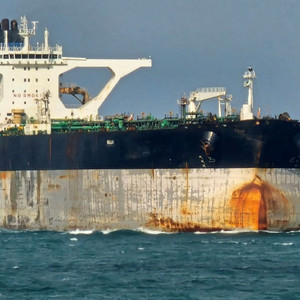
And this comes right after the US confirmed it has seized oil tankers linked to Venezuela and Russia, as it moves to take control of the sale of sanctioned Venezuelan crude.
Secretary of State, Marco Rubio, says negotiations with the Venezuelan government are already underway.
We are going to take between 30 and 50 million barrels of oil.
We're going to sell it in the marketplace at market rates, not at the discounts Venezuela was getting.
That money will then be handled in such a way that we will control how it is dispersed, in a way that benefits the Venezuelan people, not corruption, not the regime.
So we have a lot of leverage to move on the stabilization front.
White House Press Secretary Carolyn Leavitt also spoke about the level of interest from the oil companies.
There's a lot of private sector engagement that's happening right now.
As you know, Secretary Wright, our Energy Secretary, who's heading up this big project, is in Florida today meeting with some of these oil executives.
And as we confirmed earlier, they will also be at the White House later this week.
So they are absolutely eager to invest.
They're eager about these opportunities.
Now let's hear from our North America business correspondent, Michelle Fleury.
There's been lots of developments on various fronts.
On the one hand obviously, we've got the seizure of various tankers, members of the kind of ghost fleet oil feats seized by the US.
There have been kind of updates on that from Caroline Leavitt, who is the US press secretary.
We also learned about more details in terms of what America plans to do with the oil from Venezuela.
It says that it is going to control the sales of sanctioned Venezuelan oil indefinitely, and it's also planning to roll back some of those sanctions on the country's crude oil in global markets.
The idea is that originally the White House said they were going to start with some 30 million to 50 million barrels of oil.
They were going to take that and sell it and then the revenue would be controlled by the US.
Part of the motivation, I guess you could say, for that is to try and maintain some sort of leverage over the Venezuelan government.
And part of what the president's press secretary, Carolyn Leavitt, mentioned is the fact that oil companies are eager to invest.
So do we sort of have any indication that they really are?
Part of the administration's pitch is that American oil companies are going to want to go in and try and help develop some of the infrastructure.
The situation in Venezuela is such that basically, they're sitting on these massive reserves the largest in the world but they're very much still in the ground.
And that's because of years of sort of mismanagement and underinvestment by PDVSA, which is the state-run Venezuelan oil company.
And what is needed is the technical know-how, but also the financial heft of of American oil majors.
And you're going to see a meeting between the White House and some of these oil executives on Friday, no doubt, to try and discuss how that could be facilitated to make it work.
Because here's the thing if you're running a major American oil company, you have to answer to shareholders.
And they may not be so keen on the idea of investing billions of dollars in Venezuela when there are still question marks about sort of how stable the situation will be on the ground going forward.
Because these are investments that are going to play out over dozens of years and will cost billions of dollars, not something that these companies will enter into lightly.
I know we're waiting to hear the outcome of that meeting when it happens, but have any of these old firms been saying anything just yet?
I mean, they've been pretty quiet, but I think there are a couple of ways to look at this.
On the one hand, you've got players like Chevron who already operate within the region.
And so oil experts I've been speaking to will say that's the most likely immediate sort of player on the ground who will be able to maybe invest more and expand production.
Then you have the refineries.
These are the sort of refineries that operate along the Gulf Coast of the United States.
Players like Valero and Marathon Oil Energy.
They are the kinds of firms that can take the heavy black oil that is produced by Venezuela and refine them and turn them into the kind of stuff that you might put in your car.
And finally there are the sort of oil supply companies, firms like Halliburton.
They would probably play a large role in any attempt to kind of rebuild infrastructure.
And so I think, from an investment perspective, those are probably the firms that you're most likely to see benefit most immediately.
But, like I say, you know, there are still many question marks and that's what's going to be so interesting to coming out of this friday meeting is what will the administration say?
Will they offer any kind of guarantees to these firms in return for them sort of putting up, you know, these huge investments going forward and still talking about their investments?
You know, because some of these oil firms with a history in venezuela say they're old, billions.
So does that sort of raise doubts about whether investing there can actually be profitable going forward?
I was talking to a former Venezuelan minister who's now a Harvard professor about this very question.
And the point he was making was look, these companies need some sort of rule of law or rights protections if they're going to be profitable.
And to his mind, that doesn't exist on the ground right now.
So there is a gap between the rhetoric we're hearing from the Trump administration, in his view, and sort of the reality of what we can expect from oil companies as they contemplate what to do.
But when you've got the president of the United States asking you to do something for your country, you know that's hard to resist, even though obviously they also do have to answer to shareholders.
So it's going to be a balancing act for these oil executives.
The BBC's North America business correspondent Michelle Fleury reporting there.
Well, the Venezuelan people appear to be cooperating with the US, but how has this been viewed within Venezuela?
Fabiana Lamboglia is an energy and economics analyst at Arinoco Research.
If we compare, how was the Venezuelan production in the last months and compared to our historical average of barrels of petroleum exported?
They were very low.
I think people consider that any increase in our exportations are going to improve the cash flows in this country.
The foreign currency cash flows in Venezuela.
So at this moment, The American company Chevron that was operating in Venezuela and all these oil revenues were making an important part of our currency, our foreign currency market, and that brings stability, economic stability, in the country.
They believe that if this implementation and this returning back of American companies to Venezuela it's negotiated under fair conditions can bring economic relief to the country.
Right.
Now, let's talk about China.
China has actually responded or reacted in saying that this whole move threatens the energy security across the globe.
Do you agree with that?
It's very early to answer that question.
I think that we first have to see under what conditions are coming these American companies again to Venezuela.
But this definitely will represent a shift in our strategy, our commercial alliance and And Chinese investors and companies will not have the same discounts that they used to have in the past, or I would say months ago, in Venezuela.
I would say it's also a strategy from the US trying to control what's happening in this continent, in South America, especially.
After that, China was one of the biggest commercial allies for Venezuela recently.
But in my opinion, it's not just that reason.
I think that the US is trying to gain energy security.
They have a different position in the oil market, in the oil global market, considering Now the scarcity, not the scarcity, the excess of supply that it's having in the oil market and the OPEC countries, as Venezuela is an OPEC country, member founder.
And yeah, they basically I think that they are trying to, they're trying to secure the energy future.
So, apart from China, are there other countries that might be hit by this?
Even though that Venezuela holds one of the biggest oil reserves in the world, our production is very low.
It's not that important in the global market.
But now this will represent an opportunity to Iran because, according to media rulers, now the Chinese companies will try to fulfill the like this sector with the Iranian food.
So yeah, maybe Iran is also involved in this, was also a commercial ally for Venezuela.
And we still see diplomatic.
We still see diplomatic presence of Iran and Venezuela and some Also.
There are some images that can let us think, for example, at the presentation of Delsa Rodriguez as the president of Venezuela when she was at the National Assembly.
You saw the presence of the Iranian ambassador to Venezuela.
Right.
One last question.
As we zoom out a bit, what does this mean in general for global oil markets and supply chains?
Are we likely to see any impact in the medium to long term?
This will depend on the investment that they do in this country, considering that the actual oil state company in Venezuela and the infrastructure in Venezuela needs to modernize and will need an important amount to modernize this infrastructure, to improve the distractions and the exportation of petroleum.
Fabiana Laboglia, energy analyst at Arinoco Research there.
Well, let's bring in Susan Smith, who is portfolio manager at Xtreme Capital Resources in Chicago.
Susan, so we're seeing tensions around Venezuela and even Greenland back in the headlines.
Are defense stocks beginning to look attractive to investors again with all of this?
Well, defense stocks had another issue today, with President Trump coming out and making a comment about his desire to keep defense stocks from being able to issue dividends or do share repurchases until they speed up their production and the maintenance that they're meant to be doing on the various equipment and pieces that they have already out in the market.
So defense stocks today a little bit under pressure, with some of the big guys down as much as 5 trying to react to that.
The market largely trying to figure out what this means.
Can the president actually impose that?
And how would it actually flow through?
And how big a shift really would it be for the industry and for investors generally?
That would be a huge shift for investors.
Defense stocks have been very good companies over time to invest in.
They've been very well received by investors recently in the market because of that refocus on defense and the expanded sales that these companies have seen.
Taking the right of the shareholders away, which is effectively what you're doing by saying the companies can't issue dividends which go to the shareholders, is going to cause a big problem with investors who rely on those companies as some of the steady dividend producing entities in those portfolios.
Now we're also seeing data showing US private sector hiring picked up in December, even though it was only modestly.
Does that mean that the jobs market is stabilizing or is it losing momentum still?
I think investors took that positive jobs market private payroll data that came out today as very much a positive mark on the employment.
Remember that our last data read on this was for the November jobs report.
That was negative 30,000 jobs subtracted from the market.
Today's additional 41,000 jobs that were recorded shows that we actually are in positive territory.
It's not a dire contraction.
I think investors are taking a lot of comfort from that and that the trend has certainly reversed.
Also, we're back to steady state, with no more delays or gaps because of the shutdown by the government.
We have secure data.
We'll be seeing that government data on labor come out this Friday.
All right, Susan, stay right there.
We'll be back with you in just a moment.
You're with World Business Report on the BBC World Service.
Now Warner Brothers Discovery is telling its shareholders to once again reject an updated bit from Paramount's Chi Dance, calling it inferior.
It's the second time in just a few weeks the board has pushed back, after announcing in early December that Netflix would buy its film and streaming businesses in a 72 billion deal.
Well, here's Warner Brothers Discovery chairman Samuel de Piazza speaking to CNBC on Wednesday.
And he said, an updated offer from Paramount's guidance with reassurances it had the personal backing of billionaire Larry Ellison, still wasn't enough.
Ultimately, he didn't raise the price.
So in our perspective, Netflix continues to be the superior offer, a clear path to closing.
And we believe protection for our shelters.
We all know, and I think I also said it that day, a deal is great.
Closing is better.
And the day he refers to was actually when Paramount's guidance submitted its previous offer to Warner Brothers Discovery.
Well, that Netflix offer is for the film and streaming parts of Warner Brothers, after it split its business into two divisions in the latter part of this year.
And while Paramount are proposing to buy all of Warner Brothers entities, including its TV channels, including CNN and TNT.
Joining us now is Guy Petty, who is a former executive vice president at Paramount where, among other things, he managed and negotiated partnerships with streaming services like Netflix, and is now head of the consultancy firm Fulcrum Media.
Many thanks for joining us, Guy.
So what do you think about this latest development?
You know, I think it's just part of the process.
It seems like whenever... the Paramount Sky Group, Skydance Group, changes their bid.
Warner Brothers Discovery responds and this is their latest response to Larry Ellison's 40 billion personal guarantee.
So it just seems like we're just walking down kind of slowly a path of the deal, kind of being essentially negotiated out in public, if you will, Some of these larger fine points but they're the larger points of security and then regulatory issues.
I think that's going to be a whole different issue down the line because we're not there yet.
And while we wait to see how this swings, what do you think the shareholders would do?
Well yeah, I think that what Paramount Skydance is probably doing right now is they're continuing to sell their offer to those financial shareholders and also get an idea of what it might take for those shareholders to tender their shares.
And that might then be one of the reasons why they haven't increased the price yet.
They're trying to reduce the number of unknown variables that Warner Brothers Discovery has made comments about, but their offer to reduce those variables into something that really just comes down to price.
And in the letters to shareholders, one of the things that's cited is the amount of debt used to fund the deal, talking about it being potential cost to shareholders.
In your opinion, how significant are these risks?
The debt that both companies, Netflix and Paramount are going to take on is enormous, pretty significant.
Both are over $50 billion.
I think Netflix may even be higher, closer to 60.
But that's up to the banks.
The banks can figure out what can be serviced or not based on those business plans.
I think this comes down to, from a financial standpoint, of what deal will close and I think some of the issues that Warner Brothers mentioned today about, because it's so leveraged they may not be financing at closure.
I mean the people who are backing this guidance side are sovereign funds and, of course, Larry Ellison and his family and the trust
So therefore, those are pretty triple-A entities.
Guy Petty, former Executive Vice President at Paramount.
Many thanks for sharing your thoughts with us on World Business Report.
Well, let's talk about a global race underway now between the world's biggest companies and countries to build the most powerful computers ever seen.
Quantum computing uses the laws of physics to solve problems.
Ordinary computers cannot, with the potential to transform everything from medicine to climate research.
Our economics editor, Faisal Islam, has been to one of the places at the cutting edge of that race Google's Quantum Lab in California.
We've just arrived in Santa Barbara, a couple of hours away from Los Angeles, and we're about to visit one of the most important technological developments in the world right now, which is the quantum lab of Google.
So we're going to go in and actually have a look at one of the world's first functioning, most advanced quantum computers.
Hello.
I'm Hartmut.
I'm the founder and leader of the Quantum AI Lab.
I'm Julian Kelly, Senior Director of Hardware.
Thanks for showing us around this facility.
Okay, so we're coming into a restricted area now and we're starting to see the real deal the actual conversion of this high theoretical physics into an actual computer.
Let's take a look at our latest chip called Willow.
The chip is actually comprised of two parts.
A larger part here, this large silver rectangle.
This is our control electronics chip.
And the qubits themselves, they sit in these little darker squares.
For certain computations, the power of these chips is rather mind-boggling.
So there's a special feature of this process, which it happens at extremely low temperatures.
And Julian wants to show us just how low that temperature is with some liquid nitrogen.
Liquid nitrogen.
Yeah, it's around minus 200 degrees Celsius or 77 Kelvin.
So we've got here just, for example, a nice little clover and we can dump some liquid nitrogen onto it.
And so what's the relevance of the cold temperature? to the chip.
Our chips are superconducting.
And when you get certain metals cold, in our case aluminum they become superconducting and they have zero resistance.
It is one of the coldest places in the universe.
And then just behind us, we have this sort of bronze barrel which has an intricate lattice of wires going up to some connectors and a series of golden and silver disks.
And this is the quantum computer.
Yes, so this is the quantum computer.
And so there's a couple of different pieces to it.
At the very bottom, this coldest stage is where our Willow chip actually lives.
And then these different plates, that kind of ascend vertically that all these wires are connecting.
They go up higher and higher in temperatures.
So at the very top, we have room temperature.
So the wires connect our quantum chip to these control electronics that are sitting in racks behind the computer at room temperature.
And those are the things that actually program and manipulate the chip.
Take us 20 years into the future.
What are we doing with quantum computers?
I think we will use it to help with many problems that humankind has.
It will enable us to discover drugs more efficiently.
It will help us make food production more efficient.
It will help us with the energy economy, like to produce energy, to transport energy, to store energy.
The BBC's economics editor Faisal Islam reporting there.
Well, let's take you to Singapore now, where the government has just opened what it says is the world's tallest vertical farm.
It's a high tech attempt to grow more food at home in a place where land is scarce and most food is important.
Singapore once aimed to produce 30 of its food locally by 2030, but later scaled back due to its high cost.
Well, let's bring in Simon Littlewood, who is founder of the Raffles Crew, a Singapore-based business network.
Simon.
For a city of 6 million people, what does producing about 2000 tonnes of vegetables a year actually translate to, in average, eight terms?
Well, most of our listeners will know, Singapore is a very small island with six million people crowded into it.
So it doesn't have a history of agriculture.
But recent shocks in the world events in the Middle East, uncertainty with China have led to a growing appreciation of the danger of relying entirely on food imports.
So this effort launched by the government in Singapore to create food capabilities to deliver something like 30 of all basic nutritional needs by 2030 was a worthy objective.
And they'll certainly be disappointed that they haven't been able to achieve it.
And one of the reasons they are given, is it just the question about the costs?
Or are there other factors as well?
Well, the costs are quite transparent actually, because if you go to the higher end supermarkets in Singapore, you can see some of the food that's been produced by vertical farms.
You can also see some food that's been produced organically.
And then you can see stuff that's coming in on ships.
And there's a huge cost differential for most people.
Of course, most people buy their food based on the price, you know.
And yes, you're quite right.
The reason that globally vertical farms – and Singapore is by no means alone in having tried to do this – the reason that globally vertical farms are – work from a purely agricultural perspective but fail from a commercial perspective is because the costs simply don't work, specifically the costs of electricity and the costs of water, and electricity tends to depend on burning hydrocarbons still over most of the world and, as we've seen, there's been extreme volatility in hydrocarbon prices and electricity prices, and that's pretty much killed this project.
But this problem isn't going away.
The cuts are not coming down anytime soon.
No, I mean, I think that Singapore is somewhat unique in that everybody here, including the outgoing leadership, remembers that when Singapore fell during the Second World War to the Japanese, it was because the Japanese controlled the supply of water.
Singapore has to get its fresh water from Malaysia just across the straits.
It's taken enormous steps to produce its own water through reverse osmosis and other sources.
But food remains a problem.
And recent disruptions in supply chain have brought this long memory back to life, and the government feels that it must do things to protect its population.
All right, Simon, that would be a good point to leave this conversation.
Many thanks for sharing your thoughts with us.
Simon Littlewood is founder of Ratford Secure in Singapore, bringing us to the end of this edition of World Business Report on the BBC World Service with me, Busy Adebayo.
Thanks for listening.