Hey, it's Mary Childs.
Finding a new favorite podcast is tough.
NPR wants to make it easier.
That's why we're trying a new thing called the NPR Pod Club Newsletter.
New recommendations once a week so your podcast well never runs dry.
You can sign up at npr.org slash pod club or at the link in the show notes.
Now, on to the show.
This is Planet Money from NPR.
A couple weeks ago, we called up Jamesa Alexander.
So I have this theory about the economy.
And can I just run it by you?
Yes, please.
I'd love to hear it.
We were hoping that Jamaisa could help us think through this major shift that's been happening in the US economy.
Okay, so my theory is that the way you run an economy is maybe not dissimilar to the way that you organize a really, really good party.
I love that.
I love that.
I don't think people really think about it that way, but there are some synergies there.
And Jamesa, she knows a thing or two about throwing a good party.
She is one of the top event planners on the East Coast.
She does, you know, swanky galas.
She does tie-in weddings.
These are the kinds of parties that get written up in Glamour magazine.
On the day of the big event, Jamesa is usually there in the background.
She's at the loading dock directing the gelato truck or she's getting an ETA from the live acrobats.
So I'm the wizard behind the curtain.
You know that's orchestrating and instructing everything that is happening and going on.
But the guests have the feel that, oh my gosh, this is organically happening.
I love this song.
No, we already knew this was your favorite song.
You know, Aunt Sheila, the bride told me this.
So that's why we're playing this right now.
That is Jamesa's job, to set up just the right environment for people to have a good time.
And you know what?
I think that is also a pretty good way of describing the role of the government in the economy, right.
Only the government is trying to set up the right environment for economic activity.
Now, when it comes to a free market economy, governments are mostly doing stuff in the background, not gelato trucks, but you know building roads, enforcing the rules of the market, keeping an eye on inflation, that kind of thing.
Right.
But there is a whole nother layer to this extended analogy.
Because, you see, even the most carefully planned parties sometimes need a helping hand.
What happens when people are not vibing with the vibes?
Yeah, that can happen.
And so for me, I like to be a party starter.
I'm not afraid to get out there on a dance floor and to get the gas going.
And that is a move that governments, you know, make too, right?
They will step out onto the economic dance floor and help out a specific industry, right?
They might try to boost car production by giving subsidies to auto manufacturers.
Economists call this industrial policy.
But you could also call it industrial party starting.
The US didn't used to be much of an industrial party starter, but recently that has changed in a big way.
Under President Biden, Congress passed these huge bills directing billions of dollars to boost green energy and advanced manufacturing, especially microchip manufacturing.
Economists are divided about how good of an idea industrial policy is because well, it is easy for governments to mess up.
If you go about it the wrong way, you can wreck the vibes of the whole economic party.
Yeah, party planners have a lot of responsibility.
Now, Jamesa says as a professional party planner, there is a line that you would never cross.
She will help start the party, but she's not going to become a part of the party herself.
Would you ever take your party planner hat off and join the party as a guest?
No.
Yeah, that's a big no-no.
So one thing that as a planner that you would never do is act as a guest.
That is a huge no.
Like, no, absolutely not.
Our job is not to indulge in the experience that we have created for our clients and their guests to enjoy.
And similarly most economists, even the ones who are OK with industrial policy, say there is a line that governments should probably not cross.
Yeah, they say they shouldn't be joining the party themselves either.
Governments should not get so involved in the economy that they end up becoming business partners with private companies or even owning stakes in them.
But that is kind of exactly what's been happening recently.
President Trump has been making some unusual deals with companies.
The latest one has raised a lot of eyebrows.
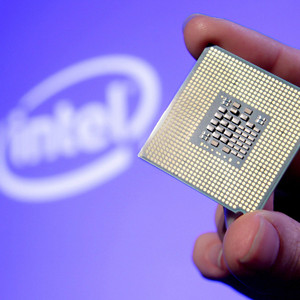
It involves the microchip maker Intel.
A few weeks ago, Trump announced that the US government had just become Intel's largest shareholder.
Hello and welcome to Planet Money.
I'm Jeff Guo.
And I'm Keith Romer.
Today on the show, we are going to tell you the story of one of the biggest experiments in industrial policy that the United States has ever tried.
The plan to bring back microchip manufacturing to the U.S.
And what happened when President Trump decided to put his unique stamp on this experiment by having the government join the economic party.
This message comes from Wealthfront.
Markets can be unpredictable, but your cash doesn't have to be.
With Wealthfront's cash account, you earn a competitive annual percentage yield on your cash from program banks higher than what traditional banks typically offer, with free instant withdrawals to eligible accounts.
Go to Wealthfront.com slash money.
Cash account offered by Wealthfront Brokerage LLC, member FINRA, SIPC, not a bank.
Funds are swept to program banks where they earn the variable APY.
This message comes from ServiceNow.
People should do the creative work they actually want to do, not boring, busy work.
Now, with AI agents built into the ServiceNow platform, you can automate millions of repetitive tasks in every corner of your business IT, HR and more.
So your people can focus on the work that they want to do.
That's putting AI agents to work for people.
It's your turn.
Get started at servicenow.com slash AI dash agents.
Last month, Trump announced that he had reached this unusual deal with the biggest microchip maker in America, Intel.
I said, I think you should pay us 10 percent of your company.
And they said yes.
And this announcement, well, yeah, it took a lot of people by surprise.
The US government was now going to own a big chunk of a major US company, which is not a thing the US usually does, especially when a Republican president is in charge.
Governments owning corporations, after all, that starts to sound a little bit like socialism.
But it's not like this deal completely came out of nowhere.
The federal government has been deeply involved with Intel for a while now.
The most recent chapter started back in 2022.
Republicans and Democrats in Congress had their eyes on what they saw as a very big problem.
The U.S. was no longer making the world's most advanced microchips.
You know, the ones powering our iPhones, the ones training our AI models.
Basically, all those chips were coming from Asia.
More than 90% of them came specifically from Taiwan.
So Congress looked at this geopolitically precarious situation and they said we got to get in there.
So they greenlit one of the most aggressive industrial policy experiments in U.S. history.
It is called the Chips Act.
The person in the government who was in charge of all this was this guy.
My name is Mike Schmidt.
What would you call yourself?
The chips guy?
The chips czar?
The director of the chips program office.
One of the main goals of the Chips Act was to get companies like Intel to build advanced microchip factories in the US, which is a tall order.
Mike has walked through some of these factories in Taiwan.
A single one of these facilities fabs they're called, you know factories is the size of 11 football fields, has more steel than two Empire State Buildings and the most complicated and sophisticated manufacturing process, with the most advanced science in the world and the most intricate supply chain leading into it.
And your job was to bring all of that back to the U.S.
All of that back to the U.S. to try to build that here.
The main tool that Mike had at his disposal was money.
Gobs and gobs and gobs of money.
$39 billion.
Mike's mission as the new director of the new chips program office was basically to dangle all of those billions of dollars in front of companies to try to get them to build their futuristic chip factories here in the United States.
But the US government, at least the federal government, almost never helps out individual businesses like this.
Like yes, it gives a lot of help to businesses generally, like by funding RD or by setting up tax breaks.
And in rare cases we've also helped out industries in a crisis, like when we bailed out the banks and the auto companies after 2008, or when we bailed out American farmers during Trump's first trade war with China.
But the CHIPS Act was different.
The plan here was to pick out some perfectly healthy companies and just give them so much taxpayer money.
When you were starting out, did you have haters?
Did we?
We had skeptics, you might say.
And there were legitimate reasons to be skeptical.
The big risk with industrial policy is that when the government starts to get more hands-on, it can really mess up the market.
Like when the government picks specific companies to be winners or losers.
Sometimes industrial policy leads to expensive mistakes.
Yeah.
At the time.
Mike says there was this one infamous example kind of hanging over everything they were doing.
It was this startup solar panel maker called Solyndra.
Back in 2009, the U.S.
Department of Energy had tried to help out Solyndra by cosigning some of its loans.
And then, a couple years later, Solyndra went bankrupt and the US government ended up on the hook for those loans.
The cost to taxpayers was over $500 million.
It became this big scandal for the Obama administration.
And Mike says at first when he was building up his team at the CHIPS office.
You'd often hear that word Solyndra, just echoing through the hallways.
Like, Solyndra risk was always in the air.
What if it's Solyndra again?
Yeah.
Did people actually talk about Solyndra?
Oh, yeah.
Absolutely.
People would say like oh, of course there's a Solyndra example or this, you know, it's just like okay, all right, we should ban it.
Like we should have a rule, no more Solyndra.
You got to turn around three times and spit.
So to try to prevent the government from making another you know Solyndra mistake, Mike came up with a two-part strategy.
First, he hired a bunch of experts, people who knew the microchip industry inside and out.
You know technical experts, people with PhDs.
And then, because you know they're going to be negotiating against these giant multinational companies, he hired these dealmaking experts, some legitimately powerful Wall Street types.
One of our deal team leads had run technology investment banking at Goldman Sachs.
This guy, he took Microsoft public.
Wait, what, really?
Yeah, he took, yeah, yeah.
You got him to come down into your dingy government.
Did you have windows in your offices?
Yeah, his office was on the first floor.
It had windows.
Mike hoped all of these experts would look out through their windows and then help save the government from getting into a bad deal.
So that's step one in his strategy.
The second part of Mike's strategy was intended to solve another problem that they were really worried about, which was what if we give the companies all this money and they don't end up building any microchip factories?
So Mike and his team, they weren't just going to hand out free money.
They were going to attach a lot of strings to that money to protect the government, to avoid another Solyndra situation.
For almost two years, Mike and his team flew around the world hammering out deals with all of these top microchip CEOs.
And sometimes those negotiations got pretty tense.
Did people ever yell at you?
Yeah.
I mean, a raised voice, an assertive tone.
Like, what would they say?
What would they say?
Yeah.
I don't know if I want to say.
OK, OK.
So what they were hypothetically allegedly arguing over were these legal contracts, these two or 300 page documents spelling out exactly what the companies had to do to get their money.
And the most important detail here is that the government was not going to hand them all the money up front.
Instead, it was going to dole it out step by step.
So the company had to hit these milestones.
Milestone number one might be the company finishing the skeleton of one of those 11-football field-sized factories.
So then the government would give them a half billion dollars.
Milestone two, the company starts installing equipment into the factory.
So now the government gives them another half billion dollars, and so on, and so on until they get all the money in the contract.
Which is a very different kind of deal than these companies were used to.
Usually, when countries around the world tried to entice these companies to say, build factories, there weren't as many terms and conditions.
I remember I was talking to one of the lawyers that we had been negotiating with for hours and hours in the conference room.
And I said, OK, so give it to me straight.
What's your contract like with Japan?
He's like, what do you mean?
We don't even have a contract with Japan.
They just give us the money.
And I was like, oh, well, that's just, you know what I mean?
But we're operating with our American contract.
We should say Japan did have some requirements for companies.
They were just a lot less detailed.
So by the end of 2024, Mike and his team had managed to sign deals with about two dozen different microchip companies, agreeing to give out over 33 billion over the next several years.
And in exchange, those companies collectively agreed to spend hundreds of billions of their own money building new factories in the US.
These deals included the top five advanced chip manufacturers in the world.
Intel, Samsung, TSMC, Micron, and SK Hynix.
All five of them were making major investments on our shores.
No other place in the world has more than two of those companies.
By January of this year, most of the chip's money was committed.
Most of the job was done.
So Mike threw a party for his team, not a metaphorical economic party, an actual, real-life party to thank them all.
Among the people that Mike wanted to thank was the team's chief investment officer, a guy called Todd.
Before government, Todd helped lead a giant private equity firm.
What kind of snacks do bureaucrats bring to a party?
Mike's like, OK, here's the funny thing about these particular snacks at this particular party.
Well, Todd, Todd just paid for it, you know.
I said Todd.
I said Todd, I'll put in like a little, and then you do the rest, because you can't get the government to pay for it, you know.
So.
OK, so after all the snacks were eaten, after the party was over, here's where things stood.
And here's also where the story gets back to Intel.
Because of all the big deals that Mike and his team had closed, the biggest one was with Intel.
Intel had promised to build cutting-edge new factories in Arizona and Ohio and Oregon and New Mexico.
And as those factories got up and running, the government would slowly dole out almost 8 billion worth of subsidies.
But now there is a new president in the White House, and that president, Donald Trump, basically took the government's agreement with Intel and tore it up.
He replaced it with a very different deal after the break.
What this new deal means for Intel and what it means for the future of making microchips in the US.
And for parties.
And for parties.
Now, President Trump has long said that revitalizing the US microchip industry is also one of his big priorities.
But he is not a big fan of the Chips Act.
He's not a fan of all the deals that the government made with all these microchip companies.
Yeah, Trump was determined to do the whole industrial policy thing his very own way.
Because with industrial policy there are a lot of different ways to accomplish the same goal, different tools you can use.
The CHIPS Act?
That was all about trying to get companies to build microchip factories by offering them carrots.
But Trump was like, instead of just using carrots, I'm also going to use sticks.
Like why give these companies billions of dollars to build factories here, when I could just threaten them?
Threaten them with tariffs or even threaten them with personal attacks.
In August, Trump went after Intel's new CEO, Lipu Tan.
Trump said Tan was quote highly conflicted, basically because Tan had investments in Chinese companies.
So Trump demanded that the CEO resign.
And that is extremely unusual for a US president to meddle in the affairs of a private company like this.
And then it got even more unusual.
A couple weeks ago, Trump announced that Intel had agreed to give the US government 10 of the company almost 10 billion worth of Intel stock.
Trump bragged that this deal came out of a personal meeting he had with Intel's CEO.
And I think it's a great deal.
He walked in wanting to keep his job, and he ended up giving us $10 billion for the United States.
So we picked up $10 billion.
With this new deal, Trump was in some ways going beyond carrots and sticks.
The US government was now kind of becoming Intel, or at least becoming Intel's largest shareholder.
Now, one way to interpret what happened is that the government just bullied a major American corporation into giving the government 10 billion worth of stock.
That's certainly how Trump is framing it.
You know, the dealmaker-in-chief strikes again.
But if you look closely at the economics here, there's a bit more to what happened than meets the eye.
Because Intel also got something out of this deal.
Was this a good deal for Intel?
I think it's debatably so, right?
I mean, like Intel didn't have to accept.
Dylan Patel is a semiconductor industry analyst.
He runs a firm called Semi Analysis.
And he says what you have to understand is that Intel is in trouble.
Over the past couple of years, its technology has fallen behind.
Its sales have plummeted.
By the end of 2025, it expects to have cut its workforce by 25%.
And all these struggles.
They were raising a lot of questions about the original deal that Intel had made with the government.
You know, the one that Mike Schmidt and his team had carefully negotiated under the CHIPS Act.
Intel had promised to build a bunch of next generation chip factories in the U.S.
And if it met all those milestones, they'd eventually get $8 billion.
It was like, well, this money is given to Intel, but not really, right?
Because they're never going to be able to make their commitments.
Intel had met some of its milestones and gotten some of that money, but there's still about 6 billion left on the table.
And Dylan says in his opinion there is no way Intel was going to finish all those factories it promised.
No way it was going to get the full $6 billion.
I think the Trump administration understood some level of this, right?
And so they went and said, what do we do now?
Well, let's let them still have the money and let's take equity.
Right.
It's kind of a way to give Intel the rest of their chipsacked money anyway.
Immediately, the government paid Intel nearly $6 billion.
And in return, Intel gave the government a stake in the company.
And what Intel is getting out of this new deal is more than just money.
Kind of has the weight of the entire U.S. government behind it now.
Right after the deal was announced, Intel stock went up.
Investors think that now that the US owns a chunk of Intel, maybe the government will help out Intel in other ways.
There is some precedent for the US government coming in and taking a stake in a major private company.
When General Motors and Chrysler went bankrupt during the global financial crisis, the government spent tens of billions of dollars bailing them out.
And in return, we got shares in those companies.
At one point, we owned about 60% of GM and 8% of Chrysler.
But only for a few years.
Then the government sold their stock.
It was always supposed to be temporary.
Yeah, this Intel deal is different.
For one.
Despite all its troubles, Intel does not seem to be a company that's about to go bankrupt any time in the near future.
So what Trump is doing here, it's I don't know, it's like a preemptive strike.
It's this very aggressive early intervention.
And also, it's worth mentioning, this intervention doesn't seem to have any end date.
We don't know how long the U.S. is going to be tangled up in intel.
OK, so what does this Intel deal tell us about Trump's approach to industrial policy?
Well, it seems to be part of a larger pattern.
Trump gets really close to companies, inserts himself into their affairs and inserts the government into new kinds of deals, like what he did when Japanese company Nippon Steel bought US.
Steel.
Yeah.
In that case, Trump negotiated what he called a golden share that gave him the power to veto decisions made by that company.
We did a whole episode on that.
He's also gotten the chip makers, NVIDIA and AMD, to share profits with the government to give the US a 15 percent kickback on some of their sales to China.
And so like these kinds of actions, how would you even describe what they are?
Well, I would describe it definitely as micromanaging by the government.
Anne Harrison is an economics professor at UC Berkeley.
She was also recently the dean of the business school there.
And we asked her to help us understand the big picture here.
Like, will Trump's style of industrial policy, you know, his kind of deal-making, will that work?
Anne has studied industrial policy around the world and all its different flavors.
And she says in general the more micromanaging the government gets with the economy, the bigger the risks, especially when you start talking about government ownership of companies.
There's no question.
So we have a lot of evidence at this point across countries within the US, in China, in Europe, that that giving government part ownership Essentially having these companies become partly state-owned leads to very bad economic outcomes.
Ann says a major problem with the Intel deal, a major problem with state ownership in general, is that you tend to end up insulating these companies from competition.
The state-owned companies, they're like, there's no way the government's going to let me fail.
They're too invested in me.
Anne says China is a great example of a country that has struggled in the past because its economy was dominated by these sluggish state-owned corporations.
But at the same time, Anne says China is also an example of a country that has been able to make heavy-handed industrial policies work.
These days, China still has a bunch of state-owned or partially state-owned companies, but many of them are not owned by the central government.
They're owned by individual regional governments and they are in fierce competition with each other.
So you know, imagine like the state of Texas has their own solar panel company and that company is competing with the solar companies from California and from Ohio.
I think that that is why China has managed to avoid many of the pitfalls of poorly designed industrial policy because they really believe in competition and they're not afraid to let firms go under.
That's really important.
Whether this Intel deal looks more like the good version of industrial policy or the bad version kind of depends on what happens next.
Now, we did reach out to Intel and the White House for comment.
Intel pointed us to a press release where the CEO said he was grateful for the confidence that the president is placing in Intel.
A White House official who spoke on condition of anonymity, told us that this is a good deal for the US.
It's important for national security.
Intel is the only US company that can compete with the most advanced microchip makers in the world.
And now with this deal, if Intel profits, the government profits too.
It's a win-win.
But there is also a chance this deal could be a lose-lose.
The next couple of years will be critical for Intel.
It's an open question whether it will be able to catch up to its rivals, get its next generation factories up and running.
And if Intel can't get its act together in time, there's a real risk that the company could fail.
And there's maybe a bigger risk here too for the semiconductor industry and for the US more generally.
Like if the government tries too hard to keep Intel alive, keeps pouring money into it, maybe even strong arms, other companies, to help Intel survive.
That is the risk whenever the government starts to get hands-on with the economy.
There's a chance it won't know when to let go.
In other words, the worry is now that maybe Intel has become too important to fail, that the US government is now too invested in it to let it fail.
If you'd like to learn more about industrial policy, we have a bunch of shows.
We've got one on Trump's golden share in US steel, another one on the US trying to create a battery future that relies less on China, and one on the evidence for how well industrial policy actually works.
You can find all those episodes and more in our show notes.
This episode was produced by Sam Yellow Horse Kessler.
It was edited by Jess Jang and fact-checked by Sierra Juarez.
Engineering by Jimmy Keeley with help from Robert Rodriguez.
Alex Goldmark is our executive producer.
Also, a very special thanks to Sam Marullo.
I'm Jeff Guo.
And I'm Keith Romer.
This is NPR.
Thanks for listening.