Get the unmissable news stories of the day.
This is the Beijing Hour.
Examining the events that impact and shape China and the rest of the world.
This is the Beijing Hour.
One hour of news and information brought to you every weekday.
Now here's your host.
Shane Bigham with you on this Wednesday, December 24th, 2025.
You're listening to the Beijing Hour, coming to you live from the Chinese capital.
On today's program, China's called on Japan to shoulder its responsibilities for nuclear safety.
China's formally become a party to a landmark UN agreement on conserving marine diversity.
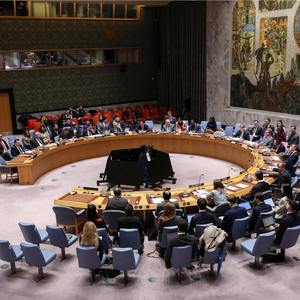
China, Russia and other members of the UN Security Council have criticized the US over its actions against Venezuela.
In business, stable growth numbers for China's state-owned enterprises.
In sports, China's top 10 sporting events for the year.
In culture and entertainment, China's box office revenue for the year has passed 50 billion yuan.
Now checking the day's top stories.
The Chinese Foreign Ministry has called on Japan to shoulder the responsibility of ensuring nuclear safety.
Spokesperson Lin Jian made the remarks after a senior Japanese official claimed that the country should possess nuclear weapons.
Lin said such remarks were not an isolated incident.
Chen Zeyuan has more on Beijing's response.
Prime Minister's attempt has gained protests, statements and petitions from local and civilian organizations in Japan.
And her attempt to revise the three non-nuclear principles has been against Japanese international legal obligations, as well as commitment to Cairo Declaration, post-temporal commission and Japanese own institutions.
And Japan has gradually loosened up its restrictions on collective self-defense, as well as expansion on military budget, as well as and develop medium and long-range offensive weapons.
And these attempts are Japanese temptation to re-militarizations, and China urged international community to pay attention to such attempt and stay alerted.
Let's take a listen to what spokesperson Lin Zhen has to say.
This is a constant attempt to test the bottom line of the international community, exposing the consistent erroneous claims of Prime Minister Takeuchi and Japanese right-wing forces and their ambition to persistently promote remilitarization, sending out an extremely dangerous signal.
Such moves challenge the post-war international order, threaten regional peace and stability and are not in the interest of the Japanese people.
China will join hands with all peace-loving countries to jointly address this issue and resolutely prevent the resurgence of Japanese militarism.
Well, Lin Zhen also said that China has noticed the concentration of radioactive substance leak into the water is relatively high.
Has impacted local residents.
And in response to that, Lin Jian said that China urged the Japanese side to learn the lesson from Fukushima accidents and take the nuclear safety responsibility.
And Lin Jian also urged the international community to supervise and monitor such situations.
That was Chen Zeyuan reporting.
The Japanese public continues to criticize Prime Minister Sanae Takeuchi's remarks on China's Taiwan region.
Citizens have held a rally in Tokyo demanding that Takeuchi retract her remarks.
I think she should clearly retract her wrong remarks.
Now they seem to want to vaguely mention it.
Takeichi does not have the qualifications of a politician at all.
Japan has never truly reflected on or apologized for the aggression of Japanese militarism.
In this context, Takaichi has now once again shown an unrepentant attitude towards the Chinese people and attempted to provoke another war, which is absolutely unacceptable.
Everything done by the Takaichi government completely deviates from the true thoughts of the Japanese people.
Where will these funds come from?
It is said that by issuing treasury bonds and then raising the consumption tax and income tax, But won't this completely destroy people's lives?
More and more people can no longer afford even festive items, let alone rice.
In such a situation.
What they do in high positions is completely opposite to the lives of ordinary people.
So the Takashi government should have been overthrown, and it is only natural to be overthrown.
A civil group in Japan, mainly made up of atomic bomb survivors, has reportedly submitted a petition to the foreign ministry.
They urged the government to reaffirm the commitment to the three non-nuclear principles.
The petition is in response to comments by a senior security official that Japan should possess nuclear weapons.
I want to tell Prime Minister Takeuchi the three non-nuclear principles are Japan's fundamental national policy.
She must make a clear statement that Japan will firmly uphold these principles.
International experts have also warned of the political and economic ramifications of Takeuchi's remarks.
The erroneous remarks made by the Japanese Prime Minister run completely counter to the spirit of the post-war international order, the spirit of the Universal Declaration of Human Rights and the spirit of the UN Charter.
The Takahichi government seeks to exploit the Japanese people to serve its sordid aims, push forward a new round of militarization, exacerbate tensions and create conflicts, including conflicts of a military nature.
The remarks by Japanese officials suggesting that Japan should possess nuclear weapons are utterly absurd.
The official responsible for making such statements has already been called on to resign within Japan.
A country that once suffered atomic bombings now claims that it needs nuclear weapons.
I believe the first to suffer would be the Japanese people.
Economic decline is one of the key factors, but even more important are the security implications.
Such remarks from Japan are truly alarming.
Takeichi triggered tensions between China and Japan in November when she said in Parliament that a military conflict over Taiwan could be a survival-threatening situation for Japan, warranting the exercise of collective self-defense rights.
Beijing has slammed the US for providing a stage for Taiwan's separatist forces at the Pax Silica summit in Washington DC.
The mainland authorities also criticized the Democratic Progressive Party authorities in Taiwan for selling out the island's competitive industries.
Zhang Yibing has more.
The spokesperson of the Taiwan Affairs Office of the State Council just answered several questions related with the external interference over China's Taiwan region.
The spokesperson, Peng Xingyun, went directly to criticize Japanese LDP lawmakers' visits to China's Taiwan region in recent days, saying this follows the one-China principle, the four political documents between China and Japan and Japan's own commitments made to China.
When asked about the Democratic Progressive Party authorities in Taiwan sending representatives to attend the meeting held in the United States and claiming Taiwan can play the key role in a so-called global semiconductor democratic supply chain.
The spokesperson criticized the US to offer the stage for the separatists in Taiwan and blamed the DPP authorities in stalling the interests of the Taiwan people.
We oppose the United States providing a stage for Taiwan independence separatists.
In pursuit of independence, Lai Ching-te and the Democratic Progressive Party authorities have deliberately stirred up ideological confrontation and promoted the false narrative of democracy versus authoritarianism, a move that finds little public support.
The so-called democratic supply chain in essence reflects Lai Ching-tung and the Democratic Progressive Party authorities' disregard for economic and market principles and their bottomless pandering to external forces.
By selling out Taiwan's competitive industries, sacrificing its development prospects and destroying the livelihoods of Taiwan's people.
They seek to trade these losses for external backing for their separatist agenda.
Such words and actions will only escalate cross-strait tensions, increase the burden on Taiwan's population and undermine the island's economic lifeline and future developments.
The spokesperson also stressed the Chinese mainland will, as always, actively support the cross-strait industrial cooperation and help the Taiwan businesses and enterprises to achieve better development in the mainland as the cross-strait business sees the renewed growth in the year 2025.
That was Zhang Yibing reporting.
Coming up, China ratifies a UN agreement on conserving marine biodiversity.
Discover the realities and responses to our changing climate with Climate Watch.
Uncover critical issues such as the Messiah Murrah's disrupted wildebeest migration and the drop in the Panama Canal's water levels.
Delve into solutions for a sustainable future.
Tune in to Climate Watch on your favorite podcast platform.
Become more eco-conscious and take action to protect our planet.
Ten minutes past the hour.
China has formally become a part of a landmark UN agreement on conserving marine biodiversity.
The Treaty on Marine Biodiversity Beyond National Jurisdiction, known as the BBNJ Agreement, is an important international treaty under the UN framework.
It aims to conserve and sustainably use Marine Biological Diversity, focusing on deep sea genetic resources, marine protected areas and environmental impact assessments and capacity building.
It establishes legal norms for deep sea and open sea activities of all countries, profoundly influencing the international maritime order.
China participated in the entire negotiation process of the agreement, which enters into force on January 17th of next year.
With more, Zhou Feng spoke with Shi Yibing, a professor of Zhejiang University.
He's also a member and advisor of the Chinese delegation and participated in the entire process of the framework's negotiation.
Professor Shi.
You worked as a member and advisor of the Chinese delegation who participated in the entire process of the BBNJ intergovernmental negotiations.
What kind of leading role has China played in key issues during the negotiation process?
China has played a very important role, a very constructive role, in helping most states reach a consensus.
For example, there was a debate over the common heritage of humankind principle and freedom of high seas principle.
That means, regarding the marine genetic resources, whether any states can enjoy the benefits solely or the benefits can be shared between all states globally.
During this course, China believed that it's important to maintain the interest of developing countries.
So China supported the positions of G77 and China and promoted the negotiation towards this direction.
So finally, both the common heritage of humankind principle and freedom of high-speed principle were written in Article 7 of the BBNJ Agreement.
And then, following the adoption of the BBNJ Agreement, what further contributions has China made in the follow-up work?
As we know, although the BBNJ Agreement has reached the threshold of being entered into force, only very few major maritime powers have ratified the treaty, for example France and China, also as the two main states.
However, some major maritime powers, such as the United States of America.
They have not ratified this treaty.
That means China has contributed to this agreement and China will play an important role in the future implementation.
That was Professor Shui-Yu Bing at Zhejiang University, offering his insights on the conservation and sustainable use of marine biological diversity of areas beyond national jurisdiction.
The Guangdong, Hong Kong, Macau Greater Bay Area generates about one-ninth of the country's total economic output, although it only covers less than 1 of China's land area.
Innovation lies at the center of the development strategy of the area, which spans Hong Kong, Macau and nine major cities in Guangdong province.
Chinese President Xi Jinping has called on the southern region to become an international sci-tech innovation center and a key driver of emerging industries.
The country is accelerating the push, turning closer cross-border cooperation into real commercial results.
Gastry Manikim has more.
A robotic gripper developed by researchers in Hong Kong, capable of handling fragile objects like eggs and balloons, has been rapidly commercialized across the border in Shenzhen, China's technology manufacturing hub.
Regional authorities say a commercialization agreement is obtained for high-value patent in the Greater Bay Area roughly every two hours, often moving directly into industrial supply chains.
Cross-border research collaboration is also accelerating.
Hong Kong.
Scientists can now commute to research parks in Shenzhen in about 30 minutes, while research equipment can clear customs and reach laboratories within 48 hours.
And there has been a 40 increase in the number of joint research projects linking Guangdong, Hong Kong and Macau.
The pace of innovation is reflected in the numbers.
The region now averages more than 400 authorized invention patents every day.
The key to building the Greater Bay Area well lies in innovation.
That message dates back to 2012, following the 18th National Congress of the Communist Party of China, when President Xi Jinping made Guangdong his first visit outside Beijing, calling for Guangdong to work closely with Hong Kong and Macau to build a world-class city cluster.
Since then, innovation has remained a consistent focus.
During his most recent visit to Guangdong, President Xi again emphasized deeper cooperation in science and technology, stronger infrastructure connectivity and steady progress towards a world-class Bay Area.
President Xi's requirements for collaborative innovation in the Greater Bay Area have been consistent over time.
Unlike beijing or shanghai, this innovation center was designed as a joint endeavor among three regions.
By leveraging the one country, two systems framework and aligning with global technological trends, the greater bay area has created a distinctive model of cross-border innovation.
Policies have eased the movement of people capital, data and research resources, helping to create a highly integrated innovation network.
The Greater Bay Area now hosts two national laboratories, 45 national key laboratories and more than 30 joint Guangdong-Hong Kong-Macao labs.
It now forms one of China's most concentrated research ecosystems.
That foundation is producing results.
In Guangdong, construction is underway on a major deep-sea research facility.
Hong Kong teams are developing a lunar surface robot, while Macau's science satellite No.
1 has completed more than 10,000 orbits, delivering high-precision data.
Just as important is how quickly research turns into products.
By combining mainland manufacturing with Hong Kong and Macau's financial and professional services, the Greater Bay Area is speeding up commercialization.
In Shenzhen's Bao'an District, authorities have opened more than 500 real-world testing sites, from public roads for autonomous driving to airspace for low-altitude drones.
Companies say these real-world trials cut development time and lower cost.
Our cutting-edge technologies can now connect with market demand much more quickly, reducing management costs by about 40.
These real-world application scenarios also feed back into research and help to draft key technological breakthroughs.
Emerging industries are now scaling rapidly.
The region's core artificial intelligence sector alone is valued at more than US$30 billion.
At the recent Central Economic Work Conference, Chinese leaders reaffirmed support for building the Greater Bay Area into a world-class innovation hub.
Future priorities include low-altitude aviation biomanufacturing, advanced electronics and intelligent equipment manufacturing.
As we go forward, We will continue removing barriers to innovation, strengthening rule alignment and institutional reform, and deepening cooperation between Guangdong, Hong Kong and Macau.
The goal is to make the Greater Bay Area a major source of original innovation and a leading destination for turning research into industry.
The Greater Bay Area is one of China's most ambitious experiments in combining research, industry and cross-border integration.
And it's an effort being closely watched by global technology and investment communities.
That was Gasturi Manikam reporting.
Coming up.
China, Russia and others on the UN Security Council criticize Washington's actions against Venezuela.
I love you.
I love you.
I love you.
This might be the easiest way to say I love you, since there are so many other romantic expressions.
No matter if you're a rookie or a sophisticated learner, there is definitely something that will interest you.
Check out Takeaway Chinese, a world that starts with 你好.
We're at 19 past the hour.
Members of the U.N.
Security Council, including China and Russia, have criticized the US for escalating military tensions with Venezuela.
The US military has continued to strike alleged drug trafficking vessels in the eastern Pacific Ocean and the Caribbean.
It's intercepted what it calls sanctioned oil tankers in recent days.
Mitch McCann has more from U.N. headquarters in New York.
Venezuela called for a meeting of the UN Security Council, citing what it said were escalating tensions resulting from US aggression.
The Assistant Secretary General for the Middle East, Asia and the Pacific, Mohamed Khali Kiari, said the people of Venezuela now find themselves in an increasingly difficult position.
Venezuela's economy was already extremely fragile, with soaring inflation, currency instability and widespread income erosion.
Millions are unable to meet basic needs.
Recent air and maritime restrictions, along with reduced exports, risk further constraining the government's fiscal ability to deliver basic public services.
Washington claims Venezuela's president Nicolas Maduro is illegitimate and accuses him of leading a large drug cartel responsible for transporting drugs into the US.
In recent months, the US has increased its military presence in the Southern Caribbean and Trump recently posted online that Venezuela is completely surrounded by the largest armada ever assembled in the history of South America.
The US military has been striking small vessels it says are carrying narcotics and it's reported the US has hit more than two dozen vessels since September, killing 105 people.
It's also intercepted oil tankers after President Trump announced a blockade of sanctioned ships coming from and heading to Venezuela.
China's UN ambassador said China supports Venezuela's position of defending its legitimate rights and interests.
The U.S. actions seriously infringe upon other countries.
Sovereignty, security and the legitimate rights and interests, gravely violate the UN Charter and international law and threaten peace and security in Latin America and the Caribbean.
More and more countries in the region and beyond have voiced grave concerns about, and the strong condemnation of, the US actions.
Russia's ambassador echoed comments of his Chinese counterpart, accusing the US of raising tensions in the region and threatening international peace and security.
Colleagues, the illegal US blockade off the coast of Venezuela is the most clear and absolutely real act of aggression, and the responsibility of Washington is also evident for the constant catastrophic consequences of such cowboy-like conduct.
U.S.
Ambassador Mike Waltz said Majuro is a fugitive from American justice and stole an election.
Venezuela's ambassador to the UN denied the American allegations, and the country has accused Washington of wanting to overthrow Maduro and seize its oil reserves.
This is the greatest extortion known in our history.
A gigantic crime of aggression and progress beyond all rational parameters, all legal logic, all historical precedent.
Despite the allegations leveled at the US during Tuesday's meeting, the US has shown no signs of backing down.
In fact, hours before the meeting, the military said it struck another vessel on Monday, allegedly smuggling drugs in the eastern Pacific, killing one person.
That was Mitch McCann reporting.
Venezuela's National Assembly has approved a law criminalizing actions that threaten freedom of navigation and maritime trade, amid tensions with Washington following the seizure of oil tankers by the US in Caribbean waters.
National Assembly President, Jorge Rodriguez, described the measure as the law of dignity against pirates and privateers in the Caribbean.
We want to stand before the people and sign the letter that we were sent to the constitutional president of the Bolivian Republic of Venezuela today, on Christmas Eve, December 23rd, when we have passed a dignified law, a law for the defense and protection of our homeland, the law on the protection of freedom of navigation and trade against piracy, blockades and other illegal international acts against the people of Venezuela.
The legislation aims to protect the rights of national or foreign legal entities that conduct commercial operations with Venezuela against acts contrary to freedom of navigation and international trade.
The approval comes after the US seized an oil tanker off the coast of Venezuela on Saturday, the second such incident in less than two weeks.
The US continues to chase a sanctioned oil tanker that the Trump administration describes as part of a dark fleet that Venezuela is using to evade US sanctions.
Tensions continue in the Caribbean as the US tightens its blockade on Venezuela's oil sector, but domestic fuel supply and prices in Venezuela have remained steady despite recent developments.
Ma Tianjing reports from Caracas.
I visited several gas stations in central Caracas and found that the fuel supply and prices remain stable.
Residents are refueling as usual and have expressed confidence in the country's ability to maintain domestic supply.
While the interception of oil tankers has drawn international attention, its short-term impact has yet to reach Venezuela's domestic market.
Gas stations continue operating normally, fuel supply remains steady, prices remain unchanged and there are no signs of panic buying.
We have grown accustomed to this kind of sanctions from other countries, in this case the United States.
We are Venezuelans, we always find a way to move forward.
Personally, I don't feel afraid.
Even under pressure, we have managed to overcome all difficulties.
According to drivers and residents, there have been no noticeable changes in prices or fuel supply.
The price is still the same.
I just paid 7,160 bolivares for 50 liters.
It hasn't changed from yesterday to today.
They want to control the market, and since they can't, they try to do it by other means.
All of this is provocative.
We really hope it does not escalate further.
Beyond conditions at gas stations, some citizens voiced opposition to the interception of the tankers, arguing that the oil involved is a national resource that belongs to Venezuela.
The U.S. is creating political and social problems.
This should not be happening because oil is ours.
It is our national resource.
No, I don't think this is right.
Intercepting oil tankers and taking everything is wrong.
Analysts say such actions go beyond commercial considerations and reflect broader political pressure targeting a strategic pillar of Venezuela's economy the oil sector.
What we are seeing reveals something significant a deep financial and economic crisis inside the United States.
This decision reflects a dangerous level of desperation.
Venezuela, however, has partners, allies, agreements and experience.
It has faced pressure for more than a decade and has managed to withstand it before.
Washington says it measures target vessels it has unilaterally sanctioned.
However, critics warn the policy creates broader risks, even for non-sanctioned ships, given the danger of military action and its potential impact on commercial supply vessels.
That was Ma Tianjing reporting.
Israeli Defense Minister, Israel Katz, says the government has no intention of establishing settlements in Gaza.
It contradicts his earlier remarks that the military will never leave all of Gaza and plans to establish military units.
Katz said in the latter statement that the reference to military units was made in a security context only.
The Syrian army and the Syrian Democratic Forces have agreed to halt attacks in Aleppo.
It comes after clashes left civilians dead and triggered more displacements in parts of the northern city.
Haider Kazwini has more from Damascus.
The situation in Aleppo is cautiously calm after the Syrian military issued an order to stop targeting SDF positions.
That move was quickly matched by the Kurdish-led fighters, and civilians have now reportedly stopped fleeing from areas around the front lines.
It comes after clashes that left at least two people dead and several injured.
Those clashes erupted on Monday during a visit by Turkish foreign minister Hakan Fidan to Damascus.
Turkey views most of the Kurdish units within the SDF as belonging to a terrorist organization.
Fidan claimed that SDF had no intention of honoring a commitment to integrate itself into the Syrian army by an end-of-year deadline.
Speaking on Monday, Fidan's Syrian counterpart expressed similar sentiments.
The agreement signed in March expressed Syria's willingness to expedite the merger and unite the Syrian territories through discussion and mutual understanding of each other's concerns.
But so far we've not seen any serious desire by the SDF to implement that agreement.
Under the March agreement, Kurdish-led forces committed to merge with the Syrian new army.
But details of how that would happen remained unresolved and momentum has slowed.
The SDF controls a swath of northeast Syria and one enclave in northern city of Aleppo, where the latest clashes erupted.
Merging with the army would be a major step towards stabilizing the country.
Failing to do so could mean more outbreaks of violence.
That was Haidar Kaswini reporting.
29 past now.
Beijing down to minus 6.
Wednesday evening, sunny and plus 1 for Thursday.
Nanchang's getting a light rainfall in 5 this evening, then sunny in 11.
Elsewhere in Asia, Islamabad's overcast and down to 6, then a high of 17 on Thursday.
Vientiane will be cloudy overnight and tomorrow, a low of 19, a high of 28.
Phnom Penh will be overcast and down to 23 degrees and a light rainfall in 32.
In Africa, Nairobi's getting clouds and 26 degrees on Thursday.
Kampala will see a light rain Wednesday nights and then through tomorrow, with a low of 18 and a high of 27.
It's time for a short break.
So far this hour, China's called on Japan to shoulder its responsibilities for nuclear safety.
China's formally become a party to a landmark UN agreement on conserving marine diversity.
China, Russia and other members of the UN Security Council have criticized the US over its actions against Venezuela.
Shane Begum with you.
Stay with us here on the Beijing Hour.
Shh, listen up.
Can you hear the heartbeat of our world?
It's vibrant and pulsating with the essence of life itself.
From the stem of trees to the gurgle of rivers.
From the silent strength of mountains to the icy whispers of glaciers.
Even the solid ground beneath our feet.
Right there, in the midst of all, beats the heart of humanity.
What if those other heartbeats were to stop?
Would ours keep on ticking?
Ever wondered what's actually going on in Africa through the perspective of an African?
How are things really going between China and Africa?
What's the narrative of this relationship?
Well, get a perspective with China Africa Talk.
Hear from African diplomats, entrepreneurs, academics, Chinese natives and more.
Get on our wavelength every week to find out what's real with China Africa Talk.
Find us on your favorite podcast.
We'll see you there.
Examining the events that impact and shape China and the rest of the world.
This is the Beijing Hour, one hour of news and information brought to you every weekday.
Now here's your host.
I'm Shane Bigum with you on this Wednesday.
Still to come.
In business, stable growth numbers for China's state-owned enterprises.
In sports, China's top 10 sporting events of the year.
In culture and entertainment, China's box office revenue for the year has passed 50 billion yuan.
To contact us, you can email radio at cgtn.com or follow our ex-account at cgtnradio.
First check of the day's headlines and here's Tian Liu.
Thank you, Shane.
China has ratified a UN agreement on conserving marine diversity.
The treaty aims to conserve and sustainably use biological diversity, focusing on deep sea genetic resources, marine protected areas, environmental impact assessments and capacity building.
It has further established legal norms for deep sea and open sea activities of all countries.
The agreement was reached after 19 years of negotiations involving more than 190 countries, and will take effect next month.
China participated in the entire negotiation process and signed the agreement on the first day it opened for signature.
The Chinese foreign ministry says Beijing is ready to work together with other parties to support implementation of the agreement.
A Chinese envoy has urged the United States to immediately stop its campaign against Venezuela under the pretext of combating drug trafficking.
Deputy UN Ambassador Sun Lei says the United States has continued to increase its military deployment in the waters of the Caribbean off the coast of Venezuela, escalating sanctions, blockades and military threats against the country.
We call on the United States to heed the just call of the international community, immediately halt relevant actions and avoid further escalation of tensions.
We urge the United States to uphold the navigation safety of regional countries and the freedom and rights they enjoy under international law, to conduct normal law enforcement and judicial cooperation under bilateral and multilateral legal frameworks, to lift illicit and illateral sanctions and to do more to promote peace, stability and development in Latin America and the Caribbean.
The ambassador says the US actions and rhetoric have led to continued tensions in the region, raising serious concerns among regional countries and the international community.
Sun also says more and more countries in the region and beyond have voiced grave concerns and strong condemnations of the US actions.
He added that China opposes unilateralism and bullying, supports countries in safeguarding sovereignty and dignity and rejects violations of the UN.
Charter and the use or threat of force.
The UN Security Council has adopted a resolution to renew the authorization of the African Union Support and Stabilization Mission in Somalia for another year, until December 31 2026.
Resolution 2809, adopted unanimously by the 15-member Council, also reaffirms tasks as set out in Resolution 2767 of December 2024.
Chinese Deputy UN Ambassador Sun Lei has expressed China's concern over the mission's finances.
At present, the funding gap facing African Union mission in Somalia is unsustainable.
And the liquidity shortfall confronting the Union of Nations, Societal Operations Services raised our concern.
China calls on international partners, particularly traditional donors, to honour their funding commitments and to move expeditiously to alleviate African Union mission in Somalia urgent financial strain.
Resolution 2809 authorises the member states of the African Union to continue to deploy over 11800 uniformed personnel, including 680 police personnel, during the authorised period.
The resolution emphasises that additional support is necessary to enable Somalia to bolster its fight against al-Shabaab and improve peace and security in the country and the region.
It urges traditional and new donors to support the mission by providing the necessary funding to enable the full implementation of its mandate.
Greenland Prime Minister Jens-Frederik Nielsen says decisions about the territory's future will be made on the island.
He made the comments after U.S.
President Donald Trump reasserted that the U.S. needs Greenland for its national security.
Trump said he has appointed a special envoy to the island to lead the charge.
Nielsen said he is sad about Trump's comments and thanked the people of Greenland for facing the situation with calm and dignity.
We are aware that the location of our country plays an important role for the United States.
We also know that our country is of interest internationally among allies.
Therefore, we must uphold a respectful attitude.
Let's discuss with respect.
Let's stop talking about taking over another country and controlling its people.
This kind of speech neither respects other countries nor aligns with our values.
Leaders of Denmark and Greenland have repeatedly insisted that the island is not for sale and that it will decide its own future.
Danish Foreign Minister Lars-Lokke Rasmussen said he is deeply angered by the US move, warning that Washington must respect Denmark's sovereignty.
The European Union also expressed solidarity with Denmark.
French President Emmanuel Macron said Greenland belongs to its people.
An opinion poll has shown that most of the people in Greenland want to become independent from Denmark, but do not wish to become part of the US.
Thank you very much.
That was Tianli with Headlines.
Coming up in business, stable growth numbers for China's state-owned enterprises.
Thank you, Shane.
Let's take a quick look at the Chinese mainland markets, where equities edged higher on Wednesday.
The Shanghai composite rose 0.5%, while the Shenzhen component gained 0.8%.
Elsewhere in China, Hong Kong's Hang Seng Index was up more than 0.1%, and in Japan, the Nikkei dropped 0.1%.
China's centrally administered state-owned enterprises have maintained stable growth during the first 11 months of 2025.
Official data show central enterprises generated 95 trillion yuan, or about 13 trillion US dollars, in added value, up 14 on a yearly basis.
Their total assets grew by 7% and profits rose 8%.
They have contributed over 10 trillion yuan in taxes and fees.
The central SOE's investment in strategic emerging industries is prominent and saw a 20 annual increase.
Last year, revenue from the sector surpassed 11 trillion yuan.
Officials attribute the achievements to stronger innovation capacity, rapid growth in emerging industries and a sharp increase in scientific and technical talent.
As China puts an emphasis on new quality productive forces high-end, intelligent and green development are becoming the distinct features of central enterprises.
The digital transformation initiative has created over 1,800 smart factories.
The firms have also significantly reduced energy consumption and carbon dioxide emissions in their production.
For more insight.
Li Donglin spoke with Liu Baochen, dean of the Center for International Business Ethics at the University of International Business and Economics.
Well, the Chinese SOEs have poured over one trillion yuan, or about 142 billion US dollars, into RD annually three years in a row with major breakthroughs.
But the central government has still, as we just heard, repeatedly stressed the need for SOEs to strengthen their independent innovation capacity.
Do you think that means there's still room for improvement in that regard?
Why is this push for self-reliance critical at this stage of China's economic development?
The answer is yes, because spending more is necessary to beef up their research and development scheme, particularly in the area of national security, and also to address those choke points under the sanction and restriction by some of the Western countries.
But more importantly, it is really the effectiveness and efficiency of such a sort of spending that is measured by the outcome of economic result from the test beds into commercialization and deliver consumer goods and industrial goods.
There's quite a level of distance that they need to cover.
And Chinese SOEs, they are really playing a dominant role on the global stage also.
So for example, they take more than one quarter of the Fortune 500 biggest companies in the world.
So the level of such spending is really having quite a lot more impact on the global landscape of competition.
And right now, for the SOEs to further improve its effectiveness of the research and development spending will require a careful scrutiny of what those target areas that they need to focus on, instead of spreading too thin of such, you know, the apparently a large amount of the expenditure.
And also they need to carefully, you know, engage with different partners, both at home and abroad, as how to streamline the security of supply chain so that they can really move together.
And third is that they need to look at more into the new fora of technological breakthroughs through original innovation, which requires a lot more long-term patient capital.
That's something they do not really need to have a quick fix in terms of such sort of delivery, because they are really playing the pillar role in engaging China's innovation drive for the modernization, particularly if we look at the next five-year plan, that is, as a doorstep.
So there is high expectation that they continue to be the leaders, drivers and also the shippers of the Chinese innovation ecosystem.
That was Professor Liu Baocheng from the University of International Business and Economics.
China's retail landscape this year shows a clear shift toward online shopping and sustainable goods, with strong consumer response to policy stimulus and experiential retail.
Online sales grew over 9% in the first 11 months, more than double total retail growth.
The national trading program surpassed 25 trillion yuan, or about US350 billion in sales, reaching 360 million people, and has expanded to more products.
Low-carbon goods are mainstreaming, especially in appliances and autos.
New energy vehicle penetration hit nearly 60%, up from 41% early this year.
Experiential.
New first stores also drew crowds with Beijing adding over 960 from January to November, already exceeding last year's total.
Global brands are targeting the rising spending power of China's county-level markets, with Stamps Club, Starbucks and Hilton expanding beyond first-tier cities.
Sam's Club has already opened three locations in county-level cities in Jiangsu and Fujian provinces.
Driven by higher incomes and better infrastructure.
Over 60 Chinese counties now have GDPs exceeding 100 billion yuan, or about 143 billion US dollars.
In the first three quarters of the year, county-level markets contributed 39 of China's total retail sales, marking them a major growth engine, while demand for quality goods and premium experiences has also risen.
For more on the latest policies to boost consumption.
Vivian Nunez spoke with Wang Rui, Associate Professor of Marketing at Peking University's Guanghua School of Management.
When we compare online and offline shopping, the consumer experience is obviously totally different.
How can brands successfully appeal to both those markets at the same time?
You know, we have seen that obviously online provide very convenience.
So that is why the e-commerce marketing in China grow very, very fast.
But offline also address different functions such as service.
So basically, you know, if an international brand wants to address the cities, no matter first tier cities or down tier cities in small counties, they need to bring up the two channels together to really address, like you know from online, to provide more like a brand awareness, to bring more convenience, to make the consumers to buy very easily.
But offline you can actually, to you know, adjust the service and also the other kind of functions that are needed by the local consumers.
So we actually have see some international brands they are doing that very well such as, you know, a Uniqlo from Japan international apparel brand.
They actually have doing very well in, you know, not only in online market, but also in the offline market as well.
Let's talk about brands that are moving down tier and appealing to customers who reside in china's counties rather than just first tier cities.
What adjustments are needed to their products and their marketing campaigns?
Of course, as you can see from, like the previous reporters, in the mega cities or first tier cities in china, you see the digitalized and internationalization and modernization of the setup of the city logistics And as well as for the, you know, consumers.
They are more mature, they are more like, you know, internationalized per se.
But when you go to the down in a small cities, obviously you facing for us.
It's like a different group of consumers.
They are more local.
They speak local dialogue.
Obviously, we have the same brand awareness for these international brands, but you need to like bring more, like you know, down to earth language in terms of their marketing campaign.
So because you know, when you buy some products, and not just from the advertising, including The channels also in Langfang, let's say, obviously will be different.
Like the stores, and the mom's and pom's stores are very different from that in Beijing, which is very close by.
So I think the international brands need to be more in the learning mode when they want to go to the you know down-tier, you know market.
But this is a good market because we have seen, according to McDonald's, around like 66 in terms of the growth out of the consumption is coming from these markets, because the first year market is already mature enough.
And that was Wang Rui, Associate Professor of Marketing at Peking University's Guanghua School of Management.
All right, thank you very much.
That was Tianyu with Business.
You're listening to the Beijing Hour and just ahead in sports, China's top 10 sporting events for the year.
Sideline Story brings you all things sports related.
The hottest topics, latest events, juiciest stories, all with a very personal take.
Subscribe to Sideline Story podcast for heated sports discussions covering events that are happening in China and around the world.
48 past now and turning to sports.
Here's Yang Guang.
Thank you, Shane.
It's been an exciting year for Chinese sports.
And as we near the end of the year, let's take a moment to reflect on the top domestic sports stories that have made an impact.
Jiang Tao has more.
CCTV Sports has unveiled its list of the top 10 domestic sports highlights of the year.
Top in the list is the successful hosting of of the 15th National Games in the Guangdong, Hong Kong Macau, Greater Bay Area.
This marks the first time these three regions have come together to jointly organize the national multi-sport event, showcasing the seamless integration of sports and regional collaboration.
Other major stories include the successful hosting of the 9th Winter Asian Games and the 12th World Games.
These international events spotlighted winter sports and non-Olympic discipline, providing athletes from around the world with a stage to display their unique talents.
Also featured is the growing popularity of the Jiangsu Super League, with failing local derby matches sparkling a nationwide football craze.
In addition, athletes like Yang Hansen, joining the NBA's Portland Trailblazers, and Zhao Xintong, winning the snooker world championship, have made headlines with their remarkable achievements.
For the Beijing Hour, this is Jiang Tao.
The Olympic torch relay for the Milano Cortina 2026 Winter Olympics has made its way to rainy Naples, marking its last stop before Christmas.
Earlier, the flame made its way through the ruins of Pompeii and travelled across the Campania region, hitting places like El Clano and Portici.
The relay wrapped up with a big celebration in Naples' iconic Piazza del Plebiscito, where Italian football legend Fabio Cannavaro carried a torch.
The relay will take a break for Christmas and pick back up in Latina on Friday.
From then, it will head to Milan's San Siro Stadium for the opening ceremony on February 6th.
In the NBA, the Oklahoma City Thunder suffered a second straight loss to the San Antonio Spurs, falling 130-110 on Tuesday.
Just 10 days ago, the Thunder had been riding a 16-game winning streak with only one loss.
Kelton Johnson led the Spurs with 25 points off the bench and Stephen Castle added 24.
Despite OKC leading by one at halftime, the Spurs surged ahead in the third quarter, taking an eight-point lead and extending it to 12 in the fourth with a Victor Wimbanyama three-pointer and 9-0 run.
A three-pointer from Johnson with three minutes remaining.
Sealed win for San Antonio, who are now on a seven-game winning streak, their longest since the 2018-19 season.
Shea Gilchrist Alexander led Thunder with 33 points and eight assists.
However, OKC has now lost three of its last five games.
Turning to the CBA, the Guangdong Southern Tigers pulled away in the second half to defeat Guangzhou Lun Lions 93-85 on the road, keeping their perfect start to the season with five straight wins.
Hu Mingxuan remained sidelined with a leg injury, but Guangdong came out strong with Xu Jie's three-pointer, putting them up 6-2.
Guangzhou briefly took the lead, as Liu Yancheng hit back-to-back threes, but Guangdong regained control in the third quarter.
In the fourth, the 11-time champions pushed their lead to double digits and sealed win.
In football, Senegal opened their 2025 Africa Cup of Nations campaign with a dominant 3-0 victory over Botswana.
In Group D, Bayern Munich loanee Niklas Jagsen started in the breeze, adding a late goal to sealed win.
After I missed that one, I just tried to forget and move to the next chance, because I know I will have the next one.
And then I worked harder and then I got a few more.
So I'm very happy that I scored two, but it's never enough.
So I just forget this game and try to focus on the next one.
Senegal took control from the outset, with Jackson opening the scoring in the 40th minute after converting a low cross from his teammates.
In the 58th minute, Jackson struck again finishing from close range following a slick pass.
Sheriff Ndiaye wrapped up the scoring in the 90th minute.
With the win, Senegal leads Group D on goal difference.
Thank you very much.
That's Yong Guang with sports.
Just ahead in culture and entertainment.
China's box office revenue for the year has passed 50 billion yuan.
West, people in China are chasing their dreams and leaving their mark.
Want to know how they beat the odds and made a difference?
Footprints brings you the true life stories of their journeys.
53 past the hour.
In culture and entertainment.
China's film market is booming, with box office revenue exceeding 50 billion yuan, or roughly 7 billion US dollars, so far this year.
This milestone underscores China's growing influence as a key driver of global box office growth.
Yang Yanzi, former Oscar judge, pointed out that China's strategic role in Hollywood's global distribution has risen sharply in recent years.
Culture, movies are such a wonderful way to build bridges.
And for us to be reminded that we have so much more in common than we do differences in many cases.
I think, to see the latest version of it in China and to know that the director, Jim Cameron, takes the market very, very seriously and has connected with Chinese people.
It's all good.
Certainly have noticed that Nezha and then especially Nezha too did incredible business in China.
And it does take Sometimes these so-called blockbusters for people to really take notes.
I think with Nuja performing so well, it became obvious that the audiences in China are as eager as they are in many places to see wonderful materials.
The hit film Zootopia 2 has earned over 38 billion yuan in China, with audience numbers surpassing 91 million.
Robotic lion dancers, ancient embroidery opera at every turn, in celebration of the 18th anniversary of the National Center for the Performing Arts is transformed into a vibrant public carnival.
Li Cheng has details.
A joint performance of human endeavor and technology.
A lively welcome before the main event.
During the whole day, visitors curate their own experience at the National Center for the Performing Arts.
Do you prefer to catch the energetic lion dance in the hall or find a seat for the choral concert?
We're an amateur senior choir.
We come to learn from the world-class artistry here.
The concert was magnificent.
Next, we like to watch a folk opera.
Folk opera, here it is.
The line between performers and visitors blurs here.
Volunteers dressed as characters from the theater's own blockbuster productions help create art that goes beyond mere spectacle.
We're performing themes from the opera The Marriage of Figaro.
I play the countess.
We interact with the audience, explaining the story, the roles, the art form.
We took photos with visitors, pulling them into our lively atmosphere.
In this way, I hope more people will go into the theaters and experience classic operas.
Beyond the performing venues, bustling markets appeal to the senses.
A treasure trove where ancient crafts blend contemporary flair.
I came all the way from Guizhou for today's event.
We wrap horsehair in silk thread to embroider, creating a solid and relief-like beauty.
For over 2,000 years, our people have worn these decorations head to toe.
Seeing so many traditions gathered here is incredible.
We learned so much and just want to see more.
It's a wonderful event.
A day that transforms this cultural icon into something easily accessible to all.
A vibrant public square where everyone has a front row seat.
That was Li Chong reporting.
Authorities from Shizhong's Cultural Heritage Bureau say the region's carried out 42 archaeological excavations since 2021, uncovering key findings about human activity on the plateau dating back 100000 years.
These excavations focused on major historical topics such as the origins of human settlement, agriculture and livestock on the Qinghai-Shizhong Plateau, as well as the region's connections with the Central Plains.
We're at 57 past the hour, checking the forecast before we go.
Beijing's down to minus 6 Wednesday evening.
It's sunny and plus 1 on Thursday.
Nanchang will see a light rainfall and it's down to 5 degrees and then sunny and 11.
Elsa in Asia, Islamabad's overcast and 6 degrees overnight, a high of 17 Thursday.
Vientiane will be cloudy overnight and tomorrow, a low of 19 and then a high of 28.
Phnom Penh's overcast and down to 23 degrees, followed by light rain and 32 degrees Celsius.
In Africa, Nairobi's getting cloudy conditions and a high of 26 on Thursday.
And that's it for this edition of the Beijing Hour Making News Today.
China's called on Japan to shoulder its responsibilities for nuclear safety, and China has formally become a party to a landmark UN agreement on conserving marine diversity.
On behalf of the staff.
This is Shane Biggum in the Chinese capital, hoping you'll join us for the next edition of the Beijing Hour and open a window to the world together.
Find The Beijing Hour at precisely 6pm Beijing time.
We meet you on podcast and on air every weekday.
The Beijing Hour, your window on China and the rest of the world.
He can't live without the Yellow River in his eyes.
The Yellow River is so noble and elegant.
Both my grandpa and dad made the living from the river.
Would you like to move away from the Yellow River?
I don't think I will.
I love it so much.
The Yellow River, the second longest river in China, is regarded as a shaping force in the history, economy and culture of northern China.
Today, about 100 million people live within its water basin, making up nearly 9 of the country's population.
How is climate change felt at its headwaters?
And what are the locals doing to cope with it?
What are the descendants of the boatmen doing?
What has kept some people from leaving their home village by the river?
And what has drawn others back?
Could the fading fishing community revive in a time of digital transformation?
From 2021 to 2024.
Our reporters visited the upper, middle and lower reaches of the Yellow River, talked to the herders farmers boatmen, fishermen and eco-activists who share a close bond with the river, and present their stories in pictures, podcasts and videos, all in our 12 part series, the Yellow River mosaic, available only on CGTN radio.