
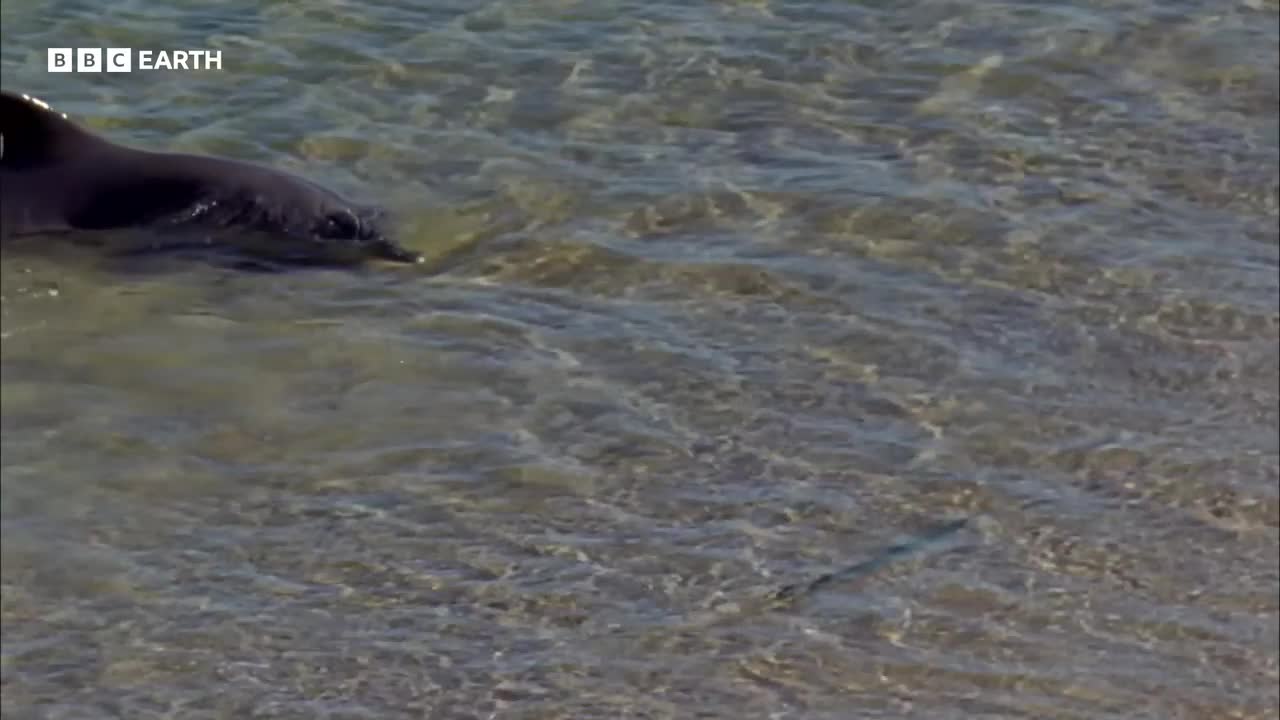
[The Daring Hydroplaning Dolphins of Western Australia]-[The Unique Trick Dolphins Use to Hunt | 20 Years of Planet Earth | BBC Earth]
📋 Summary
The Evolution of Hunting: Hydroplaning Dolphins in Western Australia
In the coastal regions of Western Australia, a unique population of dolphins has developed an extraordinary and high-risk hunting strategy to overcome the challenges posed by their environment. While dolphins are traditionally known for their agility in deeper waters, these specific individuals have adapted to capture prey that has sought refuge in extremely shallow areas.
The Failure of Traditional Hunting Methods
Typically, dolphins rely on "tail slapping" to stun their prey, a method that is highly effective in most marine environments. However, as the transcript notes, this technique "doesn't seem to work here." The fish have strategically taken refuge in water that is "only a few centimeters deep," placing them just out of reach of the dolphins' standard hunting maneuvers. Despite the fish being "tantalizingly close," the dolphins are physically restricted by the lack of depth, necessitating an evolutionary leap in behavior.
Mastering the Hydroplaning Technique
To bridge the gap between deep water and the shoreline, the dolphins have adopted a specialized technique: hydroplaning. By "vigorously pumping their tails," the dolphins generate the necessary speed to launch themselves forward. This momentum allows them to "hydroplane" across the surface, carrying them "right through the shallowest waters" to reach their prey.
This behavior is not merely a display of strength but a calculated risk. The dolphins are "in real danger of being stranded" every time they execute this move. The narrow margin between a successful hunt and becoming beached highlights the extreme pressure these animals face to secure food in this specific habitat.
A Learned Social Behavior
It is important to note that this is not a universal skill among the local dolphin population. The text observes that "only eight individuals here have mastered this daring technique." This suggests that the behavior is likely a learned cultural tradition rather than an innate reflex. This is supported by the observation of "younger dolphins" who "lie alongside, watching." These juveniles are effectively apprentices, observing the masters of this craft to ensure the survival of this complex hunting strategy across generations.
Conclusion: Fortune Favors the Brave
Ultimately, the success of these dolphins serves as a testament to their adaptability. By pushing the boundaries of their physical capabilities, they have found a way to exploit a niche that other predators cannot reach. As the summary aptly puts it, "fortune favors the brave." These eight dolphins have transformed a hostile, shallow environment into a viable feeding ground, demonstrating the remarkable cognitive and physical plasticity of the species.

Deep Learning with ListenLeap


