Discussion keeps the world turning.
This is Roundtable.
You're listening to Roundtable with myself, He Young.
I'm joined by Steve Hatherly and Yushun in the studio.
Coming up, is natural always better?
Think again. We love organic food, herbal remedies and chemical -free products.
But does natural always mean safer or healthier?
And are we unfairly skeptical of artificial advancements?
Let's bust the notion of naturalistic fallacy wide open.
And need a boost to crush the week?
Our special segment, Motivational Monday, is your ultimate adrenaline shot to kick things off strong.
Our podcast listeners can find us at Roundtable China on Apple Podcast.
Got a question that's keeping you curious from social issues to tech and everything in between.
Let us take a stab at it.
Email us at roundtablepodcast at QQ .com.
Emails are fine, but voice memos are always better.
And we'd really appreciate it if you could include your name and region of residence in that voice memo.
So we know a little bit more about you as we're trying to answer your question.
Now let's switch gears.
If it comes from nature, it must be good, right?
And if it's artificial, we should be at least a little skeptical.
Not so fast. We rely on tech -driven medicine, processed food, and synthetic fabrics, but also worry about the health risks of these very things.
So how do we navigate this maze of choices without falling into the trap of either blind trust or irrational fear?
Let's unpack the naturalistic fallacy and find out how to make smarter, safer decisions.
So what is naturalistic fallacy?
Yeah, it can refer to a few different things.
So I'll start with a broad definition and then we'll get to what we're going to be focusing on today.
The naturalistic fallacy, it's an error in logic that occurs when someone tries to derive an ought or should from an is.
in simple terms, what that means is it's the mistake of assuming that because something is a certain way in nature, well, it should be that way for human beings as well.
But the fallacy is this.
For example, here's an easy example.
Animals are aggressive, so humans should be aggressive too, right?
So we see something happening in nature and we think, oh, okay, that's good for us, but that's false.
So human beings should not be aggressive with each other.
Here's another one.
People naturally eat meat.
Or in nature, animals naturally eat meat, so it's morally acceptable to do so for people too.
But then that ignores the ethical consideration about animal welfare and the environment and things like that.
But here's the example that we're going to be talking about today.
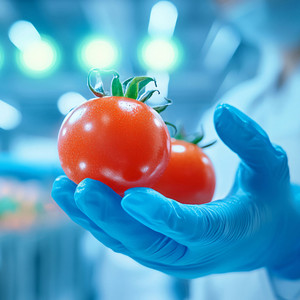
Natural products are better for you.
Therefore, synthetic products are bad.
And the reason this is a fallacy is because it ignores scientific evidence that may prove otherwise.
That is very interesting.
And yes, there's a little bit of logic and philosophy that Steve has explained to us very well.
So what's your immediate takeaway, Yu Shun, when you first saw this phrase?
Yeah, when you are thinking about natural things, I think that's kind of an instinct that human beings will think, okay, natural things are healthier and it is like extract from the nature and it will be good for you.
But think about, you know, some real life examples.
It's not always right.
When you are thinking about the, you know, the initial stage or the original state of some plants or some fruits, you'll see some of them, their skin are so thick and they're like the meat inside.
It's just so small.
They're not like developed to be eaten.
They're developed to be survived.
So that is something, you know, when we're thinking about, okay, if you want this thing to be organic, it's not always good for you.
Exactly. And that's the natural naturalistic fallacy is that we as humans think that products or ingredients are inherently superior to those that are synthetic.
And it's a really common flaw.
And you can find this in marketing everywhere.
Influencers use this a lot.
You go to the grocery store and you walk down the aisle, you'll see natural this and organic that.
Well, we automatically we as humans believe, oh, we see natural.
therefore it's better but this is the naturalistic policy isn't that like the biggest irony in a way because us as human beings we spend millions of not hundreds I don't know how many years to um to evolve from you know that primitive stage to what the city we live in now with high skyscrapers and smart home appliances and everything and now we're saying oh that's a callback natural stuff should be better.
And this naturalistic fallacy, the assumption that what is natural is inherently good or superior, is spotted in various aspects of Chinese society as well, from healthcare to food consumption, and possibly even in environmental policies.
How does the naturalistic fallacy concept apply in China?
I think one example is the, you know, the discussion among like TCM, traditional Chinese medicine and Western medicine.
Some people believe that, you know, traditional Chinese medicine is the representative of natural stuff, right?
They are healthier with fewer side effects and risks.
And on the other hand, some people think Western medicine is more effective with higher efficiency.
Both of them are correct.
And that's actually proved by a lot of scientific proofs.
And we can see people are actually applying both of these medicines in our real life.
And the thing is that how we treat and how we wisely use them.
And also about the discussion of organic and natural food movement.
Many of, as I said, grains, rice, fruits, and other foods we eat today are no longer in their original state you know they have been selectively bred by humans and in their original form many fruits had thick skins and little flesh and traits developed for survival through evolution however through human cultivation there you know these crops have been modified to be tastier and juicier and a lot you know better and also a lot of organic fruits and vegetables can be much more expensive because they're taking up, because they have maybe lower yields and then they're requiring more land use in that way.
When we're thinking about, is it better?
Is it always the natural the better?
Then we need to think about it.
Yeah, the consumer trend here in China, the demand for natural and organic food, it's surged here in the country.
The organic food market is growing at an annual rate of 15%, and again, that's fueled by this belief that natural means safer.
It also means healthier.
There's also a fear of additives here in the country.
According to a report, 72 % of Chinese consumers believe that synthetic food preservatives are harmful, despite scientific evidence proving that they are indeed safe in regulated doses.
That's from the Chinese Academy of Agricultural Sciences back in 2021.
So it's big in the food industry.
Yeah, it's an interesting one, because I think if you look at the reality, it might be even more nuanced.
For example, can everyone, does everyone fully trust the organic label?
Sometimes it's almost like okay if it's truly 200 organic i might be able i might be willing to jump on this bandwagon but sometimes well in previous years i've seen reports of um it might be just exactly the same bunch of vegetables but one has been placed a sticker of organic on it and it's been sold twice as expensive.
And if people can't trust the labeling system, if people can't trust the regulatory oversight completely, then people aren't necessarily going to jump on the bandwagon per se.
Yeah. It's just that we have to be very, very critical.
Let's talk about what's happening in the United States.
So we talked about food, But this applies to cosmetics as well.
This is from Independent Women's Forum from 2018, and this is from FDA .gov.
So the U .S. Department of Agriculture, the USDA, they define what it means for cosmetics to be labeled organic.
However, there is no formal USDA or FDA definition for natural.
So expiration dates, for example.
The law doesn't require cosmetics to have an expiration date.
In some cases, younger consumers, they're reacting to tactics employed by the green movement, which uses a kind of fear, if you want to argue that way, to push consumers into buying products that are natural or have natural ingredients.
But natural is not defined by the FDA, which oversees the production and the marketing of cosmetic products.
Therefore, quote unquote, natural can really mean anything or more precisely, it can mean nothing at all.
Just a way to get you pay more.
Yeah, exactly. Millennial Magazine reported that when choosing beauty products, young consumers are much more likely to choose a brand that offers sustainability.
Therefore, millennials look for ingredients that are not harmful to their health and don't pollute the environment.
And that might explain why young consumers are drawn towards beauty products that are offered in, for example, reusable containers.
However, environmental scientist Dr. Maddie Mason said sometimes it might be better to still use single -use items because eco -friendly products often use more resources to manufacture.
Ah, very good point.
And also, does this possibly lead to maybe greenwashing.
Yeah. Yeah. That's kind of a different topic, but you're definitely on the right path there.
And just one more point on that, young consumers, they might be concerned over what activists call harmful chemicals in the products.
Yet they should know that these harmful chemicals, they often protect them from what can really harm their skin or their eyes, like bacteria.
For instance, anti -chemical green activists, they'll sound the alarm about a chemical called parabens.
But what they don't mention is that parabens are used in cosmetics and face creams as a preservative to prevent the growth of bacteria.
Yeah, actually, that's quite similar here in China.
You know, there is kind of a rise of herbal and natural beauty products here in China.
Chinese consumers, like they're increasingly favoring skincare products labeled as natural or quote unquote chemical free.
A 2022 survey by eye media research found that 74 percent of respondents believe herbal skincare is safer even though certain plant extracts can cause allergic reactions or skin irritation so it's not you know universal to every kind of skin even though they are as natural as possible right well here in china because we have this deep -rooted cultural belief yeah you heard those two words right of traditional Chinese medicine.
So for a lot of people, and most people just can't be bothered to do the research.
We just think that if it's TCM, then naturally, because it comes from natural extracts, then it's got to be better.
And if TCM is used in drinks, is used in anything, even if it's used in wellness and beauty practices, then we sort of have the inclination to believe that it should be better.
Yeah. Do you want to go back to food for one second?
Sure. Food and beverages in the U .S.
apparently sees a lot of naturalistic fallacy as well.
Back in 2016, the International Food Information Council found that natural was one of the top three phrases that was chosen to define a healthy eating style.
Additionally, a lot of consumers thought that the natural label meant that the food was produced with no pesticides and contained no artificial ingredients or GMOs, genetically modified foods.
But what does the word naturally mean?
We have to come back to that question again.
Well, according to the USDA's guidelines, a natural product can't contain artificial ingredients and should be minimally processed.
Being minimally processed, it's defined as kind of processing the food in a way that doesn't fundamentally change what it was initially.
The FDA says that if a food product is labeled as natural, nothing artificial, like artificial food coloring, for example, has been added to it.
Additionally, the FDA does not consider the word natural on food as describing any nutritional or health benefits.
That's the kicker, isn't it?
Let me say that sentence again.
The FDA does not consider the word natural on food as describing any nutritional or health benefits.
It's strictly talking about how the food was processed minimally.
That's such important information for American consumers.
um so we've seen that okay we think that nature is great but apparently it's not wonderful always um so tell us about sort of almost like a paradox in our heads yeah i mean nature is wonderful but yeah it's not always and also the other point is you know some of the things that we create from ourselves are also great um but you're both wearing glasses today Every day.
Glasses aren't natural, right?
But they're pretty good.
We talked about smart refrigerators before.
Would you prefer to dig a hole and keep your food chilled underground every single day?
Right? Some of the things that we create for ourselves are very, very good.
Shoes. That's another example, right?
Going back to food, though, you know, a lot of it, a lot of the food that we eat doesn't come to us as nature presents it.
We process it. We cook it.
Right? That's not natural.
The harvesting, the grinding, the processing of grains helped to drive the transition of our species from being nomadic hunter -gatherers into settled farmers, and we were able, because of that, to build sophisticated civilizations.
So two, I guess, did the way in which we cultivate and crossbred crops, meaning that many of the nutritious foods that we consider natural today, they look and probably taste far different than their wild origins.
And not all the things we create are great.
Yeah. The first thing comes to mind, industrial pollution and a lot of the side effects or the unintended consequences of industry development as well as technology development.
Yep, absolutely. Plastics, for example.
Oh, yes. Right. That's an easy example.
But it does beg the question, too, you know, why do humans, why do we, when we see the word natural, we think, oh, it's better, it's healthier.
But why do we feel like that, particularly when it comes to our foods?
And this is from SeacoastOnline .com.
And it talks about the fact that consumers like this word natural because there's an immediate connection to the earth and the acknowledgement that it took, the path that it took to get to the table.
So thinking along these lines, some people associate the term with food or ingredients related to sustainability or even fair trade practices or other criteria.
And that's why this word is such a powerful word in marketing, because it can be interpreted in so many different ways.
That's so fascinating.
Also, I like to add one point, possibly, is that especially now, you know, I can speak from my own experience as somebody who's in her 30s instead of 20s.
You're nuts. You've been around long enough to feel like you've been burnt multiple times already.
I'll give you an example.
I have friends who are new moms now.
And then for years in China, it has been promoted that giving your baby, your newborn baby formula is the better option.
But then after things happen, and nowadays, a lot of people are saying breastfeeding is the best gift you can give to your baby.
So like if you've been around long enough, and then we've been through maybe that process of blindly believing something, be it naturalistic or being it scientific, but then you sort of see that it's complicated.
There are so many million things that happen in between that things can go wrong.
And then you realize, I can't blindly believe anything.
And I feel as a conscious consumer or as a responsible citizen, you just need to know more.
Check the labels, be critical.
And push for a system that doesn't always rely on individuals in coming up with checking stuff out.
I'll give you one last example.
Sugar comes from nature, doesn't it?
So sugar is considered a natural ingredient according to the FDA definition.
So a product can be very, very high in sugar and still use that label natural.
natural, the sugars we know, you have to be careful with it.
Right. You can't eat too much of it.
That's just my last point there.
Yeah. Do you have a last point you like to leave with us?
Yes. As we are saying, you know, this is kind of thing that we should not think so extreme.
It is everything should be in.
It's not like should be in the middle, but we need to give up that kind of mindset of everything is just black and white kind of thinking and that natural is always bad where artificial is always bad.
Oh, sorry. Natural is always best and artificial is always the bad.
And also, when we're discussing is it good or bad, we need to discuss how much of these things are and discussing toxicity without considering dosage is unreasonable as we are having this kind of concept in scientific world.
So, yeah, we need to think about by ourselves that which one is the best but not which one people think is the best, and I'm going for it.
Instead of getting trapped in either extreme romanticizing nature or worshipping technology, I believe the key is critical thinking, regulation, and informed consumer choices.
The best path forward is balancing ancient wisdom, yes, echoing back to TCM, with modern science, Embracing nature where it works and demanding technological solutions and administrative oversight that are truly safe and ethical.
Coming up next, Motivational Monday.
This morning, we had a group meeting and then we compared what we wanted to share.
Given everything, well, Yu Shun rises to the challenge And you have something special to share with us for this motivational Monday And I heard that it involves a little bit of music But just tell us, what's your motivational Monday first?
Oh yeah, of course So my motivational Monday is from someone that I really like So first of all, I need to say I finally had the chance to watch a concert by one of my favorite singers at Sharon in Hangzhou, Zhejiang in Eastern China.
Yes, it was awesome.
The audience were singing out loud, and the music was great.
I truly enjoyed the whole experience and ended up with losing my voice.
Yes, and when asked what At Sharon would say to fans who are pursuing their dreams, because he's been pursuing his dream for so long.
So his dream, he said, you know, nothing is out of your realms of possibility.
Any dream is possible.
And I'm saying any dream.
So his dream was never to be kind of a pop star or be on a stage.
His dream was simply to do music for the rest of his life.
But even as a global star like Ed Sheeran, he said, you know, he actually grew up in a small coastal town.
And he never imagined he would leave his hometown, even go on a world tour or even step outside of Europe, actually.
So along the way, you know, people might tell you that you cannot do it, but, you know, just don't let them affect you and don't give up just because there are challenges.
Understand what you truly want.
And once you figure it out, keep pushing forward and your potential is limitless.
And as long as you don't give up, your dreams will come true one day.
And that is why I would also like to recommend one of his songs to everyone.
It's called You Need Me, I Don't Need You.
It's a, you know, high energy.
So motivational. Yeah, that's why I picked it.
I was that motivational.
That's, you know, I think.
Self -love, self -control, self -power, I guess.
Yes, and from the name it's so self -expressive.
And it's telling you that it's all because of me and I am me.
Of course, it's a kind of personal track about Ed's struggles in the music industry and his search for a record label that would fully accept him.
This repeated line, you need me, man, I don't need you, powerfully expresses.
That's why, because this is not a message to a romantic partner.
This is a message to the music industry.
Hey, you need me. I don't need you.
I can make music on my own.
I'm okay with that.
You need me to make all this money for you.
Thank you for the explanation.
Not all of his songs are love songs.
Of course. Or also saying if it's directing to your listeners, then that's a little hubris.
Yeah, that too. Yeah.
And I think it is expressing his idea of you'll get better and better.
And it just takes real focus, determination and also, of course, hard work.
And I would like to repeat that sentence.
Nothing is out of your realms of possibility.
And I really hope you can enjoy it.
Yes. So do enjoy the music from Ed Sheeran, recommended by Yu Shun.
You need me, I don't need you.
And that brings us to the end of today's show.
Thank you so much, Yu Shun, and Steve Hatherly for joining the discussion.
I'm He Young. We will see you next time.