Today's episode is sponsored by Indeed.
You just realized your business needed to hire someone yesterday.
How can you find amazing candidates fast?
Easy. Just use Indeed.
When it comes to hiring, Indeed is all you need.
Stop struggling to get your job posts seen on other job sites.
Indeed's sponsored jobs help you stand out and hire fast.
With sponsored jobs, your post jumps to the top of the page for your relevant candidates so you can reach the people you want faster.
There's no need to wait any longer.
Speed up your hiring right now with Indeed.
Listeners of this show will get a $75 sponsored job credit to get your jobs more visibility at Indeed .com slash Brains On.
Just go to Indeed .com slash Brains On right now and support our show by saying you heard about Indeed on this podcast.
Indeed .com slash Brains On.
Terms and conditions apply.
Hiring, Indeed is all you need.
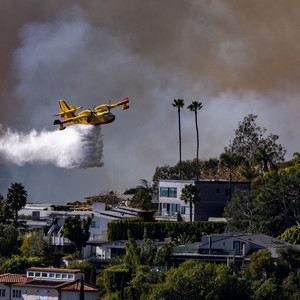
can't stay in their homes, and there's smoke and ash in the air.
We know there are a lot of listeners in Los Angeles County.
If you're not in Los Angeles, there's a good chance you know someone there, or you've seen photos or videos of the fire, or have heard people talking about it.
So, we changed our plans for today's episode so that we can talk about the fires in California.
We'll hear a conversation with a therapist about how to process this, and we'll learn about smoke and how it travels then we're also going to play some parts of an episode we made a few years ago about how wildfires start and how people work to contain them we're going to start with hold on he texted
me how he wanted me to introduce him okay everyone's favorite person on brains on sandon totten sandon lives in los angeles and hopped on a zoom call with me this past friday so just a few days ago and filled me in on how everything is going he had to evacuate his house with his wife, four -year -old
son, and everyone's favorite dog on brains on, Penelope Poodle.
So Sandon, Molly, my dear friend, how are you doing?
How do you feel right now?
It's like a weird mixture.
Like, you know, like in cartoons where there's like a witch's cauldron and they're stirring and it's like bubbling and like weird things are popping up, like a tentacle or a spider or a bat wing that's kind of what my belly feels like um it's gurgly and just like weird thoughts keep popping in my head
and scary ideas but then I try to just like put the lid on and say I gotta keep going um so I don't I don't feel great but you know luckily my family's safe and my dog is here with us so we ended up having to leave Los Angeles because we had no power and the smoke was really bad in our area and there
was a fire that started in the hills real close to us.
So we're about an hour south of Los Angeles and right now we don't know when we should go back.
But we're safe and that feels good.
But a lot of people I know, their houses have caught fire.
And so I'm also very sad.
It's a really, it's a big mix of things.
So you were a science reporter in Los Angeles before you started working on Brains On all the time.
And I'm wondering, like, anything you learned when you were a science reporter in LA?
Like, are you thinking about anything from those times as this is happening?
Yeah. Oh, I'm thinking about it a lot because I covered this kind of thing many times so I covered wildfires but they were usually further away so you know I had that sort of distance where it felt like a little bit more like I was learning and reading in a book and figuring things out and now that it's
happening to me and my friends and my community I'm sort of getting that other side of the picture where it's like the all the pictures in the book are now getting colored in and the faces are people I know and um but it does help to think about the science so some of the things I'm thinking about you
know we've known for a long time that los angeles always had fires like this is a natural part of the landscape it's not that we showed up and you know the fires are in sort of intruding on our existence it's like the fires would happen in this area and we're kind of intruding on their existence um
but we also know that you know things have gotten worse like the global climate is getting hotter um you know we're getting more periods of of dryness which is what happened this time we haven't had rain since like last spring.
So there's a lot of really dry plants and, you know, we've put up power lines and things like that all around these big wooded areas.
So if one of those power lines falls down, it starts to spark.
We've got these conditions for a fire that really can rage.
So yeah, this it's, you know, I've lived in LA for a while and this isn't even the first time I've had to leave my house to go somewhere else because fires were so bad.
This is the second time I've had to do that and so i think about you know climate change it's it's not something in the future it's here it's happening now and it just makes me think even more like i want people to watch what's going on and think about it and see what we can do to change things or make
different decisions going forward is there anything else you want to tell our listeners i guess maybe let's start with the kids who aren't in la like what do you want them to know or understand sometimes it can feel weird to know that everybody's thinking about you and like you know if you if you're
watching the news or you think about oh los angeles is going through a hard time sometimes it feels like weird to have all that attention but every time people are saying nice things to me or checking in on me I actually do feel really good so if you've got friends or relatives in the area you know
sending them a little text maybe giving them a call who actually might make them feel really nice and normal um and if you're a kid and you're watching this and you're a little scared um you know one of the nice things i've been seeing is oh my gosh the firefighters are so amazing even here where we're
at at this hotel there's firefighters who've been here for free and they're so nice they're so well trained they have a lot of great equipment they're trying so hard and every time to know or understand sometimes it can feel weird to know that everybody's thinking about you and like you know if you
if you're watching the news or you think about oh los angeles is going through a hard time sometimes it feels like weird to have all that attention.
But every time people are saying nice things to me or checking in on me, I actually do feel really good.
So if you've got friends or relatives in the area, you know, sending them a little text, maybe giving them a call, we actually might make them feel really nice.
And we really want you to feel safe.
And we're thinking about you.
You know, we'd love to hear from you if you want to like tell us what your experience is and yeah we got this we'll get through this Los Angeles is a very resilient city you know we're built on people dreaming and making those dreams come true we've made a million stories of comebacks and of victories
over tough obstacles and we're living our own and I know we can do this and so we're just at that moment right now, where it feels really dark, but we know that the end of the story, we're going to be riding high.
We'll get through this.
We got it. You got this.
That was lovely, Sandan.
You're a delightful person, and I'm sorry that you have to be going through this.
Yeah. But I'm glad you're safe.
Thanks for calling, Molly.
It's really nice to talk to a friend.
It's nice to talk to you too.
Since Sandan and I had this conversation, he's returned to his house, And as always, Sandin and I and everyone else on our team would love to hear from you.
If you've been affected by the LA wildfires, write to us.
Sandin said he'll respond to every one of you personally.
And if you have any questions about this topic or anything else, you can always send those to us at BrainsOn .org slash contact.
When stuff like this is happening, it's normal to feel sad or overwhelmed, worried or angry, or maybe all those feelings at the same time.
Producer Rosie DuPont talked with Caroline Hickman about how to handle these big feelings.
She's a psychotherapist and teacher at the University of Bath in the United Kingdom.
You'll hear Rosie first.
Hi, Caroline. Hi. So what would you say to kids who have been directly affected by the fires in California?
Kids who have lost their homes or had to evacuate or live near the fires?
Well, the first thing we've got to recognize and acknowledge is just how awful and scary these fires are.
In the same way as the floods that you had in the U .S.
last year were awful and scary.
So they affect people really profoundly.
So we've got to start there.
if you are directly impacted by the fires you will feel devastated you will feel full of grief and other people around who've not been as impacted might struggle to understand so don't get too upset if people don't properly understand how it feels for you there will be people around you who do understand how
it feels for you and the number one thing to do is talk focus on what's most important, which is that you, your family, your pets are safe.
Keep talking to yourself and saying, it's going to be okay.
I'm okay. I'm here.
You're not on your own.
Then talk with other people as well.
So you're not just in your head.
And if you are too much in your head and just kind of getting lost in all of that, take a break, take deep breaths.
I'm also a diving instructor, scuba diving instructor and we have this formula that we teach students that helps manage difficult situations because you're in trouble underwater you need to have a formula you need to know what to do and that is stop breathe think act stop what you're doing because you'll
get in more of a mess remember to breathe start to think then act what this helps you do is remember that all those things are important.
It stops you spiraling and losing control into panic.
We need to be able to think before we can act safely and think about how we're going to act otherwise we're just running around out of control which makes us feel worse right.
It helps you take a moment to assess your situation, think about what's going on and choose how to act rather than react.
The other really good trick is if you've got a pet, breathe with your pet.
Dogs are better at this than cats.
I love cats. They're not always as cooperative, but breathe with your pet.
Stare into the eyes of your dog and breathe in when they breathe in and breathe out when they breathe out because they have a slower pace of breathing than we do.
And what it does is it reduces that stress and anxiety a lot.
If you don't have a dog there, you could sit and do it with your sister or your brother or your mother or your parent and just say, can we breathe together?
Thank you. That is fantastic advice for everyone.
What would you say to kids who live far away from the fires but are feeling anxious, angry or upset about what's happening?
The first thing you've got to remember is you've got those fears because you care.
If you didn't care, you wouldn't feel bad and worried and angry and upset about these things.
So the reason I start with that statement is to say, however you're feeling is okay.
And you should be proud that you care enough to have feelings about this.
Because it shows that you care about the planet.
You care about what's happening to other people around the world.
You're aware that just because you're not being directly threatened, it doesn't mean that threat is not affecting humanity.
And it means you're connected with humanity.
There are a lot of reasons why wildfires start, but we do know that climate change is making them worse.
Do you have any advice for people who are feeling upset about climate change in particular right now?
People often talk about how to fix or cure climate anxiety and distress.
Number one, it doesn't need to be fixed or cured.
It's a mentally healthy response to what's going on in the world.
We don't want to get rid of it.
we actually need to tolerate it, learn to live with it and then utilize it to help ourselves take action.
Get the practical skills, learn how to grow vegetables or get involved in nature projects and care about the world in whatever way works for you.
But also remember, there is a political angle.
Lobby politicians and learn to have these difficult conversations with your parents because we have to deal with it on all these levels all at the same time we can't just take it personally and really important is not to get over responsible about i've got to fix climate change and save the world all
by myself right please don't think that you play your part it's normal to have big feelings and it's important to let yourself feel them we have a series of episodes all about feelings that we've linked to in the show notes for this episode and at our website brainson .org we also have lots of links
to other resources and ways you can help the people who've been affected by the wildfires in la again that's in the show notes or at our website, BrainsOn .org.
When a wildfire burns, it creates a lot of smoke.
That smoke can make the air look hazy, almost like a fog.
But the smoke doesn't stick around forever.
It moves. So where does it go?
I can help answer that.
Hey, it's BrainsOn editor Shayla Farzan.
I'm really glad you're here because I have a bunch of questions about wildfire smoke.
Like, why do you sometimes smell smoke when you're not anywhere close to a fire?
It's a great question.
It's something I've thought a lot about, actually.
Remember a couple years ago when there were all those wildfires burning in Canada?
I definitely do. Yeah, smoke came down to Minnesota, where I live, and in some places the sky even looked orange from the smoke.
It was smoky where I live in Missouri, too.
So back to your question.
How does smoke travel that far?
Well, when a fire's burning, it's usually really hot, and that heat sends smoke high up into the air.
Okay, that makes sense.
Hot air rises. Yeah, sometimes it looks like a tall tower or a plume of smoky air, but eventually that hot air starts to cool down and sinks back to ground level.
So that's when it starts to spread out?
Right. As it sinks down, the smoky air mixes with non -smoky air and spreads out across the ground.
It can spread miles from the fire.
So that's the smoke that people in California have been seeing.
And lots of things will affect how far that smoke goes, like weather, strong winds, or even if the ground is flat or hilly.
But not all of the smoke stays near the ground, right?
I've read that some of it goes really high up in the air.
Yeah. Over time, wind blows the smoke way up into the atmosphere.
Remember, the atmosphere is the big blanket of air and other gases that surrounds the Earth.
Sometimes the smoke can go more than six miles up into the atmosphere.
And once it's way up there, it gets blown around.
So it keeps moving and drifting, sometimes for thousands of miles.
Okay, so does the smoke eventually come down again?
Some of it does. That's how the smoke from the Canadian wildfires a couple years ago made it down to Minnesota.
It traveled up into the atmosphere, then came back down to ground level.
But one thing we should mention here is that smoke is not good for us to breathe.
It can irritate our lungs, give us headaches, make us cough.
So it's better to play inside when the air outside is smoky.
Seems like a very good idea.
Here's the thing about smoke, though.
Eventually it goes away.
Once a wildfire is put out, the smoke can hang around for a while, sometimes days or weeks.
But over time, winds will blow it around and it'll get diluted.
That means it'll spread out so much you don't even notice it anymore.
So eventually, the air on the ground will be clear again.
Well, thank you, Shayla, for stopping by to explain this all to us.
You bet. Catch you later.
Wildfires are not unique to California.
In the last five years, there have been big wildfires in Canada, Australia, South America, and Siberia.
We made an episode about this kind of event in 2021 after a series of wildfires in Northern California, and we're going to play parts of that episode now.
As always, everything we do is inspired by your questions, so if you have any questions about the fires happening in California or anything else, we'd love to hear from you.
Head to BrainsOn .org slash contact.
Thank you so much for listening today.
Okay, here's our episode from 2021.
Take care and stay safe.
We're going to start with a story about how fire came to be.
It's from the Yurok people.
They've lived on the land that's now Northern California, long before it had that name.
The story starts when the world was dark, no light and no way to cook.
We call those Wage times.
Old women up in the sky had fire, but there were animal spirit beings that didn't.
So those Wage spirit beings, they decided that that's what they needed to have.
Not only did they need it, but the humans that would be coming would also need it.
So the spirit beings got to work.
And so the most powerful one, his name was Wapekamao.
And so he said, all right, well, I will make a plan about how to go get the fire.
They'd have to steal the fire from the old women in the sky.
Then he called all the animals back together.
He said, but I need everybody's help.
All the animal spirit beings agreed to help.
So he went up to the sky to see the old women.
And then when they fell asleep, he grabbed up the fire and he stuck it in the basket.
And also the sun, he stuck it in the basket and he took off.
He ran as fast as he could.
The old women didn't want anyone to have their fire.
Those old women woke up.
They're like, what, what, what's going on?
And they took off chasing after them.
And we'll pick them out, just went best as we could.
Just as those old women was getting ready to catch him, he passed it off to Bear.
Bear ran all the way up a mountain.
Then Bear passed it to Eagle.
Eagle took off flying with it and those old women, they just kept chasing them.
Eagle, he dropped it off with Kegat.
That's the mountain lion.
And mountain lion, he can run fast, man.
He was running all as fast as he could.
So then he passed it off and...
He passed it off to Turtle.
We all know how so Turtle is, but Turtle was also on top of a mountain.
So when Turtle got it, he just pulled his head in, pulled his legs in, and he just rolled down that mountain until he got down to the bottom.
At the bottom of the mountain, Frog was sitting at the edge of a river.
And Frog took the fire and he put it in his mouth and he went under the water.
And he just stayed under there.
And those old women, they was there, they was waiting, waiting, waiting for them to come up.
But Frog didn't come up, and eventually the old women left.
And then the frog came up out of the water and he spit the fire into the roots of the willow tree.
And so that's why we use willow to make our fire, and that's how we as humans were able to have fire to this day.
The End you're listening to brains on from american public media i'm molly bloom and my co -host today is sierra from mountain view california hi sierra hi the story you just heard is all about fire and so is today's episode a fire can be super useful like for cooking or super cozy like a fireplace in winter.
Or super magical, like telling stories around a campfire.
Ooh, with s'mores. Of course with s'mores.
If you have a campfire, s'mores are practically mandatory.
I agree. But a fire can also be super dangerous, like when a fire breaks out in a forest.
These are called wildfires.
They can torch miles and miles of woods or grasslands, and they sometimes burn buildings, too.
If they burn long and hot enough, that can destroy ecosystems and send lots of harmful smoke into the air.
So, Sierra, you wrote in to us with a question about wildfires.
Do you remember the question you wrote to us with?
I asked, how are wildfires contained?
It's a good question, and we're going to answer it in a little bit.
So what got you curious about them?
I got really curious about wildfires last year because last year's wildfire season was the longest and worst I've ever experienced.
My family was cooped up inside for months, So not only were we stuck at home because of the pandemic, but we also couldn't even go outside due to the smoke.
That sounds very challenging.
What would you say that you learned that will help you this year's wildfire season or future wildfire seasons?
I definitely learned to stay inside and definitely not go out when the air quality is bad.
and definitely to run air filters inside.
Was there a favorite indoor activity you had?
Well, I was doing a lot of creative writing.
Very cool. And what kind of stuff were you writing?
I remember writing about this day on September 9th when the sky turned a surreal shade of reddish -orange and it stayed that way for the whole day.
And it was really eerie.
It was like an alien invasion.
And I remember writing about just waking up on that day and wondering why it was so dark.
And I remember thinking it was the middle of the night.
That must have been a really spooky experience.
Yeah, it was. Did your dog react to it at all?
She didn't seem to notice.
She was just walking around the house like there is nothing happening.
She's an indoor dog.
She doesn't pay attention to what's going on out there.
Yeah. Wildfires have always been a part of nature.
But according to the U .S.
Environmental Protection Agency, they've gotten bigger over the last 40 years.
And scientists think climate change will make wildfires worse because climate change warms up the planet.
And that makes it easier for fires to start and spread.
Climate change comes from having too much greenhouse gas in our atmosphere.
Stuff like carbon dioxide or methane.
These gases are released when we burn fossil fuels in vehicles or factories or power plants.
When they go up into the sky, they create a kind of invisible blanket that traps heat down here on Earth.
We need some of those gases in the atmosphere to keep us warm, but too much and things go from cozy to toasty.
It's like when you have on way too many blankets and suddenly you're sweating.
Right. And the more greenhouse gases we release, the hotter it will get.
That'll change the climate and weather patterns all around the globe.
That's why we call it climate change.
And climate change is part of why we're seeing bigger wildfires now.
So let's get to Mara's question.
How do wildfires start and how can we stay safe from them and make less?
It takes three things to make a wildfire.
These ingredients are called the fire triangle So we also have a musical triangle to play Can you do the honors, Sierra?
Sure The first thing you need to start a fire is fuel That's stuff to burn, like dead grass and brush Then you need heat Enough heat to light the fire So maybe from a lightning strike or a firework Or a campfire that wasn't put out properly And lastly, you need oxygen The chemical element that we breathe from the air
So that's always around us.
In the western United States, the cycle of the seasons feeds this fire triangle every year.
During cool, rainy winters, grasses and brush can grow a lot.
But then the hot, dry summer comes.
And those plants die out, becoming perfect food for a hungry fire.
So naturally, forests have a lot of burnable fuel and oxygen, so sometimes all it takes is a spark to get things burning.
Even though the big wildfires we see these days can feel very new, there have been fires in the western United States for a really long time.
Brains On producer Manika Wilhelm looked into what this landscape was like a long time ago.
Hi, Sierra. Hi, Manika.
So, indigenous people have lived with fire for thousands of years.
Margot Robbins told me about that.
She lives on the Yurok Reservation in the land that's now Northern California, and she works with fire today to take care of the land.
She told us that fire story that we started the episode with And I also asked her about what Californian forests were like a few hundred years ago Like before Europeans colonized America At that time, you could easily walk through the forest any place There wasn't a bunch of brush on the ground There
were fewer but bigger and healthier trees The trees shaded the forest and gave animals and people leaves and nuts to eat There were trails that people used that were kept open.
And as you walked along a trail, you would have seen a lot of variety.
Grass would grow in prairie -like areas, while in other places, big trees had plenty of space to spread out.
And it looked that way because Native people took care of the land with fire.
Indigenous tribes carefully burned some of the land each year to keep ecosystems balanced.
Burns break dead brush and trees down so that their nutrients can return to the forest soil.
And some plants can only grow from their seeds with fire.
And actually, loads of plants and trees have adapted to fire in similar ways.
So Indigenous people kept the land healthy with fire.
We didn't mow the grass.
We burned it. They burned land carefully and slowly, a little bit at a time.
And they set fires in very specific places so that the fires would naturally end at a stream or a path or a shaded area.
Big trees could survive these calm fires, but these burns cleared out grass, brush, and dead plants.
So wildfires worked differently then, too.
A wildfire that may have been started by lightning, it wouldn't go that far.
Remember that triangle of things that you need to start a fire?
You need fuel, heat, and oxygen.
And it's pretty much impossible for us to control the heat or the oxygen in a forest like California's.
They're just always going to be there.
But routine burning kept the fuel part of that triangle in check.
With less fuel, fires didn't get so big and they didn't travel so far.
So that worked for a long time.
But about 150 years ago, these routine burns stopped.
the United States of America's government decided that we were going to put out all fires as fast as possible that's Sasha Burlimon she's a fire ecologist who also works on using fire to keep the land healthy now she says as European Americans invaded the western part of North America they ignored how
indigenous tribes tended the land we'll use the trees as we please the skies will be smoke free And in Every Year Without Fire, more grass and brush and little trees grow.
And that means more fire fuel building up on forest floors.
The forest isn't getting cleaned, and it's just accumulating more and more trees, more and more down vegetation, that resulted in just very flammable and vulnerable, stressed -out forests and landscapes.
So if a fire did start in these woodlands, it would spread very, very, very fast.
And on top of that, climate change makes fires more likely, too.
Because it doesn't just heat things up, it changes weather patterns.
So we have longer time between rains, but then sometimes we have more rain all at once, which means more grasses and small trees grow until long, hot, dry summers crisp them into fuel.
So it's just kind of making all of the weather patterns more extreme and then it's lengthening the overall fire season.
So the way that we treat forests and climate change are working together to make these bigger fires more often.
But there are ways we can keep ourselves safe when fires burn, and we can do a better job of caring for the forest too.
We'll hear more about that after the break.
Sierra, before we move on, we've got some very important business to take care of.
Walking the hamsters?
Unclogging the hot sauce fountain?
Getting Mark's anti -gravity pants down from the ceiling?
No, though remind me to do all of that later.
Right now, it's the… Mystery Sound Here it is.
so what is your guess was that an airplane very good guess do you hear anything else happening i kind of heard gravel crunching in the middle very good guess we will give you another chance to hear it and guess and have the answer in just a bit.
So stick around. Today's episode is sponsored by Greenlight.
As your kids get older, some things about parenting get easier.
They can go to the bathroom by themselves.
They have play dates.
It's awesome. But other parts don't get easier, like having conversations about money.
The fact is kids won't really know how to manage their money until they're actually in charge of it.
That's where Greenlight can help.
With the Greenlight app, kids learn how to save, invest, and spend wisely thanks to games that teach money skills in a fun, accessible way.
The Greenlight app also includes a chores feature where you can set up one -time or recurring chores customized to your family's needs and reward kids with allowance for a job well done.
As a kid, I would have found this super motivating to do all my chores of, you know, emptying the garbage bins, cleaning the windows, and other duties as assigned by my parents.
Start your risk -free GreenLight trial today at GreenLight .com slash BrainsOn.
That's GreenLight .com slash BrainsOn to get started.
GreenLight .com slash BrainsOn.
You're listening to BrainsOn for American Public Media.
I'm Molly. I'm Sierra.
I'm Maynica. And I'm back with ways to keep the forest healthier.
Part of that is going back to where we started this episode, when Margo told us the Yurok story of where fire came from.
While gay spirit beings went and stole it for the people to use.
And we're at that time where the people need fire again.
Margo and Sasha both work on doing something called prescribed burning.
That's when you start a fire, on purpose, to get rid of all that extra fuel before it becomes too dangerous.
So they start by taking a look at land to see how it's doing, how well plants and trees and animals are doing in a space.
So we go out there, we make that assessment, and then we write a prescription, hence prescribed fire, around what conditions we would put fire on the ground in.
And then we go out there with a group of trained people, and then we will put fire on the ground in a really methodical way that we know we can control to improve the health of the land.
They only burn when conditions are just right, not too windy, with a little bit of moisture in the air.
They use tools to scrape the ground so that there are lines of bare mineral soil.
That acts kind of like a wall, so it'll stop the fire from spreading, so the fire stays where it's supposed to.
And so we carry fire a little bit at a time across the landscape so that the animals can move out of the area or underground or go up into the trees.
And so we can maintain that really close bond with the fire that we're putting down on the ground.
And they're hopeful that in time, clearing the land this way will keep these ecosystems healthier.
They won't fill up with too much fuel, and if a fire does start, it'll be a less dangerous one.
The land depends on people to use fire to take care of it, and the land in turn takes care of us.
People took good care of these lands for a long time.
And hopefully, we'll do a better job of that in the future.
So, Ciara, you mentioned that day in September where the sky was that very, how would we describe it?
What's the adjective for that orange color of the sky?
surreal it's kind of creepy and unreal it's not something you would imagine seeing in real life yeah surreal that's a really good answer yes so that's a real orangey reddish color and the reason it was like that you were curious about that too is it has to do with sunlight so sunlight looks white but it's
actually a light that's a mix of every color and during the wildfires, all the bits of smoke in the sky were absorbing and scattering blue light.
So what came through was just that orangey red light.
Very surreal. Even if you are pretty far from the fire itself, its smoke can still reach you.
So it's important to pay attention to the air quality during fire season and stay inside when it's necessary.
Okay, let's listen to that mystery sound one more time are you ready yes so what are your new thoughts well I definitely still hear that airplane but now I also hear that construction site I can hear kind of the rocks getting jumbled and I also can hear a thunderstorm kind of with the thunder kind of ripping
through the sky very good yeah there's a lot going on there well here with the answer is brains on producer Sandin Totten hi Sandin hey that sound you just heard was an airplane dumping fire retardant so you were really close nice work Sierra?
Yeah, I definitely heard the airplane there.
Yeah. I think that gravel sound you were talking about or maybe the thunderstorm, that like rumbling.
So that was this liquid fire retardant kind of falling out after the airplane had passed, kind of like it was dumping it, you know, all across this big empty field.
They were actually, when I recorded this, they were testing a new plane to see how well it scattered that fire retardant.
And I recorded it by putting my microphone into a bucket and then running off to a safe distance to watch as this orange goo just splattered all over the test site.
This kind of goes back to your original question about how fires are contained.
Fire retardant is part of how firefighters do that.
But when I talk about fire retardant, Sierra, do you know what that looks like?
Have you seen this stuff?
No, I haven't. Sometimes you see it on the news.
you'll see pictures of airplanes flying by and sort of dumping what looks like a sort of bright orange slime or maybe like, you know, a big vat of carrot juice or melted orange crayon.
It's mostly made of this stuff called ammonium phosphate.
And there's a really good reason it's orange.
And I want you to try to guess.
Why do you think they make it orange?
I honestly have no idea.
Hmm. Orange. Is it because it will, the fire will see the orange and think the fire is already there, so it'll turn and go the opposite direction?
Oh, wow. That's genius, Molly.
That's not the answer, but that's a great answer.
Actually, the reason it's orange, it helps firefighters know where they dumped it.
So when you're flying really high above a forested area and you're trying to put this fire retardant down, you want to be able to see where you put it and kind of know maybe where you need to put more or where you've already sort of laid it down.
And if it's bright orange, then you can easily spot from above and say, oh, we already covered that area.
The way this stuff works, this liquid retardant, it doesn't really put out fires so much as it stops them from spreading.
And the way it does that is really cool.
Okay, so picture this.
A tree gets slimed with this ammonium phosphate thanks to an airplane flying above.
It falls down, splurt, covers the whole stretch of trees there.
Then when a fire comes near, sizzle, sizzle, crackle, crackle, I'm going to get you.
So then the fire's coming near to this orange covered tree.
The heat from the fire actually creates a reaction in that goo.
It makes the ammonium phosphate in the slime turn the woody material of the tree into an almost pure form of carbon.
So think of something like maybe a diamond or graphite.
And get this, pure carbon doesn't burn.
So the fire will reach an area covered in this goo and the heat from the fire will create this reaction and then suddenly, the fire has nothing to burn there.
Everything was sort of turned into a fireproof shield and the fire is out of fuel.
Pretty cool, right?
Yeah, that's really interesting.
Wow, so when that happens to a tree, can it keep growing afterwards?
Yeah, it kind of turns the outside of the tree or the plant sort of into this charred black material, but I was told by firefighters that if you just peel that away, the tree's fine underneath there, and it's still growing.
So, it just kind of grows like a second skin of this kind of carbon material that will stop the fire, and then later, you know, that'll just kind of slough off, and then the tree can continue living its tree -y life.
Wow, that's amazing.
And this is just one of the many tricks firefighters have to try and fight these growing wildfires.
You know, the classic thing, you throw water on a fire.
Firefighters do that, too.
Sometimes they can use a plane and take water from a lake or a reservoir nearby and dump that on a big fire or soak an area to make it less likely to burn.
So that helps, too.
And they can also block fires in other ways, like they can dig up the plants and trees in an area.
And that way, when the fire gets there, it'll find a large stretch of dirt where there's just nothing to torch.
So the trees on the other side of this dug -up dirt, they'll stay safe and the fire can't really get to them.
Now, if you surround a fire with a border of this kind of dug -up dirt area, it's kind of like putting a fence around the fire that'll keep it contained.
That is so cool. So if an area burned recently, can it burn again?
Actually, not as easily.
In fact, you remember those prescribed burns Manico was talking about?
After a controlled burn in an area, that area is way less likely to burn again because most of the good fuel was already used up.
So every time we do these prescribed burns, we're creating more zones that could block future fires from spreading too far.
So yeah, wildfires, they're getting more intense for sure.
But we're also learning a lot about how we can fight them, how we can contain them, and hopefully how we can stay safe from them.
Thanks for all this info, Sandin.
Yeah, thank you. No problem.
All right. Talk to you all later.
Bye. Bye. Wildfires happen when areas like forests or grasslands burn.
They're natural and important for forests, but climate change is expected to make them bigger and last longer.
We can help forests by doing smaller prescribed burns, which helps cut down the amount of fuel for fires.
And when it's smoky out, it's good to stay inside and filter the air as best you can.
Firefighters can contain fires using retardants, water, and by removing potential fuel for the fire.
That's it for this episode of Brains On.
Brains On is produced by Molly Bloom, Manika Wilhelm, Mark Sanchez, and Sandin Totten.
We had production help from Ruby Guthrie and Christina Lopez, and our intern is Kun Sang Dorji.
Special thanks to Dr.
Rebecca Miller, Nicole Molinari, Amy Windsor, Jennifer and Josh Ellman, Puppy, Sam Rounds, Finn Haru, Yi Shi Searing, and Scott Jernigan.
We'll be back soon with more answers to your questions.
Thanks for listening.