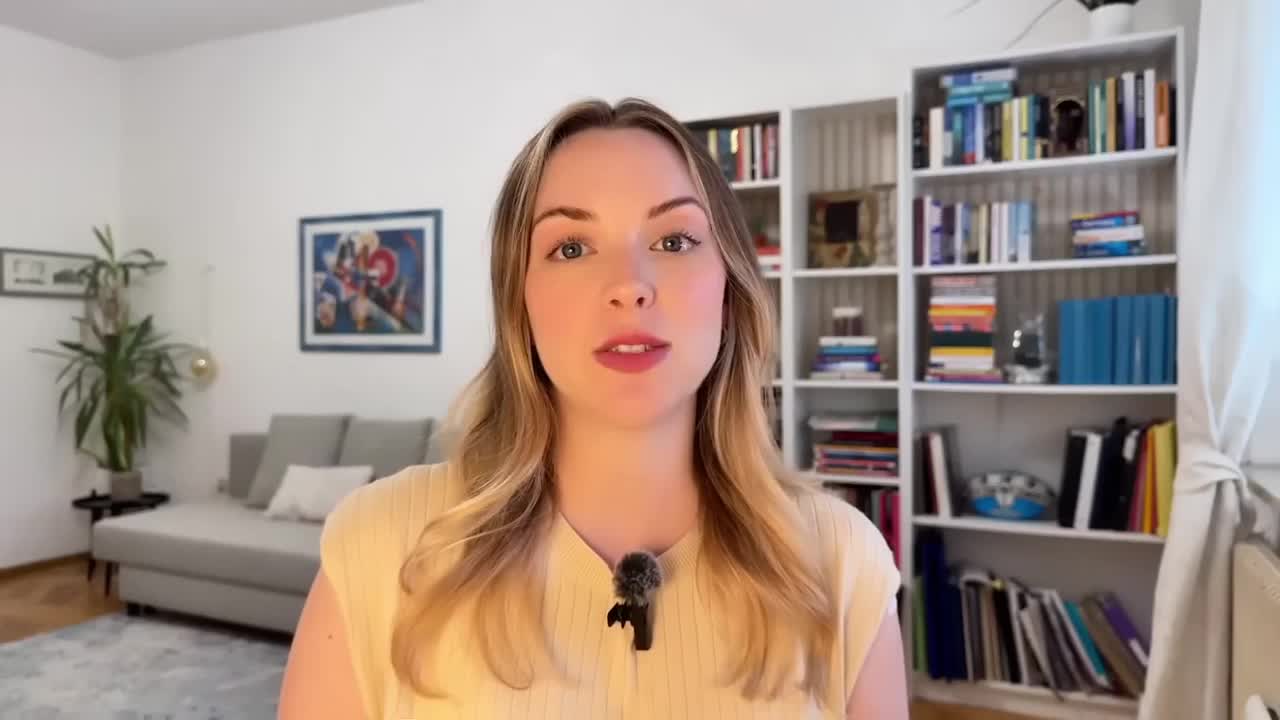
Recently I had a student ask me on one of my live calls why it was so much easier for him to understand me but to struggle to understand other native speakers.
And this is actually a really common question or problem that a lot of my students or even my followers or subscribers have for me.
So I'm going to cover in this video why you can understand me but not other native speakers as easily, and what you can do about it.
So first I'll cover some of the reasons why that might be, and then I will offer some solutions for you to help understand other native speakers, like in movies or on TV shows or in real life, even better.
English made easy with Claire.
So the first reason that you may be able to understand me a little bit easier than other native speakers that are on either TV or on social media or even in real life, is that I purposely speak very clearly in my videos.
I don't speak necessarily slowly.
This is pretty much a normal speaking speed for me, but I am very conscious that I need to speak very clearly because my audience are non-native speakers and I'm very conscious of the language that I use.
So I'll adapt my language to be a little more learner-friendly, which means that I may not use really complicated language or colloquial phrases or use certain references that I might naturally use when I'm speaking with other native speakers, because I'm aware that they will understand exactly what I mean if I use a certain reference or colloquial phrase or maybe a really advanced idiom.
But here on my channel, I'm very conscious that I'm speaking to a large group of people with various levels of English, coming here with the purpose of improving their English and learning their English.
So, of course, I'm going to adapt the language I use.
I'm not dumbing anything down.
And like I said, I'm not speaking particularly slow.
I don't really reduce my speed of speaking for these videos, but I am speaking very clearly and I'm aware of the language I'm using.
I'm adapting it for non-native speakers.
And of course, this doesn't happen in other media or in movies or TV shows, where actors might mumble or speak very quickly or use advanced idioms that maybe you don't quite understand, or very colloquial language that uses phrases only for specific areas or within a specific community or group of people.
So it's really no wonder that a lot of you might struggle to understand native speakers in movies or TV shows or on other social media.
Now, the next reason why you may find it easier to understand me is that each of my videos have a specific topic, and I let you know what that topic is before you even start watching the video.
It's in the title, it's on the thumbnail, so you are a little bit prepared on what I'm going to be speaking about.
I choose a topic and speak deliberately about that topic at the beginning of the video.
I explain to you what we're going to cover, so that you are well prepared for what you are about to hear.
I can also edit these videos.
So if I mess up or feel that I was a little unclear about something, I want to say that again using clearer or different language.
Then I can edit those moments out.
If I was having a spontaneous conversation with another native speaker in my videos and maybe I didn't tell you what topic we're going to be talking about beforehand, you might find that a little bit trickier to follow.
Now, another reason you might find me easier to understand is maybe you are used to me.
Maybe you have subscribed to my channel for a few years now and you watch my videos regularly, so you have become accustomed to the way I speak and my intonation, my speaking speed and the language I use.
So obviously, if that's the case, you are going to find it easier to understand me, simply because you have become used to the way I speak.
And the final reason why it might be easier for you to understand me is that it's just me talking in my videos.
It's much easier to understand someone and catch everything they say when it's just one person speaking to the camera deliberately.
But if there were multiple people speaking in my videos and we were having a conversation and it moved quickly, it might be a little more difficult to follow.
Okay, so what's the solution here?
How can you improve your listening skills to better understand other native speakers and natural conversations like in movies or TV or in real life?
Well, first of all, I could try and make videos where I speak with other native speakers and you have the opportunity to hear native speakers besides me, so hearing people that you are not so used to or accustomed to hearing speak.
Or something like a podcast or live streams where I'm speaking a little bit more unscripted or unedited could also be useful.
So, even though it would still just be me speaking, it would be in a little bit more of a casual format unscripted, maybe on topics that I don't necessarily give to you beforehand.
So let me know in the comments if you think something like this would be helpful for you.
Of course, in my online english community i have done podcast style listening exercises before, which my members find really useful, and of course i have the live calls over on my community where members are able to have a natural conversation with me.
And of course, this definitely improves listening and speaking skills.
So if you are interested in joining my community, check out the link in the description of this video.
Now, another solution to this problem of I can understand Claire, but I can't understand others is to watch other videos of other native speakers.
Maybe they are other YouTubers that do something similar to what I'm doing, but even better are just watching interviews or clips from movies or a TV show with native speakers, so that you get used to different accents, different rhythms and speeds of speaking, different colloquial phrases, different idioms.
You can pick up so much just by exposing yourself to many other different types of speakers.
So I would definitely encourage you to do that.
If you're only listening to me and it's the only English that you're exposed to, that's great.
Thanks for watching.
But if you still struggle to understand other people but not me then maybe it's time to branch out and try listening or watching some other videos.
Of course, you can still watch my videos.
I'm not saying stop watching, but it is good to supplement that with other native speakers because that's really going to support your English learning.
And my final tip would be if you do watch movies or TV shows in English and you struggle to understand them, try watching it with English subtitles.
So not subtitles in your native language, but with the English subtitles and read them while you're listening.
Be sure you are actively listening while you read them.
And it might even be useful to watch a scene more than once with the subtitles on, to make sure that you are picking up everything that you're hearing.
And the subtitles can simply supplement what you've heard so that you can understand it better.
And then maybe, after watching it a couple times with the subtitles, try then to watch it without the subtitles, now knowing what they said because you were able to read it and listen to it a couple times.
Listen to it again without reading, now with the context of what they're saying, so that you can start to train your ear for the future, for when there are no subtitles and you want to be able to understand them on the first listen.
So watching with English subtitles is really helpful for that.
Okay guys, so I hope this video was helpful for you and your English learning journey.
I'm so glad that a lot of you write to me and tell me how useful the videos are, and If you did click on this video because you agree that you can understand me better than other native speakers, then I want to thank you so much for following along and watching my videos and for working on your English and doing this for yourself, because it's really helpful to your learning.
But hopefully these tips will also help you to expand your English understanding by helping you to understand other native speakers as well, whether that's on any form of media or in real life.
So hopefully these tips will help you with that.
Let me know in the comments your thoughts and maybe what you'd like to see from me in the future.
And I'll see you next time.
Bye for now.