N .P .R. This is The Indicator from Planet Money.
I'm Darian Woods. And I'm Waylon Wong.
I don't know about you, Darian, but lately I've been seeing some things in the news that have shaken my idea of what it means to do business in America.
Are you talking about Zoran Mamdani's idea of opening government -owned grocery stores in New York City?
Well, that definitely got tongues wagging, I will say.
And then just this month, the Pentagon acquired a stake in a rare earth mining company.
And that's after the government took what's called a golden share in U .S. steel.
The quintessential American economic myth is that the free market, not the government, decides which businesses deserve investment and a shot of success.
Now we see the Trump administration becoming a partial owner in private businesses.
And this is actually history repeating itself.
The U .S. used to have a national investment bank.
This was a government -run entity that took on different forms during its life.
It bought up stakes in private banks and developed new manufacturing industries.
It even created the 30 -year mortgage.
Economist Chris Hughes has studied the history of this bank.
It's sort of shocking how few people know that we had a national investment bank for 20 years in the United States.
And it was popular on both sides of the aisle, started by a Republican, and incredibly helpful in getting us out of the Depression and then in preparing us for the war effort.
And it fizzled. Today on the show, Chris tells us the story of this bank, how it helped shape the American economy during crucial moments of history and how we still see remnants of it today.
to learn more. Member FDIC.
Copyright 2025 U .S. Bank.
This message comes from NPR sponsor Holiday Inn by IHG.
It's a new day for a new stay at Holiday Inn for business travelers.
With modern spaces for meeting and working, plus delicious dining from breakfast to happy hour and dinner, you have everything you need to get work done.
Give your everyday business travel an upgrade.
Book your next business trip at Holiday Inn by IHG.
Visit HolidayInn .com to book your stay.
This message comes from Ritual.
What makes Ritual vitamins different?
Ritual vitamins are made with bioavailable, clinically studied key ingredients, as well as the essence of mint.
Get 25 % off your first purchase when you visit Ritual .com slash NPR.
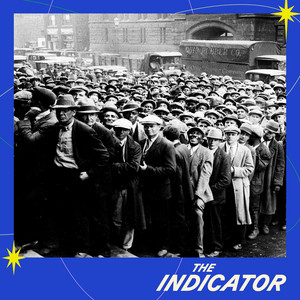
In January 1932, the U .S. was in the throes of the Great Depression.
President Herbert Hoover and Congress created a new bank -like institution called the Reconstruction Finance Corporation, or the RFC.
And it had a mission that, at the time, was relatively novel for the government.
It would extend emergency credit to businesses in danger of going bankrupt.
President Hoover assembled a board of directors for this new entity, the RFC.
One of the men he turned to was a Texas businessman named Jesse Jones.
Chris Hughes is the author of a book called Market Crafters, The 100 -Year Struggle to Shape the American Economy.
He describes Jesse Jones as a larger -than -life figure.
He was born in Tennessee, moves to Texas at a young age, starts investing, becomes a millionaire by 30.
He's a man about town.
He would definitely have a podcast if he lived today, wouldn't he?
He would have a podcast. He would have a podcast, but he had these interests in media and real estate, and he is interested in public service.
That same year, 1932, Hoover lost the presidential election to Franklin Roosevelt in a landslide.
But the RFC survived the change in administration, and Roosevelt tapped Jesse Jones to run it.
Chris says the RFC had three phases of its life.
The first one was the emergency phase, and it kicked in right as Roosevelt took office.
So the weekend that Roosevelt is inaugurated, he declares a bank quote unquote holiday all across the country and shuts down virtually all of the American banks.
And so over the coming weeks and months, the RFC is working in conjunction with other folks to recapitalize these banks.
This stabilizing role is reminiscent of what the Federal Reserve does.
But the Reconstruction Finance Corporation went further than lending money to banks in trouble.
It had the authority from the government to actually buy stakes in these banks.
By September of 1934, the RFC was a partial owner of half of the banks in the U .S. But despite that massive investment into the banking system, the Depression got worse, and the RSC moved into its second phase of life.
As the Depression gets bleaker and bleaker, they then began investing in all kinds of cutting -edge industries.
And at that point, housing is actually the most important one for them to invest in.
That's because the housing industry employed a lot of workers.
And of course, it was building something that people needed.
did. But Americans had to be able to afford these new homes.
So the RFC took another step.
The RFC creates Fannie Mae, creates the 30 -year mortgage to make it cheaper and easier for people to buy.
So we owe the 30 -year mortgage to the RFC?
Indeed. This was a major legacy of the Reconstruction Finance Corporation.
And that only created the 30 -year mortgage.
It also created the a market for trading government -backed mortgages, a financial market that still exists today.
And the RFC's second phase of life involved investing in agriculture and railroads.
Plus, it lent money to businesses that couldn't get credit from skittish private banks.
Jones believed that these business loans would spur hiring and economic growth.
Jones goes on the radio, and he's clear.
If you get turned down by a bank for your business, walk down the street to the RFC, seat and we will give you an answer within days.
And that raises a topic that a lot of economists might tell you to worry about, moral hazard, when people act recklessly because they know someone else is picking up the tab.
Were there conversations at the time about moral hazard and assessing risk and like, well, if a bank has decided that this small business sounds like a crummy business, then why should taxpayer money go into a loan for a business?
Yeah, absolutely. And you can see it evolve over time.
You know, in the beginning, they really want to avoid these kind of direct loans for this reason.
They say, you know, we in government shouldn't be doing that.
And then over time, they begin to provide, you could think of it as a kind of public option for banking that is more risk tolerant.
They don't want it to be so risky that they're just passing out money to anybody who shows up.
But they do think that they need to move the proverbial dial towards funding and taking more risk to get the economy going again.
You could have gotten funding for your yo -yo factory, Darian.
How did you know about that?
How did I know about the yo -yo factory?
I'm trying to keep a secret before the hard launch. The Second World War really got the U .S. economy going.
No thanks to Darian.
And this era is when the Reconstruction Finance Corporation enters its third phase of life.
It financed American airplane manufacturing and training schools for pilots.
The RFC also invested in something that the U .S. really needed for the war effort but didn't make.
Synthetic rubber used for, say, vehicle tires and tank treads.
It designed and built 51 government -owned rubber factories.
It also leaned on existing rubber and chemical companies to share research secrets so that they could make rubber even faster.
By 1944, so much, they've discovered not only how to make synthetic rubber, but how to do it in a cost -effective way.
And then we actually have a glut of it by the end of the war.
We had too much rubber.
Because there's so much. What did we do?
We made a bunch of bouncy balls?
What did we do? That's a good question.
I don't know. Chris says the RFC was disassembled after the war.
He points to a couple of reasons.
One was a broader push to downsize the government in the post -war era.
Another is that President Roosevelt fired Jesse Jones, this larger -than -life figure who headed the bank.
It turns out Jones had gotten into some high -profile conflicts, including with the owner of the Washington Post and the vice president of the U .S. So Jones fell out of favor with Roosevelt, and Chris says there wasn't a group of leaders able to keep the RFC going after Jones left. Parts of the RFC have endured, though.
We mentioned Fannie Mae and the 30 -year mortgage earlier.
There's also the Commodity Credit Corporation, which is this agency that supports farmers by purchasing crops and making loans.
And Chris says there have also been attempts to do similar things as the RFC.
President George W.
Bush created a loan program under the Department of Energy in 2005.
2005. The idea was to finance clean energy projects, and it continued during the Obama and Biden administrations.
That program had a notorious flop with one of its loans that went to Solyndra, a solar panel company that went bankrupt, but also lent money to Tesla to develop its electric vehicle factory in Fremont, California.
And we've seen how much the company's grown since then.
It's not just that concretely some of the institutions from the RFC survived, but this set of ideas actually, you know, comes up again and again in history.
The dream of your yo -yo factory lives, Darian.
Yes. Every banker has denied me credit but this might be one way to get some.
This episode was produced by Cooper Katzma Kim and engineered by Jimmy Keeley.
It was fact -checked by Julia Ritchie.
Kate Kincannon is our editor and The Indicator is a production of NPR.