Hello, welcome to Roundtable, where we serve up typing hot debates on the issues that sizzle in China and beyond.
I'm Yuhan Lin. China's ultra -high voltage grid is like the giant pipes in a video game.
Except, instead of delivering Mario to new worlds, it's delivering electricity.
And not just any electricity, but the kind that could help reduce China's air pollution.
Now, is this ambitious infrastructure reshape the future of renewable power in China and beyond?
For this episode, I'm joined by Ding Heng and Steve Hatherley.
Now grab your virtual compass and follow us to the heart of the discussion.
Imagine you're standing on a vast remote wind farm in northwestern China.
The wind hollowing around you, thousands of spinning termites generate electricity.
But there's a problem.
None of it is reaching the bustling cities in the east where energy demand is peaking.
So how do we move this renewable energy to the places that need it the most?
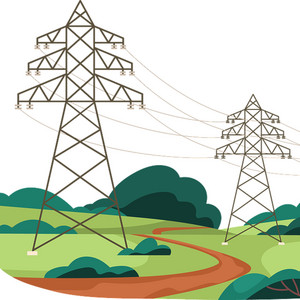
Enter China's ultra -high voltage transmission grid, a colossal project designed to solve this very challenge.
So to begin this story, let's start with a little background on where China was in terms of its electricity.
Were you playing Mario last night?
I'm curious, that's the conclusion that you drew.
This is such an interesting story.
China has the largest national power system in the world, and when you have a country as big as China is, getting power to everyone, everywhere that needs it, is a real challenge.
So let's go back to the 2000's, and this is from the BBC that you were talking about, the story that you were talking about.
You know, most of China's natural resources are located in the northwest and southwest parts of the country, but the highest electricity demand in population are concentrated in the southern and eastern coast of the country.
So you can see right there where the challenge begins, right?
The resources are in one part, and the highest population centers are on the other.
Yes, and actually it's really drastic.
For those of you who are really super into geography, maybe if you know the shape of China and everything, actually there is a line, we call it the Hu Huan Youn Line.
The line is basically a really direct straight line between Hei He and Tong Chong, and 94 % of China's population lives to the east of that line, which produces more than 90 % of the country's GDP.
Yet, available energy in this region is less than 5%, so Steve, you're perfectly right.
So in the early 2000's, China was experiencing some regular power shortages, and even though at the time, 75 % of the country's freight traffic was devoted to transporting raw materials, especially coal, resources weren't arriving at their destination fast enough, hence the power shortages.
And at that point in time, the central government was also looking for ways to develop the western regions by tapping into those natural resources.
Now enter into the conversation China's State Grid.
China's State Grid is one of the country's two grid operators, and they proposed the ultra -high -voltage grid technology to the government.
The year was 2004, and the goal was to connect the country's hydro and coal power stations with these economic hubs, the big cities that you're talking about, using the electricity that existed hundreds of miles away.
The person in charge of that idea at the time was Liu Jianya, and he was the head of China's State Grid, and dubbed by the Chinese media as the father of UHV power lines.
And he envisioned this future, where China could have this mega, mega grid that would end the country's blackouts by transmitting this electricity nationwide, and in the end the goal would be to make China a global leader in transmission technologies.
He had this massive dream for power in China.
But when he proposed this to the government, there were a lot of questions that were asked.
Yes, and we'll explain that a bit later, because if you think about it, it's a great thing, isn't it?
We want the electricity to be directly transmitted to the place without getting lost a lot during the transportation, but it is really harder done than said, and there are many things that need to be considered, especially when it comes to technology, when it comes to the material we use to actually
build the electric power lines that are currently now is already a grid here in China.
And to give you a spoiler, actually, as early as the end of 2015, China achieved the remarkable feat of providing electricity to all its 1 .4 billion citizens by the end of 2018.
China was even able to produce a quarter of the world's electricity on its own.
But before talking about exactly what are the challenges, and how come, or how did we get there, basically, one thing we need to understand is exactly what is ultra high voltage grid technology?
I think it's kind of like a mini physics lesson.
So Ding -Heng, explain to me like I'm five.
Exactly what is this?
You know, based on my limited memory of the courses I learned about physics back in the high school or middle school, I can try my best.
Basically, the definition of ultra high voltage, or UHV, systems varies actually across different countries.
Here in our country, they are defined as those with direct current, DC, voltage levels of 800 kV or above, or alternating current, or AC, voltage levels of 1 ,000 kV and above.
Basically, the kind of differences between these two systems is that DC systems can transmit more power with lower losses over greater distances, but they are more expensive in terms of building and maintenance.
By contrast, AC lines are more flexible because they can be connected to local grids along the way.
However, to remain cost effective, their length is usually limited to 1 ,500 kilometers.
In China, we have both systems being utilized simultaneously.
So I guess the principal behind this UHV transmission is that for the same power transition, the higher the voltage, the lower the current, and a lower current means less heat will be wasted, will be lost as electricity flows through cables, so there is more efficiency.
That's the basic principle.
Yeah, it enables this long distance transmission with higher efficiency, thereby solving that problem that we just talked about.
How do we get energy from parts of the country where we have all of these natural resources to cities that are really far away because the old system of moving those raw materials through freight to generate the power once it gets there, it wasn't efficient enough.
And that's why this solves that problem.
Yes. And another thing is that actually, the efficiency is something that we need to put a pin on because with this new system, or it's not that new here in China, but it's definitely new globally or internationally talking.
Relatively speaking, it's very new.
Yes, and it's actually very, very efficient.
It takes... This is such an amazing thing.
Yes. Okay, do me a favor, just very quickly do this.
Blink. Okay, there.
That didn't take very long, did it?
That's about how long it takes to transmit energy from Qinghai to Henan.
You know how far away that is?
1 ,500 kilometers. It is unbelievable.
0 .00526 seconds to transmit the green energy from A to B.
I mean, it's unbelievable.
It's almost like magic, isn't it?
And that's the marvel that ultra -high voltage transmission provides.
Yes. And for those of you who still need a little more elaboration, actually in one second, the amount of electricity transmitted is enough to power a household for, get this, two entire years.
And currently the Qinghai -Henan Ultra -High Voltage Direct Current Transmission Project allows or delivers 40 billion kilowatts hours of clean electricity annually to the central plains, which accounts for about one eighth of Henan's annual electricity consumption.
So you live in Henan and you use electricity every day.
You don't know the electricity you use are actually transmitted to you every day, 1 ,500 kilometers away.
That's why this is such an interesting topic to me, because electricity is not something that we think about on a daily basis.
We're sitting here in a room, in a studio, where we just flick a switch and the power goes on.
But we don't think, wait a minute, how did that power actually get into this building so that we can use it comfortably?
Yeah. We have almost to come to a point where we take electricity for granted.
But that's not necessarily true.
If you think about other less developed countries, electricity is still a problem.
And China is through Belt and Road Initiative and many other energy oriented programs helping those less developed parts of the region.
And I think that comes to another question, like how far or how advanced China is nowadays in terms of globally in this particular field, USV?
Yes, it's actually very advanced in the sense, because if you think about it, it's essentially about increasing the voltage.
We increase the voltage, so we lower the current, hence, get less loss on the transmission process.
It sounds quite easy.
But the issue here is that once the voltage reaches a certain level, almost anything can become a conductor instead of an insulator.
So if you think about it, for example, air is definitely an insulator normally.
But during a thunderstorm, for example, when the electrical charge in the air builds up to a certain level, the resulting high voltage can break down the atmosphere, causing what we see as lightning.
Essentially, at that moment, air would shift from being an insulator to a conductor.
And the same logic would create a biggest problem in the transformers.
That is, we need to find the proper material for the insulation in the transformers, in the cable.
At the time when everything was still being researched and trying to find out what is the best material, actually, the best material then was ceramics.
However, it could only withstand up to 50 kV of high voltage.
What we need here in China, currently what we have, the high voltage or ultra high voltage standards, is over 1000 kV.
Yeah, it's really, really impressive, isn't it?
And the total transmission length here in China, and this is from a Guangming Daily report at the end of last year, the total transmission length exceeds 40 ,000 kilometers.
And if that number doesn't mean anything to you, it's enough to circle the Earth's equator.
It's really fascinating and it's really impressive.
And these lines transmit not only hydropower and thermal power, but also wind and solar energy as well.
And we talked a little bit about the beginning stages back in the early 2000s.
UHV is now part of China's wind and solar plan, but it didn't start out that way.
But here we are in 2024.
Yes, and now we see that globally, we see more countries, especially countries in, for example, South America, Brazil is currently operates different type of projects here as well.
Yeah, and China is connected there, too.
China, as you mentioned, not the only country that's resorted to this UHV technology.
Brazil, they have two DC lines in operation, but they were both built by China's state grid.
They send hydropower from the Amazon basin in the north down to the heavily populated southeastern regions, including Sao Paulo and also Rio de Janeiro.
And actually, the state grid is building another UHV line in Brazil, too.
That's one example.
Another one is in India.
Back in 2015, the government initiated the Green Energy Corridor Scheme, and that includes dedicated transmission lines for renewable energy in states that are rich in resources.
And then they send that power across the country and to the places that need it.
Here's another example, and this might be the coolest one.
Cross -continental high voltage projects there on the drawing board in various parts of the world.
In Europe, there are several undersea cables that are being developed to bring solar and wind power from North Africa.
That's a distance of 4000 kilometers from Morocco to the UK.
And then there's another project that it's I think it's called Grigi, it connects Egypt to Greece that covers about 950 kilometers.
And then just one final example here in the Asia Pacific region, there's a huge project called the Sun Cable, and it's been proposed to export solar power from northern Australia to Singapore via Indonesia.
That's four thousand three hundred kilometers away.
It's almost too good to be true.
I mean, this is amazing.
We're transmitting electricity from one place to really faraway places.
And the energy there are clean energy.
We're solving all problems, but we understand there is a downside for everything or at least challenges in every amazing projects that we need to you know, we need to overcome.
And there are the hurdles we need to jump.
So what are some challenges we face right now?
If we want to spread or popularize this ultra high voltage grid system?
Well, I think the number one issue or the number one challenge is really about the cost because the cost is really, really high because these are UHV systems.
They require significant amount of investment and very sufficient to operate.
Operational time will be needed in order to recover those costs.
For example, there is another pretty high profile program or project here in China connecting power from Xiang Jia Ba in north western part of China to mega city of Shanghai in China's east.
This line cost twenty three billion yuan or somewhere around three point two billion U .S.
dollars. And I guess amidst this high costs, those grid operators, they tend to prioritize, say, traditional sources of energy like coal fired power and other sources of traditional energy to ensure that there will be a stable operation and a stable return from their investment over there.
And I guess the consequence of such a scenario is that this could limit the proportion or the proportion of renewable energy transmitted by going forward to renewable will be a key in the future.
Yeah, development money.
Definitely one of the challenges is so expensive to build a grid of this size.
Yes, but actually being, being expensive, we have good enough reasons for this whole system to be expensive.
Remember, we talked about ceramics being the material we used previously used.
Actually, you can understand it as the version one point.
Oh, we also have a special new version of ceramics.
You can kind of understand it as the ceramic two point oh version.
And that was also can be used for this special technology.
The only problem then was that the finished product weight seven thousand tons.
That's roughly the weight of two hundred and fifty Boeing seven three seven aircraft.
So imagine how can you move that thing from one place to another?
That's a lot of Mario karts, too.
Exactly. So that was not OK for this project, for it to be used nationwide or even internationally.
And that is why the current material we use was specially designed and basically created by Chinese engineers.
And guess what it is?
It's a special type of paper.
It's a insulating paper tailored for ultra high voltage system.
Yes. And the innovation reduced to the Transformers weight from seven thousand tons, we talked about, to five hundred tons so that it's easier to be transported to different places.
But it's still quite heavy and you still need to especially make these things resulting to the relatively high cost.
Yeah, still though, that's a massive difference in terms of the weight.
Money is a challenge.
Here's another challenge.
When we're talking about renewable energy, we need to, especially when we're talking about wind and solar power, we're depending on mother nature for for that power.
And when mother nature doesn't agree, well, then there's not much we can do about it.
So the intermittent nature of wind and solar, it requires that these UHV lines rely on coal or gas fired power to ensure a stable transmission.
And it's done well.
Renewable energy accounted for fifty six point two percent of electricity transmitted via the UHV lines in twenty twenty two.
And that was good because the government had set a target of at least 50 percent.
So it exceeded that.
But then again, most of that was hydropower.
Wind and solar contributed much less, averaging only just above twenty seven percent, which is which is still good.
But again, it's a challenge because if the weather in those regions, it doesn't cooperate, then you have to rely on other sources.
Yeah, we used to have this kind of assumption that China's coastal regions in the east are are generally in a lack of energy sources, but nowadays, I guess many coastal provinces in China are planning those large scale construction of nuclear or offshore wind power facilities and in terms of technology,
Chinese companies are a global leader once again in this field, so this would probably reduce their future reliance on imported electricity.
And then I guess there is also a risk regarding blackouts.
This is according this is not a Chinese case, but in the case of the United States, Canada, too.
I remember this early two thousands, right?
Yeah, yeah, I forget the exact year that it was.
But yeah, there were blackouts in parts of Canada, too.
And the reason was it was really triggered by a this not necessarily a tiny, tiny, but a simple malfunction in the alert system of a of an Ohio based power company.
And then it's resulted in widespread blackouts.
So the risk is definitely there.
And one other thing is if we want to have these infrastructure built everywhere, not only in China, around the world, everywhere, you have to think about the geographic situation, for example, some places have high altitude resulting in special conditions for the material for the engineers to solve.
And also there are icing regions.
So there are many technical obstacles we need to overcome.
Yeah, but still in the meantime, for at least both of you, do you think you HV technology can play an important role in future energy solutions or especially in clean energies being used internationally?
Well, yes, I do think it supports the global energy transition.
It's not it's not something that can be used easily everywhere right now.
We talked about the examples of where they do have plans and where they're actually doing it in Brazil and UK, India and India and from Australia to Singapore.
But if you look at the United States, for example, they don't use it yet.
And the technological advancements, they're there right now.
Obviously, people are using it in other countries.
But in America, they face a lot of challenges there because there's a lot of regulatory issues, it's a lot of red tape, and that seems to be the biggest obstacle, at least according to Ismael Rooenda, who is an expert who was talking about this, they said to achieve cross border and interstate transmission,
you have to complete a lot of paperwork, give a lot of permits that need to be filed and not everyone wants a transmission line near their home.
So you have to plan where these lines are going to be built.
Right. Because again, you're going from state to state and states have their own laws.
So that's one of the that's one of the holdbacks there.
But talking about globally and the future, it promotes power, interconnection between countries or regions.
If we can get past all of those permits and everything that needs to be filed and it allows for enable the enabling of resource sharing, you know, talking about Australia to Singapore.
That's amazing that we can share that.
Hmm. Yeah, I guess in the US case, the state power versus the federal power sometimes is in conflict with each other.
But here in China, we have basically local authorities and the central authorities.
They are cooperative.
They have the they are setting their eyes on the same agenda.
So maybe that's another reason why the United States, despite its technological advancement available in that country, it is comparatively speaking lagging behind in this in this field.
So, yeah, I think in terms of the future for this UHV technology, they can definitely enhance the transmission efficiency of renewable energy.
They can improve our stability in terms of our regional or national grid system, facilitating this kind of cross border power connectivity.
These are these are all aspects we can look forward to with great sense of optimism.
Yes. So will China's ultra high voltage grid revolutionize the way we think about energy?
Well, if it works, it could lay the groundwork for a truly interconnected global grid capable of transporting renewable power across continents, not just countries.
It's a vision of energy that's cleaner, greener and most importantly shared.
But whether this vision becomes a reality would depend on the success of projects like the UHV grid projects that could one day power the world.
This is Roundtable with myself, Neil Holing, Ding Heng and Steve Hatherly.
Coming up next, we talk about what happens when friendships end.
Don't go away. We'll be back after the short break.