N .P .R. This is the Indicator from Planet Money, I'm Waylon Wong.
And I'm Darien Woods.
Back in 2013, the government of Mozambique said it was going fishing for tuna.
Mozambique is in southeast Africa and borders the Indian Ocean, which has a lot of tuna.
The Mozambique government set up a new fishing company.
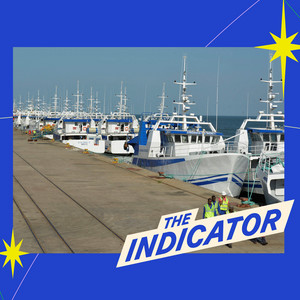
This company borrowed $850 million from international investors, and it spent some of that money on a fleet of 24 new fishing boats.
But those boats never really got used.
It turns out that the government wasn't all that interested in building up its tuna fishing industry.
What some state officials were actually interested in was taking out loans and not telling anyone about it.
Yeah, around the same time, the government secretly borrowed over a billion dollars through the same investment banks.
When this debt was uncovered a few years later, it caused a huge scandal involving bribery and kickbacks, and the economy tipped into crisis.
It's a financial scandal that crashed Mozambique's economy.
Here's news outlet Al Jazeera reporting on the fallout in 2022.
It's become known as the hidden debt scandal.
That is one of the biggest corruption cases on the African continent this century.
A court in Mozambique...
It was also known as the tuna -bond scandal.
And it's a high profile example of a government surreptitiously borrowing money.
But new research shows that hidden debt is a widespread problem.
Today on the show, the economists behind this research shine a light on this practice.
They tell us where the money comes from, and how secret borrowing can make life worse for ordinary people.
This is Albert Glass.
On This American Life we like stories that surprise you.
For instance, imagine finding a new hobby and realizing...
To do this hobby right according to the ways of the masters, there's a pretty good chance that you're gonna have to bend the law to get the materials that you need.
If not, break it. Yeah, to break international laws.
Your life's stories, really good ones, This American Life.
Ho Ho Ho! Santa here, coming to you from the North Pole, where the elves in our podcast division have just completed work on this season's best gift for public radio lovers.
NPR +, give the gift of sponsored free listening, and even bonus episodes from your favorite NPR podcasts, all while supporting public media.
Learn more at plus dot NPR dot org.
Ho Ho Ho! It's been a great year for TV, movies, and music, and we are highlighting the best of the best.
We're talking about our favorite moments of the year, including some of the best pop culture you might have missed.
Listen now to the Pop Culture Happy Hour podcast from NPR.
Sebastian Horne was recently drawn into a kind of economic mystery.
He's a professor at the University of Hamburg in Germany, and he studies sovereign debt, that is the money that governments borrow.
We started to see very big discrepancies between, for example, what media reported on big deals, big infrastructure projects financed by debt.
And then at the same time statistics that didn't really seem to move all that much.
By statistics, Sebastian means the official numbers on borrowing that the government's put out.
And then at some point you realize, well, something's not entirely right here, something doesn't really add up.
Now this would be the point in a detective story where the hardened private investigator stakes out an abandoned warehouse or something.
But this is an economic mystery, so Sebastian and several other researchers went skulking around a database of numbers from the World Bank.
Okay, so not so Hollywood, but still important work.
Fewer spiders, probably.
Fewer spiders. More lines of code.
Fureously tapped keyboards.
And as you know, the World Bank is an international organization that lends money to low -income countries.
And any country that owes money to the World Bank is required to regularly report how much public debt it has.
And this debt can be in the form of government bonds or loans made from one country to another.
The World Bank has been collecting this data since the 70s.
Sebastian and his colleagues tracked how countries revised their debt figures from year to year.
They figured if the numbers went up, that would suggest that the governments were chronically underreporting their debt.
And here's what the researchers found.
They detected $1 trillion of hidden debt.
It averaged out to 1 % of each country's GDP.
Cesar Sosa -Padizia is an economist at the University of Notre Dame in Indiana.
He says these numbers show that hidden debt is a large and common problem for the nearly 150 countries that the researchers studied.
These countries span the globe from Egypt to Pakistan to Thailand.
They never suspected that this was so pervasive because this happens across all geographies and also through time.
So it's not that it's just a new phenomenon.
So, yes, it was surprising to me.
Now, when it comes to government statistics, revisions happen regularly.
Like in the US, there are always updates to the monthly job numbers or the quarterly figures for, say, gross domestic product.
Cesar refers to these kinds of tweaks as revisions without drama.
And he says most of the underreporting on debt falls in this category.
It's not funny business at the finance ministry but rather more mundane issues.
Like a government just doesn't have the resources to track what every agency is doing.
All right, but what about the revisions with drama?
I want theatrics. Well, get out your popcorn, Darien.
There are cases where governments are borrowing money on the down low.
The researchers found that money borrowed directly from other countries tends to be the most hidden kind of debt.
It's not traded in financial markets the same way that, for example, government bonds are.
So, Sebastian says it's more easily concealed.
There's a diplomatic visit and you sign a couple of contracts and each of the parties treats it as a state secret.
Well, it may well be possible to shield debt from public scrutiny for a long time.
One example of this kind of debt leading to big trouble is in the African country of Zambia.
A few years ago, the government went into default.
It turned out that Zambia had borrowed almost twice as much money from lenders in China than what was previously disclosed.
When a new president took office, he said that the treasury was literally empty.
The researchers found that countries tend to rack up their secret debt in good economic times.
And then the proverbial skeletons tumble out of the closet when there are economic downturns.
This is because governments can get into trouble trying to pay the money back.
And while Sebastian and Cesar focused on lower income countries for their study, they said higher income countries aren't above reproach.
Remember the Greek economic crisis of 2009?
Now to Greece, a country on the brink of collapse.
Banks shuttered, ATMs running out of cash.
And now they came about after revelations of hidden debt there.
Its crisis was part of a larger wave of economic instability in the region.
A bunch of other countries in the Eurozone got sucked into the crisis.
One advantage that a higher income country does have is that it can better absorb the shock from a large amount of hidden debt.
A country like Mozambique is more vulnerable.
In the wake of the Tuna Ban scandal, the government went into default.
Economic growth was cut in half, inflation surged, and by one estimate, nearly 2 million people were pushed into poverty.
And this brings us to how hidden debt can hurt everyday people living in a country.
When the borrowing comes to light, it can force a government to rebalance its books.
And that could mean slashing social welfare programs, freezing wages for government employees, or raising taxes.
These kinds of policies are called austerity measures, and the government in Mozambique rolled them out after the scandal.
The head of a nonprofit there told El Jazeera about how these measures were playing out.
Cuts were made to the health, education, water and sanitation sectors.
And that had the direct impact in how people access medication, you know, how they access medicine, how they access health services.
And above all, I think the impact has been in the pocket of the citizens.
There were also some consequences for the officials behind the Tuna Ban scandal, including court cases in Mozambique, New York and London.
Credit Suisse, the investment bank that helped arrange the secret loans, paid about $500 million in penalties and fines.
This summer, a federal jury in the US convicted Mozambique's former finance minister on fraud and money laundering charges.
As for those 24 Tuna boats, you know, the ones that were supposed to create jobs for fishers in Mozambique, last week there was an auction to sell off the fleet.
And not a single bid came in.
Those boats are still resting in the harbor.
Before we wrap up, we just want to thank everyone who supports us by giving to your local station or by joining NPR+.
Everything the indicator has done this year is because of your help.
And if you're not familiar with NPR +, it's a great way to hear this and more than 25 other NPR podcasts sponsor free.
There are other perks too, like bonus episodes and discounts at the NPR shop.
You get all that for a small recurring donation and you get the sublime pleasure of knowing you are supporting NPR's mission of creating a more informed public.
Just go to plus .mpr .org for details.
Again, that is plus .mpr .org.
This episode was produced by Angel Correras with engineering by Gilly Moon.
It was fact checked by Cio Juarez and edited by Kate Kincannon.
The indicator is a production of NPR.
It's cuffing season, the cold months where we might look for a warm somebody to cuddle up to.
But dating isn't always warm and fuzzy.
And this year, there were so many big debates about how we love.
On It's Been A Minute, our cuffing season series will help you answer some big questions.
Like what is the ick really about?
Or is it okay to date for money?
To find out, listen now to the It's Been A Minute podcast from NPR.
When it came out in 1843, a Christmas carol was a sensation and Charles Dickens became a legend.
Some people would consider him the originator of Christmas or the inventor of Christmas.
The past, present, and future of Charles Dickens' A Christmas Carol.
Listen to Do Line wherever you get your podcasts.
This message comes from the Kresge Foundation.
Established 100 years ago, the Kresge Foundation works to expand equity and opportunity in cities across America.
A century of impact, a future of opportunity.
More at Kresge .org.