NPR. Waylon, I have a confession to make.
I almost missed the publication of the Beige Book.
Oh, well, Robert, you are in the Circle of Trust here, so you can tell us what happened.
So, I normally have the Beige Book on my calendar, I set aside the whole day to read the report, brew a pot of tea, I make a whole thing out of it.
But there has been so much economic news lately.
Tariffs on, tariffs off, stock market red, stock market green, that I somehow overlooked that the Federal Reserve had put out its most recent report of economic conditions across the United States.
It's like everything in life, right?
The loud, bright things grab your attention.
But the beige, it's quietly waiting for you when you need it.
You could almost say that it deserves an award. It's the Beige Awards, our eight times a year salute to the art and science of telling stories about the economy.
I'm Robert Smith. And I'm Weilin Wong.
It may not flash red or green, but the Beige Book abides.
On this edition of the Beige Awards, we find that just as the US is warming into spring time, an economic freeze is falling over the land.
Bundle up, baby it's cold outside, after the break.
Support for NPR and the following message come from Indeed.
Just realizing your business needed to hire someone yesterday?
Speed up your hiring right now with Indeed.
Claim your $75 sponsored job credit now at Indeed .com slash indicator.
Terms and conditions apply.
Nice to see you. Always good to remind everyone how this award show works.
There are 12 regional banks in the Federal Reserve System.
Each one studies their local economy and brings back little stories of what they see.
They publish them. In The Beige Book, we give awards to the best stories.
Right. So, in the last Beige Book, we noted that everyone was using the word uncertainty, and this time around, a new word caught our attention in The Beige Book, freeze.
Yeah, like the proverbial deer in the headlights.
Multiple businesses talked about a hiring freeze.
Which is better than layoffs, yes.
But in order to keep the unemployment rate stable, the U .S. economy has to add 100 to 200 ,000 jobs, a month.
A freeze is definitely bad news.
Yes, and even the good news parts of the beige book were still kind of bad news.
For instance, we saw car dealerships reporting higher sales.
Good. From people who wanted to grab a new vehicle before tariffs made them unaffordable.
Not good. And one law firm reported increased business from clients?
Oh, that's promising.
Because they needed help navigating all the confusing policy changes coming out of D .C.
Whalen, we just need to embrace the moment and stop sugar -coating it.
The best entries from the Beige Book this time were the most depressing ones.
For instance, I'd like to give a runner -up award to a small entry from the Philadelphia Fed.
You know those restaurant weeks where every restaurant in town offers some sort of deal?
Yeah, it's always like a prefix, right?
Three courses for $17 .76.
So patriotic. But unfortunately this is the Philadelphia entry in the beige book.
Quote, a significant number of restaurants chose not to participate in an annual local restaurant week promotion because they couldn't afford to discount their menu items. Oh, yikes.
It must mean they're operating right on the edge.
And we could all use a cheap meal right now, right?
But no matter, let's perk up the mood with a little drum roll.
And the winner of the Beigy Award...
The envelope, please.
It's the Kansas City Fed!
Coming to the stage is not one, but two writers from the Kansas City Fed, Jeremy Hill and Stephen Howard. We spoke to them on April 25th.
Congratulations, gentlemen.
Thank you, Robert. Thanks.
It's exciting. So, I have to tell you even though it is a virtual award, we only have one of them.
Have you decided how you're going to split this?
Cut it in half. Oh, very solomonic of you.
We are giving each one of you half an award for two very different entries in the Beige book.
One is a little bit more wonky than the other.
Let's start with the wonk.
We've been talking endlessly on the indicator about price increases from tariffs and which products would be the most impacted.
But Jeremy Hill, you noted that some firms are talking about increasing prices across the board. I will read the entry quote, Contacts indicated passing rising costs to customers will occur over the next several months and anticipated goods prices will rise broadly as many suppliers are spreading cost increases across their entire product portfolios.
Right, so when firms are thinking about this right now, they shared with us, it's about revenue stabilization.
We had that recently during COVID where they got taken off guard and demand shift between one product line to another one.
And they're still not certain in how things will shake out.
So when they looked at the risk, it is best to start increasing on all those product lines, according to those firms. Which I guess makes sense, right?
Customers may be able to stomach smaller price increases everywhere rather than have one or two products be completely unaffordable.
Ugh, like the better of two bad options.
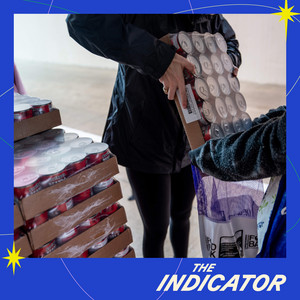
And - Exactly. Speaking of unaffordable, our other winning entry was about food banks.
The Beige Book has been working real hard to expand beyond covering businesses and starting to include nonprofits and social service agencies.
Robert, if you would read the quote.
Uh -huh. Funding cuts from the USDA were highlighted as particularly impactful regarding services for seniors.
Specifically, one pantry reported cutting back the amount of food they can give, from three to five days of shelf stable food to two days of food every 30 days due to funding cuts.
Stephen Halland, you wrote that line, and it's very specific.
We always hear about food banks struggling generally, but this is a drop of five days' worth of food to two days' worth of food.
What happened? Yeah, so the USDA cut about $500 million from food banks.
And that substantially impacted the amount of food that food banks could provide to their pantries.
So this particular food pantry was responding in trying to serve as many people as they can, but it's going to be less food that they can provide to each person.
The Trump administration cut a billion dollars from USDA programs that provide fresh food for school lunches and then also this money for food banks.
They said the Biden levels of food assistance were unsustainable.
We wanted to hear what food banks in the region were doing to respond so we called up one that provides food to 27 counties in Missouri and Kansas.
So my name is Stephen Davis and I am the president and CEO of Harvesters, the community food network.
Now, food banks always need more food.
You never call up a food bank and they say, oh no, we're good, we got everything we need right now.
But Steven Davis says it's especially bad this year.
Food is incredibly expensive, we all know that.
All the other costs have gone up rent, mortgages, health care costs, so your dollars are just not stretching as far.
And often where people have to make sacrifices is on the food that they would purchase.
Steven from Harvesters said they have a lot of different ways of getting food to give away.
Everything from cans donated by community members to deals with food manufacturers to use stuff that would have gotten thrown out.
The USDA budget cut really hurts because this was money they could have spent on staple foods that might not get donated.
He estimates that this will mean they will lose out on 2 .4 million pounds of food.
So you think about 2 .4 million pounds of food.
and we distributed 61 million pounds of food last year, but that's a meaningful amount of the food that we distributed that we could use to serve families that all of a sudden just went away.
And as we saw in the beige book, that can mean essentially food rationing, giving out less food to families so they can serve more people.
Now of course, Harvesters is going back to their donors and volunteers.
They're hustling more extra food from manufacturers, but Stephen says he doesn't know what will happen if the money doesn't come back.
Or if the economy gets worse.
Remember, it might be scary right now but the unemployment rate in the U .S. is still low.
Who knows what the next beige book will bring?
Ah, the next beige book.
Yes, it's June 4th.
I've marked on my calendar, in my phone.
I'm not gonna forget it this time.
And I want to just say congratulations to our two winners from The Kansas City Fed, Jeremy Hill and Stephen Howland.
The next beige book is going to be a crucial one.
You two aren't planning vacations or something before then.
Well I don't have any scheduled.
It's a year -round job, right?
We have to be engaged all the time.
So vacations are on the side.
No rest for the Fed.
I'm sure they get vacations.
This episode was produced by Inga Quer arrays with engineering by Sina Lofredo.
It was fact -checked by Sierra Juarez.
Kate Kincannon is our show's editor.
and the indicator is a production of NPR.