From The New York Times, I'm Natalie Kitroff.
This is The Daily.
In its escalating campaign against Venezuela, the Trump administration has gone from shooting down drug boats to now trying to seize multiple oil tankers in the Caribbean Sea.
Today, my colleague Anatoly Kermeneyev explains why President Trump is shifting his tactics on Venezuela and what that might tell us about his true ending.
It's Wednesday, December 24th.
Anatoli, Merry Christmas.
Thanks for joining us today.
Thank you for having me.
So the last time we talked to you was when the US military was ramping up these strikes on boats in Latin America that they claimed were running drugs to the US.
We are coming back to you now because over the past few weeks, we've been hearing about this new kind of escalation in the Caribbean, which is the US seizing ships that have been carrying Venezuelan oil.
So help us understand how you're interpreting this new element to this operation, which has been dramatic in its own right.
We have seen major shifts in the narrative over the last few weeks, Natalie.
The focus has shifted from a primarily military campaign to a primarily economic campaign.
The US government has moved away from boat strikes in the Caribbean and the alleged campaign to stop the flow of drugs coming from Venezuela to the United States.
And they have moved towards Venezuelan oil.
They have moved towards taking action against tankers exporting Venezuelan oil, the biggest source of the country's revenue, with a very clear attempt to squeeze the country's finances, squeeze them to the point of strangulation and achieve the results that they have not been able to achieve through military hands.
And what is the goal?
Well, the rationale that the US officials have used for this campaign has varied throughout the last several months.
But increasingly the message coming out from US officials and public is about regime change right.
That all these different measures that the US is taking against Venezuela is to force President Nicolas Maduro to leave office.
And Trump has attempted to crash the Venezuelan economy in the past with a view of getting rid of Maduro.
But what we're seeing right now is unprecedented.
It's the biggest economic pressure against a Latin American state that we've seen in decades.
Okay, let's walk through exactly what we've seen.
How exactly did this new, and as you said, unprecedented phase of this pressure campaign start?
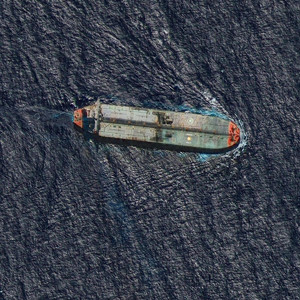
So on December 10th, an oil tanker called Skipper, carrying about 2 million barrels of oil, was heading east towards China, carrying Venezuelan oil to its biggest market.
Extraordinary video released by the Trump administration showing the seizure of an oil tanker off of Venezuela.
But it was ambushed in international waters by U.S. law enforcement agents.
Watch as U.S.
Navy helicopters swarmed the tanker.
Who repelled... from a helicopter coming onto the deck of the oil tanker.
And then as I see it there, guns drawn and to control the vessel.
Tonight new satellite images of that oil tanker seized by the US off the coast of Venezuela, headed to a port in Galveston Texas, and ordered the crew to take the ship towards Texas.
It's a new escalation in President Trump's pressure campaign against Venezuela and what he calls its illegitimate narco-terrorist regime.
And at first Betancur's detention appeared to be a one-off, like a big public relations move aimed to grab world attention, shift the narrative away from attacks on drug boats, which were becoming increasingly problematic in US public opinion and would draw an increasing backlash from American lawmakers, including even some Republicans.
And the seizure was a theatrical move that for many of us that cover Venezuela thought was a red herring.
But it obviously wasn't a red herring.
It wasn't a one-off.
The administration then started going after more tankers.
It became part of something bigger.
This morning, the United States is escalating its pressure campaign against Venezuela.
Since then, we have seen the US take action against two more oil tankers with ties to Venezuelan oil.
The US Coast Guard is pursuing a third tanker off the Venezuelan coast.
It's the third in the last 10 days.
And they, as we speak, they are chasing another vessel that has worked in Venezuela, which was on the way to the country to pick up crude there.
They're actively chasing it in the ocean.
Yeah, it's a very tough image to understand in your head because clearly a tanker cannot outrun American gunboats.
But Trump has promised that they will get it eventually.
Got it.
So two seized tankers, one that's fled.
How is the Venezuelan government responding to all this at this point?
The Nissan government is livid.
One source said Maduro is not just angry, he's bananas.
They have called the US murderers thieves pirates, referring to, you know, United States as the pirates of the Caribbean.
Anatoly, when we talked last, you made it very clear that forcing Maduro out was a big goal for very powerful people inside the Trump administration, Marco Rubio, the secretary of state, in particular.
And it sounds like that goal has become even more explicit in the weeks since.
But what is Trump saying about the official justification for what the administration is doing here?
So the initial explanation was that the U.S. is simply enforcing sanctions already in place.
Trump was doing something that previous administrations didn't have the gut to do.
Can we just pause there and explain for a moment these pre-existing sanctions that you're saying have existed on Venezuela?
Take me through those.
During his first administration, Trump made an initial push to... topple Maduro from power.
And he sanctioned the Venezuelan oil industry.
He made it illegal for American companies to work with Venezuela's state oil company, which owns all the oil in Venezuela.
And this made it very difficult for Venezuela to sell its oil.
And it started to increasingly rely on the so-called dark fleet or shadow fleet basically, tankers exists on the very edge of legality of international law, but carries sanctioned oil around the world, primarily to China.
And Venezuela's reliance on sanctioned vessels has given the current Trump administration a perfect excuse to go after its oil industry.
And you said that the Trump administration is now going out and actually enforcing these sanctions in a way that it wasn't willing to do before and in a way that the Biden administration hasn't done before.
Why?
Well, the big fear has always been upsetting the fragile global oil market, right?
Creating volatility in the industry and raising global oil prices, which would have an impact on American pumps, inflation being obviously a massive political issue in the United States.
And that has prevented...
Trump and the Biden administration in part from enforcing the sanctions.
But this month, Trump decided to give it a shot.
He threw to the side the caution of the past and went big time against Venezuela's oil industry.
And so far, the effects on the oil prices has been fairly muted.
There are a lot of other different factors at play.
The economy is weak.
There's a.
The prices have not bulged in any meaningful way, which has given him a carte blanche to expand his strategy, to scale it up.
But there's a bigger justification in play in Italy.
Shortly after the detention of the first tanker, Trump published this long screed on Truth Social, his media platform, where he alleged a wholesale theft of money.
American oil by Venezuelan governments.
Venezuelan governments, according to him, has stolen American land, has stolen American oil, has defrauded American oil companies.
And he is writing a historical wrong.
What is he actually talking about there?
Explain that.
The short answer is that we don't know.
It's a very incoherent text that does not neatly match on any historical events.
But throughout its history, Venezuela had several ways of nationalization.
Most recently in 2007, where Maduro's predecessor, Hugo Chavez, nationalized some of the oil fields, leading to the exodus of some American companies like ExxonMobil and CanocoPhillips, who have been suing the Venezuelan government ever since.
Okay, so we're not exactly sure what Trump was referring to, but it seems to be a reference to this period of nationalization where American oil companies were kicked out of Venezuela and the government took control.
That's right.
And Trump announced...
And I quote him a total and complete blockade of all sanctioned oil tankers going into and out of Venezuela.
A few days later, his advisor, Stephen Miller, followed up with arguably even more incendiary tweets, alleging that the Venezuelan oil industry has been created by the toil and ingenuity of American people.
And America wants its rights back.
But there is an exception to all this, right, Anatoly?
Chevron, which is an American oil company, is still operating in Venezuela.
That's right, Natalie.
The reality is a lot more complex than the narrative that the Trump administration is attempting to put forward.
During that last wave of nationalization, not all American companies have left.
Some have stayed.
And the biggest one of them being Chevron.
It's negotiated with the New Zealand government.
And the deal that they have worked out both with Nicolas Maduro and the government of the United States allows them to produce all the oil from the fields that are operating in Venezuela and give back half of that oil to the Venezuelan government and export the rest to the United States.
The thinking of the company has been that they're willing to swallow this temporary period of losses or reduced profits for the eventual balance.
Evaluates the company in the events of a government change in Venezuela?
Venezuela is sitting on top of the world's largest oil reserves, and Chevron would be in a position to benefit from that.
It is interesting that piece of this that, on the one hand, US policy has been to put maximum pressure on the Maduro regime.
And yet on the other, they are kind of propping up the regime by allowing Chevron to give its oil back to the government.
Well, it goes to be hard to be in consistency of American policy towards Minnesota right now.
There's a clear intention to starve Maduro of funds, to force him to negotiate at best and leave power at worst.
On the other hand, US is very preoccupied with Venezuela's energy asset fall into Chinese hands in case of chaos in the country.
So it has chosen to keep Chevron working there, continue earning revenues, continue propping up Venezuelan governments, because it is concerned that if Chevron were to leave, those oil fields would fall into Chinese hands.
And the clear contradictions of this policy makes it very difficult for anyone to understand what will happen in Venezuela next.
We'll be right back.
Anatoly.
Before the break, you left us with a sense that it is really hard to know how all of this is going to play out.
But it seems clear from what you've said that the point of this campaign is to create pain inside of Venezuela.
So I want to turn to that.
I want to talk about the impact this is having inside the country.
How are Venezuelans feeling about it?
And how is the Maduro regime responding?
Since the start of seizures of tankers, Venezuelan oil exports have plummeted.
This is by far the biggest source of revenue for the country.
And we don't know what political effect this is going to have.
But we know that this is going to have a very negative effect on the Venezuelan economy and, by extension, on Venezuelan people.
Most people in Venezuela, Natalie, dislike Maduro.
They want him gone.
More than 70% of them voted against him in last year's election.
And they would love to see political change in the country.
And this current shock and awe strategy employed by Trump, many support it.
They are prepared to prop up some economic pain if it means Maduro live in office in any meaningful amount of time.
The worry, the anxiety in Venezuela right now is that if Maduro withstands this current blow, if he manages to adapt, then the fear is that Venezuelans will be stuck living in an impoverished poor, isolated economy.
It could leave them worse off, actually. it could leave them worse off.
And remember Natalie, that this country has just been beginning to emerge from another crisis, extremely deep economic crisis, which was caused by Maduro's terrible economic policies and corruption, but was aggravated by American sanctions.
And life has become a little bit easier in the last few years.
The government has liberalized the economy, took away many of the currency and price control that have been hobbling economic activity.
People could breathe.
People could work.
They could invest a little bit.
They could see the return on their investment.
And this new pressure campaign by Trump is crumbling all these plans.
And inside of Maduro administration is disbelief and anxiety.
They are still scrambling to figure out what exactly is happening, how they can react to it.
Ships are afraid to come to Venezuela.
They're turning around.
They are unwilling to take Venezuelan crude.
They are sitting in ports because they're afraid of being seized.
And the oil has to be pumped.
The oil has to keep coming on the ground.
Venezuela doesn't have a lot of storage.
It doesn't know what to do with it.
There are calls to seize some of the tankers and use them as storage facilities.
There are calls to maybe put armed soldiers on top of the tankers and let them accompany all the way to China.
Venezuela's gunboats have already been escorting tankers inside Venezuelan waters.
There are calls to maybe expand them and let these gunboats go into international national waters, of course increasing the risk of confrontation with US military.
It's a period of extreme tension and extreme fear inside the Venezuelan government right now.
And is the Trump administration's logic here that essentially by imposing what the president has called a blockade, by creating such terrible conditions inside Venezuela, the U.S. either prompts an uprising by the Venezuelan people or Maduro just voluntarily leaves and gives up power?
Is that what they're after?
What is the calculation?
In the last few weeks, we have seen Trump officials becoming increasingly explicit about their aims.
Susie Biles, the White House chief of staff, said that the US is going to keep blowing up boats until Maduro cries uncle.
Kristi Noem, the Homeland Security secretary, said on Fox News that Maduro needs to be gone.
The calculation is that the economic pressure, economic pain is going to make Maduro's hold on power untenable, but it's going to lead to an internal uprising, an internal coup by factions of the military that will ask him to leave or eliminate him.
And what's your sense of whether that will actually work?
Because you, I know, are a student of Latin American history.
The U.S. has been squeezing Maduro economically for years now.
And Cuba, for example, has been under a U.S. embargo for more than a half century.
The communist government is still holding on to power.
That's right.
There are few historical precedents for when economic pressure leads to regime change.
Governments adapt.
And when economy shrinks, people become more dependent on the government, not less.
Government is holding a bigger share of a shrinking pie.
You know, I grew up in Russia.
There's an old Soviet anecdote.
A schoolgirl is walking home and stumbles upon her drunken father.
And she says to him, Daddy...
I heard that vodka is getting more expensive.
Does that mean that you're going to be drinking less?
And he goes, no, sweetie, it means you're going to be eating less.
And I think this analogy applies well to Venezuela.
Wow.
The Soviets really do have the best anecdotes.
I'm also struck Anatoly by the obvious thing that happens when you squeeze a country economically, which is that people who are suffering try to leave it.
They migrate, which is another thing the Trump administration really doesn't want to see happen, right?
Absolutely.
And again, we're coming back to the contradictions of this policy that we have talked about earlier.
The Trump administration's overarching goal is to stop the flow of migrants to the United States.
At the same time, it is dramatically worsening economic conditions in Venezuela which, if it continues, is going to lead to another increase in migration from the country.
It's going to put pressure on Venezuela's neighbors and it's going to lead some of the people to head north towards the United States.
And this is a point that the Maduro government has been making very clear that the campaign to topple it from power is only going to create an economic crisis and political instability that's going to lead to a new migration crisis in the country.
When we talked about the boat strikes a while ago Anatoly, you had mentioned that there was this faction inside of the administration that was pushing for a diplomatic route, for a negotiation that might give the US a deal and a way out of this escalation, this campaign.
Is that still an option here with now the seizures of these oil tankers?
That is a crucial question.
That is what I'm focused on, because the headlines are dramatic.
The headlines are unprecedented.
But underneath these dramatic events actually appears to be a potential diplomatic solution.
Trump is saying that Maduro has stolen American oil, that he has defrauded American companies, that America wants its oil back.
And, of course, Maduro has already offered Trump Venezuelan oil during an earlier round of negotiations that took place in the spring of this year.
The two governments have come pretty close to an agreement that would see a massive increase of American oil investment in the country and the country opening up and basically redirecting its flow of oil from China to the United States and opening up to American companies, American investments.
And what benefit would that actually give the United States?
Can you just walk us through what the US actually gets out of potentially controlling Venezuelan oil reserves?
It will give the United States control over the world's largest known oil reserves, which in turn means that the US can control the supply of oil, can control the global oil prices and can reward its allies and punish its adversaries by manipulating the oil market.
Okay, so geopolitical benefit.
Absolutely, geopolitical benefit.
And there's a bigger, more fundamental benefit for the United States.
Control of the world's largest oil reserves would allow the United States to follow through of its plan of becoming the dominant player in the Americas, of expelling its adversaries China, Russia and Iran from the region and dominating the country's political and economic environment.
Yeah, and we've seen the Trump administration explicitly acknowledge that that is the goal of its foreign policy in this recent document that it put out its national security strategy to establish itself, the United States, as the predominant power in the Western Hemisphere.
So how are China and Russia responding to this?
So far, we're standing on the sidelines.
Of course, China has just sealed a major trade deal with the United States, which is crucial to its economy.
And it's been very careful about what fights it picks with the United States.
We have seen the seizure of Chinese property in the actions taken against tankers.
China has issued recently a statement condemning these seizures but has not taken any further action.
Russia as well has made some gestures of verbal support, but has not moved beyond that.
We have not seen Maduro's allies come to its aid in any meaningful way.
We have basically seen America's adversary acknowledging Latin America as a sphere of American influence.
Why would they do that?
Why aren't they coming out more forcefully in defense of Venezuela and against this action by the US, which theoretically would expand American power?
Part of it is a position of relative weakness.
They are preoccupied elsewhere.
Of course, Russia is fighting a massive war in Ukraine.
China is dealing with economic slowdown.
They have bigger fish to fry.
But Trump's actions also fit into this country's fundamental worldview, which basically sees world powers, regional powers, having the right to dominate their neighbors.
And for Russia, the loss of Maduro is an acceptable cause for American acknowledgement that it has rights to defend its interest in Eastern Europe.
It's fascinating.
It sounds like basically an acceptance by these two great powers that yes, carving up the world into spheres of influence works well for them too.
The so-called multipolar world has been something that Putin has been talking about for years.
And, you know, it was sort of largely ignored by Western media, by Western policymakers.
And Trump's actions are bringing this world into reality.
Anatoly.
Given everything you've told us, Do you think we're more likely or less likely to see military action on the ground in Venezuela than we were before the seizures of the tankers started?
Because I think all of this action against Venezuela is really concerning for people who don't want to see a war.
We've now seen dozens of boats blown up, American aircraft, carriers and other warships kind of positioned around Venezuela.
We keep hearing that Trump is open to land strikes.
Bottom line, are we seeing this ratchet up or cool off militarily?
It is quite ironic talking about cool enough, as tankers are being seized in high seas and being chased throughout the Caribbean.
And of course, the U.S. continues to build up its military presence in the region.
But paradoxically, perhaps we are seeing a certain ramp down of the escalations.
We have seen the focus of the boat strikes move towards the eastern Pacific, away from Venezuela, an area where actually most of the cocaine is being trafficked.
And We are seeing, on one hand, an escalation of economic pressure of Maduro to see whether this economic shock is going to be enough to topple Maduro from power.
On the other hand however, we are seeing the emergence of a potential off-ramp, of a potential diplomatic deal which would allow Maduro to ensure the survival of his political movements in return for handing the country's natural wealth to the United States.
Well, Anatoly, thank you so much.
Pleasure to be here.
We'll be right back.
Here's what else you need to know today.
On Tuesday, the Supreme Court refused to allow the Trump administration to send hundreds of National Guard troops into the Chicago area.
It was a rare departure from recent cases where the conservative majority has sided with Trump in early tests of presidential power.
The order is preliminary, but it casts doubt on the viability of similar deployments in other cities and likely will set ground rules for legal challenges in Portland and Los Angeles.
And the Trump administration says it will begin the process of seizing pay from student loan borrowers who are in default starting as soon as next month.
Officials will send the first round of notices to 1000 borrowers, and those notices will increase every month.
It's unclear exactly how much will be deducted, but the government can take as much as 15 of an employee's wages for loan repayment.
Today's episode was produced by Rochelle Banja, Shannon Lin, and Eric Krupke.
It was edited by Maria Byrne and Patricia Willans, with help from Paige Cowett.
Contains music by Dan Powell, Diane Wong, and Marion Lozano.
And was engineered by Alyssa Moxley.
That's it for The Daily.
I'm Natalie Kitroweth.
See you after the holiday.