This BBC podcast is supported by ads outside the UK.
In Fiji, music isn't something we do, it's who we are.
Music brings everyone together.
Music is connection.
My favourite Fijian quote, it's called Marautiko.
Marautiko means to stay happy, whatever you go through in life, be positive, stay happy.
Experience the real Fiji.
Visit Fiji .com .fj to find out more.
It's Wednesday night after a long day.
And the last thing you want to do is cook dinner from scratch. But you still want a satisfying, tasty meal without the guilt?
Enter your freezer's sidekick, Cauliflower.
From thin and crispy cauliflower crust pizzas to all natural white meat chicken tenders and more, Cauliflower is gluten -free always, satisfies every craving, and is ready in minutes.
Colipower is available in freezer aisles nationwide.
Visit eatcolipower .com slash where to buy to find a store near you.
You're listening to the Global News Podcast from the BBC World Service.
Hello, I'm Oliver Conway.
We're recording this at 13 hours GMT on Wednesday, the 25th of June.
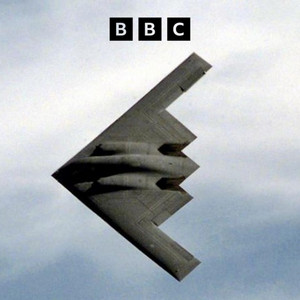
President Trump insists the US has wiped out Iran's nuclear threat, despite a Pentagon report suggesting the damage was limited.
Why global vaccination rates in children have stalled or even gone backwards?
And could weight loss drugs be changing our shopping habits?
Also in this podcast, New York Democrats look left, backing a 33 -year -old Muslim socialist as their candidate for mayor.
And Enigma Cursor is a two -legged dinosaur, a herbivore, and it has very long limbs and big feet, so it was probably quite a fast runner.
The newly identified dinosaur the size of a dog.
What next for Israel and Iran?
The US -backed ceasefire, which got off to a shaky start yesterday, appears to be holding.
But there are plenty of issues which remain unresolved, not least the future of the Iranian nuclear programme.
Israel insists the threat has been removed.
But a leaked Pentagon assessment suggests the American raid may not have wiped out Iran's ability to enrich uranium.
President Trump dismissed the reporter's fake news and once again praised the weekend attack.
That was a perfect operation.
And this was done from 52 ,000 feet.
There was no moon, there was no light.
Those three holes are right together.
Also, and nobody talks about this, we shot 30 tomahawks from submarines, in particular one submarine, but that was 400 miles away.
And every one of those tomahawks hit within a foot of where they were supposed to hit, took out a lot of buildings that Israel wasn't able to get.
We took them out with tomahawks.
This was a devastating attack and it knocked them for a living.
Do you think that the Iranian nuclear programme has been put back by these strikes?
I think basically decades because I don't think they'll ever do it again.
So how reliable is the Pentagon assessment?
assessment. Emma Barnett put that question to Mick Mulroy, a former Pentagon official in the first Trump administration.
There's really two issues here.
One, is the intelligence correct?
Is what the White House is saying overstated?
People want to know.
Obviously, the whole purpose of doing this really complex military operation was to destroy Iran's capacity to build a nuclear weapon.
And the assessments all before this had it at about two years setback.
If you look from from the intelligence side, how was the intelligence community so wrong to say if you struck these facilities that it would be years and now it's months?
So they obviously had something wrong before or something wrong now.
It can't be both. The other question is, is this based on just limited intelligence?
Normally, battle damage assessments, which is the BDA term that everybody's hearing now, takes place over time because you have to collect human intelligence, imagery intelligence, signals intelligence, and it changes as you get more information.
And then there's just a common sense view of how much of a setback this would be.
You drop 12, 30 ,000 pound bombs on a facility and you're telling the average person it's only going to take a few months to repair at the same time that we all know Israel's not going to let them repair it.
So I think people need to ask what is the basis of this assessment and how do we ensure that this is actually accurate.
How damaging is this leak?
Well, that's the other part.
So if it's leaked, if people don't have trust that are providing information, that the information would be protected, they'll stop providing information.
They have to worry about their own safety.
A lot of human sources can get killed if they're compromised.
You can deduce based on the information that's leaked sometimes about who would have had placement and access to leak that information.
And then you can narrow it down if you're Iranian counterintelligence.
So there's a lot of issues.
I don't do politics, but there's a political issue.
The White House is using the term obliterated.
The report apparently is much less confident in not only how much was destroyed, but also how much this would set back the program.
Now, if the reason why they're making this assessment, and I don't know, is they moved the enriched uranium and the centrifuges out, or some of them, then that That matters because the facility could still be destroyed, which was what the objective is of the strikes itself.
But unfortunately, it doesn't matter if the material that you wanted to assure was destroyed was moved out before.
So there's so many questions.
I don't know the answers, but that's what Congress and the committees that are relevant should be asking.
And just in terms of looking ahead now, with this sort of leak and this concern that the strikes by America were not as successful as had been hoped and has been claimed, what does that mean, do you think, about whether America is finished with this?
The objective, I think, remains the same and it has been the objective of every administration.
Iran cannot have a nuclear weapon.
You have to have some force to back that up.
If you don't have any force to back that up, it's essentially empty rhetoric.
It doesn't mean we use military force all the time.
It should be limited and it should essentially support diplomacy.
Diplomacy should always lead.
But if you don't have a viable forcing function like the U .S. military, then diplomacy can only take you so far.
You can use economic pressure sanctions that I think is effective to a limited extent, but it doesn't actually change their actions entirely.
So this might be something that continues if Iran tries to rebuild the sites at Natanz, Fort Au, Istafan, and there's others, or they try to build a new one that's discovered by intelligence.
There could be additional strikes to essentially ensure that they never get to a place where they have a nuclear weapon.
Former US Deputy Assistant Secretary of Defense for the Middle East, Mick Mulroy.
A spokesman for the Iranian foreign ministry has told Al Jazeera that the country's nuclear facilities were badly damaged by the American strikes but didn't give any details.
Iran says more than 600 people were killed during the 12 -day conflict.
Internet services are being restored and comments both supporting and criticising the government are being posted on social media.
But as Iranians take stock, many fear the authorities Authorities will try to reassert control by cracking down on perceived dissent.
What scares me more than war or ceasefire is a wounded regime.
It failed to defeat Israel or the US.
Now it will turn on its own people, increasing executions.
That means the regime will now start arresting young people over their social media posts.
Parham Gobadi from the BBC Persian service told me more about the atmosphere in Iran right now.
six men who they said they are Israeli Mossad spies.
And one of them said that, yeah, I'm a delivery motorcycle driver.
And he said, so what did you do?
It's like, yeah, I was spying for Mossad.
We don't know under what conditions these confessions are made, might have been under duress or not.
But the fact is that even Iranian authorities have acknowledged that one of the biggest blows they've had was because of the Israeli infiltration into the system.
But that That can't be a motorcycle driver because there were so many top Iranian commanders who were assassinated in the past few days.
So many nuclear scientists, they were assassinated.
This shows that whatever spies they have in the country or collaborators, they are at very high level, that they know the location of these top commanders.
That should be a secret on the streets of Tehran right now.
You see a lot of checkpoints.
So they have restored checkpoints and people are not used to it anymore.
We had it back in the 80s.
So there's a feeling of fear among people, confusion, shock, and uncertainty.
Following the killing of all those generals and security leaders, how difficult will it be for Iran to rebuild its military command?
Well, they're claiming victory right now.
Like Israelis, they're saying that we won this war because we managed to inflict some harm to them.
But in reality, they know that they've been humiliated.
And that's one thing that Iranians fear the most, because whenever the Iranian regime feels humiliated, their critics say that it takes revenge on its own people to restore its strength and keep its face and to probably prevent public disorder in order to show people that you cannot protest right now, you cannot get on the street.
I'm still strong. I'm still the one that is leading the police.
And what of the nuclear program?
Today, Iranian parliament passed a bill that Iran should suspend its cooperation, collaboration with International Atomic Energy, IAEA.
But at the end of the day, the buck stops with the Iranian Supreme Leader, Ayatollah Khamenei.
That might only be used as a bargaining chip for Iran, but it's too early to judge.
I think we need to wait and see.
But what the Iranian authorities are saying is that they might leave NPT, Non -Polar Refraction Nuclear Treaty, and also stop collaboration with IAEA, which is going to pave the path for them in the future if they want to make a nuclear bomb, which is a really risky process.
Bahram Gobadi of the BBC Persian Service.
Other news now and a new study suggests that progress in vaccinating children against a number of life -threatening diseases has stalled or even gone backwards in the past two decades.
The findings published in The Lancet show that measles vaccinations have declined in nearly half the world's countries.
Lead author Jonathan Moser says he remains optimistic.
We know that this is one of the most tremendous, effective and cost -effective public health interventions in history.
And we've seen the ways in which it can transform communities, it can transform public and global health.
And I think that we as a global community, despite all these challenges, can rise to the occasion and take advantage of the opportunity that we have in the coming decades to really transform global health through providing immunization to all.
Anna Foster found out more about the findings from our health correspondent, Dominic Hughes.
The context of this is what has been a huge public health success really in that since 1974 more than 4 billion children have been vaccinated it's estimated 150 million deaths have been prevented worldwide and in nearly half a century up to 2023 researchers say vaccine coverage has doubled but if you zoom in on the last couple of decades progress has been really unequal and And since 2010, it's actually stagnated.
So there's now this really wide variation in vaccine coverage.
One good example of how things have gone backwards is measles vaccinations.
This Lancet study says measles vaccinations declined in 100 out of 204 countries.
Interestingly, that's often in European countries, in the US, many wealthier countries.
But then we also have the Covid -19 pandemic, which really made things much worse by its impact on primary care systems. So by 2023, there were nearly 16 million children who'd not had any childhood vaccinations at all.
Most of them were in sub -Saharan Africa and South Asia.
And then things like conflicts, civil wars, natural disasters, as they all also take a huge toll on these primary care systems, which are the main way that these vaccines are delivered.
So that's how we've ended up where we've ended up.
And of course, you have things like vaccine hesitancy and also cuts to foreign aid budgets in countries like the UK, the US.
Often they are the ones, aren't they, who deliver and distribute vaccines.
And just from a technical point of view, it is one of those things where it is better that the whole world is vaccinated.
You can't just look at one country and say, well this country's all right because that's not quite how diseases work no absolutely and that's that's the key that's one of the key points that the researchers behind this paper in the lancet make is that vaccines are a way of protecting all of us from the spread of diseases like tuberculosis measles polio but also whooping cough rubella mumps all these preventable largely preventable childhood diseases that can claim many many lives so they're saying you need better primary care systems. They need governments to work with organisations like the World
Health Organisation, but also principally the Vaccine Alliance, Gavi, who are in the process of trying to secure their next round of funding for the next five years.
They want a much more concerted effort to provide better, more equal access to vaccines.
But they also suggest, as you mentioned, this misinformation to help those parents who might be hesitant about getting their own children children vaccinated.
Our health correspondent Dominic Hughes.
Could weight loss drugs be changing our shopping habits?
Well, the latest figures here in the UK from research firm Kantar show the first fall in supermarket sales this year, as well as a drop in purchases of fast food.
It's not significant enough yet to draw conclusions, but some analysts are attributing it to shoppers cutting back on high sugar snacks and processed foods.
So what's going on?
Sean Sean Farrington is the BBC's business presenter.
Cantart look in depth at what we buy from supermarkets and what supermarkets are offering.
And so when they've done their latest analysis and looking at the price of all this stuff as well, they've seen that they actually sold fewer things, not just spending less, but they sold fewer items in supermarkets in the last month.
And when they then drill down and look at what some of those products might be, they're starting to maybe suggest that the trend that we've definitely heard about globally, Some of the massive treat conglomerates have definitely had to adjust how they are producing products, the size of the products that they're selling, particularly in the United States, the impact of some of these weight loss jabs has had.
And so it ties in and they will see that the products are of a similar nature.
There'll be adjustments in all ways.
But when we first started to see these jabs being talked about, investors straight away were saying, if this carries on like this, this is going to have a major impact.
A newly identified dinosaur the size of a dog has been named by scientists.
When it was first found, it was wrongly classified as a nanosaurus.
But experts say it's actually a different species altogether.
It'll be the first new dinosaur to go on show at the Natural History Museum in London for more than a decade.
It's been given the name Enigma Cursa, meaning puzzling runner.
Our science correspondent, Georgina Ranard, has been to see it.
We're putting some of the tail vertebrae onto this dinosaur Conservators are holding the delicate black bones of a dinosaur That was no taller than a Labrador dog It has tail bones like shiny pebbles And a small head the length of my palm It will be the first new dinosaur to go on display in the museum since 2014 I'm stood here in the Natural History Museum's earth hall With Sophie the Stegosaurus A huge dinosaur looming above me and all the visitors here today.
And above us on a balcony, there's a black screen and just visible are the museum's conservation team, painstakingly assembling the pieces of the newly named dinosaur, Enigma Cursor, inside a glass display case.
It's a huge honour for one of the world's smallest dinosaurs.
When the museum was donated this specimen, it was called Nanosaurus, like countless other small dinosaurs.
What we're looking for, we're comparing it to other specimens and saying, well, how are the proportions different, how are the shapes different?
Paleontologist Susanna Maidman compared the dinosaur with other dinosaur specimens and realised they were different.
All of this is the hind limb.
All of these nobbles and bobbles are muscle attachments.
It's features like that that allow us to look at it and say this is something new and novel.
It was a case of mistaken identity.
Now the dinosaur has been named a new species cheese enigma cursor meaning puzzling runner enigma cursor is a two -legged dinosaur it was a herbivore and probably used its four limbs to pull food towards its mouth and it has very long limbs and big feet so it was probably quite a fast runner it lived in the morrison formation 150 million years ago in the late jurassic period running around the feet of larger dinosaurs like the Stegosaurus.
It's very rare to have such a complete example of an early small dinosaur.
When we think of dinosaurs we tend to think of giant famous dinosaurs like Diplodocus or Tyrannosaurus rex. Professor Paul Barrett from the Natural History Museum.
But these are only a small part of the overall diversity of dinosaurs as a group but when we take them all together we can get a much better idea of how those ecosystems functioned, how they worked, how the group as a whole evolved and the factors that led to them diversifying in such a wide range of forms and also potentially giving us some clues into why some of those groups became extinct professor paul barrett ending that report by georgina ranard still to come on the global news podcast first question is were you aware of f1 have you ever been to a race one hand went up after the movie he
said are any of you interested in f1 or seeing a race every hand went up the producer of But the new film about Formula One racing says it's not just for superfans.
In Fiji, music isn't something we do, it's who we are.
Music brings everyone together.
Music is connection.
My favourite Fijian code, it's called Marautiko.
Marutiko means to stay happy.
Whatever you go through in life, be positive, stay happy.
Experience the real Fiji.
Visit Fiji .com .fj to find out more.
Have you ever wiped with a piece of dry, single -ply toilet paper and wondered, is this as good as it gets?
Well, it's not. It gets a lot better thanks to the wet, extra -large cleaning power of Dude Wipes.
They comfortably clean up whatever TP leaves behind on your behind.
It's time to stop being an a -hole to your b -hole and start experiencing the confident clean of Dude Wipes.
Available at Amazon and at major retailers nationwide.
Dude Wipes. Best clean.
Pants down. For some of us, personal finances aren't just personal.
They include a lot more people than ourselves.
Loved ones, neighbors, the communities we call home, and the causes we hold in our hearts.
At Thrivent, we help plan your financial picture with the bigger picture in mind.
Because even though our business is helping guide your finances, our ambition is to make it mean so much more.
Thrivent, where money means more.
Connect with us at Thrivent .com.
As a parent, you wear many hats.
At dinner, you're the chef.
When your kids play, you're the ref.
And let's face it, you're basically a full -time chauffeur.
Fortunately, when it's time to wear your teacher hat, a Becca makes things easy.
Our proven flexible homeschool curriculum is designed to let your kids retain and build on the knowledge they acquire, setting them up for success later in life.
A Becca. Learning for life begins with the right homeschool education.
Learn more at a Becca homeschool .com.
While the Israeli military has been focused on attacking Iran for much of the the past two weeks.
Reports of Palestinians being killed while trying to get aid in Gaza have continued almost daily.
Nearly a month after the Israeli and US -backed Gaza Humanitarian Foundation began operating, the UN says at least 410 people have been killed by the Israeli military while trying to get aid.
The UN's children's agency UNICEF has once again spoken out against the aid distribution system.
Its spokesman, James Elder, has just come back from from Gaza, he told Rajini Vaidyanathan about conditions on the ground.
Catastrophic, worse than ever.
It's so hard to articulate to people that they keep getting worse, but two things struck me here.
The obvious one is, of course, people's coping capacity has been smashed with relentless bombardment, consistent denials of humanitarian aid and the only thing for long periods getting in is bombs.
Two more things struck me here.
One is water. We are now looking at a man -made drought.
If fuel which supplies and distributes water across the Gaza Strip is not allowed in, then we start to see children dying of thirst. And we're talking about a couple of weeks.
Fuel has not been allowed in for 100 days.
This is not logistical.
This is political. This is entirely man -made and it's fixed very quickly.
The other thing, I've spent too much time in hospitals, too much time seeing little girls and boys with these horrendous wounds of war because the bombardments have not stopped we're talking now 50 000 girls and boys either killed or wounded the difference this time is i didn't just see those children i heard them it's a sense of hearing the screams of little girls and boys because of a sheer lack of painkillers as doctors and nurses try to treat amputations or shrapnel or gunshot wounds i met a little boy a 13 year old boy who got money given by his father to go and buy bread that's all the family had
he He saw people going to one of these sites.
This is my chance. I'm not going to see my mum starve.
I'm going to bring it back a box of food.
Chaos ensued, firing.
He got hit with shrapnel from a tank shell.
When I met him in hospital, he had injuries to his pancreas, to his stomach. Bravest little boy, wanted to sit up with me while we tried to tell his story to get a medical evacuation.
After two weeks on the day I left Gaza, he died.
That little Abdullah Rahman, 13 years old, died of those wounds.
He died while trying to get food for his family.
This is not an isolated incident.
It's hard to hear stories like that, isn't it, James?
We talked so many times after you've been in and out of Gaza.
What is your message to world leaders about what desperately needs to be done?
It's really simply, it's the application of international humanitarian law.
It's allowing aid agencies to flood the Gaza Strip with humanitarian aid.
It's stopping indiscriminate attacks.
The sad thing is, Rajini, that Palestinians have said to me, we understand that international humanitarian law doesn't apply to us.
You know, I had a fourth -year English literature graduate student say, James, it's so humiliating to starve.
And medical students say it's dangerous to dream.
This cannot become a norm for Palestinians who seem more aware of some international humanitarian law than those who are meant to implement it.
UNICEF spokesman James Elder.
Well, Israel's army has said it will review all incidents of Palestinians being killed or wounded near aid distribution sites in Gaza.
But it has also said it is redoubling its campaign to crush Hamas.
It said today that seven of its soldiers were killed in an attack on their armoured vehicle in the southern city of Khan Yunis on Tuesday.
It's one of the deadliest incidents for Israeli forces in the more than 20 -month war.
The Israeli Prime Minister Benjamin Netanyahu said it was a difficult day for the people of Israel.
Our heroic fighters fell in a battle to defeat Hamas and release our hostages, the words of the Israeli Prime Minister.
Despite being an established democratic stronghold, New York was one of many so -called blue states that saw an increase in Republican support in last year's US presidential election.
But could yesterday's Democratic primary, in the race to become mayor of New York City, point to the future direction of the Democrats more broadly?
With 95 % of ballots counted, a young socialist candidate, Zohran Mandani, is the clear frontrunner.
His main rival, the former New York State Governor Andrew Cuomo, has already admitted defeat.
Chantelle Hartle has this report.
A year ago, Zohran Mandani was relatively unknown in political circles in New York.
But the 33 -year -old Muslim socialist is now poised to win the Democratic nomination to become the city's next mayor.
More than a million voters threw their support behind him in the first round of the primary on Tuesday.
Declaring victory in the borough of Queens, which he represents, Mandani told hundreds of supporters, Tonight we made history.
We have won because New Yorkers have stood up for a city they can afford. A city where they can do more than just struggle and it's where the mayor will use their power to reject Donald Trump's fascism.
If elected when voters head to the polls in November, Mandani would be the city's first Muslim and Indian mayor.
In recent weeks he's become massively popular, especially among younger voters.
Slickly produced social media videos set out his vision of free buses, rent freezes and a a higher minimum wage paid for by new taxes on the rich. His strong support of Palestinians and criticism of Israel has put him at odds with most of the Democratic establishment.
But as critics argue, his platform is too far left for moderates and certain to be weaponised by Republicans trying to paint the Democratic Party as out of touch. His opponent, the political veteran and former New York Governor Andrew Cuomo, who'd been leading in the polls, conceded early in the night.
He had attempted to make a political comeback after resigning from office in 2021 over a sexual harassment scandal.
He'd made fighting anti -Semitism a core part of his campaign and committed to restoring the Democratic Party's appeal among working -class voters, promising to hire more police officers, improve safety on the subway and remove red tape to build more affordable housing.
At an election night party, he congratulated his opponent.
the night was not our night tonight was assemblyman mondani's night the confirmed winner of the democratic party nomination will face several contenders in november this contest is being watched very closely by the democratic party more broadly as it considers a convincing political strategy to take on donald trump after a bruising defeat last november Chantal Hartle, next to the border between Thailand and Cambodia where a bitter dispute has escalated.
Thailand has now imposed restrictions on all travellers heading into Cambodia.
Our reporter Katie Silver explains what's behind the move.
Bilateral relations between them are at their lowest that we've seen in decades.
We've already seen in terms of economic impacts, Cambodia banning the import or the purchase from Thailand of things like fuel, oil, fruit, vegetable, even Thai dramas and Thai films. What we've heard now is that crossing points are going to be closed across the seven border provinces.
Two exemptions include, for example, students or those who have medical needs to cross.
But the military said in a statement that the new restrictions match the current security situation, quote unquote.
Now, the latest we're seeing is scenes of dozens of tourists and workers being stranded.
Stories, for example, of Cambodian workers who generally every day cross the border into Thailand for work, unable to return home having to spend the night sleeping at checkpoints there are stories for example of families with young babies being stuck there overnight as well one reporter mentioned seeing the father having to change the nappy overnight of a young baby on this border crossing foreign tourists as well and there's implications there when it comes to potential tourism ramifications and tourism spend now all of this dates back in fact to when France first drew the the 800 -kilometre border
in the early 1900s when it was ending its Indochina occupation.
There has been dispute about the way that was drawn for over 100 years, but things really came to a head in May where we saw some clashes and a Cambodian soldier was killed, which really put relations between the two countries at their lowest level in decades.
That analysis from Katie Silver.
Now, are you a fan of these insects?
we'll have to say i'm not they are wasps and they don't have the best reputation but scientists say we need to learn to love them more because they help counter the huge biodiversity loss we're experiencing that's why the grant museum of zoology here in london has made them the focus of a new exhibition.
So just how important are wasps to our natural environment?
Sir Iain Sumner is Professor of Behavioural Ecology.
It is important to remember that bees sting as well and yet we tolerate their stings because we know what they do in the environment.
We know and appreciate their role as pollinators.
Wasps are also really important in ecosystems. They are nature's pest controllers, they are pollinators, they are decomposers.
Wasps are are top predators within any ecosystem.
So whether it's a farmed ecosystem or your garden or a natural ecosystem.
And if you take away the top predator from a community, you're going to alter the whole balance of all the other organisms in it.
Imagine taking a lion away from the Serengeti and imagine what would happen to all the prey species there.
The same thing would happen with wasps so when we remove wasps from our gardens or from our buildings we are taking away those wasps who are controlling all the other insect populations they're really important in regulating all those other populations but they're never going to hunt any particular species to local extinction because they tend to be generalist hunters particularly the wasps that we encounter in our gardens so they're really important in ecosystems and they're also pollinators most Most people don't realise that.
But wasps have to visit flowers to get nectar because the adult wasps are actually vegetarians.
Even though they hunt prey to feed to their brood, the adults themselves are vegetarians.
So there are so many reasons to appreciate wasps.
And OK, they might sting us, but that's mainly because we behave badly.
Tarian Sumner, behavioural ecologist at University College London.
Finally, the Hollywood team behind Top Gun have turned their attention and a sizeable budget it to Formula One.
The new movie F1 is released in the US and Britain this week.
It features Brad Pitt as a veteran driver who makes a surprise return to the circuit.
He's got hope for some lucky breaks.
Hope it's not a strategy.
Anything else, professor?
Drive fast. well it was shot on real racing circuits with cooperation from the organizers and drivers rick edwards has been speaking to the film's producer jerry bruckheimer who's been making blockbusters for more than 40 years how did they try to make the film appeal to both formula one super fans and complete newcomers to the sport we had to make sure that somebody who's never been to an f1 race would enjoy this movie so what we did after we finished the movie We had what we call a blind recruit, where you recruit an audience, but they have no idea what they're seeing.
So they come in the theater, and they see, oh, it's a movie about racing.
And after the movie, we break them down to 20 people, and we ask them questions.
This is in California.
First question is, were you aware of F1 if you've ever been to a race?
One hand went up. After the movie, we said, are any of you interested in F1 or seeing a race?
Every hand went up.
So the experience, they got enough out of it that they understood the intricacies of F1 and yet enjoyed the movie.
So we did our job as far as explaining enough about tires and tracks and all the things.
Now, for an F1 fan, a rabid fan that says, oh, wait a second, that can't happen, it's not a documentary.
So you have to enjoy the enjoyment of being in the car with Brad, who trained for four months to be able to drive these cars.
We started him in a road car.
Then we put him in an F4 car, then an F3 car.
and then finally into our car.
We designed the car with Mercedes.
We were embedded with the teams to nine races around the world, which was exciting for us, just being a part of the sport and hanging out with the drivers and the team principals and talking to them.
So it was a blast. And what we give you is a big, exciting, romantic, fun movie with a phenomenal soundtrack.
For a fan, you've got to go in and say, look, this is not reality.
Have fun with this movie.
be, it's like Rocky on steroids.
That's what it is. How adamant were you and Brad that he had to be driving a car?
We weren't going to make it any other way.
Joe didn't want to make it unless they drove.
Brad didn't want to make it.
He wanted to make it real.
They trained for four months to be able to do it.
It was hard to be able to get in these, especially when they got up into the F2 engine with a F1 chassis, they're monsters, these cars.
Brad was going 180 miles an hour and then braking down at 50.
Not only were they driving, they had to train in between because you're taking 5Gs.
It's a killer on your neck and your back.
So just to be able to brake and hit those corners at high speeds and not spin out, I mean, it took a daunting cast by them putting the time and effort into doing it.
So it's just more than then.
A lot of actors just show up and do their lines and then and go home.
These guys are working 18 hours a day.
Even when they're not filming, they have to train to be able to get back in that car the next day.
What were your insurance quotes like?
I don't even want to talk about that.
But I'll tell you what was interesting is that they had a cap on us, I think, at 140.
And one of our stunt drivers went and met with the insurance company and said, it is more dangerous to them going to these turns at a lower speed because you need the downforce to get out of this.
It's not like driving a normal car where the faster you go, the more dangerous it is.
It's the opposite here because of the downforce.
And they bought it and we got up to 180 miles an hour.
Film producer Gerry Bruckheimer.
And that's all from us for now.
But the Global News Podcast will be back very soon.
This edition was mixed by Nathan Chamberlain and produced by Nikki Verrico.
Our editors, Karen Martin.
I'm Oliver Conway. Until next time, goodbye.
in Fiji, music isn't something we do it's who we are music brings everyone together music is connection my favorite Fijian quote it's called Marautiko Marautiko means to stay happy whatever you go through in life, be positive stay happy experience the real Visit Fiji .com .fj to find out more.