This BBC podcast is supported by the UK. planning another business trip soon.
When you fly Emirates, you can really make the most of your journey.
Emirates offers a luxurious chauffeur-driven transfer from your door to and from the airport.
You'll have access to the Emirates lounge, where you can enjoy a drink, explore an international menu or even take a shower.
And on your flight, you can enjoy all the comforts of Emirates' world-class service.
Get more from your business trips with Emirates.
Enjoy coffee with the best quality in your home with Philips Latte Go 5500.
Discover what reaches 20 drinks of hot or cold coffee with one touch of the button.
From the rich espresso to the frozen coffee.
Prepare your coffee from your favorite coffee beans to get rich and high quality coffee in every cup.
Coffee in the style of the cafe suits your taste.
Prepare in your home at the moment you choose it.
Phillips.
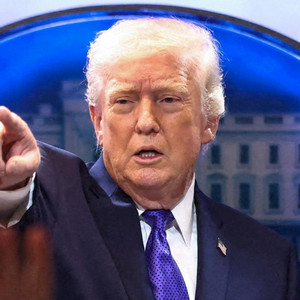
Donald Trump defies the Supreme Court to promise even stronger tariffs, but some businesses are worried.
Continuing without addressing underlying structural issues in the economy and just using tariffs is a short-term solution without a long-term gain.
It's World Business Report from the BBC World Service.
I'm Vishala Sripathma.
On the way a US tariff special as we explore what the Supreme Court's decision means for businesses around the world.
And we hear from the toy business that took on President Trump's tariffs declares victory.
Let's take a closer look at the Supreme Court ruling.
The justices have effectively torn up Donald Trump's sweeping Liberation Day tariffs, saying he went well beyond his powers by using emergency laws that were never really designed for this.
Well, Trump's fired back, calling the decision deeply disappointing, and he's already threatening a new 10 levy on global imports, though he's not given much detail on how he'd bring it in.
Well, let's hear a little from that press conference that took place in the White House a short time ago.
This was an important case to me.
Moore is a symbol of economic national security and also, I would say, just for our country itself, so important.
Although I firmly disagree with the court's holding today, the decision might not substantially constrain a president's ability to order tariffs going forward.
That's because numerous other federal statutes, which is so true, authorize the president to impose tariffs and might justify most, if not all, of the tariffs issued in this case.
President Trump there a little earlier on.
It's worth saying this ruling only knocks out the big across the board tariffs.
The individual duties he slapped on specific countries and products stay put.
It's a lot to take in.
And yes, we'll get to the global reaction in just a moment.
But before that, let's head stateside.
I spoke to our North America business correspondent, Michelle Fleury, a short time after the news broke.
Yeah, so this is an interesting one.
He was clearly angered by the Supreme Court overturning his tariff authority under sort of emergency powers.
And he immediately came back with this 10, using something called Section 122 of the trade law from 1974.
And essentially, it gives him the power to impose this global tariff, 10% tariff.
Depending on whether it sort of expands the existing tariff on goods that already exists then yes, it could raise more money.
But if it just sticks to the existing tariffs in place, I was speaking to someone at the Tax Foundation who said actually it would only raise about half the revenue.
So the devil is in the detail and we don't yet know all of that.
And Michelle, you've been speaking to the group that brought forward the case to the Supreme Court initially.
Yeah, it's a company called Learning Resources.
There were two cases, and one of them was brought by Learning Resources, which is an educational toy maker with about 500 employees.
And I was chatting to the boss, Rick Waldenberg, the chief executive which led the case against the government, to get his reaction to the verdict.
And he told me how much money his company has lost as a result of the tariffs.
Well, when the numbers were finally toted up for 2025, it came to a little more than 10 million in IEPA tariffs and several hundred thousand dollars in incremental expenses on top of that.
And that's not the lawsuit.
And I don't know what we've spent this year.
So it's well in excess of $10 million.
And we believe that the holding is that the IEPA tariffs were unlawful when imposed.
So we expect the money back and we expect interest, too.
The Supreme Court didn't say anything about refunds.
Are you concerned?
What happens next on that front?
No, because they said that the tariffs were unlawful as imposed and so they had no right to take it.
As a consequence, the lower court will put together a mechanism by which we can get the money back.
And that will happen in due course.
We're well financed right now, so we're OK.
But lots of businesses really are waiting anxiously for that money back.
And so my hope is that they will move expeditiously to right this wrong.
And that, to you, is really the most important thing about today.
The case is important to our company and I think all of us feel a privilege to have been involved in something that we think has historical importance.
We're thrilled that our name is on it because we think we're standing up for things that are right.
Does it feel at all like a hollow victory?
Because Donald Trump has said right, we're turning to a different kind of tariff, but essentially they're using Section 122 to impose a new 10 global tariff.
If the government is bound and determined to try to harm us through excessive taxes, I'm sure they'll find a way.
We have to look at the details of what they do before we come up with any comment or strategy on how we might respond.
I don't think it's a hollow victory when the Supreme Court stands with you to respect the rule of law.
I think that that's a major victory and I think it's something that people will read for a long, long time to come.
That's more important than the money.
I'll take the money, though.
That was Rick Waldenberg speaking to the BBC's North America business correspondent, Michelle Fleury.
Well, let's stay in the US.
Orrin Cass is the chief economist at the conservative think tank American Compass, and he joins us now.
Thank you very much for joining us, Orrin.
Firstly, what's your reaction to this ruling?
Well, I think, as a lot of folks have said, it's a very important legal decision.
It will have consequences not just for IEPA, but for how we understand executive power, what the president can do, what Congress can do.
That will probably end up meaning a lot more than what it means for the trade policies, because virtually everything that the president has done thus far he can now replicate with other authorities that everybody agrees that he has.
And we're obviously now very far down the path of new negotiations.
While ongoing negotiations, some concluded negotiations with trading partners.
And I would expect those to continue.
The president is now shifting to this 150-day tariff under a different legal framework.
For companies trying to plan ahead, does it not add another layer of uncertainty?
Well, I think there's certainly been a lot of uncertainty for about a year now since the IEPA tariffs started.
Those had the benefit of being something that the president could do right away.
That gave him a lot of flexibility.
They did not provide the certainty or stability of the kind of foundation you would want for a long-term policy.
I think you could say the same thing about 122.
I think you had to know what the court was going to rule.
122 now gives you some more runway while you decide what the permanent status will be.
But I think, as the president said, as Ambassador Jameson Greer said, particularly through the 232 authorities on particular types of goods, the 301 authorities that go country by country, the administration is going to be able to put the kind of permanent framework that it wants to have in place.
And I also think there are some places where Congress is quite likely to consider acting, because there are things that folks in Congress agree on as well.
Oren, you've previously spoken in favor of tariffs.
Ultimately, though, who bears the cost here?
Because American consumers, are they prepared to pay higher prices for a policy that may or may not protect US jobs in steel and carmaking?
Well, you could ask the question the other way, which is to see that it's not clear how much the American consumers are actually paying and they're getting extraordinary opportunities in better protection and oncoming investment in those industries.
But input costs are higher though, aren't they?
Some costs have gone up.
I think it's very clear if you look at the actual inflation data that folks who I think analyzed it well from the beginning saw you would see some fraction of a percentage point change in inflation, not the kind of disaster that some people predicted.
And it's also important to keep in mind that that is a one-time thing.
Tariffs are not sort of a spiraling inflation that keeps going year after year.
Once the tariff is reflected in the prices, the prices don't keep going up.
And so certainly, compared to the kind of inflation that we experienced during the Biden administration, the tariff effect has been much, much lower.
It is within the sort of margin that we see inflation go up and down every year anyway.
And so the question now is, do we get the benefits?
Do we start to see that investment come through?
Do we start to see the expansion of domestic production.
I think the early indications are encouraging.
But it will be especially now that we start to get a sense of what the permanent state is going to be that we see whether people are willing to make investments in that world.
A key question indeed.
Oren Kasser, Chief Economist at the conservative think tank American Compass.
Well, let's get some global reaction now.
So Simon Evanett is a global trade expert.
He's Professor of Geopolitics and Strategy at the IMD Business School in Switzerland.
Thanks for joining us, Simon.
Hi, good evening.
This ruling will be felt differently depending on which part of the world you're in right now and how high that tariff is.
Correct.
The tariffs which have been ruled illegal varied a lot across countries.
So you've got some countries like Brazil, India and China, which will see huge reductions in their tariffs.
Other countries like the UK will see much smaller reductions.
And so this is really going to reshuffle the competitive landscape for exporters.
Well, we can hear about Brazil now.
It was hit with 50% tariffs a bit earlier.
And Welba Barrel is Brazil's former Secretary of Foreign Trade under the first Lula da Silva presidency.
In the case of Brazil, we have seen a lot of uncertainty since the beginning of last year.
We had first an announcement of 50, then 40, then many products were excluded and still 20 of the Brazilian exports are being affected by tariffs.
None of them are under the AIPAD emergency law, meaning that we have measures because of the Section 232, some trade remedies, and all of that will be probably canceled.
Demand bilateral negotiation between Brazil and the US.
And that's probably going to begin next month when President Lula is going to visit the White House.
And what do you think is the bargaining chip for a country like Brazil?
Well, Brazil is not so dependent as in the US market, like Canada or Mexico, for example.
It's about 10% of the Brazilian exports.
That's the first difference.
The other thing is Brazil has increased the export to other markets.
Mostly China, Asian countries, Argentina, Latin America.
So Brazil has exported more last year, but not to the United States.
They directed its export to other markets.
So Brazil is negotiating, I think, in a strong position.
And besides tariffs, there are other issues like critical minerals that are very important for the US.
What does this do to the credibility of the rules-based trading system?
So are we moving further away from, say, a WTO arbitration towards sort of unilateral action?
Yes, in the case of the U.S. and maybe in the case of other countries.
But there's another interesting movement.
Every time you see new agreements, so like we have now.
The European Union negotiating with India, India with Indonesia.
Many countries are trying to create bilateral rules and bilateral mechanisms for dispute settlement.
So probably we're going to see more mechanisms but, at the same time, initiatives to create more certainty.
The problem now is the level of uncertainty that we suffered in 2025.
That was Welber Barrel, Brazil's former Secretary of Foreign Trade under Lula da Silva.
Simon is still with us.
Simon, that last point about the rules around WTO trading.
It feels like it's in a grey place at the moment.
Yes, these are not great times for the rules-based trading system, especially when you've got big players deciding to arbitrarily change tariffs.
And other countries.
Even the EU has said that they're not sure they want to offer everyone equal treatment of tariffs anymore.
So I think it's a sign of the times, with all this geopolitical rivalry, that the big countries are not prepared to have their hands tied with international agreements.
You're in Europe, you're in Switzerland.
How has Europe been impacted by tariffs?
So I mean Europe, and then Switzerland managed to negotiate down from quite high tariffs to around 15.
I think the mechanism in both cases was different.
The EU was over a barrel because they needed American support in Ukraine.
And the Swiss, of course.
The Swiss were, I think, quite dependent on very profitable exports to the US market.
So the Americans managed to leverage that quite effectively.
I think what the exporters now will look at is the prospect of paying not 15 percent going forward, but this new global 10 percent.
And I think what you're going to see in the next 150 days is a lot of exports being surged to the United States before the 150 days is up.
So ironically, the administration's proposals today might actually lead to a greater US trade deficit in the near term.
And what does that practically mean for businesses?
Because this impacts supply chains, for example.
It does, it does.
And what it will mean is that companies will do what they did last year, which is uncertainty about future tariff increases causes them to surge production now, ship stuff to the US, build up inventories.
And this actually delays often the reconfiguration of supply chains which the American administration wants.
Having said that, a number of Swiss companies have told me they're sick of the uncertainty and they may well just move some production to the US just to get some form of security.
And that speaks to an important feature of US policy.
It is uncertainty by design.
Yes, indeed.
And we'll hear a bit more from businesses in the US in just a moment.
Simon Evnett there, a global trade expert based in Switzerland.
You're with World Business Report from the BBC World Service.
Well, let's now look at how businesses have been reacting.
Beth Benike is the owner of Busy Baby in Minnesota and has been hit hard by the tariffs as her products are all made in China.
She told us about her relief at the ruling.
Oh, my gosh.
I feel like a thousand pound weight has been lifted off my chest.
It's been devastating, to be honest.
My products are all manufactured in China.
I make a line of products that stop babies from dropping and throwing their things on the floor.
And they're made out of silicone, which we don't have in the U.S.
And all of the best manufacturing for silicone products is in China.
So that's where I've been manufacturing.
I had to cash in my retirement.
I had to let employees go.
I have not been able to plan anything for my business.
I've lost a retail relationship with Target.
So it's been a really, really rough year.
And the uncertainty has just been really, really heavy for me.
So I feel a little bit of a weight lifted.
If I had to add up the potential revenue lost and the revenue lost while we were out of stock because of the tariffs, it would it's probably close to a million dollars in revenue.
That was Beth Benike, the owner of Busy Baby Products in Minnesota.
Lisa Goldenberg is the president of Delaware Steel, based in Pennsylvania.
She's not against tariffs, but feels that it may harm trading relationships long term.
I think that the whole intention was to sort of boost the economy using protectionism techniques tariffs, but that's a short-term fix.
So continuing forever in this direction, without addressing underlying structural issues in the economy and just using tariffs as a way of managing it is a short-term solution without a long-term gain.
For me, I just don't think it's a way to manage our international trade.
We don't have a trade policy other than you'll excuse me tax or tariff the hell out of people, regardless of other relationships friendships nuance, etc.
The president was on the radio this afternoon talking about trade with India and flipping it, and then he came out with a statement that he's going to charge tariffs across the board 10 to the world.
You know this is not policy, this is pontificating and language and spewing which doesn't benefit any industry because it's not thoughtful or strategic.
Would you like the Trump administration to scrap tariffs then?
I don't think scrap would be the word that I would use.
Funny in the steel business, right?
I think that rethink, readminister.
Obama had enormous tariffs with China.
Most presidents have some tariffs as part of trade policy.
It's become a triggering kind of word.
So I think that trade policy tariffs taxes, balance quotas.
All these things make very reasonable sense at some level.
But randomly throwing things around because you're in an argument.
If we administered half the things we said when we were angry at our parents, children or spouses, the world would be a chaotic place, right.
That was Lisa Goldenberg, president at Delaware Steel based in Pennsylvania.
Well, listening to that is Chris Lowe, chief economist at FHN Financial in New York.
Hi, Chris.
Hi.
You could really sense the frustration there in Lisa's voice, couldn't you?
Absolutely.
And I think Lisa struck some really important points, among them that there is in fact some value in tariffs and other trade policy, in part because of the uneven global playing field.
And I think, when you look at steel production in particular, the US competes with Japan, with China, with Europe in steel production and Among other things.
In China, the steel producer's biggest cost energy is provided free by the state.
To compete against that.
There has to be something that either reduces costs of production here or increases the cost of that Chinese steel, if US steel is going to survive.
I think for a lot of these tariffs not all of them by any means, but a lot of them it was a similar logic that went into place.
Where she's also correct and I think a terrific point is that a lot of the tariff policy frankly seemed arbitrary.
And I think that's where the anger came from in opposition to them.
Chris, how are businesses like Lisa's navigating these challenges, do you think?
Well, in the case of steel, we've had tariffs in place for years.
But what happened last year in February and then again in April?
With the two rounds of tariffs imposed, all of those rates changed.
And as a result, all of their relationships with all of their suppliers and customers changed.
I think it's extraordinarily difficult.
The biggest thing that happened in the US as a result of tariffs is that it made planning difficult.
And because of that we saw a material weakness develop in business, investment in equipment and structures, as well as hiring, because companies simply couldn't plan.
And when you can't plan, you can't spend, you can't hire.
And has that had a ripple effect when it comes to investors?
For example, the markets today, there's been an interesting reaction, hasn't there?
Yeah, stocks are quite a bit higher.
And at the same time, we saw an increase in market interest rates.
The rise in stocks.
I think it's pretty clear that people are looking for a positive impact on earnings, because we are a country that imports more than we export.
Because of that, tariffs have a net negative effect in the near term.
At the same time the rise in interest rates is because the loss of that tariff revenue means potentially a 4 trillion hit to the deficit over 10 years.
Okay, Chris, thank you very much.
Chris Lowe, Chief Economist at FHN Financial in New York.
So will businesses have a fighting chance at gaining compensation for the money they feel they've lost due to tariffs?
Well, joining us now is Stephen Becker, a partner at law firm Pillsbury in Washington DC, who leads their international trade practice.
Thanks for joining us, Stephen.
What exactly are these sort of tariff refunds that people are talking about?
Well, just like with the, you're paying income tax.
Occasionally people have adjustments in how much tariffs they owe.
And it could be a routine process to have adjustments made.
And the customs authorities that we call Customs and Border Protection, CPB, will issue refunds.
It's just that, in this case, the scope and the amount of the refunds, of course, are going to be enormous.
And who could get these refunds if and when it's possible?
Every import has to be made by what we call an importer of record, who has legal responsibility to customs for paying any tariffs or associated fees and with presenting accurate information about their products.
And because those are the entities that pay the tariffs directly, they are the only ones that can directly receive a refund.
Okay.
And so what are you looking out then for in terms of possible next steps to take this along?
Well, there's several possibilities.
In an ideal world, the administration would announce an orderly process for importers to seek the refunds through the normal manner by making corrections and entries into the electronic filing system.
But during his press conference this afternoon, President Trump indicated that he wanted to litigate the refunds, claiming that the Supreme Court had not dealt with that issue.
But of course, the Supreme Court held that the tariffs were unlawful from the beginning.
So there doesn't seem to be a legal basis to hold on to them.
And we've got some big names that are lining up to try and get compensation.
Is that correct?
About 1800 companies had already filed lawsuits out of an abundance of caution, which were all linked to the outcome of the Supreme Court decision.
We do expect that now that more companies may start filing again to protect their interests and to avoid a situation where the government could try to delay or refuse their refunds.
Okay well, I'm sure we'll be hearing lots from these businesses and others as we continue to cover this story.
Thank you very much, Stephen.
Stephen Becker, a partner at law firm Pillsbury in Washington, DC.
And you can hear...
A lot more from companies like the ones that Stephen mentioned on our live page.
If you go to bbccouk forward slash news.
We've got updates pretty much every minute from all sorts of different types of voices across the tariff spectrum.
Well, that's it from World Business Report today.
Like I said, we've got lots of reaction on our website at the moment.
I'm just having a look at a moment about Brexit.
Michelle's interview that she mentioned a bit earlier on the CEO talking about bringing that case forward to the Supreme Court and all the kind of deals that he had to go through to get there in the first place.
Well, don't forget to subscribe to get the latest, wherever you get your podcasts, including the latest daily update from the World Business Express.
We end tonight by looking back at the last year of the drama that has been US tariffs.
My fellow Americans, this is Liberation Day.
Waiting for a long time.
I always say tariffs is the most beautiful word to me in the dictionary.
President Trump's announcement of universal tariffs on the whole world, including the European Union, is a major blow to the world economy.
The court said that I'm not allowed to charge even one dollar.
I can't charge one dollar.
But I am allowed to cut off any and all trade or business with that same country.
Oh, my gosh.
I feel that like a thousand pound weight has been lifted off my chest.
The decision might not substantially constrain a president's ability to order tariffs going forward.
Wow!
Hilton, for the stay.