NPR. Republicans are on the road selling President Donald Trump's new tax and spending law.
And we're on the road to digging into what that law actually does.
In today's case, we're looking at how the act makes the largest cut in history to one of the country's biggest safety net programs.
That would be the Supplemental Nutrition Assistance Program, also known as SNAP or food stamps.
About 12 percent of U.S. residents receive SNAP to help pay for groceries, and about 40 percent of them are children.
Ken Cobb is a professor at Furman University who studies food access and retail.
He says families on Snap were already squeezed tight before these cuts.
It's heart-wrenching. Honestly, like parents skimping on their own food so that their kids can have an extra portion.
Like, that's just sad. Ken says this law will also have a second effect on those families.
Some could lose access to their only grocery store.
This is The Indicator from Planet Money.
I'm Waylon Wong. And I'm here with friend of the show, Stephen Passaja from the Gulf States newsroom.
Welcome back, Stephen. Good to be with you, Waylon.
And on today's show, grocery stores have super tight margins. and a large portion of their profits often come from SNAP.
So we are off to Opelika, Alabama to talk to a grocery store owner about what these cuts mean for markets like his.
And why they'll be felt far beyond the checkout aisle.
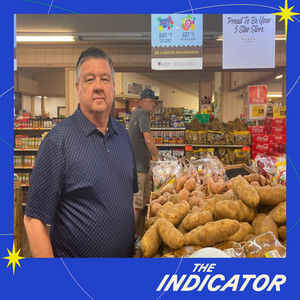
Wright's Market is an independent grocer, but really it doesn't look all that different from your classic supermarket, just a bit smaller.
You've got your aisles packed with sweet tea, veggies, and the best fresh catfish that shopper Diane Chavis says you can find.
I'm an old country girl, so I like old country products.
And that is a lot of what you can find in here.
What brought you in today? Best ground beef in town.
My husband, if I'm in a hurry and have to stop somewhere else, he can tell every time, as soon as he bites into it, that I haven't gone to rights to get that ground beef.
Oh, my gosh. I got to try this ground beef.
I'll go over for taco night. I don't think my ground beef palate is like refined enough to tell the difference.
Oh, absolutely not. Now, that ground beef and the catfish and all sorts of other things at Wright's Market can be bought using Snap.
Basically, Snap helps people with low income buy certain approved items like fruit, snacks, and milk.
If you look at last year's numbers, about 42 million people receive SNAP each month.
And a lot of that spending happens at grocery stores.
The National Grocers Association says about 12% of grocery sales in the U.S. come from Snap.
But that's the number for all grocers together.
At Wright's, that percent is much higher.
We're somewhere around the third of our business comes through Snap.
That's owner Jimmy Wright. And while a third of his business is pretty significant, at some grocers, Snap is the majority of their sales.
And those are the stores Jimmy is most worried about.
Like beyond his own business, Jimmy helps small grocers too.
He was even once named Grocery Champion of the Year for that.
He's not concerned about your Publix or your Whole Foods.
But he is worried about the independent grocers in low-income areas, where Snap can make up as much as 70% of their sales.
I get concerned that in changes in the program, will that have a negative effect on these small stores? in rural America and in urban America where they cannot stay open.
Trump's new tax and spending law is estimated to cut about $190 billion from SNAP over the next decade.
It does that through things like new work requirements and caps on how much benefits can rise based on inflation.
Ken Cobb is a professor at Furman University, and he says smaller independent grocers could close because of lost snap sales.
Yeah, I mean, it will. It will cut down some retailers.
To make the situation worse, these stores are often located in areas that would otherwise be considered food deserts.
So those are the areas with the least amount of offerings of fresh and healthy produce, healthy cuts of meat.
And so it does go, it hurts where people need it the most.
And Ken says the ripple effect of this actually goes further because those snap dollars are not just an aid to people who get it or grocery store owners, but but also the overall economy.
Like, take this 2019 paper from the US Department of Agriculture.
It estimates that during tough times, every additional dollar in SNAP benefits can add $1.50 to the country's gross domestic product.
That includes both your California farmers getting extra orders for broccoli to the local HVAC guy making sure those peas stay frozen.
One of the big clamors for grocery stores is that they offer healthy food, but they also provide jobs.
They're businesses where people are coming and going.
They produce foot traffic. They have lighted parking lots.
They're perceived as safe. They fill all sorts of other community needs besides just filling people's shopping carts.
We reached out for comment from the U.S.
Department of Agriculture, which is the agency that runs SNAP.
We did not hear back. Okay, so with all these benefits that SNAP provides to families in need, to local businesses, why is SNAP being cut anyway?
Well, the main thing is that SNAP is expensive.
Last fiscal year, it cost the federal government about $100 billion.
And Republican lawmakers were looking for ways to lower the cost for tax cuts that were set to expire.
One of the ways was with these snap cuts.
The new law is expected to cut the program by about 20%.
Stephanie Johnson is with the National Grocers Association, and she says, yes, this will impact grocery stores.
But she points out that the cuts were originally much steeper.
Her association lobbied Congress for a more limited one, and Congress did that.
The cut we got is about a third the size of the one originally proposed.
And you know what she says? It's not all bad.
The tax cuts in Trump's tax and spending bill that Republicans were looking to fund were will benefit grocery businesses.
We're very excited about the tax cuts in that package.
I just wanna say we are. We were strong supporters of the certainty that those continuing those tax provisions gave to our members.
Republican lawmakers also accuse Knapp of being filled with fraud and waste.
Last year, the program had a roughly 11% error rate for both over and underpaid benefits.
Though those are usually administrative errors, not recipients cheating the system.
In fact, a lot of fraud in Snap is not from people on the program.
According to the USDA's website, the vast majority of SNAP recipients are eligible.
In fact, it's often those recipients who are the victims of fraud.
Yeah, like how SNAP benefits often get stolen using skimmers.
Basically, you get these bad actors installing these devices onto the card readers at stores.
Then when someone swipes their Snapcard, it logs that info and the fraudsters steal those benefits.
One group actually installed these kinds of devices at Jimmy Wright's market.
And I caught them about five minutes after they...
They did it, they were gone. What did they look, were they just like suspicious with like a big coat hiding what they were doing?
One of the guys was driving this monster four-door Chevy Suburban.
He had backed into the parking lot over here on the other side of the store.
The other guy was around the end of the building.
So just one of those things that didn't look right.
We spent $8,000 to replace all of our pin pads up front into a one that's got the anti-skimming device on it.
And you mentioned that grocery stores have a really thin margin, right?
So how is a grocery store supposed to get $8,000 for emergency tech replacement.
Yeah, exactly. Like you said, like every extra expense, including those lost dollars you just snapped, matters for a store like Jimmy's.
I mean we're a penny business. He means that literally.
He says for every dollar spent at a store like his, grocers only net about a penny and a half.
Jimmy hopes those lost SNAP dollars do not mean having to cut jobs.
That would be the very, very, very, very last thing that I did on that.
The last two things I want to do is try to raise prices on people that are struggling.
And I certainly don't want to do anything to my employees.
Jimmy doesn't want to get into the politics of this.
He says the cuts happened and he's now just got to deal with them.
But he is concerned about what this means for grocery stores and the customers he's been serving for most of his life.
This episode was produced by Corey Bridges and engineered by Robert Rodriguez and Jimmy Keeley. is fact-checked by Sierra Juarez.
Kate Kincannon is our show's editor, and The Indicator is a production of NPR.