This BBC podcast is supported by ads outside the UK.
If journalism is the first draft of history, what happens if that draft is flawed?
In 1999, four Russian apartment buildings were bombed.
Hundreds killed, but even now we still don't know for sure who did it.
It's a mystery that sparked chilling theories.
I'm Helena Merriman and in a new BBC series I'm talking to the reporters who first covered this story.
What did they miss the first time?
The History Bureau, Putin and the apartment bombs.
Listen on bbc.com or wherever you get your podcasts.
Will Kevin Walsh be a good chair of the Federal Reserve?
He's very smart, very good, strong, young.
I think he's going to do a good job.
I mean, he was the central casting guy that people wanted.
Donald Trump is trying to take over our nation's central bank.
It's World Business Report from the BBC World Service.
I'm Rahul Tandon.
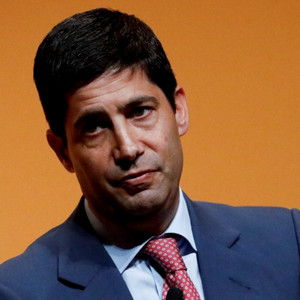
Donald Trump says Kevin Walsh is from central casting, but what role will he play in the US economy?
And we'll take you to the city that was once the heart of Venezuela's thriving oil industry.
Hi there.
Good morning.
We come on the air a bit early with some breaking news.
Just moments ago, the president announcing his pick to replace Jerome Powell as chairman of the Federal Reserve.
The choice, former Fed Governor Kevin Warsh.
That sounded pretty dramatic, didn't it?
Well, it is.
And there are many clips on television in the U.S. like that.
There's headlines at the moment.
That was from the CBS network.
Let's explain why. why the Federal Reserve is really at the centre of so much attention.
It is, of course, the world's most important central bank, so who is in charge of it is important.
It's a crucial part of the US economy and, amongst the many things that it does, one of its key objectives is the so-called dual mandate.
That is to achieve maximum employment and stable prices.
But recently, it has been in the news for lots of other reasons.
Let's bring in Chris Lowe, familiar voice.
There's been so much anticipation about this appointment because of the backdrop to it.
Chris, remind our listeners of what the backdrop is.
Well, that's right.
Since coming into office, President Trump has been taking pot shots at various members of the Federal Reserve, particularly Chairman Jay Powell himself.
And Governor Lisa Cook Cook.
In fact he's trying to fire from the Fed that case in front of the Supreme Court.
But Powell he has criticized because he says Powell doesn't understand the economy and isn't cutting interest rates fast enough.
That is the big question.
And Donald Trump.
After he announced, Kevin Walsh was asked if he thought that his nominee would now cut interest rates.
I don't want to ask him that question.
I think it's inappropriate, probably.
Probably would be allowed.
But I want to keep it nice and pure.
But he certainly wants to cut rates.
I've been watching him for a long time.
Did you have any concerns about his hawkish history of pushing for rate hikes?
He's going to want to do the same thing.
I think that, yeah, I've had times when I think you've had to really have rate hikes too.
He's very smart, very good, strong, young, pretty young.
I think he's going to do a good job.
I mean, he was the central casting guy that people wanted.
Young, he's 55 years old.
Now our North America business correspondent, Michelle Fleury, over the past few months has been following the ups and downs of that Powell-Trump relationship.
So she gave me her reaction to today's news.
In recent days, three names had kept popping up.
One was Black Rocks Reader.
He's a gentleman from the private sector.
Another was Christopher Waller, who is a current Federal Reserve governor.
And then the third name was Kevin Walsh.
In recent days maybe he wasn't people's top pick, but clearly in the last few hours he did enough to sort of climb back to the top.
And so in that sense, I think people are going look, here's someone who has experience both on Wall Street and inside the Federal Reserve, someone who is clearly qualified.
And so at least from the market perspective, there is a sense of, OK, this makes sense.
You gave us a little bit of background to him there, his time at the Federal Reserve previously.
Tell us a little bit more about him.
He was at the Federal Reserve during the 2008 financial crisis.
He was a Fed governor from 2006 to 2011, before he actually resigned from the job, in part because he was unhappy with the direction the bank was moving in.
He's seen as someone who has been fairly critical since he's left the Fed of sort of how they conduct business.
And in recent months, he's sort of become less of what we call an inflation hawk.
In other words, someone who wants to see rates go up to fight inflation and become someone more who agrees with the president in terms of lowering rate as a way to kind of bring things back under control.
That change in attitude has led some to question how much that had to do with sort of him trying to get this job, which obviously he has now been successful, at least in terms of winning the nomination.
We're going to hear from Donald Conn, who was at the Federal Reserve during the financial crisis vice chair, a little bit later in the programme.
You raise an important point there.
He has been nominated.
So what has to happen next for him to actually get the job?
So he still needs to be confirmed by the Senate.
And that approval is not given.
And that's because this whole process occurs at a pivotal time for arguably the world's most powerful central bank.
Its independence has been threatened in part by the constant criticism from the Trump administration, which has been pushing aggressively for lower rates.
That hasn't happened.
There have also been, on top of that, various investigations into, into Federal Reserve Governor Lisa Cook.
And that case has now gone as far as the Supreme Court.
And then separately, there's a Department of Justice investigation into Jerome Powell to do with renovations at the central bank itself.
The reason I'm kind of giving you all of this background is because that has led to questions about whether or not the central bank can survive independence.
And there was such a backlash to some of these investigations that you had even people within the Republican Party saying they were unhappy with this, that the bank's autonomy was paramount.
And they have threatened to withhold confirmation of any candidate until that investigation is resolved.
And that is the big question, isn't it?
The independence of the Fed.
That is why there is so much attention.
I was reading one of the big financial papers who said this is the most important decision actually that Donald Trump will make when it comes to an appointment in his second term.
And in Kevin Walsh's case, is that a problem?
Because he has seemed to be supportive of President Trump.
Could that make his position difficult?
Because there are many other Fed governors.
He doesn't make decisions on his own when it comes to interest rates, does he?
Look, I mean, I think, the attacks on the Federal Reserve, the fact that the Trump administration has shown it's willing to try and remove people from their jobs to open investigations, that sent a chilling message.
And there are fears that that means anyone who takes this job, not just Kevin Walsh.
You, given what they know about how far this administration will go to get what they want.
And so I think that will be a big feature in this confirmation hearing.
Lawmakers are going to want to know, can you be independent in the current context?
On the other hand, for Donald Trump, he nominated Jerome Powell, probably thinking that they were on a similar wavelength.
We've seen how that ended up.
Just because you nominate someone doesn't mean they're going to follow what you want them to do when it comes to the Federal Reserve.
Well, and historically, it's been very difficult to fire someone.
You have to fire someone for cause.
That obviously is being challenged now by the Trump administration, certainly in the case of Lisa Cook.
They're kind of citing mortgage issues and mortgage applications that she made as a kind of reason to get rid of her.
But because of that notion that it's just hard to fire someone once appointed, traditionally the person who has held that top job in the central bank has been relatively independent.
In other words, what they said beforehand they don't necessarily stick to once they're in the job and they tend to kind of follow their own way.
Let us see what happens now.
But, as Michelle mentioned there, Kevin Walsh was at the Fed between 2006 and 2011 when this happened.
The stock market is now down 21%.
Traders saying this is the craziest day they have ever seen in these markets.
The movement in oil prices so fast.
We read everywhere, essentially, down by 4, 5%.
This could be the most serious recession in decades.
And that means life, as most Americans know it, is about to change.
In some cases...
That was, of course, the global financial crisis of 2008, one of the most challenging moments of recent financial history.
And Kevin Walsh at the Fed was at the heart of it.
Let's get the thoughts now of Judy Shelton, who served as an economic advisor to President Donald Trump during his first term and was one of his former picks for the board of the Federal Reserve.
Judy, thank you so much for joining us here on World Business Report.
Good choice.
I think it's an excellent choice.
As we just heard, Kevin Warsh has been through the ringer.
Now, notwithstanding that, as a member of the Federal Reserve Board of Governors prior to the meltdown in October 2008, I suppose you could say neither Kevin Warsh nor anyone on the Federal Reserve saw that crisis coming.
But I will say that he stepped in.
And as he will admit, we were making it up as we went along.
It was an extremely challenging time.
And he was a wonderful pipeline to Wall Street and was able to come up with innovative arrangements to get through the immediate crisis.
He's not going to make it up as he goes along this time, even though it's a fairly turbulent economic period.
What should he do at the Fed now?
What would you like to see him do?
I think there are necessary reforms and he is calling for monetary regime change.
But I would put them in terms of what I'll call the three M's.
The Fed needs to change its models.
The Fed has a Keynesian approach which has a presumption that economic activity and growth is inflationary.
And therefore, when things are going quite well, the inclination of people at our central bank is to raise interest rates.
And can I just interrupt you there?
Do you think, particularly because productivity is such an important part of that discussion with AI, do you think that that theory is even more outdated?
Well, it needs to be, because if you're increasing productivity through AI, then you can withstand that economic growth and its productive growth and not inflationary.
And having low unemployment is not inflationary.
But the next M where a reform is needed would be the mechanisms of the Federal Reserve.
Our Federal Reserve uses as its primary tool the interest it pays to commercial banks on the reserve cash balances they keep.
I might point out that when your central bank and the European Central Bank have much lower interest rates that they pay on the comparable account, foreign banks end up getting a huge amount of the total interest our Federal Reserve is paying to keep that money staying.
And what about your third M?
What's the third one?
Management.
The Fed needs a new approach to management for one reason the ratio on staff is 10 to 1, Democrat versus Republican.
And I'm not saying that deliberately causes them to have a biased view in the choices they put before the Board of Governors, but even inadvertently, it reflects a philosophy of government.
And I think The problem, too, is that staff kind of dictates the agenda.
If you read the minutes and transcripts of the meetings to decide interest rates, they are so choreographed by staff that the board really takes on the bigger picture.
You'd like to see a wider range of thinking when it comes to who's on that governance.
Can I ask you a final question?
And thank you for giving us your vision of the Fed.
Let's see what Kevin Walsh does with it.
On the crucial question of independence, the Fed needs to remain independent, doesn't it?
From political interference.
I believe that this term has become so exalted.
It's as if it's sacrosanct.
It really goes against democratic norms to have a government agency that is so powerful and so prominent in financial markets and so political have someone at its head who cannot be fired ever by anyone.
I i think not healthy and i thought it was was not appropriate for Jerome Powell to refuse to respond to a Department of Justice inquiry.
I think he was saying he is above the law.
Well, thank you, Judy, for joining us there.
I don't think that was what Jerome Powell, he says, was trying to say there.
Let's bring in Chris Lowe once again there.
That is the key question, the independence of the Fed.
What did you make of what Judy Shelton said?
You know, it's a government agency.
You've got a person at top of it who has to go to voters and put his record on the line.
When it comes to economic policy, they're going to want to see the Fed do things, aren't they?
They are.
You know, I think honestly, the answer is he is serving out his term.
It ends May 15th.
He will be there until then, at which point the new chair will take over.
And, by the way, only if as your reporter noted earlier only if approved by the Senate, which may not happen by then.
So that's another interesting twist.
The rules at the Fed say if a replacement isn't approved, then the person in the seat currently stays in that seat.
So, in fact, Powell could be around for a while.
In the meantime though yes, independence absolutely critical to the markets, especially and well-functioning markets, critical to the economy.
OK, we're going to have a look at what's been going on in the markets with Chris in a few minutes time.
We've been talking so much, haven't we, about that spat between Donald Trump and Jerome Powell, the current chair of the Federal Reserve.
Let's pause for a minute and hear how that has played out recently.
It is my pleasure and my honor to announce my nomination of Jerome Powell to be the next chairman of the Federal Reserve.
No, I'm not happy with Jay Powell.
I don't think he's doing a good job at all.
We're always going to be aiming for maximum employment and price stability.
That's what we do.
I believe he's making a mistake by not lowering interest rates.
And I think as well as we're doing, we do much better.
I make it a practice not to respond to any elected officials comment.
It's just not appropriate for me.
I think he's terrible, but.
I can't complain because we had the most successful administration economically in the history of our country.
We do not need to be in a hurry to adjust our policy stance.
The threat of criminal charges is a consequence of the Federal Reserve setting interest rates based on our best assessment of what will serve the public, rather than following the preferences of the president.
This is about whether the Fed will be able to continue to set interest rates based on evidence and economic conditions, or whether instead, monetary policy will be directed by political pressure or intimidation.
There we go.
A reminder of what we've seen over the last few years.
And, as we heard there, it was Donald Trump who nominated Jerome Powell, of course, as the Federal Reserve chairman.
So will Kevin Walsh be able to maintain a better relationship with Donald Trump?
Let's hear from Donald Trump.
He's the former vice chair of the Federal Reserve.
He was there during the financial crisis when he worked very closely with Kevin Walsh.
So I did work with him very closely even before the financial crisis, but even more closely during the crisis.
We had a very good and close working relationship.
Kevin is very smart.
He is very knowledgeable about financial markets and the people in financial markets.
He explains things quite well, particularly about financial markets.
In the crisis, he was an important conduit between the Fed and the financial markets.
So he was getting information from the financial markets and the people he knew in the financial markets feeding it to us, helping us.
So yes, we had a very close working relationship and it was a pleasure to work with through that period.
Is there anything that stood out from you at that time?
Is there anything that struck you?
Did you think, I mean, you were vice chair of the Fed at that time, an extremely important position.
Did you think at that time that here's a young man who one day could be running this very important organization?
So to be honest, no. didn't see that eventuality.
But I did have an enormous amount of respect for Kevin.
One aspect of his personality is he is very emotionally intelligent.
He reads the room very well.
He can see through people.
He can evaluate what they are.
So I think this will serve him very well when he comes in to lead the Federal Reserve.
He knows the institution, he knows the people he's leading, and he'll need all those skills in order to convince them that his views are where they want to go.
He has to get through that nomination process, doesn't he?
But if he does, do you think we have ever had a Federal Reserve chair who will be under the pressure that he is under?
Because he has been appointed by a president who is very clear he wants those interest rates down.
Well, I think Jay Powell's been under enormous pressure, including threats of lawsuits, etc.
So it could be a continuation of that, though I doubt it.
I mean, I think Chair Powell has handled that pressure very, very well.
And I think Kevin Warsh has to do the same thing.
A lot of people.
We were talking to our business correspondent a little earlier about the big questions ahead for the Federal Reserve, and its independence is one of them.
Is Kevin Walsh the man to defend the Fed's independence and how important is that?
The independent self is very important.
Of course, having a leader who defends that independence is absolutely critical.
I think in the past he has given speeches that have been very passionate and vocal on the need for an independent central bank.
So I think he recognizes that. the importance of that independence.
And I would expect that he would exercise that independence.
It's a committee.
It's not just Kevin.
It's not just the chair.
So he needs to convince the rest of the committee that his vision for where policy ought to be going is one they should support.
He has been a critic of the Federal Reserve himself, hasn't he, since he left?
More and more so over the last few years.
From what you've read of what he said and the fact that you work so closely with him, what do you think his vision will be for the Federal Reserve?
So I think it's not entirely clear.
I think he's been very critical of and somewhat caustic in his criticisms.
Is he right to be critical?
No.
I've been critical of some of the things the Fed has done, but Kevin has gone beyond what I've been critical of.
He's talked about the need for regime change.
He's talked about presumably breaking heads at the Federal Reserve.
And I don't think that's exactly right.
So I do think the Fed has made mistakes.
All institutions make mistakes.
Donald Kahn there.
And he's always attempt here or what we're trying to on World Business Report to give you the views of people who know some of the people in the news and he knew him very well.
Chris, still with us.
Mark, can we actually mean gold and silver?
What a fall today.
How much are they down and why are they down so much?
Yeah, huge decline.
You know, looking at the spot prices today, gold is fell about $500, a little more.
Silver down about $40, which in percentage terms is actually bigger than the drop in gold.
I think the key there is that gold has doubled in price since the beginning of 24.
Silver has tripled.
Huge gains, and they were gains because people had doubts about the value of the dollar.
And I suspect this is a reaction to Warsh's view about what the Fed should do.
He gave a speech last April. where he argued that the Fed should have a smaller role in the economy.
And, in particular, he wants to end the Fed's aggressive bond buying programs, saying that it's monetizing the debt which devalues the dollar.
Yeah, let us see what he does if he does get you that nomination process.
If journalism is the first draft of history, what happens if that draft is flawed?
In 1999, four Russian apartment buildings were bombed, hundreds killed.
But even now, we still don't know for sure who did it.
It's a mystery that sparked chilling theories.
I'm Helena Merriman and in a new BBC series I'm talking to the reporters who first covered this story.
What did they miss the first time?
The History Bureau, Putin and the apartment bombs.
Listen on bbc.com or wherever you get your podcasts.
You're with World Business Report from the BBC World Service.
OK, we were talking about some metals.
Shall we talk about oil?
Exxon and Chevron both have had results out.
They've been pumping a lot of oil, but have they been making a lot of profits?
Chris?
No.
And the reason they haven't is because well, oil output globally is up, particularly in the US, and demand for oil globally is down.
And that combination, weaker demand, stronger supply, means prices have dropped.
So profits – have not kept up with the increase in sales.
And that's even despite huge productivity gains in the oil industry in the U.S.
The production increase occurred with a headcount reduction.
OK, Chris, when we've been talking about oil recently, we've talked a lot about Venezuela.
So we're now going to take you there.
And the BBC's Noboto Paredes has been to the city of Maricaba, once the heart of Venezuela's booming oil industry.
This city is not what it used to be.
The colonial-style buildings, brightly painted in tropical colors, have faded and cracked.
The streets are full of potholes and very quiet.
Marcaibo used to be the wealthy heart of Venezuela's oil boom, but decades of mismanagement had hit it hard.
Now, it feels like a symbol of a country that has declined.
People here are desperate for the political stability and the investment to bring Maracaibo back to life.
Getting ready for a trip out on the city's lake.
These fishermen are being hit by the economic downturn and the pollution caused by the oil industry.
Carlos used to be able to pull in big catches.
It's getting worse every day.
I see it getting worse and worse.
Green, black, oily, less fish.
Despite the removal of his president by Donald Trump, he's ready for American investment and the oil to start flowing once more.
It would be good because it would create jobs and our children wouldn't have to work in the fishing industry anymore.
In a nearby neighborhood, Jose is talking about his old job at the state-owned oil company.
Everything has changed.
Things have become more difficult.
In the past, things were easier.
We had more comforts.
The streets in this area could be straight out of a 1960s American suburb.
International oil companies, many with US links, built whole neighborhoods for the workers.
There were schools hospitals, clubs and security.
But today many of these houses stand empty and some have been looted.
Many of the people who still live here survive on pensions that barely cover the basics.
Jose says a lot of things are now in short supply.
Because you'd go to the pharmacy, get medicine, and it was right there.
Now it's not like that.
Now they prescribe medication and, no, it's not available.
Analysts say it could take tens of billions of dollars and potentially a decade to restore Venezuela's oil output to what it once was.
Chris Noberto there reporting from Venezuela.
The big question is where is the money going to come from?
Will we see U.S. oil companies investing in Venezuela again?
We will, but it's going to take some doing, you know, partly because the US investments in Venezuela have already been nationalized twice before.
So they are very worried they're going to invest billions only to lose them.
They'll want some reassurances.
But the oil will flow and they'll get market prices going forward.
Chris, thank you for guiding us through what's been another busy day.
What a week it's been in the business world.
We had the EU-India trade deal at the start of the week.
We now know who could be the next chair of the Federal Reserve.
Sam is going to be with you next week.
I'm sure it's going to be equally as busy.
But for this week, that's it from World Business Reporter.
If journalism is the first draft of history, what happens if that draft is flawed?
In 1999, four Russian apartment buildings were bombed, hundreds killed.
But even now, we still don't know for sure who did it.
It's a mystery that sparked chilling theories.
I'm Helena Merriman and in a new BBC series I'm talking to the reporters who first covered this story.
What did they miss the first time?
The History Bureau, Putin and the apartment bombs.
Listen on BBC.com or wherever you get your podcasts.