This BBC podcast is supported by ads outside the UK.
This is the Global News Podcast from the BBC World Service.
I'm Keith Adams, and at 4.30 GMT on Saturday 21st February, these are our main stories.
Donald Trump outlines new plans to keep some global trade tariffs after the Supreme Court struck down most of his existing levies as illegal.
The family of a Palestinian-American teenager killed by a Jewish settler in the occupied West Bank call for accountability for his death.
Also in this podcast, a British minister says the government is considering introducing legislation to remove Andrew Mountbatten-Windsor from the royal line of succession.
What does it mean for Commonwealth countries who share the British royal family and name things after them?
There's a Prince Andrew Court.
There's the Duke of York Boulevard.
There's the Prince Andrew Drive.
There is Prince Andrew Island.
And NASA shares some dates and excitement.
You know, every night I look up at the moon and I see it and I get real excited because I can really feel she's calling us and we're ready.
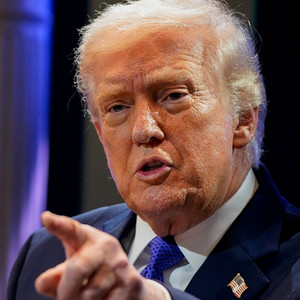
Donald Trump has called tariffs the most beautiful word in the dictionary, and they've been a powerful tool in his arsenal.
So he was furious when the US Supreme Court struck down his sweeping trade tariffs policy.
The judges decided, six to three, that the president's decision to introduce levies under the International Emergency Economic Powers Act was unlawful.
President Trump had himself appointed two of the judges who ruled.
The tariffs should have been approved by Congress.
At a press conference, he called those who voted against him fools and lapdogs.
The Supreme Court's ruling on tariffs is deeply disappointing and I'm ashamed of certain members of the court, absolutely ashamed for not having the courage to do what's right for our country.
Foreign countries that have been ripping us off for years are ecstatic.
They're so happy.
And they're dancing in the streets, but they won't be dancing for long.
That I can assure you.
President Trump went on to announce a new 10 global tariff through a different law to replace the ones struck down by the court.
The Democrat Chuck Schumer said keeping tariffs in place will upset many Americans.
Glaringly.
Amazingly, a vital and important point is missing from the president's speech that his tariffs have dramatically increased costs on American families.
Costs of so many things have gone up because of these tariffs and the American people hate the tariffs because it's increased their costs.
The case in the Supreme Court called Learning Resources v Trump was first brought to lower courts by a US company who sell educational toys, importing products from China.
The chief executive, Rick Waldenberg, told us he felt vindicated by the ruling.
We challenged the IEPA tariffs as unlawful an unlawful tax, and the Supreme Court seemingly adopted our arguments we made in our complaint back in April, which is exciting.
The case also is a vindication of the principles of rule of law, where the law applies equally to everybody.
And so I'm a citizen, Mr. Trump's a citizen, there's one law.
We challenged the way the law was being applied, and in this case, the little guy won.
While the president has outlined a new plan to retain some of his global tariffs, our correspondent in Washington, Simi Jolaosho, told us what's next for the Trump administration.
He's introduced this 10 global tariff using a different authority called the Section 122, which allows the president to impose up to 15 for 150 days.
And then afterwards, Congress needs to approve the tariffs. existing beyond that.
The possibility of refunds of the tariffs that has already been paid by businesses wasn't mentioned in this Supreme Court ruling.
And even President Trump said it was a valid point when he was asked by a journalist earlier today on whether he would give that refund and said that he expects years of litigation to resolve this issue.
The Trump administration had, in court arguments, said that companies would receive refunds if the tariffs were considered unlawful, which they have been, but they might try and push back against that.
But remember, experts say that part of the tariff costs was passed on to consumers.
So, even if tariff refunds are issued, companies might get that money back from the government, but that money likely won't reach consumers right.
They've already spent that money, i suppose, and we're talking about billions of dollars, aren't we?
Um, has there been an international reaction to this ruling?
They're cautiously welcoming the ruling.
There's still this air of uncertainty.
So canada's international trade minister said the tariffs were unjustified in the first place.
The canadian chamber of commerce said canada should prepare for new blunter mechanisms being put in place by the trump administration, and And we've seen that with the 10 global tariffs that has been put in place today.
The European Union trade spokesperson said they are watching Trump's next move and said there's a need for stability and predictability when it comes to trade.
That sentiment has been echoed by Germany, Mexico and the UK, which have all said that they are simply watching for the next steps that will be taken by the Trump administration.
Simi Jolla Osho.
The Treasury Secretary, Scott Besson, has described the Supreme Court decision as a loss for the American people because it removed the president's leverage with other countries to deal with issues like unfair trade practices and drug smuggling.
Our North America editor, Sarah Smith, told us the ruling has eroded a key pillar of Donald Trump's economic and diplomatic policy and left him licking his wounds.
Until now he had looked pretty invulnerable because the Supreme Court had ruled in his favor on every major decision they had made.
But now they have finally said there are some things that the president cannot do on his own without going through Congress and having legislation passed.
And this is the first time they've done that, too.
President Trump.
He has put a lot of work into expanding presidential authority, finding ways of doing things which mean he doesn't have to go through Congress.
Now the Supreme Court has put a stop to that on this particular policy.
And for him it's not just about the billions and billions of dollars that have been flowing into the Treasury in revenue from the trade tariffs, or the way in which he wants to rebalance international trade.
This is a key diplomatic weapon for him as well.
He uses the threat of higher tariffs as leverage to get other countries to do what he wants when it comes to trying to make peace deals.
Or you'll probably recall, he was threatening European nations with 25 tariffs if they didn't agree with his plan to take over Greenland on all sorts of different areas.
He no longer looks unchecked or unconstrained.
He can no longer do exactly what he wants to.
Now, of course, if he finds a way around this ruling and he is able to introduce the tariffs as nimbly and as often as he likes by another authority, maybe he will look as though the court simply cannot stop him.
But there are other big rulings coming up on things like whether or not you are automatically a citizen if you're born in the United States, where the court also may rule against Donald Trump on that and some other big decisions.
So over the next few months we may see.
He doesn't appear quite so all-powerful as he maybe did yesterday.
With the fourth anniversary of Russia's full-scale invasion of Ukraine approaching, the two sides have indicated that another round of peace talks is likely to take place in Geneva, perhaps as early as next week.
The British Prime Minister, Keir Starmer, and the French President, Emmanuel Macron, are also due to host a meeting of the so-called Coalition of the Willing, timed to coincide with Tuesday's anniversary.
Our diplomatic correspondent, Paul Adams, is in Kiev, where he's been talking to Ihor Brusilo, the deputy head of President Zelensky's office.
So we can divide these talks in two parts, the political one and the military one.
And the military seems to be more substantive than the political one.
So they talk business when they meet.
And a good sign that they meet.
That's the biggest progress that we can believe, a tangible one.
But what is lacking is the political decision.
Once the political decision to declare the ceasefire as the first stage towards the end of the hostilities is achieved, then the military will know how to act.
What about the American approach at the moment?
Is U.S. domestic politics starting to loom large over this whole process?
Objectively, yes, it will loom large over the process.
But the good thing is that the United States is involved in the process now.
And they are doing it in good faith.
This is the main idea.
So they are not working to one side or the other.
But the deeper they get involved into the talks, the more intricacies and details they get to know, the more they understand that it's not an easy task to end this war just because you stopped fighting and that's it.
But you say good faith.
I mean that's something that you are confident of now, because that's been a question mark that's hung over this really for the last year.
Yes.
We do believe so, because they started to understand better the circumstances and the conditions on the ground.
And, well, the reasons of this war, why Russians started this war.
So the more they understand, the more they listen, not only to the Russian position in Moscow, but also to the position of Kiev and the president of Ukraine and our military guys and the international political leadership.
So the better they understand the situation.
Let's talk about this notion of an election and a referendum to be held sometime, maybe even as soon as the spring.
Can you just clarify what President Zelensky's position is on this?
I think the president supports the idea of holding the elections, but once the conditions are ripe and right for this thing to happen.
So security guarantees is a first building block of moving towards the elections.
Once security and safety is guaranteed, once people can feel they can go and vote, then the elections will be held.
So, just to be clear, it's perfectly possible to have these votes in wartime, which is not really previously the position of the Ukrainian government, provided there are adequate security guarantees in place.
Well, when there are adequate security guarantees in place, it means that the war is either over or close to be over.
Ihor Brusilo, the deputy head of President Zelensky's office, talking to Paul Adams.
First, his titles and home were taken away.
Now the UK government says it will look at removing Andrew Mountbatten-Windsor from the royal line of succession.
It comes a day after the former prince was arrested on suspicion of misconduct in public office.
He's now been released under investigation.
But the Metropolitan Police says it's expanding its own inquiry into his links with the convicted sex offender Jeffrey Epstein.
The force is approaching his former protection officers and reviewing records of flights at London airports to see if they were used for human trafficking.
Andrew Mountbatten-Windsor has always denied any wrongdoing.
Here's our correspondent Daniel Sanford.
This has all come out of media reports in the last two weeks, in which former royalty protection officers have suggested some of them anonymously that their colleagues might have willfully turned a blind eye to alleged activities on Jeffrey Epstein's island and even in Buckingham Palace.
Now the Metropolitan Police has said that no new criminal allegations have been made to them about sexual offences in their area.
But clearly they didn't want to leave these allegations in the media unchecked.
So it said it's now contacting former and serving officers who may have protected the King's brother.
It said it was asking them to consider carefully whether anything they saw or heard is relevant to any reviews, for example, of allegations into Andrew or Jeffrey Epstein.
And it was urging anyone with new or relevant information to come forward.
Now, it's stressed that it's not seen any evidence of any wrongdoing by any protection officers.
And there is an issue that protection officers need to think about the privacy of the people involved, protecting and before reporting everything to their superiors.
But the fact that the Met is actively contacting former officers does show that the force does need to see if any of these anonymous allegations are true.
And just on the investigation into Andrew Thames Valley Police have said that the searches at Royal Lodge in Great Windsor Park are likely to continue right through the weekend and may not end now until Monday.
Daniel Sanford.
Now.
The former prince is currently eighth in line to the throne, but the UK government has said it's considering legislation that would remove him from that line.
It's a process that would only happen after the police investigation has concluded, and has been described as difficult because it needs to be supported by the 14 Commonwealth countries where King Charles is head of state.
Two of the biggest are Australia and Canada.
So how is the crisis being received there?
And has it raised questions about the country's becoming republics?
Emma Cropper is a freelance journalist and reporter based in Sydney.
It is the biggest story in Australia here at the moment.
It is very much dominating the news, as is any royal scandal, but especially one of this magnitude.
Australians are watching it very closely because when something major now involves violence, The royal family questions are raised here in Australia about whether we should be part of the monarchy and become a republic.
And we've had a referendum here in Australia in 1999 where they voted no.
But it is still a question that comes up quite often, especially when there's something, a scandal.
People start talking here, you know, why do we care?
Should we be paying attention?
But people ultimately do and they worry about it.
So That is what we hear in the chatter here.
We know when the Queen passed away as well.
That was a discussion that became very strong among people here in Australia.
So we're starting to hear that chatter again, but Australia's Prime Minister, Anthony Albanese, has spoken today and he's ruled that out.
He said he is a staunch Republican himself and Although he is the Prime Minister, it's not the time for a referendum.
They don't pass in Australia historically.
And he has respect for the King.
So it's not something that is going to change here.
That was Emma Cropper in Sydney.
And Carina Roman is a senior reporter for CBC News in Ottawa.
Well, it was probably similar to everywhere else around the world.
You know, shock, surprise, not surprise as well.
You know, it was definitely the top news story on all platforms.
It wasn't really met with as much surprise as you would have thought.
It quickly turned to what does this mean for all the places named after him?
A lot of places in Ontario, for example, St.
Catharines, which is southwest of Toronto, There was a Prince Andrew Court.
There's the Duke of York Boulevard.
There's the Prince Andrew Drive.
There is Prince Andrew Island.
It's still early days.
I do think that as we discover perhaps, who knew what when, that may lead to a stronger republic push.
I also think one thing that has always been one of the arguments to keep the monarchy has been well.
It makes us different from the US.
And I do think that that right now is doubly important to people.
So that's not the way the conversation is going yet.
Karina Roman.
And for an in-depth look at what the former Prince Andrew's arrest means for the royal family, listen to our sister podcast, The Global Story.
Still to come in this podcast.
North Korea's Kim Jong-un opens his party congress, an event where big announcements are made every five years.
A vegades gran és només gran.
I a vegades gran és just el que necessites.
Descobreix el Dacia Bigster.
Gran maleter.
Gran espai interior.
Baix consum a un preu petit.
Vine i descobreix les motoritzacions híbrides i GLP amb etiqueta Eco de Dacia Bigster.
T'esperem a Grau, el teu concessionari Dacia Tortosa i Vinarós.
Estrena la mejor tarifa de fibra y móvil con tus plataformas favoritas.
Sin letra pequeña ni sorpresas en tu factura.
Llámanos gratis al 1706 PPFON.
Estrena la mejor tarifa de fibra y móvil con tus plataformas favoritas, Sin letra pequeña ni sorpresas en tu factura.
Llámanos gratis al 1706 PPFON.
I've spent the last three decades trying to better understand money across the boardroom, the newsroom and the trading floor.
That's longer than most podcast hosts have been alive.
But even I've got questions.
Join me Merrin's Hubset Web every week for my show.
Merrin Talks Money from Bloomberg Podcasts, where I have in-depth conversations with fund managers, strategists and experts about how markets really work.
And join me for a separate episode where I answer listener questions on how to make those markets work for you.
Follow Marin Talks Money on Apple Podcasts, Spotify or wherever you listen.
This is the Global News Podcast.
Relatives of a 19-year-old Palestinian American man shot dead by an Israeli settler in the occupied West Bank.
According to eyewitnesses and health officials have called for accountability over his killing.
Nasrallah Abu Sayyam was shot near the city of Ramallah on Wednesday, becoming at least the sixth American citizen to be killed by Israeli settlers or soldiers in the territory in the last two years.
Tom Bateman has the details.
The family of Nasrallah Abu Sayyam says he was among around 30 residents of the village of Mukmas who tried to stop armed settlers stealing their goats.
As both residents and settlers threw stones, says.
The family settlers shot at least three of the villagers, including Abu Sayyam, who was struck fatally.
He was a Palestinian-American, a US citizen, born in Philadelphia, from where his cousin, Abdul Hamid, told the BBC the actions of the settlers had gone unchecked.
It's a big loss to see a young man of 19 shot and killed in this cold blood and no responsibility impunity, completely.
The Trump administration has faced criticism from rights groups for lifting Biden-era sanctions on violent settlers, who rarely face criminal punishments by the Israeli authorities, one factor fuelling a sharp spike in settler violence in the occupied West Bank.
The US State Department said it was aware of the death of a US citizen and was ready to provide consular assistance.
The Israeli embassy in Washington said the incident was under review and that an operational inquiry must be completed as soon as possible.
Tom Bateman.
According to President Trump's peace plan for Gaza, the territory will eventually be run by a reformed Palestinian authority.
However, the authority looks weaker than ever in parts of the occupied West Bank, where it's supposed to govern, as Israel continues to expand settlements there.
And this week a far-right Israeli minister has proposed dismantling the PA and announced new steps which critics say amount to a de facto annexation of the West Bank.
Here's our Middle East correspondent, Yoland Nel.
With Israeli settler violence surging in the West Bank, Almagay is on the front line.
It's recently seen farmland confiscated and new outposts nearby.
Marzouk Abou Naim from the village council says the settlers aim to force out Palestinians.
They're doing it silently, not openly.
It's true, but this is annexation.
We can't reach our lands.
Al-Mughaya is in an area where Israel's army controls security, but the Palestinian Authority should provide public services.
Increasingly, though, it can't.
Israel's been withholding tax money that it collects for the PA because of payments it makes to Palestinian prisoners.
The PA says it's made reforms, but the disputes deepened a financial crisis.
When I go to them, they can't give me the support I need.
The tax revenues are kept back by the Israeli government.
One mother tells me her eight young children are meant to go to a local PA school.
The children, honestly, some days we don't send them to school when there are settler attacks.
Life is difficult.
And there isn't school every day, only three days a week, because the authority has no money.
Nearby, in the West Bank, we see new settlement roads being built.
This is all land that the Palestinians want for an independent state of their own.
But the growth of Israeli settlements, seen as illegal under international law, is at a record high.
Inaugurating a new settlement last month.
It's Israel's far-right finance minister, Bezalel Smotrich, who's pushing through changes.
This is our land, our state.
We are here.
We're going to be here forever.
Citing biblical ties to this area.
The minister's announced a series of steps, including new land registration rules.
As he tightens Israel's hold on the West Bank, he talks of dismantling the Palestinian Authority.
We are taking off, out of the table the idea of creating a Palestinian state.
It will be a terror state and we are here forever.
After passing an Israeli military checkpoint, I'm in Ramallah, the administrative capital of the internationally backed Palestinian Authority.
Over 30 years since it was set up, it's failed to deliver on statehood.
Political stagnation, corruption and security coordination with Israel had already made the PA unpopular.
Now it looks increasingly weak.
Sabri Saidim is a former PA minister and a leader in the president's Fatah party.
It is a turning point in our lives.
The Palestinian statehood, Palestinian identity, Palestinian existence on this very territory of their ancestors is being now compromised by Israel.
And the existence of the Palestinian authority at large is also questionable.
Back in Al Mughayr, settlers have already pushed Bedouin shepherds off their land nearby.
Across the valley, we see soldiers firing tear gas.
Israel's army says villagers threw stones.
While little world attention is being paid to daily realities in the West Bank.
Locals warn the danger of widespread unrest is rising.
To North Korea, where the country's biggest political gathering, the Workers' Party Conference, is taking place.
The country's leader, Kim Jong-un, opened the event on Thursday.
He told thousands of attending delegates that he's filled with optimism for the future.
The gathering, which only takes place once every five years, is used to make significant announcements on things like foreign policy and military goals.
And, according to some analysts, it comes at a time when North Korea is in its strongest position for many years.
The newsroom's Pete Ross has more.
North Korean state media has reported that the first Workers' Party conference since 2021 has begun in Pyongyang, showing images of the country's leader, Kim Jong-un, arriving at the Grand House of Culture building and making his way to the main conference chamber, while hundreds of delegates follow behind.
At one moment, Kim stops to bow beneath two huge portraits of the country's two previous leaders his grandfather and the country's founding leader, Kim Il-sung, and his son, Kim Jong-il.
Kim Jong-un was given a standing ovation as he took to the stage to deliver his opening address.
Adopting a triumphant tone.
The communist leader hailed the country's recent great successes, lauding his nation's growing international standing and improving economy.
The most important political event in the North Korean calendar comes at a time when Kim has enhanced his regional presence by growing the country's nuclear arsenal and forging ever closer ties with Moscow, much to the growing concern of Washington and Seoul.
The meeting, which is likely to run for several days, will provide Kim an opportunity to unveil his key political and military objectives.
The significant event is closely watched by foreign observers keen for clues on the direction the isolated state may be heading.
But ahead of this year's event, many North Korean experts think Kim could use the Congress for a particularly significant announcement.
Who will be his successor?
Last week, South Korean intelligence agencies indicated that Kim was considering his 13-year-old daughter, believed to be named Kim Joo-ae, as his successor, a move that would formalise the regime's fourth generation of succession.
More than 50 years after humans last travelled to the moon, NASA has set a date for sending astronauts around it once again.
The Artemis II mission has been scheduled to launch on 6 March, after its 98-metre-tall rocket successfully completed final tests.
The spacecraft will lift off from the Kennedy Space Centre in Florida, although the date remains subject to conditions at the site.
Our science correspondent Georgina Renard has been hearing from NASA.
Following that successful wet dress yesterday, we're now targeting March 6th as our earliest launch attempt.
You know, every night I look up at the moon and I see it and I get real excited because I can really feel she's calling us and we're ready.
The NASA administrator Laurie Glaze delivered the news that the space agency had longed to announce.
Its mission to send humans back to the moon for the first time in half a century has a launch window from the 6th until the 11th of March.
We're just so ready to fulfill the mission that we came here to do.
The American astronaut Christina Koch is one of the four who will enter quarantine tonight saying goodbye to their families.
The team should make a 10-day voyage, travelling the furthest into space humans have ever been.
But they won't touch down this time.
Instead, they will fly around the far side of the moon, the part we never see, and back to Earth again.
It's been a rocky road to get here.
The last moon landing was in 1972, and few thought that these would be among the last words spoken on the lunar surface.
We'd like to dedicate the first steps of Apollo 17 to all those who made it possible.
But space exploration fell out of fashion, politically and financially, until in 2017, when President Donald Trump announced America was going back.
The launch will be a major test of America's burning ambition to beat China in the race to build human settlements on the moon.
And if this mission succeeds, America will pull into first place.
Georgina Renard.
And you might have to go a little further into the cosmos than the moon if you want to find life on other planets.
Or perhaps you believe aliens have already visited Earth and, as some conspiracy theorists say, have been examined in the notorious Area 51, the top secret US military site in Nevada.
Well, now, perhaps, we might get to the bottom of those stories.
President Trump has said that he'll direct the Department of Defence to begin the process of releasing government files related to extraterrestrial life.
His announcement came after Barack Obama said he thought aliens existed, although he said he'd seen no evidence of that while he was president.
Our correspondent Divya Talwar reports.
Donald Trump and Barack Obama have disagreed on many things over the years.
Healthcare, the economy, foreign policy, and now the issue of aliens.
It follows these comments by the former US president on YouTuber Brian Tyler Cohen's podcast.
They're real, but I haven't seen them, and they're not being kept in, what is it?
Area 51.
Area 51.
There's no underground facility.
Unless there's this enormous conspiracy, they hid it from the President of the United States.
Those comments during a quick-fire round of questions on the podcast made headlines.
Obama has since said his comments were made in line with the spirit of the speed round of questions, adding that statistically the chances are that life is out there, but he saw no evidence while president.
Donald Trump, meanwhile, accused Obama of revealing classified information.
Here's the president speaking on Air Force One.
Well, I don't know if they're real or not.
I can tell you he gave classified information.
He's not supposed to be doing that.
He made a big mistake.
I don't have an opinion on it.
I never talk about it.
Then, a few hours later, in a post on social media, Mr Trump said, following the tremendous interest shown, he was going to direct US agencies, including the Defence Department, to begin the process of releasing government files on aliens.
Matters the president said were extremely interesting and important.
So what can we expect from those files?
Dr Becky Smethurst is an astrophysicist at the University of Oxford.
A lot of these documents are going to be on UFOs, which don't equate to aliens.
They are things that have been seen in the sky, usually by pilots, which is why there's so much cover up by the military that people always talk about.
But really it's just unexplained things in the sky.
Well, we might not know whether those files reveal anything groundbreaking, but what's clear the debate over life beyond Earth is playing out at the very highest level of American politics.
Divya Talwar.
Thank you very much.
And don't forget our sister podcast, The Global Story, which goes in-depth and beyond the headlines on one big story, available wherever you get your podcasts.
This edition of the Global News Podcast was mixed by Massoud Ibrahim Khayel and the producer was Charles Sanctuary.
The editor is Karen Martin.
I'm Keith Adams.
Until next time, goodbye.
Arrested on his birthday.
Andrew Mountbatten-Windsor, the former prince, has been released under investigation after being held on suspicion of misconduct in public office.
Join me Iqra on What's in the World as we break down the details of the arrest, what this could mean for the British royal family and how this might connect to the Epstein files.
What's in the World is a daily podcast from the BBC World Service.
We cover news and trending topics every weekday in less than 15 minutes.
Find us wherever you get your BBC podcasts.