Discussion keeps the world turning.
This is Roundtable.
You're tuned in to Roundtable.
I'm Steve Hatherly, together today with Niu Honglin and Yu Shan.
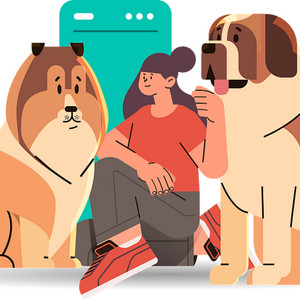
On the way, China's tech leaders are developing AI to translate animal sounds into human language.
The ability to understand barks and chirps and clicks could redefine our relationship with nature, But indeed, there are some big questions about how far this should go.
And then move over, meditation apps.
What if prescription strength relief lives in your local library?
Today, we'll talk bibliotherapy.
It's the practice of book as medicine, and it's getting another look for modern mental health.
Our podcast listeners, that's you.
You can find us at Roundtable China on Apple Podcasts.
And don't forget, we love hearing from you as well.
so you can send an email we appreciate that but if you could send a voice note we'd love you forever send those our way with your thoughts on any of the issues that we discuss on the show here's how you do it roundtable podcast at qq .com one more time roundtable podcast at qq .com and now imagine this your dog barks and instead of guessing what they want you actually hear, I'm hungry.
A bird chirps outside your window and you know it's saying, your window's dirty.
Even a dolphin's clicks could inform you that they know they're smarter than we are.
It sounds like a bad B movie, I know, but Baidu, one of China's biggest tech companies, has filed a patent for AI that might make this possible.
And we're not just talking about hungry dogs and judgmental birds.
This technology could fundamentally change how humans interact with the entire animal kingdom in the beginning beginning of the show i said oh cute story and it is but it's actually way way more than that there's a lot of doors that could be opened here but on the other side of the coin there's a lot of ethical questions that should be considered as well let's start with baidu though what's going on with their ai patent for animal sounds so baidu's patent focus it focuses on an ai system that's capable of of deciphering animal emotions and states by analyzing various forms of animal data.
So this is what they do.
The system, it first analyzes vocalizations, body language, behavioral patterns, and other biological signals from these animals being studied, and then it determines their emotional or communicative intent from these biological signals that's collected.
it. So it's more about understanding these animals core feelings like fear or hunger or comfort as of how they are expressing themselves through the sounds and signals.
So it's not about teaching animals human vocabulary.
Why? That's animal abuse.
You've seen that kind of video that's so popular on Instagram where a dog can press certain buttons that said feed me and then the owner is going to feed me that's the other way around yeah so this system then it's looking to translate these emotional indicators i think we can call them that into human language meaning something that we can understand and the whole goal here is to improve cross -species communication right cross -species communication it's niche i've never heard of a saying like that but you know know in the beginning the reason the inventor wanted to do something like this is about a tragic
incident in 2023 there was this news of a dog biting a little girl and the parents wanted to protect the girl got bit as well later they both recovered but the inventor thought what if i can detect some of the indicators of the dogs is in perhaps a not normal state maybe he's angry Maybe he's angry because of something.
Maybe he's triggered because of a certain trigger and they want to be able to catch the indicator.
That is why instead of saying, oh, we're translating what the animals are saying, what they're doing is to pick up the indicator of their emotional, of what they're thinking, what they're feeling.
Like in that case, in that situation where unfortunately there was an accident, if there was a warning sign that the dog was already giving, then this situation could potentially have been avoided.
There's a spokesperson from Baidu that confirmed, yep, there is a lot of interest in this patent, but also noted that the technology is still in its early stages and also in the research as well.
but this represents an ambition that maybe is a little bit unique because this one wants to build a multi -species model you know a lot of the previous research focused on a single species but this baidu patent this would be a broader aspiration it would be scalable right across different species and what they're trying to do with the project is to translate barks and meows and grunts and like we said even body language into human speech but this would give a wider wider lens to the entire animal kingdom this is a really ambitious undertaking what they're trying to do here yeah i mean um a lot
of times i think out of 80 percent of the times i can understand what my cats are telling me you think i think and then for the other 20 percent it's just them meowing so it's really important that these days they're coming up with this at least ai interfered system that's helping us to try to in a way translate these animal communications so So here they use AI that's utilizing machine learning to identify patterns in vast data sets of animal communications.
And scientists, they are collecting massive amounts of animal sounds that's way more than any human could make sense of on their own.
And then they turn to algorithms to find patterns that we'd probably miss in our capability of hearing those sounds.
and with machine learning, they train the system to just simply recognize these hidden signals.
Sure, the patterns too.
Yeah, the patterns and sorting and just labeling different sounds.
I think it's very smart because we know that the natural language processing is used for the computers or for the algorithm to understand human language.
So they try to find the pattern, that's one way of doing it, or just select enough samples so they would be able to expect or to anticipate what the next move should be and if this can work for human language it's supposed to be work with animal language as well so why is this important because on the surface this seems like oh we just want to know what yeah what our cat is saying or what our bird is saying but it's it's it's it is that some some part of it but this is way more way more serious and there's a lot more to be learned here yeah indeed because understanding animal communications, it
can really help helping conversation efforts, especially for endangered species, like, for example, the Hawaiian crawls.
And also by understanding their communication, the scientists, they can better assess their ability to survive and thrive when reintroduced to new, say, habitats, for example, including communicating about predators and foods.
So all of this is to help monitoring the population of this pack of animal and also help analyzing their number within the pack, how informative they are between the members and just reviving on maybe sometimes the lost calls, who they're calling and what's going on inside the pack.
Well, with that Hawaiian crow, so they use AI tools and then they're looking at birds that were from a captive breeding program, right?
So the AI tools, they analyze the vocalizations of the birds.
They analyze the behaviors of the birds.
And then if they can understand that, then the scientists can know, will these birds in captive, if we release them into the wild, will they be able to survive or will they not?
And that includes how they communicate with each other, and it includes their signals about predators, their communication about food, and that type of animal language can give the conservationists all the information they need to know for a protected species.
Yes. And besides protected species, they can also be used in animal farms. For instance, by selecting or collecting the data of, let's say, a cattle, they would be able to identify each and every one and detect their emotion, detect their status, seeing whether or not they're in a normal state and helping raise the productivity of the farm as well.
It could go so far.
I thought this was absolutely fascinating.
So if AI demonstrates advanced cognitive capacities in animals, in communication, in morality, in emotional intelligence, and their ability to actively communicate with each other, this could challenge legal frameworks.
works the american bar association this is from march of this year they're discussing how communication uh revealing animals as sentient beings capable of expressing preferences it may prompt courts and legislatures to reconsider animal rights legal status uh animals legal status and their rights and expand those accordingly i understand totally i've heard the story of a celebrity on television reality show saying that they were on a trip to a beautiful farm and the farm owner introduced them to these little beautiful lamb called Mary and they were all terrified because if you know Mary and you
play with Mary and your dinner is Mary, that's just creepy.
So I think it comes with the same sentiment that if we are really able to have deep and real communication with our animal friends how about the animal friends in the farm yeah so some of the things that they're doing right now and what they've figured out what they think one of the programs is the CETI cetacean translation initiative they analyze these intricate clicks like or the codas by uh used by sperm whales and then researchers they understand how the whales with their rhythm and tempo and duration, they know what these clicks might mean and what they think.
They might work like an alphabet, combining different elements of their clicks for different meanings when they talk to each other.
And also elephants, they may use names for each other.
AI could help identify unique names elephants use for herd members.
How intelligent they are.
Is there a Steve elephant out there?
You should know Steve.
Yeah, right. That's a study from Colorado State University from this year.
They looked at some African elephants and they found evidence of this.
And the elephants suggest exactly what we think it does.
Abstract thought, individual recognition, right?
Recognizing an individual within a group.
And this can influence conservation and human interaction.
It's incredible. And that's why I said before, it seems funny and cute.
And it is, but it's way, way, way more than that as well.
So let's talk about the potential benefits here.
If this comes to be, then what types of advances could we see?
Yu Sheng can raise her understanding of her cats from 80 % to 100%.
First on the list, what is number two?
Number two is, sorry, I'm so overwhelmed by number one.
So number two is that, of course, improving animal welfare and pet care is crucial.
As we mentioned, how this could potentially raise the awareness for animal rights protection.
So understanding an animal's emotional state or needs could definitely lead to timely interventions for, say, pain or distress in pets or in all kinds of animals.
Quality of life. Yeah, for zoo animals, enhancing quality of their life in general.
Yes, and we've talked about enhanced wildlife conservation efforts.
We would understand them better and help them go back to nature and live freely better.
And also we would have better and deeper scientific understanding of ecosystems and animal intelligence like elephant Steve might be able to even teach us more in the future.
Oh, would he ever? Yeah, the benefits are many and they would probably even find more benefits, I would think, in the future should this technology come to be.
but um downsides ethical and the and the ethical questions are real these are very very real um the risk of exploitation i think is is number one on that list the risk of manipulation is is a big concern as well because if you have the technology available to understand how animals communicate with each other then poachers for example could misuse that technology as well well.
And how can we make sure we are accurately interpreting what they're saying?
Sometimes that's another issue.
Yeah. Sometimes the communication between each other in the herd is more complicated than when they try to communicate with us.
Some even say that the cats meow because they want humans to understand them, not because they want to communicate with each other.
So there are still many challenges, even in the development of this technology.
Yeah, because we can ask AI today, did you make any mistakes with ABC, this project?
And AI will respond, no. And then you ask it again, are you sure?
Oh, wait, I did make a mistake.
So if we're talking about interpreting a communication system from one particular type of animal or many, then we have to make sure that the information that we're receiving is accurate.
And I heard that some scientists, they're also asking this question of if humanity is really ready to listen effectively and act with empathy, receiving all these new signals and new indicators from the animals that we probably can in the near future.
So there are deeper understanding of animal suffering and coming along as a greater moral obligation on human as well.
So what are we trying to, what if it attracts the wrong attention?
Yeah, what's the goal here?
Right? Yeah, not looking to control the animals, but to help them.
It's not just Baidu.
I mentioned Project CETI before.
Google, they've entered the field, they have projects like Dolphin Gemma, that's an AI powered system designed to facilitate direct communication between humans and dolphins.
dolphins. Like I said before, that's the difference between what Baidu's trying to do here and what, for example, Google was trying to do.
Google was specifically looking at dolphins.
Baidu is looking at a larger group of animals.
It's really exciting.
The quote was, yep, there's a lot of interest, but still very early on in the research right now.
But it's very cool to know that this is happening.
How soon can I use it?
Is there an app in the app store that I I can use to translate what my cat is saying?
I think they are. I don't think those are scientifically accurate.
This is for fun, maybe.
I believe that would be related to the fast tech topic that we covered on the show recently.
Very cute to use though, that's for sure.
Only for entertainment purposes.
You're listening to Roundtable and coming up next, read a book, feel better.
Sounds simple, right?
Yeah, it is, but there's something much more powerful to be gained as well.
How about fiery debate?
Want to hear about current events in China from different perspectives?
Then tune in to Roundtable, where East meets West and understanding is the goal.
You're listening to Roundtable.
I'm Steve today with Yushan and Yeohong Lin.
You know, we always hear about groundbreaking innovations, unexpected solutions from everyday elements.
but what if there were equally surprising breakthroughs that are happening but not related to technology but in our own well -being we're going to talk about bibliotherapy it's this really fascinating concept that's regaining traction if you will it's not new it's uh getting a lot of attention for what it could do for your own personal healing and your understanding bibliotherapy sounds like it's related to the bible somehow but it's it's not It's not.
It's not at all. But it's only related to books.
That's kind of at its core what we're talking about, right?
Yes. It uses book to support mental and emotional well -being.
A qualified therapist or counselor or someone is specifically concentrating on biblical therapy, they would recommend reading materials.
And this guided approach helps individuals cope with emotional challenges, understand themselves and gain new perspectives.
And it's reading with therapeutic purpose.
And this is talking about patients.
So if you're dealing with a patient, and if you're using bibliotherapy, it has to be a therapist, a bibliotherapist, a bibliotherapist. Yet here in China, for instance, in a lot of what bibliotherapy is really developed and common in universities in China, university campuses, yes.
And instead of treating patients, what they're doing is to to select, carefully select a list of books and put them into specific places and held activities and events, inviting students to read the books.
Because, you know, students in that age, they are discovering who they are.
They're trying to find purpose for their life and trying to figure out what they'll do in the future.
They have a lot of emotional burden or a lot of challenges they're facing.
And it's also due to lack of experience.
It's hard for them to solve the problems by themselves.
So reading would be a good way.
Yeah. And it can be guided, like you said, with the professional support or unguided, just doing it by yourself.
But the idea is that the stories and the characters, they mirror what you might be going through.
And reading about those characters inside that story, facing a similar struggle to you, what you're going through, it makes you feel less alone and it makes you feel more understood a lot of people if they're suffering from depression or even just simply going through a hard time that feeling of isolation and feeling alone is a powerful one yeah i i actually felt that um right after i finished the college not college the high school entrance examination i used three days to finish the trilogy the three books of the hunger game you read the hunger games in three days yeah i mean Yeah, that's crazy
because I never read so fast because I was so deeply emotionally sinking into that story because I just got through a very hard exam.
And I feel like, yeah, I was trying as if I was trying to survive, like how the characters were doing in Hunger Games.
Somehow that just makes sense now.
You know what's funny?
Here in China, in late Qing Dynasty, which is the last dynasty, yes, we've experienced.
And there is this literate called Zhang Chao, and he had, well, you know, given books as a way, as a prescription.
He talked about the kind of books that you can read that can make you feel better.
Yes, they include the four classics, The Great Learning, Doctrine of the Mean, Analects, and also Mentions.
They say these books are sweet in taste and mild in nature.
They're not toxic at all.
And if you read them, they can clear your mind, enhance wisdom and reduce desires.
And there's also the five classics.
And also what's funny is the historical works like Records of the Grand Historians and Book of Han Dynasty.
These books are full of dramatic plots and full of historic histories.
trees and these would make you feel a little bit triggered and anger it can help you release the inner anger of yours yeah and what's really cool is that it doesn't matter if the characters in the story are real or fictional it doesn't i found this to be really fascinating emotional truth in the story matters more than character reality because and this is what i read because that's the question I had.
When immersed in a story, our brains engage in what's called narrative transportation.
So we're drawn into the plot and the character's experiences and we respond emotionally as if it were real.
So our brain prioritizes the emotional journey over the factual basis.
Our brain doesn't care if it's a real story or a real character.
Our brain responds to the emotional side of things.
I think that's amazing.
And also the fact that we're reading from the book instead of just focusing on our own feelings, it almost feels like it gives this little space of observing a character's life.
And in that way, as we go through the character's stories, it helps us to explore our own pain or past experience just in a more careful and soft way.
Not only solving problems, it's also benefiting people for example, example, personal growth purposes, self -discovery, navigating life transitions by reading the stories of others, you might be inspired to find the answer that you've been looking for for so many years.
Yeah. And we're talking bibliotherapy, which is strictly related to books.
I don't know if this applies to movies.
I was thinking that.
Or not, but I think it absolutely could.
Or songs. or songs because it's the same concept right i think that sometimes it's people for yeah number one they feel isolated and they might feel like i'm the only person who feels like this way because when we see social media and when we walk down the street everybody looks like they're living their best life and they are perfectly mentally stable and emotionally stable here's the thing everybody has problems so when you see a character in a film and you realize they're going through something similar, then you feel that feeling of isolation disappears.
But also, when a character in a book or a character in a film is able to think about and then come to a solution to a problem, I think for us, when we see that happen, then it makes us feel like, I didn't consider that.
And it allows us to see our situation through a different set of eyes.
The difficulty when you're trying to get over a hardship is that you only have access to your own brain sometimes, right?
And your own brain is only going to give you the answer over and over and over again unless you find different ways to explore possible solutions.
So bibliotherapy or film, I don't know if there's a technical word for the film side of things or not, or if I just made that up.
And the thing is you can find the same kind of consolation with someone you talk to, a living person, yet the living person might change.
They might tell you things that you didn't anticipate them to.
Yet a character in a book is relatively fixed.
So they would not disappoint you.
They would not say things you do not agree with, which is an upside.
Yet the downside here is that you might misunderstand what this character is supposed to convey.
And there comes a professional therapist helping you understand.
Seek help when you need.
Yeah, exactly. The message could be mistaken.
And if it's very serious, yeah, perhaps professional help is the best way to go.
Really interesting topics on today's show.
That'll do it for Roundtable for this time.
Thank you very much for being with us today.
Thank you, Niyo Honglin, and thank you, Yushan.
I've been Steve, and we all hope that you'll come back and join us next time.