
[Exploring Medical Innovations, Sleep Technology, and Historical Narratives]-[Trailer: HTW Season Premiere This Monday!]
📋 Summary
Enhancing Quality of Life Through Advanced Cancer Treatment
The Kansas City Proton Institute is positioning itself at the forefront of oncology by "delivering the future of cancer care" through "state-of-the-art proton therapy." For patients diagnosed with head or neck cancer, the primary value proposition of this technology is "increased precision." Unlike conventional radiation, this targeted approach significantly mitigates common, debilitating side effects. Patients often suffer from "dry mouth, difficulty swallowing and the loss of taste" when undergoing traditional treatments, but proton therapy aims to preserve quality of life by focusing radiation more accurately on the tumor while sparing healthy surrounding tissue. The institute encourages patients to seek a "second opinion" to leverage the expertise of what they describe as "KC's largest, most experienced proton therapy team."
Optimizing Recovery Through Sleep Fitness
The narrative shifts from medical intervention to personal wellness with the introduction of The Pod by 8 Sleep. This "smart mattress cover" addresses the common domestic friction point where partners have differing thermal preferences—one who "loves it hot" and one who "loves it cool." By utilizing thermal regulation technology, the device "keeps each side at the perfect temperature all night long." The core benefit of this innovation is the physiological impact on rest; by maintaining an optimal temperature, the user can "sleep deeper and wake up feeling more rested." Beyond mere temperature control, the product integrates data-driven health metrics, providing users with "daily health insights and a sleep fitness score," effectively turning the mattress into a tool for proactive health management.
Unearthing the Engineering Legacy of the Hudson River Tunnels
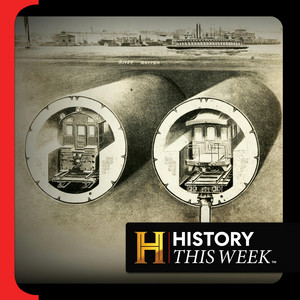
Finally, the podcast highlights the upcoming season of History This Week, focusing on a dramatic event from February 1905. The teaser describes a "quiet morning at the rail yard" that turned into a catastrophe when the "ground gives way" and an "entire locomotive is swallowed whole." This event served as a major "setback for an audacious project to tunnel under the Hudson River," a feat attempted by what was then "the world's largest corporation." The historical significance of this project is brought into a contemporary context with the sobering revelation that, 115 years later, these same tunnels are now considered a "national emergency waiting to happen." By connecting the past to present-day infrastructure concerns, the show promises to provide the "story behind the most important train tunnels in the United States," inviting listeners to stay tuned for a new season of investigative historical storytelling.
Deep Learning with ListenLeap


