
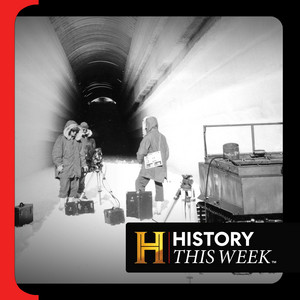
[The Strategic Obsession: America’s Long-standing Interest in Greenland and the Secret of Camp Sentry]-[Trailer: America's Cold War Obsession with Greenland]
📋 Summary
The Strategic Obsession: America’s Long-standing Interest in Greenland and the Secret of Camp Sentry
For over 150 years, the United States has maintained a persistent, almost singular focus on the island of Greenland. This geopolitical fascination is not a modern phenomenon but a historical narrative rooted in military ambition, strategic positioning, and Cold War secrets. As explored in the latest episode of History This Week, the American interest in this vast Arctic territory has manifested in various forms, ranging from diplomatic purchase attempts to covert military engineering projects.
The Gold-Plated Ambition: Attempts to Purchase Greenland
The American desire to acquire Greenland reached a notable peak in the immediate aftermath of World War II. During this period of global restructuring, the United States made a formal offer to Denmark to purchase the island for "100 million U.S. dollars in gold." This bold proposal highlights the immense strategic value the U.S. placed on the territory. While the transaction did not result in a transfer of ownership, the offer served as a clear indicator of America's geopolitical priorities, signaling that Washington viewed Greenland not merely as a remote Arctic outpost, but as a critical asset for national security and global reach.
Project Iceworm and the Shadow of Camp Sentry
When the U.S. failed to acquire Greenland through diplomatic channels and gold, it pivoted toward establishing a physical military presence. The most ambitious, and perhaps most notorious, manifestation of this was the construction of "Camp Sentry." Carved directly "underground into the ice," this facility was presented as a triumph of engineering and a testament to American ingenuity. The base was designed to house "200 men inside the ice," functioning as a self-sustaining city beneath the frozen surface.
However, the allure of Camp Sentry was marred by its clandestine nature. The project was shrouded in secrecy, with the "secret purpose of Camp Sentry" hidden from the very personnel stationed there. Veterans who lived and worked within the facility later reflected on this manipulation, noting, "In retrospect, I was being told that I didn't know it." This admission underscores the darker side of American military operations in the region, where soldiers were effectively pawns in a classified strategic experiment, unaware of the true geopolitical objectives they were serving.
The Lingering Question: Why Greenland?
The obsession with Greenland is rooted in its unique geography, which serves as a gateway to the Arctic and a vantage point for monitoring global movements. By establishing bases like Camp Sentry, the U.S. sought to project power in an environment that was historically difficult to navigate and even harder to occupy. The episode prompts a critical examination of this history: Was the obsession driven by the necessity of Cold War containment, or was it a broader realization that control over the Arctic is synonymous with control over global security?
Ultimately, the story of Camp Sentry and the U.S.-Greenland relationship is a study in the intersection of ambition and secrecy. From the offer of 100 million dollars in gold to the hidden tunnels beneath the ice, the narrative reveals a nation willing to go to extraordinary lengths to secure a foothold in the North. Understanding this history is essential for anyone looking to comprehend the modern geopolitical landscape, where the Arctic continues to be a theater of intense international competition.

Deep Learning with ListenLeap


