This message comes from DonorsChoose Before there are leaders, there are learners Before progress, there's potential Learn how to donate at DonorsChoose.org slash back to school.
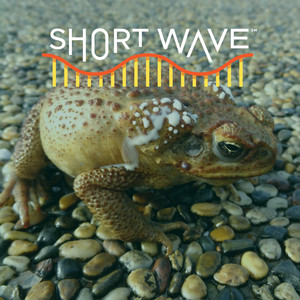
You're listening to Shortwave from NPR. Imagine you're a toxic toad hanging around South America when you finally get your big break.
You and your family are going abroad to Japan as pest control.
No other animals are gonna mess with you, right?
After all, you're toxic. If anyone tries to eat you, they'll be exposed to something called a cardiotonic steroid, and they may die of a heart attack.
And when they're ingested and they reach the bloodstream, and from the bloodstream they reach cells, they bind to and disable one particular protein.
And this protein is the sodium potassium pump.
It plays a role in almost every single physiological system.
Blood pressure regulation, cardiac contractility, brain function, Evolutionary biologist Shabnam Mohmadi says there are hundreds of different kinds of these toxins.
But wait, that bird over there just ate your cousin and it doesn't seem to be getting sick at all.
What the heck is going on? Unfortunately for toads, some animals have developed adaptations to toxic steroids.
And Shabnam, who goes by Shab, has spent her whole career studying how animals can eat foods that are laced with these poisons without dying.
What is their adaptation? How does it work?
Humans have used this toxin to their advantage throughout time.
The first written evidence goes all the way back to ancient Egypt.
There's a papyrus known as the Eber Papyrus.
They documented... the use of plants that contain cardiotonic steroids to treat people with heart failure or heart problems.
And to this day, we still do that, actually.
Some versions of cardiotonic steroids are prescribed for treating congestive heart failure.
Today on the show, toxicity. It can feel ubiquitous in this world, and yet some predators have learned to overcome it.
How do they do it? And what does all of this have to do with Vincent van Gogh?
I'm Regina Barber, and you're listening to ShoreWave, the science podcast from NPR.
Okay, Shab, so we heard one way this toxin, cardiotonic steroids, interacts with us humans is like with our hearts.
Now, I want to talk about another way it might interact with us, and that's our microbes, our gut microbes.
How are gut microbes interacting with this toxin?
Okay, the story actually starts with, I think it was clinical trials.
They were giving patients... a cardiotonic steroid doses.
Some people got placebo, some people got the cardiotonic steroid.
And they found that some individuals excreted different amounts of the cardiotonic steroid that they were given.
And also different individuals had different levels of cardiotonic steroid in their blood after they were given a dose.
So they were trying to figure out why are amounts of this toxin ending up in different people's blood.
And there was a group from UC San Francisco led by Peter Turnbaugh.
I believe it was around 2013, 2015, they ran a study where they basically discovered a microbial source of resistance to cardiotonic steroids.
And what they found was that actually there is a bacteria in our gut.
Not everybody has it. Some people have more of it than others.
This bacteria... can actually metabolize cardiotonic steroids.
So when you ingest them, they go in your gut and these bacteria break it down So that less ends up getting absorbed in your blood and circulating through your body.
And in that sense, the bacteria are providing resistance for you.
Wow. Like somehow humans can be maybe a little resistant to this toxin.
Yeah, yeah, yeah. Thanks to our gut bacteria.
As long as you have a good, healthy gut flora.
Wow. The famous painter Vincent Van Gogh somehow is like related to these toxic plants.
Can you tell me about that? Yeah, that's a fun theory.
One of his famous paintings, it's a painting, I don't remember the name of it.
It's a painting of his doctor, and he's leaning on the table with his elbow on the table, and next to him is a plant.
And this plant is the foxglove. And foxglove is a plant that produces the cardiotonic steroid Digoxin, which is actually what is most commonly used today for heart failure therapy.
Oh, wow. So there's this theory that Vincent van Gogh was taking foxglove recreationally Therefore, he was ingesting digoxin, and digoxin has tons of side effects.
There are common ones, there are rare ones, and one of the rare ones or a few of the rare ones are seeing bright halos around lights, and in particular yellow.
Like starry night, like the painting. Exactly, yeah.
Wow. It fits really well to his painting style, so there's a theory that he, maybe the reason why he painted the way that he did was because he was recreationally consuming cardiotonic steroids.
Wow. I like it. Let's go from plants to animals beside humans, different kinds of animals.
How are these animals, like the toads you were talking about, using this toxin for their own defense?
They synthesize this toxin from cholesterol.
And then they concentrate it in these glands on their skin.
They have two on the back of their necks.
They're the peritoid glands, and that's where most of it is concentrated.
But they also have a lot of other smaller glands throughout their skin. which also contain cardiotonic steroids.
And essentially, when an animal bites into a toad, These glands release the toxins and then the animal ingests it.
And is it only plants and toads or are there other things that have this toxin at high levels that you're talking about?
You find it also in a lot of insects. So fireflies, for example, produce it.
Monarch butterflies are a famous example.
The caterpillars feed on milkweed and they then take the cardiotonic steroids from the milkweed and stored in their own body.
This process is known as sequestration. And the European hedgehog, they also chew on toad skin.
They take the cardiotonic steroids and they lick it onto their spines.
So they're producing... their own chemical defense.
This is a mechanical form of sequestration.
And there's a rat in Africa. the African crested rat that does the exact same thing with... plant-derived cardiotonic steroids.
And they're actually, they've taken it to the next level.
Their hairs have these hollow spaces and those spaces can wick the toxin into the hair so they can actually in a sense store it in their hair That is so cool.
Okay, so this is what all of these animals are doing today. to defend themselves against these predators, but some of these predators can eat these toxins without getting sick.
How do they do that? Yeah, some animals have developed mechanical resistance.
This you see often with birds, where they'll just... eat the insides of the toad and leave the skin out.
They know that the skin is toxic. There's actually a record of a snake in Asia that can also do this.
This is really remarkable because snakes don't have any digits, any...
Hands, feet, nothing. But they do it with their mouths somehow.
They're able to just bite around in the stomach area and... get that out and leave the skin behind.
The evolution of resistance to cardiotonic steroids is an adaptation that has happened repeatedly. across the world, across the animal kingdom.
This is called convergent evolution, right?
Yeah, convergent evolution in a broad sense refers to when you have multiple organisms that are not related to each other. which have all evolved the same adaptive solution to a problem. independently.
And the way that most predators cardiotonic steroid-defended animals and herbivores of cardiotonic steroid-defended plants. resist these toxins is through just a handful of mutations on the target protein. this toxin which i mentioned earlier was the sodium potassium pump and the really cool thing is these mutations they pretty much happen at the same site on the protein over and over again.
So all of these animals, snakes, birds, frogs, mammals have evolved resistance to cardiotonic steroids by one or two mutations at the same place on the sodium potassium pump and They do it through different mutations, but it's always at the same site.
What is your lab's like the big question you want to answer?
Like what is your main focus? big cosmic question that we're trying to answer is how adaptation happens as a process.
What are the dynamics of the adaptive process?
And the approach that we take is to actually reconstruct evolution. in vitro in the lab.
And we do this using statistics. were able to statistically reconstruct ancestral steps.
Hundreds of millions of years ago, And we do this at the gene level so we can reconstruct the gene for this protein.
60 million years in the past, 100 million years in the past, so on and so forth.
And then we resurrect that in the lab at the protein level.
And then what we do is we take these modern resistance mutations and we move them back in time onto each step to... see how the effects change as they go back in time.
And this sort of tells us at what point this adaptation was possible.
Yeah. I mean, we've talked about cardiac arrest help.
Like, what are the human applications to studying cardiac arrest? cardiotonic steroids.
Oh, okay. A collaborator of mine, Gustavo Blanco from the University of Kansas Medical School, is one of the groups that's working on developing male birth control.
And long story short, mammals have... So this protein that these toxins attack and disable The sodium potassium pump exists in four copies.
So there are four versions of this protein in our body's and they exist in different tissues.
For example, one copy is in our heart, one copy is in our brain, so on and so forth.
And there's one copy that is present only in mammalian sperm.
This is copy number four. And what they have found is when they silence this copy or knock it out, then the sperm are not able to move anymore.
So this protein is vital for sperm mobility.
And what disables sodium potassium pumps?
Cardiotonic steroids. So they're looking to develop a cardiotonic steroid compound that just targets this copy number four.
If they can disable only copy number four, then they can disable sperm.
Shab, we went from predators eating toxic things animals to Vincent van Gogh to male contraception.
I loved this. Thank you so much for talking to me today. it was really fun to talk about yeah thank you Short Wavers, thank you for listening.
If you want to help us out, follow us on the NPR app or whatever podcasting app you use.
This episode was produced by Rachel Carlson and edited by our showrunner, Rebecca Ramirez.
Tyler Jones checked the facts. Kwesi Lee was the audio engineer.
Beth Donovan is our senior director and Colin Campbell is our senior vice president of podcasting strategy.
I'm Regina Barber. Thank you for listening to Shortwave from NPR.
Pop Culture Happy Hour, NPR's easy breezy, laid back pop culture podcast has brought you the best in culture for the past 15 years.
That means we spent the last 15 years talking about what exactly?
Bad reality TV, actually good Marvel movies.
Actually awful. Marvel movies. Reboots. Hot music.
Prestige dramas. Netflix slop. That's 15 years of buzzy pop culture chit chat.
And here's to many more with you along for the ride.
Listen to Pop Culture Happy Hour on the NPR app or wherever you get your podcasts.
Do you ever look at political headlines and go, huh?
Well, that's exactly why the NPR Politics Podcast exists.
We're experts not just on politics, but in making politics make sense.
Every episode, we decode everything that happened in Washington and help you figure out what it all means.
Give politics a chance with the NPR politics podcast available wherever you get your podcasts.