Yes, you like potato And I like potato You like tomato i like tomato potato potato tomato tomato let's call the whole thing off Hmm, I wonder what this episode is about.
Is it about the way I say tomatoes? No, but this is the perfect time to remind all you lovely listeners that Nikki is in fact British.
I know, I know. She's been here for so long that she almost sounds like an American.
But then there are some words that we differ on, like the tomato.
Or in fact, tomato. We're definitely not going to call the whole thing off.
Our relationship is solid, Cynthia, but the tomato?
That's a more troubled love affair. And we've got the whole story this episode of Gastropod, the podcast that looks at food through the lens of science and history.
I am Nicola Twilley. And I'm Cynthia Graber.
This episode, we're finally telling the story of one of my favorite vegetables of all time.
Or wait, is it a fruit? Oh, well, the United States Supreme Court said it's a vegetable, but the reality is it's a botanically, it is most definitely a fruit.
Not the first time the Supreme Court has been wrong.
Either way, the tomato is extremely beloved.
I love it. The world loves it. It's up there with the potato as the most consumed item in the produce category.
So why did humanity's relationship with this delightful vegetable fruit get off to such a rocky start? no one seemed to love the tomato where the wild plant originally grew, and even the Italians weren't into it for hundreds of years after they first encountered one.
And as if repaying us for all this lack of love, why are most tomatoes so disappointing today?
All that plus a sneak peek at the tomatoes of the future.
But first, we have a quick bit of exciting news.
We're getting ready to host our second ever GastroHang.
It's a super fun get-together hosted by, yes, us.
We all meet online. There are games and behind-the-scenes stories and more.
This year we'll be getting together on October 8th and invites will go out to supporters in the middle of September.
If you're not a supporter yet and you'd like to get on the Gastrohang invite list, go to gastropod.com slash support.
That's gastropod.com slash support. This episode was supported in part by the Alfred P. Sloan Foundation for the Public Understanding of Science, Technology and Economics.
Gastropod is part of the Vox Media Podcast Network in partnership with Eater.
Support for this show comes from Pure Leaf Iced Tea.
When you find yourself in the afternoon slump you need the right thing to make you bounce back. you need pure leaf iced tea.
It's real brewed tea made in a variety of bold flavors with just the right amount of naturally occurring caffeine.
You're left feeling refreshed and revitalized, so you can be ready to take on what's next.
The next time you need to hit the reset button, grab a Pure Leaf iced tea.
Time for a tea break? Time for a Pureleaf.
Support for this show comes from Pure Leaf Iced Tea.
When you find yourself in the afternoon slump, you need the right thing to make you bounce back. you need Pure Leaf Iced Tea.
It's real brewed tea made in a variety of bold flavors with just the right amount of naturally occurring caffeine.
You're left feeling refreshed and revitalized, so you can be ready to take on what's next.
The next time you need to hit the reset button, grab a Pure Leaf iced tea.
Time for a tea break? Time for a Pureleaf.
All right, we got a really good looking one here that's literally warm off the vine.
It was in the sun about 10 minutes ago growing.
This is the moment I've been waiting for since like February.
Oh my gosh. Starting with the big pink and yellow one. just a little bit of salt here we go i love it Oh, that's so good.
That's so good. Mmm. A little more fruity.
You have a slightly darker one here. So good.
It's like perfect summer. Listeners can't see but I'm doing like a little tomato happy dance.
That's it. Just leave me here. Eating tomatoes.
They're so good. Okay. I'm going to eat the rest of this with some basil and some mozzarella because that's... my ideal life in the summer.
It is not an exaggeration to say that in summer, we here at Gastropod HQ
Live for tomatoes. Jeff and I eat them every day, multiple times a day.
They're our producer Claudia's favorite vegetable to eat and grow, and the same is definitely true. true for Tim and me.
And based on the statistics, we're very much not alone in our tomato consumption.
If we exclude the potato, which should more properly be thought of as a starch, not a vegetable.
The tomato is the most popular vegetable on the planet by far.
William Alexander is the author of Ten Tomatoes That Changed the World.
And just to get this Supreme Court elephant out of the way at the start, this fruit-vegetable confusion is because botanists define fruit as as an ovary enclosing a plant's seeds.
Which, yum. Basically, this means that a particular plant is flowered, and then the lady part of the flower turns into an ovary around the seed or seeds.
Most fruit are, well, fruit and also a bunch of vegetables fit that definition.
Peppers, eggplants, squash, a whole bunch, including the tomato.
But of course, people like us who are more concerned with eating than botanizing, we categorize tomatoes according to how we eat them. which is typically as a vegetable.
Hence the confusion. But back to the tomato.
It's kind of shockingly popular today, but once upon a time, it was just one of a bunch of random plants in the Andes.
It is a plant that originated in the mountains of Peru, Ecuador thousands of years ago.
If you walked past one today, you probably wouldn't recognize it as tomato.
It looked like kind of a scrubby weed, and the fruits were the size of peas.
As far as we know it was not eaten at all in South America.
We haven't tasted the fruit of these wild ancestors.
But like Bill says, rumor has it that the ancient Peruvians didn't bother eating or cultivating wild tomatoes because they just weren't that into them.
Ah, they're not very good. Ouch. Harry Klee is an emeritus professor in the Horticultural Sciences Department at the University of Florida.
But if they weren't domesticated in the Andes, then who did domesticate the tomato?
Yeah, this is actually a great question because we don't know.
What it's known is that actually domestication likely mostly happened in the south of Mexico.
Gabriella Toledo is an associate professor at Wageningen University in the Netherlands and the founder of a project called the Tomatoes for Tomorrow Initiative. and she told us that somehow this underappreciated wild pea-sized fruit made its way north to Mesoamerica, where the locals took the time to domesticate it. and over hundreds of years it went from that pea-sized fruit to something closer to what we would recognize as Tomato today.
And not just the one most popular tomato today, that round, smooth red globe.
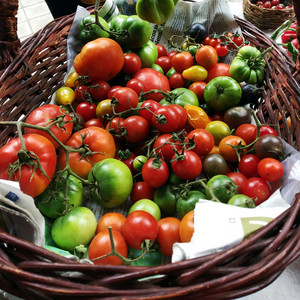
These new domesticated tomatoes came in a huge variety of sizes, shapes, and colors.
And the Spanish conquistadors arrived in 1519.
They were amazed at just variety and the number of them.
They were reported to be green and yellow.
Red. You have the shapes that go from round pear shape And you also have some, they have very specific shapes that look like a kidney somehow.
Some are called, for example, pumpkin-like because they look like a pumpkin. and i have actually in some events used some pictures of these tomatoes without the color And without the color, people actually cannot know if this is a pear or it's a pumpkin.
Even despite all that delightful variety, Bill told us that the tomato was not the MVP of Aztec vegetables.
Sure, they had cultivated a bunch of them, but did they truly? truly adore the tomato?
Maybe not. There are even some indications that the Aztecs themselves preferred tomatillos.
Tomatillos, if you're not familiar with them, they look a lot like tomatoes, but they're usually hard and green when they're ripe, they grow with a kind of lantern-shaped papery coating around them that you have to remove,
And you don't typically eat them raw. You cook them or roast them.
They have a delicious citrusy flavor and they're super common in Mexican sauces.
And in Nahua, the language of the Aztecs, the tomatillo is called the tomatl, while the thing we call a tomato these days was called a jitomatl.
That overlap was way too confusing for the conquistadors.
When the Spanish brought them back, They just took the root of the word for both tomatillos and tomatoes, which means a round fruit, and they called them by the same things.
So when we read some of the accounts in Spain, we're not always sure which of those two they're talking about.
Okay, so when the Spanish word tomate shows up in the records, we don't know whether they're referring to tomatoes or tomatillos.
But whichever one, we do know that neither was the favorite among the horticultural haul that Spaniards brought back to Europe with them.
There were chili peppers, chocolate, squashes they had never seen.
They raved about chocolate and were fascinated with chilies.
They loved a lot of the New World foods. it doesn't seem like they were super into the tomato.
The poor tomato. No one loved it. Even the first recorded tomato encounter in Italy was a big fat meh.
Tomatoes arrive in Italy on All Hallows Eve, the holiday we now call Christmas.
Halloween at the Pisa Palazzo of Cosimo de' Medici, the Grand Duke of Tuscany.
And he gets word that a basket of a strange new fruit from the new world has arrived. and the steward summons the entire staff downstairs to witness this new fruit So exciting.
Cosimo was known for growing all sorts of cool things.
He was already growing maize. He had recently founded Pisa's first botanical garden just a few years earlier.
This clearly was going to be another botanical treasure.
Surely everyone would soon be blanketing their pasta with tomato sauce.
And the steward records the scene, this historic scene when tomatoes are first unveiled in Italy And he says, and this is a quote, the basket was opened and they looked at each other with much thoughtfulness.
That That's it. Which implies that they really didn't quite know what to make of them.
I'm starting to feel like someone needs to give the tomato a hug.
What's more, things were only going to get worse.
As more and more Europeans tried tomatoes, they were just completely panned in the press.
Many, many of the contemporary writers complained about the strong smell, not just of the fruit but of the leaves.
Here's a few choice quotes. One British journal called them odious and repelling smelling berries.
A Flemish herbalist said the strong stinking smell gives one sufficient notice how unhealthful and evil they are to eat.
Northern Europeans hated them the most, but even in Italy tomatoes did not get great reviews.
For example, one influential Paduan doctor listed tomatoes as one of the, quote, strange and horrible things that, quote, a few unwise people were willing to eat.
So why in the world did people hate tomatoes so intensely?
Well, the thing that you read most commonly is that they were known to be a member of the Nightshade family. which includes, of course, belladonna, which is very toxic poison.
It's one of the most poisonous plants on the planet.
I don't buy that because they also knew that squash and peppers and eggplants were also in the nightshades.
And they were happily eating all of those things.
But that's the most common reason that you hear.
Tomatoes are obviously not poisonous, but even today you often hear that tomato leaves are poisonous, and that's just not really true. you'd have to eat at least a pound of tomato leaves, which is a frankly ridiculous amount, to experience any ill effects at all.
It's all part of this bad rap that the tomato didn't deserve.
Tomatoes were likened to their fellow nightshade the eggplant in Italy at the time.
But that association with the very edible eggplant probably didn't do the tomato any favors there. because it seems like eggplants were mostly associated with food that poor Jews ate, and Italians at the time weren't too fond of Jews, rich or poor.
These were all strikes against the tomato.
Another issue was that Europeans just didn't know what to do with them.
I mean, they were very strange when they came there.
They didn't look like anything else Italians had.
In fact, some weren't sure which part of the plant to eat.
They would take a bite of the leaves and say, and pronounce them unfit.
And even if they did figure out that the fruit vegetable part was what they should cut into, they wouldn't necessarily have been too impressed when they took a bite.
The tomatoes at the time weren't as sweet as a lot of the varieties today.
They'd probably have been a lot more acidic.
And in any case, you really need to do something to a tomato, not just eat it by itself.
Maybe dress it up with some salt and oil or add it to a dish.
That's where it really shines. The Europeans didn't know how to let the tomato show itself off.
And then on top of all of that, The window they would have had to try to figure out their tomato consumption would have been pretty short.
They go from hard green and tasteless to rotten on your windowsill in a matter of days.
Plus, they didn't grow well in much of Europe, even much of southern Europe.
They hadn't been bred yet to do as well in colder climates, so they only really flourished in southern Italy and parts of Spain at the time.
So a lot of people just weren't familiar with them either.
But one of the biggest reasons the tomato was so shunned was a guy called Galen. who at that point had been dead for more than a thousand years.
He and his theories about health were rediscovered during the Renaissance.
The Renaissance was all about the rebirth and revival of ancient Greek and Roman arts and architecture. sculpture, literature, but that also extended to some of the medical writings of that time.
And foremost among those were the writings of a doctor called Galen of Pergamon.
The Renaissance was taking place in the 1500s and 1600s in Italy, basically when the tomato showed up.
And this callback to Galen and his medical beliefs included adopting his beliefs about how food fit into your overall health.
This was called humoral theory. and there were four different humors, cold, hot, wet, and dry.
So all foods had a property of how wet they were, dry or how hot and cold they were.
So, for example, cheese was cold and dry.
A lemon was hot and wet. And the idea was to kind of stay in the middle of this, not to get too cold or too hot. or too dry or too wet, but to keep that balance so that your humors were in balance.
And even though Galen himself could never have encountered a tomato, they didn't do well in his system.
They ended up kind of where you might classify a wet band. basement kind of in the coldest and the wettest corner of the chart and thus were considered very unhealthy, pretty much to be avoided at all costs.
So you'd think with all this anti-tomato sentiment that absolutely nobody was bothering to eat them.
But that wasn't true. In Spain, which after all was the tomato's first port of call in the old world, Attitudes were a little bit more welcoming.
The king's own botanist declared tomatoes safe to eat and good for sauces in the late 1500s.
There are already some of the documents that show that as early as in the 17th century, Probably the tomatoes were already part of some of the culinary traditions.
The Spanish who did eat tomatoes seemed to have enjoyed them with salt and onions and in soups.
So they did introduce them in similar ways that the Mexicans had done.
The next place in Europe the tomatoes caught on was southern Italy, which at the time was called the Two Kingdoms of Naples and Sicily and was ruled by the Spanish.
Because Spain at the time. had provinces that were part of Italy.
These were regions whose climate was perfect for the tomato.
And so even though the people in the north still feared tomatoes because they were wet and cold, By the late 1700s, early 1800s, southern Italy was ready to become tomato-obsessed.
By then, medicine had moved on a little from Galen's humors.
And in the South they didn't have too many other options of what to eat.
Southern Italians were incredibly poor. It's hard to imagine how poor they were.
And so it turns out that they grew really well in the South.
They had a fairly long growing season. And they added a little color to a really drab diet.
Indeed, they grew so well and became so popular that southern Italians developed remarkably tasty ways to preserve their tomato glut so they could eat tomatoes all year round.
One of the most successful ways that they did this was they cut the tomatoes in half put a little salt on them, and put them on their roofs.
They were the first ones to do sun-dried furniture.
Tomatoes. A few decades ago in the 80s and 90s, sun-dried tomatoes were like the hot ingredient and they were in everything, everywhere.
Then they kind of became passe. But I can assure you that they are in fact delicious and totally still worthy of a spot in your fridge.
I buy them packed in olive oil and they're great chopped up in green salads.
But the real southern Italian tomato hack was something that's much harder to find today, even though it sounds kind of delicious.
They would make something called conserva nera, which means black preserve.
So at the end of the harvest, they would harvest everything off the vines.
And they would all get together in the streets. and put the tomatoes into these large cauldrons and start fires up. and boil them down into a thick paste.
This boiling and thickening would take days.
It was almost like a street fair at the time.
Because you did it in a group. You hung out.
You gossiped as you stirred and strained out the seeds.
And then they would spread this thick paste onto wooden boards. and leave it out in the sun for several days.
And at which time then, they could actually go out and roll up this thin sheet into something that probably looks like fruit leather.
And they would sometimes form it into blocks.
In block form, tomato conservanera would last at least a year, right through to the next harvest.
And it was so concentrated that you didn't need much to flavor a soup or a stew.
If you're thinking that this sounds sort of like tomato paste, it's really a different thing.
They're both concentrated tomatoes, But conservanera was nearly black, as Bill said, and it was tough and you had to slice off a piece.
Nikki and I actually looked for some online, and there are things from Italy called conserva, but they're more like lightly sweetened tomato spread, not this hard, tough tomato leather.
But if you know where we can get some, please let us know.
In any case, finally, finally, the tomato had found its place in the sun, at least in southern Italy.
The story of how it took pills and tins to get big in North America, coming up after the break.
Support for this episode comes in part from Square.
Square powers businesses of all kinds, lots of which you probably frequent.
Maybe your favorite farmer's market vendor, your hairstylist, or your go-to bookstore.
If you've ever tapped to pay and it was a fast and easy transaction, chances are it was Square.
It's a tool that was built for the way people actually run their businesses.
Square is one connected system to take payments. manage inventory run payroll and send invoices you can track it all from one place And it's not just a point-of-sale system.
Square includes hardware that makes payments much easier to do both in person and on the go.
Plus, it has software for all of your marketing insights and staff management needs. if you're starting a business or running one that deserves better tools square helps you sell manage and grow without slowing down Right now, you can get up to $200 off Square hardware at square.com slash go slash gastro.
That's S-Q-U-A-R-E dot com slash G-O slash gastro.
Run your business smarter with Square. Get started today.
This is advertiser content brought to you by Vitamix.
I just believe in simplicity in everything.
Simplicity in food, simplicity in tools.
I think just having one really good knife is a total game changer.
I love using mini whisks. I love my microplane grater.
I absolutely love my Vitamix. I use it all the time.
My name is Lily. I work at Vox Media, and I have two teenagers.
They are hungry literally all the time. I grew up in a Lebanese household.
Both my mom and dad made hummus probably every couple days, and I just continued that tradition.
I think a lot of hummus recipes are too complicated and I think the best ones are very simple, but I think there are some very important tips that I think are essential.
The ingredients you need to make hummus are a couple cans of chickpeas.
I always, always, always wash. My chickpeas.
Two to three lemons. I like hummus very lemony.
I would say like two to three cloves of garlic.
It's always raw. tahini, and salt, of course.
And then my other secret weapon is ice cubes.
It feels so wrong when you're putting them in because you're just like, how is this science going to And then I just go into my Vitamix.
I give it a blend. And then that's it. in there.
Is it good? Really good. That's so good.
There are some essential foods that endure, like a simple and delicious hummus.
And then there are essential tools like Vitamix blenders.
Only the essential at Vitamix.com. There's no handbook for being Thank you.
Every day you're making choices, some tiny, others life-changing, that shape the path ahead.
It's messy, it's complicated, and it can feel overwhelming.
That's where Life Kit from NPR steps in.
Think of it as a friendly, trusted companion for navigating the challenges and opportunities life throws your way.
Whether you're hoping to move with more intention, find your footing in a stressful season, or simply live a little better, Life Kit brings you real stories, expert insights, and clear, actionable strategies.
Episodes cover the things that matter most, relationships, finances, parenting, health, and career.
But they don't just offer advice. You'll leave with practical tools you can put to work immediately.
LifeKit isn't about chasing perfection. It's about learning how to live with more clarity, purpose and ease starting right where you are.
Listen now to the LifeGit podcast from NPR.
In the U.S., a few brave souls were fond of tomatoes.
They were better known in the South. Thomas Jefferson grew and ate them.
But my fellow New Englanders were generally not fond. fans, Ralph Waldo Emerson declared them an acquired taste.
And then came tomato mania. It was kind of a quirk.
It happened in 1834. a kind of failed doctor named John Cook Bennett who had been fired from one medical school had failed to start his own school, gave a lecture to his medical students about the health properties of tomato.
In general, medicine wasn't particularly advanced at the time, so people were always looking for something to make them healthier.
But Americans were particularly health-obsessed at that moment because they were in the middle of an epidemic of cholera.
So after Bennett published this lecture, 200 American...
Uncritically picked this up and printed this.
Now it didn't take long for the snake oil salesman to realize that there was an opportunity here and one in particular, an Ohio merchant named Archibald Miles. had been peddling this worthless pill, which he called American hygiene pills.
Archibald Miles encountered John Cook Bennett's viral tomato article, and it gave him a couple of ideas.
Shortly after, Miles printed up some new labels, awarded himself an MD. and Dr. Miles' compound extract of tomatoes was born and sold like hotcakes.
Were there any tomatoes in this? Probably not.
If there were, it was very few. Once these compound extract of tomato pills started to get popular, they kicked off a tomato pill trend.
It was like sun-dried tomatoes in the 90s.
These pills were everywhere. Americans love nothing more than a health fad.
The supposed wonders of tomato pills in turn inspired a craze for growing tomatoes.
And before you knew it, the U.S. was in the grips of a full-blown tomato obsession.
We have a wonderful journal entry of a British journalist. who visited a hotel in Madison, Wisconsin and complained that he was being served tomatoes for breakfast, lunch, dinner and people were eating him at breakfast with mustard and he nearly lost his own breakfast And I mean, people just went tomato wild.
Americans grew and sold tomatoes. Everyone was eating them.
But the problem was that tomatoes weren't available all the time. you know if you've grown tomatoes you know that their habit is they come in slowly And then all of a sudden you get a couple of hot days and they come in like gangbusters.
And when that would happen, there would be a glut.
The price of tomatoes would drop so much that they would just sometimes plow them into the fields.
Fortunately, at about this time, the next big breakthrough in food preservation was ready for primetime.
Canning. That is a whole other story that we're coming back to in a whole other episode.
But the point is, tomatoes were a finally beloved.
They were so beloved that people weren't content with eating the fresh ones in the summer and early fall and the canned ones in the winter and spring.
No. Northerners wanted their fresh tomatoes all year round, and so the answer was Florida.
They grew them in the wintertime because the weather was much milder.
They put them on trains and shipped them to New York and Boston.
And so it basically took over. This is Harry Klee again, and he spent much of his career in Florida growing tomatoes.
You know, the reality is in New England, the season for growing tomatoes really is only basically if you're lucky, the end of July through September.
So what do you do the other nine months?
You import them. And so Florida filled that niche and it did it very well.
In some ways, because while Florida has its charms and mild winters are certainly among them, it's not actually paradise for a tomato.
So the thing about Florida is that the soil is extremely poor.
Well, it's sand, very little organic matter in the soil.
And so, yes, it's a good place to grow them because in the wintertime and the the fall and the spring, you can grow them.
You can get two crops a year, but You have to completely irrigate them.
You have to flood them with nutrients constantly because there is nothing in the soil.
Basically it's almost like growing them hydroponically.
The soil is an inert substrate to hold the roots in place.
It's also not the greatest place to grow them because... much of the year it rains a lot.
It's very humid. Disease pressure is tremendous.
So basically, the only thing really going for tomato is the temperature.
Otherwise, it's not a very good place to grow tomatoes. but that temperature was a draw.
The sandy soil didn't hold the rain, so farmers just developed irrigation systems.
They also had a very intense regimen of fertilizer and pesticides and fungicides.
They literally had to disinfect the soil.
Not ideal environmentally, but it works.
And at the same time... Plant readers worked on developing a tomato plant that could thrive in these challenging growing conditions and deliver tomatoes at industrial scale.
For Florida specifically, most of the breeder programs focus on disease resistance, and yield.
Labor is probably the biggest single expense for growing a tomato, so you want a plant that produces fruit in very large quantities in a very short period of time.
The other thing about the Florida tomato industry is that those tomatoes had to be picked before they were ripe.
It had to be green and very hard. They can fall off a truck and not really be damaged.
And that's the big thing they want because it goes through so much handling.
As soon as the tomato starts to ripen, a whole series of genetic events occur and the biggest one, of course, is softening.
And ultimately, if they're softening when they're in the field in Florida, they're really not going to get to Boston or New York in any shape that's worthy of selling.
This is all still how Florida tomatoes are grown today.
Fumigate the soil, douse them in lots of pesticides and fertilizer, And then when it comes to harvesting, pickers go through and just grab every piece of hard green fruit that's the right size.
So they're pretty much manhandled. I mean, you're not talking about delicate process here.
They're ripping them off the plant, throwing them in a barrel, and then throwing the barrel into the bin where they're stacked four feet high.
Tomatoes are disinfected in the packing house, and then they go down a conveyor belt so that only the largest ones pass through.
Ironically, anything that's particularly colored, like it's pink or has distinct ripening on it, is taken out and thrown away. because they want something that's going to last a long time.
The ripening is done much later in specialized ripening rooms, right before the tomato goes on sale.
The whole system was developed to basically get you a tomato from very long distances and have it survive all the way to the retailer. who then puts it on their shelf and hopefully just in time for you to buy it.
All of this, the whole setup, it got lots of tomatoes to consumers all year round. but it ended up neglecting one important thing, flavor.
Oh yeah, totally flavorless. Well, yeah, I mean, anything tastes better than Florida tomatoes. has been the subject of as many harsh words as those early tomatoes in Europe.
Chef James Beard called them an almost total gastronomic loss.
Critic Craig Claiborne described them in the New York Times as tasteless, hideous, and repulsive.
Hard, plastic, watery, blah, disgusting.
The poor Florida tomato has hurt it all.
This is a tragic outcome for what is one of the most popular foods in the world.
The problem, at least when it comes to Florida, starts with the sandy, nutrient-free soil they're grown in.
As Harry said, it's almost like they're being grown hydroponically.
There's no question that terroir is a factor.
We know, for example, we can grow the same tomato hydroponically in our greenhouse or in the field grown at exactly the same time.
We harvest them. We give them to consumer panels.
The ones in the field will taste much better.
So Florida soil is making the tomatoes taste like nothing, but so is the practice of harvesting them while they're green.
The further along in the ripening process it is, the better the ultimate flavor.
When you're picking something that's immature green and taking it off the plant, and ripening it artificially, you just don't get the same flavor.
The longer it stays on the vine, the better.
This is because tomatoes get their nutrients and sugars from the leaves.
And if the tomato is picked off the plant before it should be, it's missing out on a lot of days it should be beefing up its nutrients and flavors.
But the truth is that these tomatoes wouldn't taste great even if they were grown in good soil and picked red and ripe.
They would taste acceptable. Harry says acceptable, but I'm not convinced.
And honestly, I'm not sure Harry really feels that way because he knows the truth about those tomatoes. breeders have not selected for flavor.
Basically, just like I don't have the genes to be an Olympic sprinter, industrial tomatoes just do not have what it takes to taste good.
The breeders who worked so hard to make the tomato flourish in Florida weren't focused on that. flavor is just so down on their radar that they have neglected it. for years so we've done these studies you can take the commercial tomatoes You can grow them in your field right side by side beside an heirloom tomato.
Let them fully ripen, pick them and bring them back to our taste panels.
And no, they do not have the flavor of a... an old variety, an heirloom variety tomato.
They have lost flavor. There's no question of that.
It's just as simple as if you ignore something over 100 years of breeding. you randomly end up with something that's just not as good.
No one intentionally developed a flavor-free tomato.
But that's what happened. In their quest for yield and disease resistance, they accidentally bred out all the deliciousness.
We're blaming the breeders here and the growers, but the truth is we're also at fault.
The consumer is not without blame here. You know, consumers want that tomato year round.
And the system has built itself to give them what they want.
If you want a tomato in January, you're going to have to buy a commercial tomato.
And lots of us turn out to be perfectly satisfied with that watery, plastic, blah-tasting commercial tomato. or at least not bothered by it.
Part of that is how those tomatoes are being used.
Some end up in the grocery store, of course, but most are destined to become just a slice in a deli sandwich or burger.
Honestly, more for color than flavor. The majority of Florida tomatoes go to the commercial food industries.
So they end up in restaurants, They end up on food chain burgers.
They end up at Taco Bell. That's one reason why they're so bad.
Because the buyers... know that people are not going to decide whether they're going to Burger King or McDonald's based on the tomato on the burger.
What they care about is are they a penny a pound less from this farm than they are from that farm.
So there's tremendous pressure to keep prices low and there's tremendous pressure to make sure that the tomatoes arrive in perfect condition.
And no pressure to make sure they taste like anything.
But so is it possible to ever buy an industrial tomato that actually tastes good?
That's coming up after the break. Avoiding your unfinished home projects because you're not sure where to start?
Thumbtack knows homes, so you don't have to.
Don't know the difference between matte paint finish and satin?
Or what that clunking sound from your dryer is?
With Thumbtack, you don't have to be a home pro.
You just have to hire one. You can hire top rated pros, see price estimates, and read reviews all on the app.
Download today. We're excited to tell you about a podcast we think you'll love called Decoder Ring.
Decoder Ring is a Slate podcast all about cracking cultural mysteries, hosted by Willa Paskin.
And if you're a fan of getting the weird true stories behind things, which if you listen to Gastropod, you surely are... then we think you'll really enjoy it.
The show tackles an enormous variety of curious conundrums.
There's an episode about how a made up fruit, the blue raspberry, took over the candy aisle. but also one about why the tooth fairy hasn't been commercialized the way, say, Santa has.
Ever wondered why single-subject magazines about everything from Taylor Swift to Robert Redford to the paleo diet, why they've taken over the CVS checkout lane.
They've got an episode on that too. named Best Pop Culture Podcast by the iHeart Podcast Awards and a Best Podcast by Vulture.
Decoder Ring will make you see the things that are all around you differently and more deeply.
Make sure to follow Decoder Ring to unravel even more fascinating stories.
That's Decoder Ring, available wherever you listen to your podcasts.
Megan Rapinoe here. This week on A Touch More, we are welcoming a very special guest to the show.
She speaks multiple languages. Her middle name is literally tough.
And I used to dread playing against her on the field.
That's right. It's five-time Champions League winner Lucy Bronze.
And now, two-time Euro winner. Plus, Sue and I discuss the bonkers scoring in the W and share our new workout of the week.
Check out our latest episode of A Touch More wherever you get your podcasts and on YouTube.
Harry has been working on the tragedy of the tasteless tomato for a really long time.
So we knew, we knew in the 80s, we knew that the flavor of tomatoes was crap and desperately needed help.
So, you know, when we started looking at the system, I thought, oh, well, the big problem is they're just being picked too young.
And if we can fix that. then everything will be fine.
Harry was working for a commercial breeder at the time, and his theory was that if he could slow down the ripening process... tomatoes could be picked when they're riper and they'd continue to ripen so slowly that they still wouldn't be mushy when they got to the consumer.
And he was successful. Harry bred tomatoes that ripened more slowly, and it did mean they could spend a little longer on the vine.
But no one's socks were being blown off by these new, slow-ripening tomatoes.
So he moved to academia, and he went back to the drawing board.
I think I sort of had this epiphany one day where I said, you know, we're working on indirect things. methods of making a tomato that has better flavor.
Indirect in the sense that we're not working on flavor, we're working on slowing the ripening process down.
And I thought, hey, Maybe there's a problem with these commercial tomatoes that they just don't have flavor to begin with.
And what the hell is flavor? This was Harry's new hypothesis at the time.
He didn't know yet whether industrial tomatoes even had the potential to taste good.
To figure it out, Harry set out on a quest to discover what makes a great tasting tomato.
Anybody who's grown heirloom tomatoes knows that there's no one great flavor.
All the different heirloom tomato varieties that people grow, there's no one single recipe for a great tomato.
They all are very distinct. To narrow in on which of all the flavors that can be in tomatoes are the ones that matter for a truly delicious tomato, Harry surveyed the field.
He grew hundreds and hundreds of different varieties, and he created a chemical fingerprint for each. how much sugar and acids each tomato variety had, but also which volatile aromatic flavor molecules and how much of each one.
The whole process took years. And then Harry and his colleagues took about 200 different tomato varieties that were dramatically different in terms of these chemical profiles, and they also put together groups of eager tomato tasters.
And we said, okay, we would like you guys to eat these tomatoes and rate them. and tell us what you think of them.
And we had ratings. We had ratings from, this is the best tomato I ever tasted, down to, this is inedible.
And with both sets of data in hand, they were able to connect the flavor molecules with people's taste preferences.
In other words, they finally had an answer to the question, which chemicals have to be in a tomato for it to taste great?
It turns out it's complicated. Tomato's a little bit different from a lot of other fruits.
If you take something like a banana or a pineapple or a strawberry, There are only a very few chemicals that really contribute.
They have dominant flavors. Banana really only has one ingredient. major volatile chemical that you smell it and it's a ketone that you smell and say, oh, that's a banana.
Strawberry only has a couple of chemicals that really give that unique strawberry aroma.
Tomato has 20 or more. So it's really a kind of an amalgam in terms of flavor.
It's really quite complicated. But even having narrowed down the tomato flavor must haves to 20 chemicals, the scientists weren't done.
They then had to figure out the genetic pathways in the tomato plant that led to these aromas and flavors.
So we took all that data and we said, okay, these are the important chemicals.
How does the plant make these chemicals?
And just as he feared, it turned out that these genetic pathways had been more or less bred out of the commercial varieties over the years.
Because, like we said, the breeders weren't focused on flavor.
But now Harry had a list of what was missing.
We developed an average recipe for what we think the best tomato would be.
That doesn't mean it would be your absolute favorite, but I think everyone would agree that this is a really great tomato.
As Harry says, this was based on averages because there were some fun differences in what people in the tasting panels preferred.
So what we find is that those European descendants tend to like a tomato that's sweeter. less acidic.
The volatiles are very important. Hispanics tend to like something that's a little more acidic, more firm because they're chopping it up and putting it into salsa. or using it as more of a condiment that has to stand out.
But the differences go beyond cultural culinary choices.
We know that older people like tomatoes that have more volatile chemicals in them. that have more aroma.
Younger people respond more to just plain sugar.
Whereas older people, I kind of think of it as, as you get older, your palate matures and you appreciate more the nuances.
And apparently we women also have palates that are particularly sensitive and sophisticated.
We also don't want a tomato that's just sweet.
Women are more like the older adults. They like a tomato that's more complex.
What's also fascinating is that Harry discovered, almost by accident, that all that great flavor also guarantees a tomato that is even more stuffed with nutrients that are healthy for us.
What we found was that virtually all of the important volatile chemicals are derived from essential nutrients.
And that really was a big surprise to us.
So you know, it'd be almost impossible to prove it, but I think that our sort of working hypothesis is We like what's good for us.
So the next step, which again took years, was to breed seven of the most liked flavored chemicals back into a commercial variety.
The goal was simple but beautiful, to have a tomato that had all the attributes industrial growers wanted but also tasted good.
In theory, it sounds very simple. In practice, when you're going back to those heirloom varieties to get those good genes, you have to get the good gene out without taking all the bad genes along with it.
And so that's the process. That's where it becomes more of a challenge.
It's not scientifically challenging. It just takes time and resources because we've got to go back and we've got to – take a small part of one chromosome and cleanly get that into the commercial variety without compromising The yield, the disease resistances, all the things that are scattered through the rest of the genome that the commercial growers just won't give up on.
This sounds like the process for genetic modification, which if he did that, it would be super quick.
But actually, Harry's been finding and moving these chromosome parts using standard plant breeding and it has taken decades.
That said, I think we've made huge progress.
We've introduced all of those genes. And we've done the consumer panels now this past year to show that they really side by side they taste better.
So we have made a significant improvement.
The problem is that the tomato is still a little bit smaller than its parent.
It's not an acceptable commercial size, but we have all of the other performance.
We have the yield. We have the disease resistance.
It's only just the size that we don't have back quite yet.
Now, just to be 100% honest, if a commercial Florida tomato operation was to grow Harry's great-tasting tomatoes the standard Florida way... in totally fumigated sandy soil with no terroir, harvested green and early, they're still not going to taste utterly fabulous.
They taste better. So we grow our tomatoes in the field using commercial techniques.
They're grown exactly the same way the commercial growers grow them.
And we can say that they taste better. Does that mean that they've achieved their potential?
Absolutely not. I grow them in my garden at home on a real garden with lots of compost and they taste substantially better than they do if they're grown in the Florida sand.
OK, but here's a bigger problem for Harry and for us.
Commercial growers aren't planting his tomato.
The difference in size is too big a deal for them when they're counting every last penny and a lot of fast food companies have requirements for tomato size.
Plus, like we said, the demand isn't there.
No consumers have boycotted Subway or McDonald's because the tomatoes are tasteless.
And some of you out there are buying those taste-free tomatoes in the supermarket.
Harry is semi-retired at this point, but his lab and his colleagues are continuing to this tasty industrial tomato so the big commercial growers do adopt it.
He's convinced they'll get there one day.
I don't think I can consider myself completely successful until you see a great tasting tomato in Walmart. that the people on food stamps can go out and buy and get their kids a nutritious, good tasting product.
That'll be the real success. I don't know if that's going to happen in my lifetime.
But I think we can make significant progress We can get stuff that's good enough that people will start to say, oh, this is not plastic.
This really does taste good. Onwards and upwards, the quest continues.
But in the meantime, this isn't the only tomato Harry's been breeding.
He's also used his findings to breed garden tomatoes for home growers or small-scale commercial growers, and these are popular.
Those were made on a very simple principle, and that is people want heirloom flavor, but they want the performance of modern varieties.
After talking to Harry for my book, Frostbite, I started growing his varieties alongside my regular heirloom ones. and I am not being paid to say this, but his tomatoes cannot be beat for the combination of flavour, super high yield, and a tomato that actually stays perfect on your kitchen counter for a few days. rather than turning mealy overnight.
Harry told us about an Amish farmer who grows thousands of Harry's plants and sells the tomatoes to happy customers at New York farmers markets.
We have the links if you want those seeds yourself.
Just go to gastropod.com. But while you can't buy Harry's tomatoes at the grocery store yet... the ones you can find there increasingly aren't from Florida.
Yeah, I first noticed a few years ago that in my markets in the Hudson Valley, New York.
I was seeing tomatoes from Canada in March.
I thought, this is weird. What are tomatoes? coming from Canada.
And it turns out in the last... 20 years, Canada has been borrowing technology from Holland. and building enormous greenhouses of more than 100 acres I have to say that Dutch greenhouse tomatoes have about the same reputation for lack of flavor in Europe as Florida ones do here.
They're in supermarkets in the UK, and they're hard, watery, and depressing.
But Harry says there are some flavor advantages to the Canadian greenhouse tomatoes.
The stuff that's grown in greenhouses these days is a little bit better than, well, it's actually substantially better than the stuff that comes from the field.
Those tomatoes are generally allowed to ripen on the vine And you can put these greenhouses closer to major cities.
Tomatoes from Mexico and Florida travel hundreds or thousands of miles. to reach your supermarket shelf.
And some of these greenhouses, the tomatoes are picked on a Monday, and they're on a store shelf on Tuesday.
So that's a positive. These greenhouses also use dramatically less water and fewer pesticides than Florida tomatoes. but they do take a huge amount of energy for the light and heat needed for growing and ripening.
You don't need to have good soil you don't need to have lots of sun what you do need is about a hundred million dollars which is a lot of money.
And for my money, the real way to optimize your tomato experience is to limit fresh tomato consumption to the summer months.
This may sound extreme, but I don't actually eat fresh tomatoes when they're not in season locally.
If you can't grow them yourself, try to find a farmer's market.
And if you have to buy at the supermarket, look for ones grown as close to you as possible.
And really only do this during tomato season.
As an experiment, in early spring this year, I bought a full-size round red tomato that I'm pretty sure was from Florida and another one that was labeled New York. but the New York one was just as tasteless.
Wrong season. If I buy a tomato in the winter at all, I'll typically buy the grape tomatoes.
They just have more flavor. They're higher sweetness.
But really, I don't want to sound like a food snob, but in the winter, if you want a tomato that tastes like something... you should use sun-dried or our favorite canned tomatoes.
Save the fresh ones for summer. Speaking of canned tomatoes, we love them so much that we're going to do an entire other episode all about them later in the winter when they're the best tomato option of all.
Stay tuned for why they taste so much better than fresh winter tomatoes, whether San Marzanos are worth the price, and whether you're even getting what you paid for when you buy them.
If you're wondering what became of tomatoes in their original homeland in Mexico, Well, we have the scoop on Gabriela's new project, Tomatoes for Tomorrow, in our special supporters newsletter.
You can sign up to support the show and get that juicy Thanks this episode to Gabriela Toledo, Bill Alexander, and Harry Klee.
We'll have links to their research books and tomatoes at gastropod.com.
And you can sign up to support the show and get an invitation to the gastro hang at gastropod.com support.
And of course, thanks as always to our awesome producer and fellow tomato lover, Claudia Geib.
We'll be back in a couple of weeks with another new episode for your listening delight.
Thank you.