Discussion keeps the world turning.
This is Roundtable.
You're tuned in to Roundtable.
Thanks so much for being with us today.
My name is Steve and I'm joined by Nioh Honglin and Yu Shen.
Coming up, tipping.
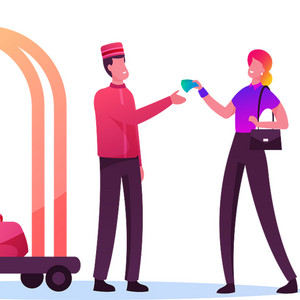
It's a long debated issue in Western culture, but it's now found its way here to China, at least as a discussion.
People are now debating online about the value of its existence in this part of the planet.
Do we need it here or do we not?
After that, social media used to be filled with tons of amateur postings with no real significance.
Think, here's a picture of my sandwich I had for lunch. Well, times have changed, though, and as socials have become more professional -looking, people have started to question about whether anyone actually cares about their sandwich or not.
We'll discuss that as well.
You can find us at Roundtable China on Apple Podcast. And please don't forget that we love hearing from you, and we really, really love hearing your voice.
So, yes, you can indeed send us an email, but we appreciate those voice notes just a little bit more.
Send those our way with your thoughts on any of the issues that we discuss here on the program.
Here's how you do it.
RoundtablePodcast at QQ .com.
One last time, RoundtablePodcast at QQ .com.
And now. Now, tipping is one of those topics that always stirs debate in the West, and it never, ever, ever goes away.
It never goes away because people can't seem to agree on it.
But what's interesting is that the conversation has been picking up steam here in China as well.
Did you hear about this?
Just last month, a well -known hotpot chain famous for its over -the -top service, it made headlines when some of its staff were spotted wearing QR codes on their uniforms for customers to tip them directly.
So here's what you needed to do.
So you scan the code on the uniform and then the money that you send goes straight into the server's personal account.
You tip them directly.
This move has suddenly pushed the idea of a tipping culture into a country, China, where it hasn't traditionally been prevalent.
So is this the start of tipping culture in China?
And if it is, do we want it?
And if it is, do we need it?
And if it is, why now?
Why all of a sudden now, right?
There's so many questions to talk about here.
What do you think, Yuxin?
Is this the start or is it not?
Well, first of all, the online comments is showing that a lot of people are saying no and to me if if i'm correct that's the restaurant that i'm thinking the restaurant is famous for its good service and that is why a lot of people are going to that restaurant and if they are monetizing that service as another like uh like channel of their income i don't think a lot of consumers will buy it a tip directly into the server's account is not another revenue stream for the company though.
That's true but tipping culture has never been a thing here in China.
I think that is mostly the problem because if we go to the kind of markets that are famous for having a tipping culture we would know that the amount of money the salary that the business owner pay to or for the servers are relatively if not drastically low.
So for the people who decided to have a job as a server, as a help in any kind of these places, they are counting on the tip.
And they know it. The customer know it.
The shop owners know it.
Everyone is kind of agree on the social norm or a unspoken contract.
Yet here in China, if someone started to start this because it has never been a thing here in China.
And that is why for business owners, they have to provide a decent, acceptable, reasonable amount of salary if they're hiring servers.
Now, let's see. If you want to change the Chinese model into the tip -paying model, then it has to be one, enterprises started to say, I am going to lower my salary a little bit, but I encourage you to ask for a tip.
and people would willing to pay for the tip because they know that they would have to be willing to pay for the tip so that the server can earn even a little bit more than the previous situation meaning more server would want to work within the specific restaurants giving pressure to other restaurants to follow suit and do you see how many things could go wrong in that chain pain of consequence or whatever a situation change so i do not see that happening because servers would find it a little bit trouble because previously all they need to do is to provide the service and now they need to smile
they need to be extra nice they need to be do they i'm just if they want to earn the tip well i'm totally talking about from a western point of view here about tipping so they're asking for a tip even though they're not smiling that much right well Well, see, here's...
Okay, do we want to get to the Western?
No, no, no. Because this is highly debatable.
Let me finish my thought.
What I was trying to say is that in order for that change, that social norm change to happen in the Chinese society, so many parties have to be on board. And I do not see that happening.
Yeah, and that's a fair point to make, right?
Because you're talking about a fundamental shift in the way people think about the service industry, right?
Yeah, and because it is so different And actually, consumers also need time to get adjusted.
And even though this kind of tipping thing via QR code for...
Looks new. Yeah. And it's also not that mandatory.
People still argue that this can create a kind of negative cycle where service without a tip appears degraded or discounted.
And rather than just truly incentivizing better service of the employee.
Yeah, it's interesting.
I mean, it just exists in some parts of the world, and it doesn't in other parts of the world.
In Korea, I think it was a couple of years ago, there was a tip jar, right?
It was just a tip jar, a little innocent tip jar that was presented at a popular bakery, and it sparked this heated online debate and also copycat attempts as well, but the cafe quickly removed it because people didn't like seeing that there.
In Japan, tipping can be seen as even disrespectful at times.
I heard that some of the employees may reject tipping because that kind of behavior may be considered as they are not satisfied with their salary and they are getting extra money from this kind of tipping system.
And maybe that will create misunderstanding among the relationship between them and the company.
I try to find the word origin for the word tip or tipping.
It didn't, well, there are so many different versions.
But here in China, if you are using the Chinese term 打赏, the character 赏 itself carries the kind of connotation that you are better than the other party.
And instead of giving them as a thank you or a gift, you're giving it to them because you're rewarding their nice behavior like you're rewarding a little kid with a lollipop.
Like a puppy. Yeah, so that...
You did a good job today.
A little bit like that, but it's not the situation between every relationship of someone's tipping other people.
I'm just saying the word itself carries that tiny little connotation and language has power.
For me, I always find tipping, if you're using it as a thank you, it's okay, but if you're using it as, good job, I find it a little bit strange.
It's all about perception, isn't it?
Yeah. This isn't exactly brand new in China, though, is it?
There were a few restaurants and service industries here in the country that had already started experimenting with tipping or the digital gratuity as early as 2016.
That hotpot that we're talking, the hotpot chain that we're talking about, for example, despite public backlash, their tipping QR codes actually go back to 2021 and they've expanded that to over 20 Chinese cities.
So it's not just a one off test. It seems to be a bit of a bit of a strategy.
Definitely. And at the same time, we see that in some restaurants, instead of having a tipping policy, that is, you can reward those server who you deem better or doing a good job.
There's also the service fee kind of policy, meaning that when you're paying for the entire bill, you would have to, it's a built in, but it shows up on your receipt.
seat meaning that on top of paying i don't know 20 for this dish and 30 for that dish you're also paying a certain amount of money eight percent even sometimes as high as 12 yeah 15 that's what i experienced and how'd you like it i i don't like it at all are you kidding me that's cheap 15 in canada that was like 2016 50 people miss the days of 15 and you're complaining about it That's what I'm talking about.
Because when you're in a restaurant, you know, you already know before stepping into it, you know, you're enjoying not only the food, food, but also the service, also the environment, also the beautiful little lady playing the violin on the other end.
Where are you eating?
That is the thing. But if all of those categories that you're enjoying are clearly written on the receipt, how would you still like it?
It's a weird psychological thing.
And I think it all again comes back to the social norm.
Yeah, I think it's almost more appreciated.
And this is just my own personal opinion about that.
When the tip is built in, the service charge is built into the bill.
I think it's more appreciated in the West than having to deal with the tip at the end of the transaction.
And I'll explain why in just a sec.
if you're curious to know from a legal standpoint here in China there's no laws that prohibit you know some tipping culture here in the country so it's not that it's not allowed it's just not a part of it and I when we first came to China my wife and I didn't know whether tipping culture existed here or not now we could have easily done an internet search but I remember we went out for for dinner one night and at the end we tried to tip the person and they were like whoa whoa whoa what are you doing man you're like looking around the room nervously i was like oh okay sorry i guess you don't do
that here um but there are certain instances that you would do that that is for for example if you lost your phone in the restaurant and they call you or they cannot call how you call your wife and you're giving them some money as a thank you.
Or if you also, for instance, have the taxi driver waiting for you for too long, then you pay for them for thanking them to wait for you.
If you hire someone to come to your home and clean the entire house and it ends up that your house is so much more less clean than expected, they need to spend so much longer cleaning it.
And also they did a really nice job.
maybe what all they need or all they were asked was to clean or to wash your clothes yet they not only washed your clothes but also put them very tidily together and they almost arrange your closet then you pay for an extra so when this paying for extra exists or this tipping exists it's always for an exact reason a very specific reason it's context -based context but it's not Not built into the society like it is in Canada, America, and maybe some other countries as well.
I watched a video this morning because, you know, I haven't lived in Canada for a long time.
But I know that the tipping culture is very strong there.
So I wanted to see, you know, kind of get an update of what it's like now.
Here's what I found.
Tipping is expected across various industries in Canada.
For example, now 76 % of people tip their hairdresser.
74 % tip your bartender.
If you don't tip your bartender and the bar is very busy, the strategy is with your first cocktail or whatever, you have to tip them a lot the first purchase.
If you don't, they will ignore you and you will have a hard time getting your second beverage of choice.
A lot of pressure going to the bar now.
71 % tip food delivery, but it's only certain industries because hotel housekeepers only get tipped by 34 % of people and coffee shop workers only get tipped by 29 % of people.
now for me that has never made sense because what's the difference between a bartender and a and a barista who's making a cup of coffee for you they're both making your drink they're both giving it to you why does one get tipped a lot and the other doesn't the average tip price i mentioned this before jumped from 16 in canada in 2019 to 20 in 2023 it's called tipflation if you're curious to know and about 60 % of Canadians are now frustrated with this one of the problems is servers feel that a tip is their right not something that they work to earn there's a sense of entitlement some people feel
now don't don't misunderstand me please I'm not saying that they don't deserve it I'm not saying that servers don't work hard I'm not saying they're not under underpaid or not underpaid because they are underpaid.
But there's a problem there.
When it's built into the society, the choice is removed for the customer.
And you have to tip.
It's not based on good service.
That's why I brought up that little snarky comment before when you said, oh, if the servers are tipped, then they're going to be nicer.
Well, that's the idea.
But it's not not the case all of the time.
Not only that, the pressure to tip is even more intense.
And the reason I said a few minutes ago, I think that the concept of building the service charge into the bill is more appreciated from a customer's point of view is because at the end, when you're paying your bill and you have to calculate the tip, it's an anxiety -inducing moment because they'll show you a digital screen with options on it 15 20 25 percent sometimes apparently even up to 30 percent now you as a human being you don't want to insult the other person and you don't want to look like the cheapest person in the world either so i think a lot of the time people choose 20 because it's
the one in the middle right and you it's that it's that moment where the customer feels pressure and And that's why 60 % of Canadians are frustrated with this and probably in America, similar numbers there as well.
It's not easy, though, because we get the other side to these servers.
They work their butts off.
Right. And it's not an easy industry to work in.
And they do deserve to make more money.
There's no question about that.
But the thing is, I also sorry, that was a long speech. Yeah, go ahead.
Yeah, about this kind of situation, I also heard that many workers in, let's say, service industry, they aren't actually in favor of tipping culture because tipping often means they're expected to provide extra, often maybe also invisible services to earn their tips, maybe even more tips.
So it also allows employers to justify that, OK, paying them a very low base salary is correct.
And since their income is expected to come from tips, and that is the situation I think both consumers and servers are not expecting.
Last question. Is it going to come to China or is it not?
What's your personal prediction?
I don't think it's coming to China.
I have already talked about some of the reasons we need a huge push for it to happen.
there are no good reason to push for it.
At the same time I think more and more people started to want a simpler life because we're already super connected because of the internet and everything.
We have too many relationships.
So when I go to a restaurant I expect myself only having a relationship with the restaurant instead of with also the server and maybe the chef in the restaurant.
So it's just too much pressure.
You're listening to Roundtable.
It's a debate that will never go away.
And I was kind of laughing like oh no now Chinese people are going to start debating about this, just like we do in Canada.
This is going to go on for decades and decades more.
Yes, you're listening to Roundtable.
I'm Stephen Yeohong -Lin and you, Sean, please do stick around.
Looking for passion?
How about fiery debate?
Want to hear about current events in China from different perspectives?
Then tune in to Roundtable, where East meets West and understanding is the goal.
This is Roundtable.
I'm Steve, joined today by Nho Hong Lin and Yushan.
When you post something online, do you ever pause and think, oh gosh, maybe nobody's gonna like this?
Does this make me look kind of cringe?
Do people care about my cat?
Well, the New Yorker recently called it posting ennui, a quiet fatigue around sharing online.
For some people, the fun of posting has started to feel more like pressure.
All the fun is gone.
So we're going to talk about the reasons behind why people are feeling like that.
I guess let's start with that expression.
What is posting ennui?
It's a French word and it can be summarized as the emotional fatigue towards sharing personal content online.
It's that strange moment of hesitation that Steve has has just mentioned?
Do people really care?
Am I posting it right?
Do I want everybody who appear to be my WeChat friend or Facebook friend who are not really my friend to look at this?
Or do I want to share this with my parents who are my friend online?
So all these anxiety and all these hesitations started to give people too much pressure before they post or share.
Why? What happened?
Because it never used to be like that, right?
It always used to be here is a picture of Here is a picture of my sandwich. Here is a picture of my cat.
And there's still lots of that.
So what changed them?
Why do people feel differently now?
Many people are saying that social media has shifted from being a digital living room or your own gallery to a noisy shopping mall.
Personal content is drowned out by brands, influencers, and AI -generated posts, making it feel irrelevant.
And people will feel uncomfortable when they're seeing all of these maybe even man -made commercial stuff showing that they're eating everywhere, but actually it is just an advertisement.
And also the boundary between personal and work or other side or other types of relationship is kind of blurry right now, especially I think here in China, the WeChat moments.
it's not only your moments it's also about your work information your the advertisement that your boss is asking you to post a lot of these things making people feel uncomfortable posting when it's only personal stuff that is a really good point i have a friend who just finished i think a huge project and she wanted to post about the work she did and she's so proud of it and at the end of the the day, she picked all the pictures and wrote down the little paragraph of that this has been a really nice project.
And she had, including myself, three people looking over it to see whether or not this would be too showy to other colleagues, to see whether or not these late nights putting to the work would make her parents worry about it and just too much worry.
And at the the end of the day that we chat moment never got out yeah we chat's a different beast isn't it because because i mean there's a setting on we chat where you can set that your friends or your contacts can only see your chats right they can't see your we chat moments so you can set it that way but it's different because your friend your we chat friends with your boss obviously and all of your co -workers so anytime you put a moment up there it's like oh here's what i think about my my work and all of you, by the way, through some fancy picture.
And another thing is for those of you who feel like you have lost the motivation to share that you feel like, huh, what's wrong with me?
Am I losing interest in life?
No, you're just probably too tired of sharing for this period of time.
Or maybe you are maturing too fast that even looking at to the post that you are posting a year ago you feel like what was I doing at that moment I don't know if I agree with you there I think that things have gone from casual to curated in a million mile at a million miles that is a different scenario for sure right video quality used to be terrible and nobody cared right um the photography used to be terrible and nobody cared the content used to be meh whatever but nobody cared because that's what it was all about right but now the creators have gotten so so good with their video making with their
editing with the quality of the video itself that I think that's part of it too it's making people think well I'm not an expert at this should I even be uploading anything at all but to be fact we are often very strict about the content we share but when it comes to the wechat moments or facebook posts of our friends we always give them a thumbs up what do you think you should has this had had an effect on you do you feel that what's it called posting on we I would say a lot of people may be affected by these things not only the way that you posted the filters that you're using but also the content
that you're posting okay my friends are all going to Paris or my my friends are going to Italy and I am going to the Little River and next to my home so people are like having that pressure of comparing with each other yeah my life isn't good enough to share yeah well we certainly hope our listeners are not experiencing round table on we I'll leave that as our last comment for the day that is it for round table for this afternoon thank you so much for sharing your time with us thank you I've been Steve and we want We want you to come back and join us next time.