Discussion keeps the world turning.
This is Roundtable.
You're listening to Roundtable.
I'm Steve Hatherly together today with Lai Ming and Yushan.
Coming up, TikTok refugees are trading in their For You pages for Zhao Hongxu's curated feeds, hoping to find a new digital home.
The welcome from Zhao Hongxu's current users has been nothing short of warm and lovely, and it seems the opportunity for new friendships is real.
After that, while many grandparents cherish the opportunity to spend time with their grandchildren, is it fair to expect them to provide child care without some form of financial recognition for their time, effort, and expertise?
That question is posed today.
Our podcast listeners, that's you, can find us at Roundtable China on Apple Podcasts.
And please don't forget, We love hearing from you as well.
An email is wonderful, but you know we want to hear your voice.
Send those voice clips or your emails our way with your thoughts on any of the issues that we discuss on the show.
Here's how you do that.
Roundtablepodcast at QQ .com.
One more time, roundtablepodcast at QQ .com.
Now, let's dive into the world of social media and new friendships.
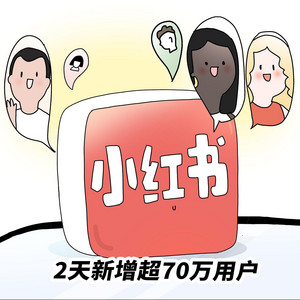
A wave of American social media users feeling a bit adrift with the potential TikTok ban are finding a welcoming haven in Xiaohongshu, the popular Chinese lifestyle platform also known as Little Red Book or Red Note.
So large is the migration, in fact, that a reported 700 ,000 new users joined the app in just two days.
These digital nomads are embracing this new adventure with the curiosity and excitement of explorers, stumbling upon unexpected cultural treasures and forging surprising connections with existing users here in China.
It's a heartwarming tale of how technology can unexpectedly bridge continents and foster unexpected friendships.
And this, of course, is all related to the potential ban of TikTok in the United States.
So Yuxiang, get us up to speed if you could.
Yeah, so according to its own online audio live stream, the U .S.
Supreme Court held a two -hour discussion on January 10th regarding the future of TikTok in the U .S.
So at this moment, TikTok is basically waiting for a Supreme Court decision that could determine whether it will be banned in the U .S.
or not. So in the meantime, its users are now migrating to another Chinese social media platform, like you said, Steve, called Little Red Book or Red Note, which literally in Chinese we call it Xiaohongshu here among the Chinese young people.
So we talk about the red Xiaohongshu on roundtable for multiple times.
For years. Yeah, for years.
And this company was founded in 2013, and it's one of China's biggest social media platforms with 30 million users, according to research firm Chen Gua.
30 or 300 million? 300 million.
300 million. Yeah, 300 million.
Yeah, that's far more than I thought, of course.
About twice the amount of users on TikTok in the U .S.
Oh, yeah. And as of January 15th, Red Note was the number one most downloaded app in Apple's U .S.
app store. So these American users call themselves TikTok refugee and have had many interesting and enduring interactions with the app's native users here in China.
Yeah, this is really an unexpected story that we're talking about here today, but it's kind of all over the news.
And the app Little Redbook or Rednote or Xiaohongshu, it had cornered the Chinese market but hadn't gained a lot of attention internationally speaking until now.
But as far as I know from chats I had in the office, that wasn't really the intention of the app anyway.
But now we're seeing this flood of new American friends who are coming.
yeah it's a lifestyle application or platform where people go and see short videos photos text posts and shopping functionalities i don't necessarily own i think i have a xia hung shu account but i don't have time for it for it but i do my wife uses it a lot she gets guidance and tips on her doctoral
dissertation she also gets entertaining fees to help her relax when she's too tired and fatigued writing her paper.
So it's a very comprehensive platform.
You get everything you want.
The algorithm appears to be working quite well for the Chinese users, but it remains to be seen with the influx of foreign users.
It'll also appeal to the foreign users as well well is it i've read that it's quite similar to tick tock in its um user interface uh you are uh uh on the app correct you sean would would you agree with that it's pretty user friendly yes definitely because xia hong shu not it's not only a social media app or rather
a video um scrolling tool for the young people nowadays but also like it's just a platform to chat and to comment on each other's posts.
And for me, it's more about a place to get information on the comparisons of lipstick colors under different lights and also the dressing styles and just some day -to -day tips.
And the thing with Xiaohongshu is that it doesn't really have any limitations or boundaries for different countries of users to post stuff.
So you can literally see users from this country or this region of that country, like everybody just chatting together over one post.
So that's the vibe of Xiaohongshu.
And it's very similar.
The panel nowadays is adapted to, in a way that's very similar to TikTok.
And also I think there are some netizens comparing different apps between the US and China as well.
So Xiaohongshu in their perspective is closer to Instagram as well in that case.
So yeah, it's a really user -friendly app.
That's what makes it comfortable then for these new American users to join and use the app so comfortably.
700 ,000 new users in just two days as reported by Reuters.
So let's get to it.
What are some of the interactions between netizens from the two countries so far?
Some jokes. Paying the cat tax is one of the things that's happening.
Many Chinese users say if you want to stay, you better pay the cat tax, meaning American users on Red Note, they should share photos of their cats alongside personal posts.
And Chinese users enthusiastically respond by showcasing their own furry friends, creating a whirlwind of adorable exchanges.
There's a saying that the internet is filled with cat videos.
and Xia Hong Shu is another good example of that.
I was chatting with other fellow cat -loving colleagues just this morning that nowadays we're not only petting our own cats but also digitally petting cats from the other side of the world.
Isn't that so cute though?
That's what Chinese netizens were saying on the app to the new American users.
Hold on, hold on. If you want to be in this app, show us a picture of your cat and then you'll be accepted.
That's the entrance fee.
The cat tax, as they call it.
I found some more responses, which I think are quite nice as well.
One user said, I just want to reassure you that we want to try to find a way to communicate with you and be respectful to your community.
We want to be good guests.
That's a quote from an American user.
Here's another one from an American user.
Just a quick message for the other American users coming over here.
We just want to have fun here.
We just want to enjoy ourselves, and we want to show respect to the people who are already here.
So most Chinese users have warmly welcomed the newcomers, with some even sharing video tutorials to help the new TikTok refugees navigate the app.
Oh, nice. Showing them how to use it properly.
Like our coworkers have shown Steve around some of the applications.
Yes, exactly. Because of the language barrier.
does Xiao Hongshu already have an English interface?
I don't think they already have one but well they definitely are working on it according to the interview with some of the employees of Xiao Hongshu the company they're still working on trying to make it bilingual for users that's from an English -speaking background and also I found it very impressive
that some so -called TikTok refugee they are trying to tell each other by calling out to the TikTok refugee group on Xiaohongshu that this is a very nice and friendly environment that we're trying to blend in here.
And this is not very political and the users are very friendly.
So please don't bring that kind of vibe we used to have on TikTok to Xiaohongshu.
And they're really trying to engage into the native Chinese communities on Xiaohongshu with just daily stuff.
Like, what do you drink in your cup?
And how is your day?
What's your favorite game to play?
I actually got one comment from one of the American users on Xiaohongshu these days while we were talking about our favorite game, which happened to both to be Boulders Gate 3.
So we were talking about how the storyline goes on.
And I was very happy that nowadays I can not only get those kinds of feedback from, say, YouTube or the international platforms, but just like next door, just open Xiaohongshu and you can get all kinds of advice on the game and tips on how to go on with the narration and everything.
That's just so cool.
There are other posts about, you know, hey, can you help me with my English homework a little bit?
If you want, I'll help you with your math homework a little bit.
There were posts about that.
Another interesting side of this is that there isn't much of an overlap in terms of the post because of the huge time difference.
Right, right. It's the morning sea, evening A phenomena.
Yeah. Here in Chinese, we say, we use it to describe a lifestyle where one person might drink coffee in the morning and alcohol in the evening.
But in this case, morning C, evening A stands for morning China and evening America because of the time difference.
Right. And that makes it quite convenient, right?
Because then it's just like half English pose, half Chinese pose, and it just goes in a cycle like that.
Yeah, I guess Red Nose should be happy because their servers are being utilized to the maximum.
Yeah. There's no time difference in that sense.
Speaking of the English posts, one Chinese user wrote this.
Why is my feed full of English today?
Did I become a foreigner by opening Xiao Hongshu?
Who am I? Where am I?
Made me laugh. So many of these posts are just kind and funny and definitely put a smile on your face.
What are some of the other Chinese reactions I mean?
Well, Xiao Hongshu hadn't introduced regional divisions between China and the U .S.
and some jokes like sudden challenges.
It is primarily in Chinese and it's a very significant obstacle.
So a former Xiaohongshu employee told Shandong Expresso, which is a Chinese media outlet, that foreign users entering Chinese social media might face a cultural shock due to different discussion styles and which could even affect existing users.
The lack of translation is an issue.
And other users, some are saying, I don't know how to...
Speak Chinese? Yeah.
And how is it? What is the salary situation in the U .S.?
Some very interesting questions.
And is it easy to see a doctor in your country?
Wow. So that level of exchanges are taking place as well.
One user wrote, finally, we've broken the invisible wall together, which is leading to all of these wonderful exchanges.
Some silly, some cat photos and memes.
I saw another post said, we don't want your data.
We just want your cat pictures and your memes.
That's what we want.
Even in Chinese society, Red Note or Xiaohongshu is a, comparatively speaking, more polite and civilized environment.
I mean, there are more brutal platforms that you have to brace yourself when you do sign up for.
But Xiaohongshu, I don't know the precise demographics.
My understanding is more better educated people and they are more civilized to each other and they are more likely to discuss their shared topics than just scrolling through the pages.
Which is wonderful because some social media apps do have that negative connotation, that vibe to them.
For example, Twitter or X.
I wasn't on there a lot, but I've heard from friends who use it.
It can be brutal. It can be an awful place from time to time, whereas here it's just about spreading the love and getting to know other people.
From a logistics point of view, can the platform handle the global traffic that's coming now?
I mean, so far the company reacts to it as if it's a rather random occasion that they're not fully expecting, let's say.
there were a previous wave of foreign users getting to know Xiaongshu.
That's when Lao Wai Tingchuan series, like foreign users trying to post themselves for advice for dressing coats.
And that's not really generating much of a wave.
But this time, it's like adding, pouring out this whole attention onto this app.
So right now, Xiaongshu hasn't really introduced regional divisions between China and the US.
And it's still working on just trying to make it bilingual.
And also, this is according to domestic tech media, 36科, Xia Hongshu internally view the situation as just an isolated event and is quite sudden for them to try to deal with the occasion.
Like the company has yet to reach a consensus on this issue with a core team debating that the challenge brought by this globalization over their app may outweigh their excitement of handling the increased traffic.
But Xiaohongshu staff, they've stated that they're accelerating the rollout of new features as well to address the challenge.
The lights are on, reportedly, at the office building of Xiaohongshu.
So managers and engineers are working overtime.
24 hours a day. yeah going back to the coffee alcohol example perhaps just before we finish I think this is important to address could Zhao Hongshu face the same situation potentially that TikTok is facing in the future?
I think it kind of depends and it's still hanging in the air that we can't really answer that precisely at this very moment because CNN also reported on you know this other app from ByteDance called LemonAid It's a lifestyle community that's also from ByteDance and is currently ranked as the second
most downloaded app on Apple's U .S.
store just after Xiao Hongshu.
And Lemonade has a similar video sharing function just as TikTok and is modeled after Instagram and Printerist.
It was first launched in the U .S.
just two years ago in 2023.
But I don't know. Nowadays, if ByteDance is kind of, you know, in this situation that's quite complex, we don't really know if Lemonade is going to face the same as TikTok.
It's a developing story.
In the U .S., the government is dealing with the situation as it changes.
A Washington Post exclusive says U .S.
President -elect Donald Trump is considering an executive order to suspend enforcement of the ban or sale law for 60 to 90 days once he's in office.
And just before the show, Biden's administration is also reportedly saying that it might continue the operation of TikTok.
It is considering this.
So it's an evolving story.
It is indeed. Well, it's a heartwarming story as well.
And I think I'll leave you with this.
This is from a Chinese user who identified himself as Abe in a now viral post speaking to new American friends.
For so long, we really haven't been able to connect or talk with each other like this, but now we finally can, and it feels so special.
This is such a real chance for us to get to know each other and maybe create something amazing together.
You are not just welcome here.
I really, really hope you will stay.
And I think for all of us here at Roundtable, we can collectively say, we hope you'll stay as well.
Right. You're listening to Roundtable, and coming up next, your grandparents may help take care of your kids, But the question is, should they be paid?
Stick around. Looking for passion?
How about fiery debate?
Want to hear about current events in China from different perspectives?
Then tune in to Roundtable, where East meets West, and understanding is the goal.
You're listening to Roundtable.
I'm Steve, he's Lamming, and she's Yushan.
And now, this is a spicy meatball, grandparents, should they be required, not required, should they be accepting pay if offered from their family members?
Grandparents around the world, of course, are often willing to support the growth of their grandchildren by doing different things, such as spending time with them when their parents are at work.
But situations change, and sometimes the grandparents can become the primary caretakers.
Should they be paid or should they not?
Culture perhaps plays a role in the answer to the question, but there are countries around the world that have a definitive answer to that question, and that answer is yes.
It's an interesting issue that seems to be being addressed right now.
Lai Ming, where is it that it's law that grandparents need to be paid?
Well, the Associated Press reported in July 2024 that Sweden launched a groundbreaking new law which allows grandparents to step in and get paid parental leave while taking care of their grandchildren for up to three months of a child's first year.
Under the law, parents can transfer some of their generous parental leave allowance to the child's grandparents.
A parent couple can also transfer a maximum of 45 days to others, while a single parent can transfer 90 days, according to the social insurance agency, a government agency.
And Sweden is known for its taxpayer -funded social welfare system, where parental benefit is paid out for 480 days or about 16 months per child.
So that's Sweden, a North European country.
And we know the North European countries for their social welfare system.
And they also have incentives to encourage the people to have more babies.
So a combination of the two, I think, creates the result that we're seeing.
Sure. I mean, Sweden was the first country in the world to introduce paid parental leave for fathers, not just mothers.
And that was 50 years ago.
That's quite pioneering.
They're well known for this.
Let's go around the world just a little bit, Yushan.
In the United States or other countries, are there examples of this or are there examples of not providing support to the grandparents?
Well, in the case of the U .S., they don't really have a federal program specifically designed to provide financial support to grandparents who provide child care.
Even in the U .S., even though it's kind of culturally expected for the grandparents to step in and actually take care of the grandkid and help with the parents in a way, there are, in fact, limited federal leaves as mentioned in the Associated Press article that the Family and Medical Leave Act that's
passed in 1993 in the U .S.
allows eligible American workers up to 12 weeks of unpaid job -protected leave for family and medical reasons, including caring for a newborn.
Unpaid. Yeah, unpaid.
Exactly. That's the key word here.
However, this leave is really unpaid and does not really extend to other family members, such as the grandparents.
So they don't really have this policy so far, but the expectation is there.
As we can tell a lot of, say, middle -aged grandparents who themselves are not yet retired and are still participating in the work or having their own career, they sometimes will have to just willingly accept the fact that they need to help their child, in this case the parents of the newborn, and have to
quit their job or leave their career temporarily just so that they can go back home to take care of the kids.
Australia, let's take a trip there for a brief moment.
They have a specific program.
It's called the Additional Child Care Subsidy Program, and it's designed to assist eligible grandparents with the cost of approved child care.
We can see that there.
The UK, they have a system as well.
According to a 2021 governmental survey, over 22 percent of the children age 0 to 14, they used informal child care of 2021.
The situation in the UK though, and this is from one of their largest investment platforms, is that it doesn't extend to grandparents unless they are the child's legal guardian.
So it's a little bit more strict in its definition.
And then I think there it's connected to their pension.
Yeah, it's grandparents stepping into the shoes of the parents when they are not around.
So how about China then?
Well, there's a tax reducing policy, tax exemption policy for the legal guardian of a child aging from zero to three years old.
I used that benefit when my son was below the age of three.
The legal guardian can be the child's parents, step parents or grandparents and other caretaker of the child with a tax reduction of 2000 yuan for one side of the parent or 1000 on both sides.
So if you make 10 ,000 yuan a year, 2 ,000 of them is not taxable.
That's how the policy works.
Culturally speaking, I think in the West, and this is a generalization for the sake of our conversation.
It would differ from family to family.
But generally speaking, I think it's almost expected that your grandparents should help out with the care of the grandkids, not necessarily on a full -time basis, but just come over from time to time, and it would depend on the parent's schedule.
But I think it's kind of expected.
Would you say that's fair in Chinese culture too?
I would say from my experience of my grandparents flying all the way from Urumqi, which is the Xinjiang Autonomous Region, just to land in Beijing back in 1996 to try to take care of me.
Yes, totally. That's the same expectation shared in many Chinese families as well, especially in the more traditional families where the grandparents happen to have already retired and is in good health status to be capable.
and able to take care of the grandkids, then yeah, most will, generally speaking, willingly join in that effort to just try to maybe see their grandkids off to school and get them back home, cook for them while the parents are out working.
It really varies from family to family.
Should the grandparents have the right to receive monetary compensation for their efforts, in your opinion?
I don't think that's a right.
I mean, again, it's a family decision whether the smaller family, the nuclear family, is under a lot of financial pressure, whether they tacit or clear agreement between the one generation and the other is there to provide a solution.
It really depends. In my family, I give my stepmother a monthly allowance once she's retired.
Are you Swedish? No.
All right, well, that's all the time we have for roundtable today.
I'm Steve. That's Laiming.
That's you, Sean. Thanks to them both.
And thank you as well for sharing your time with us.
And we hope that you, of course, will come back again next time.