
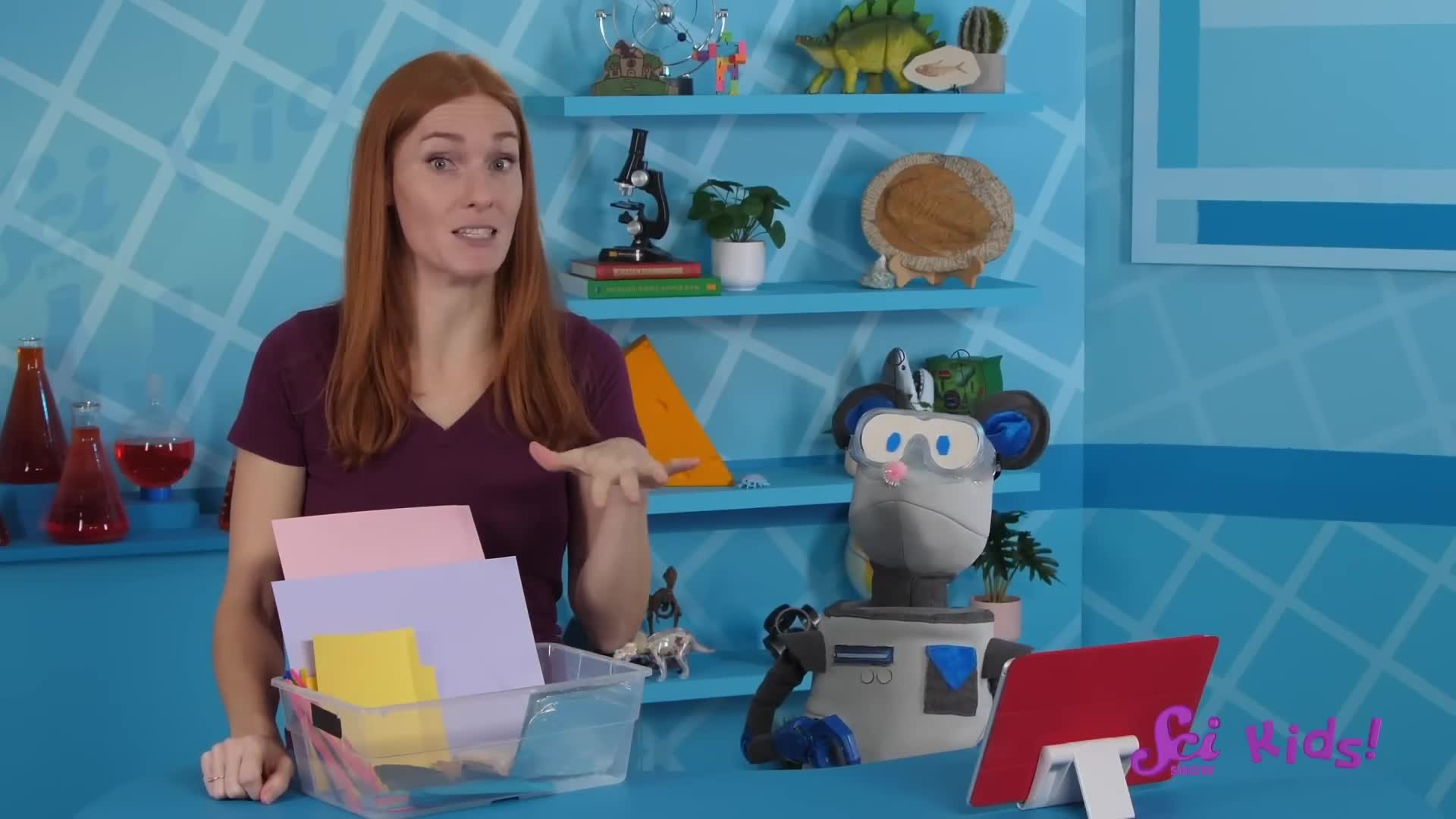
[Thinking Like an Engineer: Designing a Raft for Juniper]-[Think Like an Engineer: Let's Design a Solution! _ SciShow Kids]
📋 Summary
Engineering a Solution: The Raft Design Process
In this episode of SciShow Kids, the team faces a logistical challenge: how to help their friend Juniper travel across the lake after losing Squeaks' toy boat. To solve this, the group decides to "think like engineers," breaking down the problem-solving process into structured, logical steps.
The Engineering Design Process
Engineering is not just about building; it is a collaborative process. The speakers emphasize that "engineers talk to each other" and "share ideas about the problem." Before sketching, they define the success criteria for their project: the raft must be able to "float," accommodate Juniper's size, and ensure she stays "safe" during her journey.
Material Analysis and Testing
A critical step in the engineering design process is evaluating materials based on their properties. The team gathers a variety of items—kitchen sponges, craft sticks, cardboard, modeling clay, aluminum foil, corks, and a large rock—to test their buoyancy.
Through experimentation, they reach several observations:
- The Sinkers: The large rock is dismissed because, as Squeaks notes, he throws rocks into the pond and "they always sink." The modeling clay also fails to float entirely.
- The Temporary Floaters: Paper and sponges float briefly but eventually become waterlogged and sink.
- The Reliable Materials: Craft sticks, corks, cardboard, and aluminum foil prove to be the most viable options, as they successfully remain on the surface.
Conceptualizing and Iterating Designs
Once the materials are vetted, the team creates individual design sketches. This phase highlights the importance of balancing creativity with functionality. Dino’s design, which features a paper airplane and a fan, is critiqued because the plane would likely "get soggy" and there is no power source for the fan at the lake.
Other designs demonstrate a deeper understanding of the initial requirements:
- Juniper’s Design: Utilizes aluminum foil to create a structure large enough for her to "curl up inside" with raised sides for safety.
- Squeaks’ Design: Focuses on safety features, incorporating a "handle in the middle" for stability.
- Sam’s Design: Combines utility and innovation by using corks on the bottom for buoyancy and adding a sail for a "stylish" flair.
Conclusion and Next Steps
The team realizes that while all designs are creative, the next stage of the engineering process is implementation and testing. They decide that the best way to move forward is to "build our designs" and then conduct real-world tests to see which one "solves our problem the best." By following this systematic approach—defining the problem, testing materials, iterating on designs, and planning for testing—the group exemplifies the core principles of engineering.
Deep Learning with ListenLeap


