You're listening to Roundtable. I'm He Yang, joined by Steve Hatherly and Yushan in the studio for this show coming up.
From adrenaline junkies to kiddos at heart, summer just isn't complete without a trip to a theme park.
China's parks are raising the bar to keep guests coming back for more.
The tickets aren't cheap. So, is the magic still worth it?
And what clever strategies are parks using to stay ahead in the entertainment game?
Well, a right picture of this. You are at a lavish Chinese banquet.
The Peking duck is perfectly crispy and the xiao long bao soup buns are steaming hot. but Great Aunt Lee is still fussing with her chopsticks, and Uncle Wong hasn't even shown up yet.
Do you take the first heavenly bite before your food turns lukewarm?
Or do you hold back out of respect? Turns out this wait to eat rule isn't just about manners.
It's an international cultural minefield.
We'll... navigate through it all together and need a boost to crush the week our special segment motivational Monday is your ultimate serotonin shot to kick things off strong.
Our podcast listeners can find us at Roundtable China on Apple Podcasts.
Got a question that's keeping you curious from social issues to tech and everything in between?
Let us take a stab at it. email us at roundtablepodcast at qq.com.
Now let's move on to the next. topic discussion or let's say a continuation of the first topic discussion today.
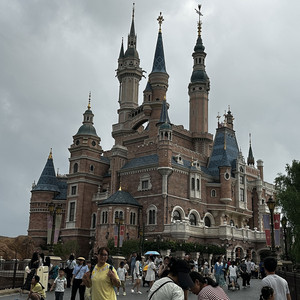
Summer screams, laughter, and cotton candy.
That's theme park season. In China, parks are constantly leveling up to attract crowds.
What is it about theme parks that's making them such a popular summer destination?
And how are they becoming major players in China's tourism landscape today?
Did you hear the news that recently the world's largest Legoland opened in Shanghai just kind of recently featuring eight themed areas, including the global debuting of I can't even pronounce that name, but it's showcasing a deep understanding of the Chinese market. and also localizing a world famous IP of LEGO.
And also in the meantime, we see the launch of the Harry Potter Studio Tour in Shanghai as well. which is a 2.8 billion yuan of investment set to open in 2027. so lately especially in this summer there are theme parks just like that, like the Legoland and Shanghai Disney and Beijing Universal Studios.
That's the good old ones that have been seeing a surge in booking and visitor traffic.
They're attracting a lot of people, families especially, at this time of the year.
Me personally, I'm not really a big fan of any of them.
You're not a theme park person? I don't ride roller coasters.
Wait, you've never been on a roller coaster?
I've been on one to say that I don't like it.
Okay, yes. Once is enough. What about you, Steve?
Are you a theme park person I was when I was a kid you know I'm from Nova Scotia which is on the east coast of Canada so My family, almost every summer we would go to Florida, which is in the southern part of the eastern United States. for a summer vacation.
And that's where Disney World, Disney World or Disneyland?
I always get confused. Anyway, one of them is in Florida.
So we went there maybe a handful of times.
And yeah, I really enjoyed it. But one of the things that I remember being frustrated about especially with Disney World or Disneyland, is that the lineups can be so super incredibly long.
Yeah. But the considerate thing, I guess, is that they'll put a sign up that shows you how long you have to wait so that you can make a decision to go somewhere else.
But on a busy... Saturday afternoon, sometimes the lineups can be like two and a half hours long.
Those are for the most popular ones. you get lucky you get on those great rides and it can be a fun family day for sure right and also now the way they do it is they make you pay extra so you can not necessarily jump the queue you get that super pass or whatever yeah yeah yeah yeah It's just to get you to open up your wallet a bit further and I know this is supposed to be a land for amusement and fantasy.
But, you know, if you look at the business side of things.
I'm sorry to, you know, to sort of burst that bubble, but I tend to see these things.
Yeah, right. and that's how i got tricked down to the roller coaster my friend back then we were planning our trip to the beijing universal studios and we thought we were buying the super pass for something else, but with similar names and we ended up getting the actual roller coaster ticket, the super pass tickets.
And of course it's costly. We've already got it.
We both didn't want to do it, but we got it by mistake, so we had to win on.
That is how I got it. I think you got tricked is the wrong choice of words.
Everybody's saying, yeah, it's your friend's intention in the first place, but anyhow.
I mean, in China, this is a great place for theme parks to be successful, right?
Because there are favorable... investment policies for foreign investors.
There's a lot of people, right? So you have a large customer base here.
And it's a lot of hope, I think, for international businesses currently.
There's a lot of demand, too, I think, in China, just as there is in many other countries.
But there's a high demand. Would you agree for... family-friendly entertainment and experiential entertainment where you can go and not just...
You know, not just look at things and take pictures of them, but it's more of an interactive experience.
Very good point. And also we tend to say, oh, rides. of in these places, but actually I think for a lot of Chinese theme park goers, they're really there. for the rides as the first priority, because I think for a lot of people, actually, maybe it's more like young people or kids, they are attracted by the intellectual property franchise.
And that's why when you guys mentioned Another Harry Potter studio tour in Shanghai as a proud Beijing-er.
My regional pride just got me. Not wanting to admit to, oh, we got to.
Shanghai has got all the good stuff. Like, we thought we had Universal Studios and therefore Harry Potter is... hours in China, but now they're getting a slice of the Harry Potter franchise as well.
And also Shanghai is now just becoming maybe a Chinese... international theme park hub with all these attractions.
A lot of money went into that, too. That was about...
Almost 3 billion yuan investment. It's going to open.
That Harry Potter studio tour in Shanghai is open in 2027.
Yeah. So I'll have to wait for that one for a couple of years.
Or a couple of more years to be angry about it, apparently.
I can get angry at anything. As a Chinese, the first impression of me having any theme park experiences originates back in the amusement park. phase when we were kids back in say 2006 where the first say Happy Valley was open here in Beijing and also in Shenzhen in southern China's Guangdong Province as well.
That's where our childhood, say, memory lands for amusement parks where people used to float there.
Not just in summer, but throughout the year, trying to get a ticket and waiting for two hours for one ride. say on certain programs.
We have those in Canada too and in the States, those kind of smaller, less established things. theme parks or in rural communities sometimes you'll get like the county fair or something like that where you'll get like a a few rides to go on and play some games.
So yeah, they exist on different scales.
I suppose. And I don't know why, but it seems like in Hollywood or in story writing these days, those Those old school theme parks that aren't really in existence anymore, but the infrastructure is there.
It's always like a scene for a zombie movie. or some sort of horror film, right?
Yeah, I see what you mean. Yeah, like the clown's eye won't open all the way.
Yeah, I remember that. And yes, that gives me some fun chills, actually.
And I know this completely dates us. Yushan and I. Yushan, for her childhood memory, was going to Huanlegu, Happy Valley.
And there are different locations in China, I would think.
They're really popular. Yeah, open in many cities.
Yeah, homegrown theme park, amusement park franchise now.
When I was a kid, like on a school tour, we went to Shijingshan Bajiao Amusement Park and And I know for our kids today, they're going to go, oh, how uncool. school you are if you live in Beijing, because I know now the facilities there are kind of like worn off yeah and dusty maybe but yeah i remember that was the thing for us bayesian kids when Back in the day, and I remember this older girl who's a neighbor, she went on her first date there and she didn't want her parents to know, but I know.
Hey, they named the subway station of Line 1 just after that amusement park.
Just saying... quite loud about how big of a deal it was when it was first constructed.
Yeah, and this is a wonderful place where you can spend your summer time and And we're seeing how that's evolving in the Chinese economy.
Coming up, hot food in front of you, but other guests are still getting seated.
Do you wait or do you eat? In China and around the world, this small moment reveals big cultural values.
Let's break it down and maybe settle the debate right after this break.
Looking for passion? How about fiery debate?
Want to hear about current events in China from different perspectives?
Then tune in to Roundtable. where East meets West and understanding is the goal.
You're listening to Roundtable with myself, He Young.
I'm joined by Steve Hatherly and Yushan in the studio.
Alright, please picture this for me. Delicious food has been served right in front of you, steaming hot. but not everyone at the table has their play chit.
Do you dig in or do you play? politely wait even if your stomach is rumbling and your meal is getting cold.
This age-old dining etiquette rule, the wait to eat rule, is sparking a hot debate. debate, apparently.
A new international study sheds lights on just how people truly feel about this tradition.
Yeah, this is from the journal Appetite and they had 2,000 participants for the study and part of it was they did an international survey across 91 countries, and they found that 91% expect people to wait... for everyone to have their food.
And it's kind of a universal norm, but there are some inconsistent attitudes about it.
It's very much a part of Canadian dining etiquette.
If you get your food first and other people at the table don't have their food yet, you are expected to sit and wait until until they get their food.
It goes like this. I'll get my food. And I'll just sit there in front of it.
And Yushan will say this. Go ahead. Go ahead.
Eat, eat, eat, eat. And I say, no, no, no, no, I'll wait for yours.
And then Yushan will say, it's gonna get cold, go ahead.
And I say, I'm gonna wait, it's okay. And this is the whole conversation.
And it's kind of like the expected conversation at a Canadian dinner table.
Sounds like something I would definitely say.
Right. But also there might be a slight cultural or diet, well, eating difference here.
Or serving difference here. That is in China because we share each dish.
It's not like you have, you order your three dish dish a three course meal and then everything is delivered to you to consume personally.
In China, we share the dish. But it's weird if not everybody's here and then you're the first one to.
Use your chopsticks to get the food, right?
So in a sense, maybe there's a similar kind of discussion here.
Yeah, especially when it's the younger kids who is fumbling with the chopsticks and attempting to get a get a piece of food before everybody is seated or before everybody give a toast to officially mark that here, let's start the dinner or lunch or whatever meal it might be. it might be.
So in my family's case, the most that I noticed is that either my father or other say guests Uncle Wong, let's say.
Yeah, always late. Yeah, raise the glass.
Giving a toast to dedicated to the main reason why we're gathering today and then they will just you know like with their glasses hitting each other and and taking the first sip. that marks the official beginning where everybody can start using their chopsticks.
Aha, so you don't care if you're the first person after that because everybody at the same time is going to be reaching.
It's kind of like how it is and usually it's the elders on the table that's starting the first say, chopstick collection of food.
Moving the chopsticks. Yes, right. Put the chopsticks in motion.
Question. That's for the beginning of the meal.
Right. What about near the end of the meal where the food is being shared?
Let's say there's only one dumpling left on the plate.
So awkward. Usually it's the kid getting it, I'll say.
Oh, really? Yeah, in the most case that I've noticed this before.
Not for everyone, apparently. There's only one left or there's only a few left.
Let's give it to the younger ones. That was such a natural, you know, noise of dismay. grunt of dismay that I just let out.
It's the same awkwardness, isn't it? They did a survey in America and they said that, talking about this this rule of having to wait for others to get their food for you to start eating.
72% of people find it awkward, but 55% feel pressured to comply.
For the people who don't care, right, they say that – I said in the example, oh, your food's going to get cold.
That's why they say don't just go ahead and eat.
But there's some – I found this so interesting.
There's some psychology behind this. We always say to the other person, no, no, go ahead, right?
Start eating. But when we have our food first, we never do it.
So the psychology there is that we hold ourselves to stricter standards than we hold other people to.
So people will say they will wait for us, but if the roles are reversed, then we will not follow what we do. when we're dealing with another person.
Question though, when you say, so let's say, Steve, you've got the food first and I'm being polite saying, oh, Steve, please do start.
But if you actually start, oh, I will think of Steve as... not gonna be inviting him to dinner next time yeah What kind of etiquette does he have?
So your question is like, if somebody tells you like, yeah, go ahead.
Yeah. Is it actually okay to go ahead? Exactly, because actually, if you do go ahead, just paying lip service I don't expect you to actually go ahead if you do that's poor manner Yeah, it's like asking the question, hi, how are you, when I don't actually care how you are.
I think it depends on your audience. I think it depends on with whom you are eating.
How close you are to them. Yeah, if it's your coworkers you've worked together for 10 years.
Go ahead. Whatever. Right. But if you're, you know, on a first date, probably not the best idea.
Yeah. Depends. And also, back to that dinner table, and Steve actually decided to go ahead when Yushan and I are still waiting for our food, let's say.
And Steve, wouldn't you feel it to be a little awkward when you're like slurping?
No, you don't actually slurp when you're like gobbling down everything and us two just looking at you.
Yeah. I would. I would. But that's a pet peeve of mine about restaurants.
I always think, and I think this is a restaurant service thing, they say that the best service is when they buy prepare the meals together and bring out the meals together so that that awkward moment isn't created.
I always get annoyed when they bring out one person's dish and then you have to sit there for six minutes before the other dishes come out I think that's where the Chinese wise culinary culture comes.
We always serve the cold dishes first. And then after the toast where all the cold dishes are ready, people start eating, then comes the warmer ones.
That's how we observe in traditional Chinese restaurants.
Yeah. And also when the dishes are served meant to be shared and then there's no real waiting.
So that's kind of how it works here. Before we go to the last part of the show, which I know a lot of people are anticipating, roundtables. motivational Monday segment.
What's one Chinese dining etiquette that you think is worthwhile for everybody to know in case that maybe they don't.
And I know Steve has made mistakes in the past.
I'll say... I have. Wait, what? Don't play with chopsticks.
It's not a drumstick. Now I know what you're talking about.
It's not a drumstick. Don't play or hit it onto the porcelain bowls in place to make sounds.
That's considered as a beggar's say. signal where when traditional um in traditional say culture in a way the beggars are hitting their ball asking for food in the neighborhood that's the iconic gesture for them to do.
So yeah, for kids and also for people who are new to our culture, don't play with your chopsticks.
Yeah, no, see, that wasn't it. I wasn't trying to fulfill my childhood dream of being a drummer in a rock band during my hot pot meal.
The mistake that I did make, and to be fair, I didn't make this mistake in China.
I made it in Korea, but I didn't know when I moved to Asia. that you're not supposed to stick your chopsticks vertically into your rice... as a holding position until you need the chopsticks again.
Now, to me... I mean, that's just a perfect holding position, to be honest with you.
For chopsticks. For chopsticks. It really... You can't do better than that.
But... There's a pretty significant reason why you should not do that.
Please do not try this. to attempt to conjure up your deceased ancestors.
And I think just to leave them in peace.
Yeah, because doing that is what will draw them to your table.
That's one belief. And yeah, keep these things in mind.
Coming up, Motivational Monday. on Mondays.
Yushan, what do you have for us? Uh, it's kind of even a little bit awkward for me to share this, but it actually happened just yesterday.
So I know for each family, They deal with things differently, especially the similar scenarios.
But I believe for many, say... young adults who's raised in an eastern asian family like mine there might be something that many of us can relate to that is to express our deepest love or, in a way, vulnerability to our parents. because being raised how I did I'm I've grown up in a very strict say childhood where straightforward expression of love or even gestures like hugs are kind of rare and scarce.
I'm kinda expected to be the one who please everybody in the family and you know settle family disputes in a way that I rarely feel I'm seen or heard. in a way that Western kids might.
So yesterday when I decided to confront with my parents about my current say romantic relationship, and just let them know that this is happening.
And I want you guys to know that we're going official on this.
Whoa. I just revealed it in a way that it's not just personal privacy, but also my vulnerability in fearing for their disappointment and disapproval.
But what surprised me was that I was received with acceptance and understanding that rarely comes from, in my mind, my very traditional parents.
So that's something that really motivated me in a way that, yeah, it's just courage as they pay off.
And also fearing for exaggerated worsened case scenario in our head.
It happens, but sometimes you might be surprised of the other party's reaction, especially if they're your loved ones.
So yeah, if you're holding back from a very difficult conversation, like I did with either family or friends, or even yourself, This is just one gesture to call on to your courage in doing that.
Good for you. Don't think I would think this, though.
I'm trying to think from your dad's perspective, right?
And so he was probably like this. Great.
Good, good. I have to be supportive, so I will.
I love you, honey. Good. But don't think you can go back today and like drop another bomb on him because that might like... be too much for him emotionally.
I plotted this for a long time on how I'm going to deliver the message and how to make it easier for them. and boom, it happened.
That's great, though. It went down well.
That's a lot of pressure off of you, too, I think.
Yeah, a big relief off my heart, too. Nice.
Yeah, it's like looking at a young person Thank you. becoming more mature and yeah, yeah.
And family, you know, acceptance. That's always a really, really lovely thing.
And that brings us to the end of today's Roundtable.
Thank you so much, Steve Hatherly and Yushan for joining the show.
Thank you for tuning in. You can find us on Apple Podcasts at Roundtable China.
I'm Hayoung. We'll see you next time.