
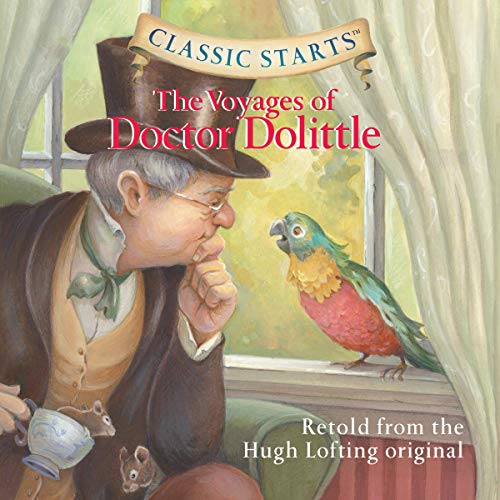
[The Burden of Compassion: Dr. Doolittle’s Domestic Transformation]-[The Voyages of Doctor Dolittle - Part 05]
📋 Summary
The Burden of Compassion: Dr. Doolittle’s Domestic Transformation
The Rising Tide of Animal Patients
In the early stages of his renewed practice, Dr. Doolittle experienced a fleeting sense of financial stability that brought joy to his sister, Sarah. Sarah, who had grown weary of the chaos, even indulged in the purchase of a new dress. However, the doctor’s inherent kindness created a logistical nightmare. Because he "never had the heart to say no," his home became a sanctuary for recovering animals who "did not want to leave." The house quickly became impossible to keep clean, signaling the beginning of a conflict between the doctor's altruism and the practical requirements of a functional household.
The Arrival of New Residents: Chi-Chi and the Crocodile
Dr. Doolittle’s compassionate nature led him to rescue a monkey from an abusive organ grinder, whom he threatened to report for "cruelty." The monkey, named Chi-Chi, became a permanent fixture in the house. The situation escalated further when a crocodile, suffering from a "bad toothache," escaped the circus to seek the doctor's help. After the doctor performed the procedure, the crocodile requested to stay by the garden pond, promising "not to eat the fish." Unlike the circus men who eventually accepted the crocodile's presence, the local community—specifically the lady with the "sick poodles" and the local farmers—became terrified. They feared the creature would consume their animals, leading to a sharp decline in the doctor's paying clientele.
The Departure of Sarah
Sarah’s frustration reached a breaking point. She viewed the presence of the "awful" creature under the bed as proof that the doctor had "gone mad." Despite the doctor’s insistence that he "trusts him completely," Sarah issued an ultimatum: "Either he goes or I do." True to her word, Sarah departed, leaving the doctor without his housekeeper and, subsequently, without his financial safety net. While she found a "neat and tidy" life elsewhere, the doctor was left to face the reality of a home filled with animals and an empty purse.
Animal Autonomy and Household Management
With no money to hire help, the animals took it upon themselves to maintain the household. The division of labor was both creative and heartwarming:
- Chi-Chi handled cooking and sewing.
- Tu-Tu the owl managed the household accounts due to his skill with "arithmetic."
- Dab-Dab the duck took over dusting and bed-making.
- Gub-Gub the pig tended the garden.
- Polynesia assumed the role of the primary housekeeper, ensuring everything was "done properly."
The scene of Jip the dog sweeping with his tail served as a testament to their collective determination to support the man who had "given so much to them."
The Looming Winter
Despite these efforts, poverty remained a constant threat. The animals attempted to supplement their income by selling vegetables at a roadside stall. When Polynesia voiced concerns about their dwindling resources, the doctor remained characteristically optimistic, shrugging off the pressure and noting, "As long as the chickens lay eggs and the cows give milk, we'll be fine." He dismissed the anxiety of winter, believing there was plenty of time to earn more. However, the narrative concludes on a somber note as winter arrived "much earlier than expected." With the garden barren and the animals hungry, the household faced a precarious future, highlighting the harsh consequences of the doctor's unwavering, yet impractical, devotion to his animal friends.

Deep Learning with ListenLeap


