This message comes from NPR sponsor Morgan Stanley with their podcast. What should I do with my money?
Smart people don't always feel smart about money. Listen to what should I do with my money to hear real people getting real help from experienced financial advisors?
This is Planet Money from NPR
Where does this whole story begin?
So our story begins in November of 2019 at the White House where President Donald Trump has become concerned about youth vaping.
This is journalist Leon Nayfok. For the past year or so he's been looking into the rise of e-cigarettes over the last couple of decades.
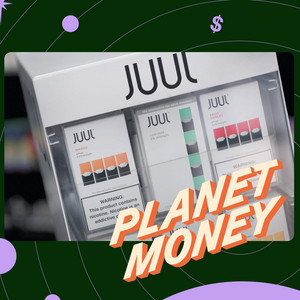
And that story centers on one device in particular, the jewel.
So the jewel is a sleek little USB type device that became essentially the first mainstream vape.
But at the time of this White House meeting back in 2019, the jewel was seen by a lot of people as this massive threat to public health.
The numbers around teen use of jewel in particular are skyrocketing.
Everyone thought the war on youth smoking was over, those numbers have been going down and down and down.
But here comes this new technology, this new device, the jewel that kids seem to love.
And so Trump decides to invite a whole bunch of stakeholders, people from parent groups, people from industry, to have basically a apprentice style gathering to hash it out.
Okay, so this is like the reality TV approach to public health policy.
Yeah, so I mean, you get the impression that Trump thought that by just simply getting everyone in a room and having them argue about it, he would see the past forward.
He would see the obvious solution that all these other people had not been able to find.
Well, this is a very big subject and it's a very complex subject.
Probably a little bit less complex than some people think.
But I'm here to listen and I have very divergent views. Who would like to start?
As different people around the table respond to President Trump, the fault lines in this debate start to become clear.
Broadly speaking, there are two factions.
One side says that vaping is a scuridence society that's getting an entire new generation of kids addicted to nicotine.
And we need to do whatever we can to get these things out of stores and out of kids' hands.
And I've never seen an epidemic this serious, this rapid and this intense among our youth.
And then on the other side, you have a faction that says, okay, yes, youth vaping is a problem.
But we also got to think about all these millions of smokers who are going to die if they don't quit.
And vaping has been shown to be a really effective way to quit smoking.
So for these folks, which includes a lot of public health experts, vaping is an imperfect solution to a really, really deadly problem.
But pretty quickly, the meeting goes from the usual introductions and pleasantries to a series of disagreements over some of the most basic facts of the situation.
Like how many teens are actually taking up vaping.
Five million is a misrepresentation.
I'm not trying to show you a lot.
Numbers are a misrepresentation.
No, five million is ever tried.
There is basically an exchange of accusations that both sides are not being honest about the problem.
And it gets really personal, really fast.
Yeah, the meeting eventually devolves into an outright screaming match.
Sorry, but that's a false.
That's a false.
Sorry, but that is a complete false.
There's a moment state.
There's a moment state.
Half the kids at high school are big.
It's not a very productive meeting.
People are just like shouting over each other.
And you can't even really hear what everybody's saying.
So Trump has to kind of just put a stop to it after about an hour.
And he is clearly a little bit sobered by what he has seen and his hope of making a complex object.
Less complex has not worked.
We want to take care of our kids.
Gotta take care of our kids.
Thank you very much.
When you zoom out, this meeting at the White House feels like a kind of key to understanding the broader story of how e-cigarettes came crashing into our lives.
I mean, I think what you see in that chaotic meeting is it's a microcosm of the debate we've been having ever since vaping took off.
And ever since this thing that was supposed to solve one public health problem has seemingly spawned a whole other one.
Hello and welcome to Planet Money.
I'm Alexi Horowitz-Gazzy.
And I'm Leon Nefak.
I am the co-host along with journalist Ariel Pardes of a new podcast called Backfire, The Vaping Wars.
Today on the show, The Parable of the Jewel.
How a new technology ignited a public health crisis and how the government's efforts to rein it in may have actually made things worse.
This message comes from NPR sponsor LinkedIn Marketing Solutions.
As a business to business marketer, your needs are unique.
B2B Buying Cycles are long and your customers face incredibly complex decisions. LinkedIn ads empowers marketers by allowing you to build the right relationships, drive results, and reach your customers in a respectful environment.
Make B2B marketing everything it can be and get a $100 credit on your next campaign.
Go to LinkedIn.com slash money to claim your credit, terms and conditions apply.
Support for this podcast and the following message come from Wise, the app that makes managing your money in different currencies easy.
With Wise, you can send and spend money internationally at the mid-market exchange rate.
No guesswork and no hidden fees.
Learn more about how Wise could work for you at Wise.com.
Okay, so the jewel was not the first attempt to create an electronic cigarette.
Companies had been experimenting with the idea for decades by the time jewel hit the market.
But the rise of jewel helps explain how this technology went from a niche product to a mainstream industry worth tens of billions of dollars.
And like a lot of tech companies, jewel got its start in Silicon Valley.
Yeah, so the story of jewel begins on the campus of Stanford University or two design students, James Monsey's and Adam Bowen, both smokers decide to make a new product.
To make the Thesis project a prototype of an e-cigarette, a device that will satisfy their cravings as smokers and satisfy the social components of smoking without killing them.
We just kind of looked at each other and thought, you know, this would be a really interesting space to look at.
So our goal was to basically create a whole new experience for people that pertains to the positive aspects of smoking like the digital and everything that makes it as healthy and socially acceptable as possible.
How explicit was the kind of like public health part of the mission in their pitch?
I think it was genuinely core to what they wanted to do.
I mean, I'm not saying that they were altruists who merely wanted to save lives.
They were going to make money doing it, but I think they saw a huge opportunity when they looked at the massive population of smokers who actively wanted to quit and who weren't able to quit using the smoking cessation tools that were out there.
That was very much part of the pitch to investors from the beginning.
Monsey's talked about that population as both group of people that he wanted to help, but also a group of people that, you know, jewel could make a lot of money on.
So that was the origin story of jewel, but one of the key factors in how the company was able to become a cultural phenomenon has to do with how e-cigarettes were regulated when James Monsey's and Adam Bowen were building their company.
The regulatory system that jewel walked into was very murky. There wasn't really anyone they had to answer to.
See, back in the 1990s, attorneys general from states across the country had sued big tobacco companies.
And the settlements they won against big tobacco, along with later legislation, meant those companies were limited in how they could advertise or what kinds of flavored products they could sell.
But those rules did not explicitly apply to e-cigarette companies.
The FDA had tried to regulate e-cigarettes before jewel cable long. There was like an earlier company called Enjoy, store-out. Enjoy wanted to advertise and the FDA tried to block them by characterizing the enjoy as a drug delivery device.
They sued the FDA and basically took the position that they were no more a drug delivery device than regular cigarettes. And given that the FDA at the time couldn't regulate cigarettes either, they had no standing to tell Enjoy what to do.
Congress did pass a law in 2009 giving the FDA authority to regulate tobacco products like cigarettes. But it still took several years before they were able to bring e-cigarettes into that category.
Which meant that when jewel first hit the market in 2015, the company was operating in a kind of legal gray area.
So the lack of regulations around e-cigarettes meant the jewel was free to do a number of things that you would be really shocked by if it was a tobacco company.
The very beginning jewel knew that flavored vape liquid was going to be key to making people want their products. So they had flavors like mango and cool cucumber. Again, not something that tobacco companies could offer.
And secondly, this is really important. They were able to advertise. And as anyone who remembers the fight over the moral role man or Joe camel would remember tobacco companies were had their hands really tied when it came to presenting their product in a positive light and making people want to smoke marbles by showing them a cool cowboy. Jewel wasn't bound by that.
And what exactly did jewel do with this freedom they had to advertise?
They try to make jewel look cool. They try to make their product look really attractive through marketing. They launch a campaign they call vaporized. They put a big billboard in Times Square. They put a print ad in vice.
And you know, they threw parties in cities where they thought they could reach cool young people who would then tell their friends about this cool new device.
One of those cool young people was a woman in New York City named tabby wakefield or tabby wakes. This is like the start of viral marketing. Like I didn't know what I was doing. But this is what I was doing. I guess.
Tabby wakes was someone who threw parties around the city. You know, she was just out of high school and someone who knew someone who knew tabby invited her to the jewel event in New York and told her to bring all her friends. I think she got paid 200 bucks to, you know, basically avail her social network of this party.
And once she got the jewel party she was given samples of their products.
They had little bowls filled with pots. So you could take a handful of Cremberlay and just did meant was good and tobacco was good and fruit punch was trash.
And which she told us was that she brought her vapes back to college and her friends brought their vapes back to college and.
We had a bunch of jewels. So it's like your friend comes in your dorm and is like, past me that like thing you were smoking you're like here you can have one.
And I think as we say in the show this was like viral marketing as God intended it like they told their friends and their friends told their friends and suddenly.
This weird little USB stick was an object to be coveted something to ask for at a party.
Now there was pushback against the vaporized campaign it reminded people of Joe camel and the slick tobacco advertising in the past.
So jewel changed the direction of their advertising and growth was slow at first. But a year or so after they launch jewel sales start to take off.
The new craze and a cigarette it's called jewel and it is fine off the shells.
One store owner we spoke to says sometimes he sells out in one day.
So between 2016 and 2017 you see their sales increased by sevenfold from two million units sold in 2016 to 16 million in 2017.
And you know I just remember that suddenly they were everywhere. I mean walking on the street you saw people jeweling you know celebrities were starting to be caught with jewels.
You know the word jewel becomes a verb. That's how you know you're winning is when people say jewelings instead of instead of whatever else vaping.
And it's around this time that a lot of people start to notice that while jewels target audience may be adult smokers looking to quit.
The company's rising popularity is also being driven by teenagers.
I mean I remember walking down the street on my way to work and seeing high school kids standing around vaping and those same kids would keep vaping when they got to school.
You know they were vaping in the bathroom. They were vaping in class but you could also go on YouTube and you could see kids talking about how they get away with jeweling at school.
I'm going to go over a couple different ways to hit your jewel while you're in school and not get caught.
Giving people advice on how to pack your jewel into your socks or how to how to exhale the vapor into your sweater so that no one can see it or smell it.
And that brought a whole new kind of attention on jewel.
In just a couple years on the market, jewel had gone from total obscurity to being a fixture of teen life flooding into home rooms and study halls across the country.
Which brings us to the next part of the story, the backlash.
This is when parents in anti tobacco activists started calling for government action.
And the thing that really pushed government regulators to act was a survey.
So the real ThunderClapp was the CDC's annual youth tobacco survey, which they've been administering for years.
And so the early results from the survey hit the desk of a man named Mitch Seller who had been put in charge of the FDA's efforts to regulate cigarettes.
It's the **** at the fan in 2018 when we saw the explosion in the rise of kids use of e-cigarettes from 2017 to 2018. It turned out to be a 76% increase in kids use of e-cigarettes in one year.
So I looked at these numbers in shock.
So Seller just rang the alarm. He brought the results of the youth tobacco survey straight to the FDA commission at the time of Scott Gottlieb.
And Gottlieb had the same reaction. And he goes out in public and he calls this an epidemic.
The FDA will not tolerate a whole generation of young people becoming addicted to nicotine, has a trade-off for enabling adults to have unfettered access to these same products.
And from the beginning, the theory of the case was that the reason kids are flocking to these products and to jewels specifically was flavors.
Kids love flavors. Kids love candy. They are curious about a mango flavored USB stick. And so the number one priority became getting rid of flavored e-cigarettes.
But faced with the threat of a crackdown from the FDA, jewel decides to voluntarily withdraw most of its flavors from retail stores.
They announce they're going to take those mango and fruit and cucumber jewel pods and only sell them online, where they can use an age verification tool.
It seems like they're on board and by all appearances like they are cooperating with the FDA. And then the FDA finds out about something along with rest of the world that really shocks them.
Altria is taking an almost $13 billion step towards making sure its business model doesn't go up in smoke.
Jewel is taking on a massive investment from Altria, which is the company formerly known as Philip Morris and the company that makes Marlbrose.
Altria says that its investment will boost jewels value to $38 billion, making it more valuable than Ford, Delta Airlines, or Target.
A big nicotine entering jewel, that's a scary thing for parents that I have no idea how to contain this issue.
All of a sudden you're looking at a very different situation where a company whose existence was premised on destroying a company like Philip Morris and putting them out of business was now taking their money and essentially getting into bed with them.
And this decision only seems to raise more outrage and more concern among regulators. And so even with this huge new infusion of money,
the company becomes more embattled than ever.
Yeah, this was definitely Jewel's worst year. I mean, first James Monsey's, the co-founder is dragged in front of Congress and faces extremely hostile questions from politicians who see him as a drug pusher.
You, sir, you don't ask for permission. You ask for forgiveness. You're nothing but a marketer of a poison and your target has been young people.
And then almost at the same time as this hearing takes place, people start dying of something that people think is connected to vaping. That's kind of all we knew for a while.
We have been reporting heavily recently on vaping and the growing health concerns. Last week we learned there are now five deaths being reported on it or blamed on it.
In Indiana, Minnesota and California, each reported a vaping-related death on Friday.
Eventually, it was determined that the majority of these cases were linked to a kind of oil used in THC vapes, not mass market nicotine vapes like Jewel.
But at the time, no one knew what was causing this mysterious vaping illness and it got a ton of media coverage, which eventually reached President Trump.
And so Trump is starting to hear about vaping from various people, including Melania, who's worried about their son, Baron at school, and Trump decides that he needs to do something about it.
We have a problem in our country. It's a new problem. It's called vaping, especially vaping as it pertains to innocent children.
And they're coming home and they're saying, Mom, I want to vape.
So Trump calls in health and human services secretary Alex Azar. He calls in the acting commissioner of the FDA.
They have a press conference, make it clear that they are going after flavors, that flavors are the main way they see dealing with the teen problem.
So with the president's support, the Food and Drug Administration intends to finalize a guidance document that would commence enforcement to require that all flavors are being made.
All flavors other than tobacco flavor would be removed from the market.
Okay, so they announce what sounds like kind of a definitive plan here. Just get rid of these flavors.
But it turns out to be a bit more complicated, right? Like what happens to that idea?
Well, what happens to that idea is that it turns out not everyone likes it. It turns out that there is in fact a constituency of people out there who are adults who vote.
And who like their flavored vapes. There are people who have quit smoking using flavored vapes. There are people for whom it has become part of their lifestyle.
And Trump has sort of taken a back when he starts getting concerted pushback from this voting block who actually might be important to Trump's re-election.
They live in swing states like Michigan. There's a survey that Trump becomes aware of. His advisor showed to him that says that 83% of people who vape would become single issue voters.
Basically, if their ability to vape was threatened by whatever the FDA had in store. And what seemed like a really easy win, you know, who doesn't want to prevent kids from becoming addicted to the nicotine, certainly starts to look like kind of a headache because it turns out there's another side of the story.
And this kind of brings us back to that White House meeting that we talked about at the beginning of the show, right?
Yes. So part of his sort of attempt to think through this issue, that's when Trump invites everybody he can think of who cares about vaping to come to the White House and argue about it.
After this meeting, it takes the Trump administration a little over a month before they announce where they've actually landed on this question.
And in the end, the FDA's new policy does put a ban on vape flavors just in a very particular way.
The flavor ban, you know, spiritually sounds exactly what they've been talking about. But in the way that the policies actually written, they leave open a huge loophole by limiting their policy to what they describe as cartridge based devices.
So in other words, a device like jewel where you buy the thing itself, but then separately you buy pods that can come in mango or cucumber or whatever.
You can't do that anymore can have flavored pods can have flavor cartridges. It really just is aimed at jewel.
The Trump administration decided to kind of split the difference between the main factions in this debate.
They were essentially trying to stop the most popular device from selling the flavors that teens craved yet they were still allowing some flavors to appease the adult vapors who'd organized against an outright flavor ban.
But this solution struck some public health officials as a recipe for more problems, including Mitch Zeller who was in charge of regulating tobacco products at the FDA.
The White House made this decision. I received a phone call from a political person at FDA telling me what the policy was going to be as decided by the White House.
And I said, well, if that's what you're telling me to do, we will write that guidance. But I just got to tell you from a public health perspective, this is not sound or wise policy.
And I said, if this administration is really concerned about flavor these cigarettes, it can't draw the line just a cartridge and pod based products because it'll be whack them all.
And you know what happened after that.
Coming up after the break, the vaping market explodes and the moles run a block.
Support for this podcast and the following message come from wise. The app that makes managing your money in different currencies easy with wise.
You can send and spend money internationally at the mid market exchange rate. No guesswork and no hidden fees. Learn more about how wise could work for you at wise.com.
This message comes from an PR sponsor andthropic. Their clawed three model family is enterprise ready AI.
High coup is fast and cost effective. Sonnet perfectly balances skill with speed and opus sets new intelligence industry benchmarks. Visit anthropic.com slash clawed.
All that sitting and swiping your body is adapting to your technology learn how and what you can do about it.
I really felt like the cloud in my brain kind of dissipated once I started realizing what a difference these little breaks were making. There's no turning back for me.
Take NPR's body electric challenge. Listen to the series wherever you get your podcasts.
Last year over 20,000 people joined the body electric study to change their sedentary screen filled lives. And guess what we saw amazing effects now you can try NPR's body electric challenge yourself listen to updated and new episodes wherever you get your podcasts.
Hey Darian Woods here the Empire State Building was built in the 1930s but it still holds lessons for projects today.
Everything was standardized everything was modularized. In fact the architects and the engineers said we're not really building you know 100 floor sky scraper here we're just building the same floor 100 times.
In our latest bonus episode it's my extended conversation with Ben Flubeier he's studied thousands of big projects and has come up with some principles that can guide ventures big and small to success that's for planet money plus listeners if that's you thanks if it's not it could be you could get sponsor free listening and support the work of planet money just go to plus dot NPR dot org.
In January of 2020 the FDA announced a ban on flavored vaping cartridges basically targeting jewel in hopes of solving the problem of youth vaping.
Instead the problem kind of exploded in a whole new direction flavored jewel pods were no longer allowed on store shelves but almost immediately scores of new competitors rushed in offering brightly colored disposable vapes and these
disposable have been an enormous hit a lot of these disposable like are way way stronger in terms of how much nicotine you inhale when you hit one and more to the point they are so much more aggressive than jewel ever was in terms of offering a dizzying array of of kid friendly flavors I mean I tried a lot of these vapes over the course of our reporting for this series I'm going off the top my head here but you know there was a blue raspberry there was a much a flavored one there was a
watermelon ice there was something called beach day which is rather abstract for flavor but I gather it you know evokes the the spirit of hanging out by the ocean you know they took the appeal of jewel specifically the aspect of jewels appeal that really spoke to young people and just turned it up to 11 now most of these
disposable vapes are actually illegal vape companies are supposed to apply for approval from the FDA or get a waiver in order to sell their products legally but at this point there are just so many new makes and models that the FDA has found itself playing this kind of nightmarish game of
a whack-a-mole they hear about the latest vape the kids are into they do everything to take it off the market only for something else to take its place so in many cases these disposable brands are coming from overseas the FDA can't even really figure out who runs them in some cases they try to send them warning letters when they can find their addresses that say basically like you can't be selling this stuff and they try to add certain brands of vapes to like lists of products that are banned
from import you know the customs people at the border can seize and that does stop a couple brands in their tracks but overall what the FDA finds is that these companies are extremely nimble and pretty brazen sometimes they just rebrand you know
Elf bar when they got put on the import ban list the company just put out a new line of vapes called eb create and everyone understood that these new vapes were the same as the old ones you know made by the same company maybe some different flavors but you know the FDA couldn't really do anything about it because the industry was just moving so much faster than they could
and this explosion in unregulated e cigarettes has only added to the health concerns around vaping because we just don't know the ingredients that are going into many of these devices and still too early to know in general what the long term health effects of vaping even are
okay so Leon after reporting on the rise of the vaping industry for more than a year now what is your big takeaway here like what do you think is the moral of the dual story
I think maybe the moral of the story of dual is what we're in an age where things can become widely adopted so much faster than was possible in the past and that in itself is like a new challenge for regulators who always had to be reactive in one way or another but now are finding that so many new technologies get introduced and widely adopted in a way that makes them really hard to put back in the bottle
in a way you can think of the story of dual as the story of a lot of regulation when a new technology springs up regulators have to make this choice on how restrictive or lenient to be to restrictive and they risk depriving consumers of potentially life saving products to lenient and they run the risk of unimagined consequences
given how long it takes to pass new legislation and figure out enforcement it can be nearly impossible for regulators to prevent this chaos before it's unleashed
today's episode is just one small slice of the story that Leon and co-host are all podcasts tell in their new podcast series backfired the vaping of hers
they've got insider accounts of the design and marketing of the jewel they go along for a real-time police bust of illegal wage sellers and they have a sit-down interview with one of the people who created dual
I'm James Monsey's and the co-founder of jewel
Can I ask you why you decided that you were ready to talk about it?
You certainly can ask that
You can find the whole series on Audible. We'll also put a link to the series in our episode description
and we should say Amazon which owns Audible supports and pays to distribute some NPR content
Today's episode was produced by Emma Peasley and edited by Jess Zhang with help from Annie Brown
It was fact checked by Sophia Shukana and engineered by Sina LaFredo
Alex Goldmark is our executive producer
Special thanks to Kim Giddelsen, Sam Lee and Andrew Parsons
I'm Leon Nefaugh
and I'm Alexi Horowitz-Gazzy. This is NPR. Thanks for listening
It's a high stakes election year so it's not enough to just follow along
You need to understand what's happening so you are fully informed on November
Every weekday on the NPR Politics podcast our political reporters break down important stories and back stories from the campaign trail
Do you understand why it matters to you? Listen to the NPR Politics podcast wherever you get your podcasts
This election season you can expect to hear a lot of news
Some of it meaningful, much of it not
Give the up first podcast 15 minutes, sometimes little less, and we'll help you sort it out
What's going on around the world and at home?
Three stories, 15 minutes, up first every day
Listen every morning wherever you get your podcasts
In this country some truths aren't self-evident
An NPR's Black Stories Black Truth
So the collection of stories is wide-ranging and real
As the people who tell them we celebrate the Black experience for all its soul and richness
Search NPR Black Stories Black Truth wherever you get podcasts