Discussion keeps the world turning.
This is Roundtable.
Ultra -processed foods dominate grocery aisles, but was really lurking behind the labels as China tightens regulations on no -editive claims and food labels under scrutiny, how do we cut through the marketing hype and truly eat well?
You're listening to Roundtable.
I am He Yang. For today's program I'm joined by Steve Hathaway and Yu Xun in the studio.
First on today's show.
Food labels once touted no additives as a badge of health.
China's new regulations are cracking down on misleading claims to give consumers a clearer look at what's really in their food.
Yet, in today's global food system, truly additive free food is rare.
Ultra -processed foods are engineered to keep us coming back for more and with the industry projected to hit $850 billion from 2025 to 2029, as reported by Tech Navio, the stakes for public health are higher than before.
So, let's take a look and dig into the age -old truth.
we really are what we eat.
Yu Xun, spill the beans, what's the latest regulatory change regarding food additives in China?
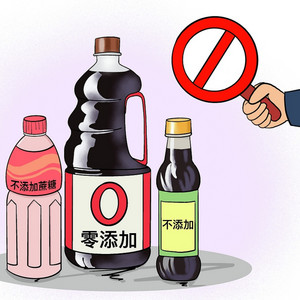
Oh yeah, China has introduced these new food safety standards that ban producers from using terms like no additives or zero additives on labels.
As such claims can mislead consumers into thinking products are inherently healthier and this change announced in a circular from the National Health Commission and the state administration for market regulation on March 27th and it is designed to improve transparency and address consumer concerns.
You know actually I once saw a drink or maybe that's a kind of a seasoning or something I don't really remember but this thing with a brand registered under the name of Zero Additives.
Oh the company name was Zero Additives?
Yes and this doesn't mean this product contains zero additives in any way it's just their name of this brand.
So this is purely a word game played with consumers and now this kind of ban may bend this kind of behavior.
Yeah, this is a big issue now here in the country there are, pardon me, concerns earlier in March of 2025 there were media reports that revealed the tests on 13 different soy sauce brands marketed as additive free did indeed find traces of cadmium and that ignited public concerns.
That's a report from China Daily.
And customers, consumers are concerned about potentially misleading food labels that claim to be free of one additive but actually contain other types of additives.
So you'll see that on a label.
This product does not have this, but it doesn't state that it does have the other things.
It's a marketing thing that's done in many, many, many countries around the world.
Yeah, the latest revision includes 50 new standards and 9 amendments aiming to enhance, as we said, transparency and address consumer concerns.
Just like Steve said, for example, a product labeled no added sucrose may still contain significant natural sugars like fructose or something like that and yeah so the the claim of no added sucrose if you see that on a label it doesn't mean that the product is sugar free but it's very easy to misunderstand a label like that for for us consumers right we see that and we think oh okay there's no sugar in there but that's not necessarily true that's a quote from Zhong Kai a director from China Food Information Center.
And that's such important info cause so many people love to buy beverage drinks these days.
And so many of these beverage companies, they tout the No Sucrose label and in Chinese it's called Zhuo Tang, so it's a form of sugar from sugar cane and sugar beet.
I bet every Chinese listener out there has seen this.
And then actually when there's zero sucrose, if you bring in the fructose, which is guo tang, that's sugar from the fruit juice and honey.
That's equally as bad.
Yeah. Well, sucrose is just one member of a large sugar family, if you will.
So the ingredient list may include high fructose corn syrup and others which are not necessarily healthy.
So the claim like no additives that can create a false impression that such products are inherently healthier And that's what we're talking about.
Exactly, but just a quick note guys with this Regulation does it kind of?
Implicate that basically the stuff we buy in stores All have additives it's just impossible to have the like really clean zero, additive product because these things need to be transported.
Processed? Yeah, for it to last more than a couple of days, and then it's got to have additives.
Yeah, I mean, a lot of the foods that we eat, and maybe we'll get to this a little bit later, but food that isn't processed at all versus minimally processed food versus ultra high processed foods.
they're very different, right?
And a lot of things get added to the things that we eat.
It's just the way that the world is right now.
So let's get into it.
What are food additives and do we consume a lot of them without knowing?
So WHO explained the definition of food additives as food additives are substances primarily added to processed foods or other foods produced on an industrial scale for technical purposes, for example to improve safety, increase the amount of time a food can be stored or modify sensory properties of food.
Yeah, food additives are chemicals essentially that keep our foods fresh or enhance their color or enhance their flavor or enhance their texture, something along those lines.
Not all foods, by the way, containing additives need to be automatically treated with suspicions.
All foods are made up of chemicals somehow, some way, right, and food additives are not always less safe than the naturally occurring chemicals.
You know, many of the food additives used by the food industry also occur naturally within foods that people eat every day.
MSG, for example, is found naturally in Parmesan cheese and tomatoes and sardines and significantly greater quantities than the MSG present as a food additive.
Many people view food additives as a major food threat.
We feel like our safety is threatened, but in terms of health risk, food additives would come in perhaps at the end of the line after, you know, things, very serious things like foodborne microorganisms like salmonella, for example, or inappropriate hygiene and eating habits, or environmental contaminants, things like that.
Those would be a greater risk to our to our health and safety.
See, you already pushed, you already touched a sensitive nerve.
Cause with MSG as we do in Chinese, the subject itself deserves a whole show.
Because you know, in Chinese cooking, do you add it?
Do you not add it? You know, what are the health results of that?
It has been a decades long discussion or heated debate to say the least, but also we've seen in the U .S., for example, which in recent years I've seen whole swaths of bodies of work devoted to the study of food additives and ultra -processed foods as such. And basically the sweetener, if we can use this as one example, it's been expanded use in so many ways.
And continuously rising, right?
you know, we consume more of some food additives now than than we used to, and high fructose corn syrup is an example of that.
This is from WebMD, this is the quote, high fructose corn syrup, that's HFCS, made up just 1 % of sweeteners in America in the 1970s, but fast forward to 2004, which is still a long time ago, but still it accounted for 42%.
So from 1 % to 42 % and the average American daily fructose consumption increased from 37 grams in the late 1970s to almost 55 grams in 2008 and that represented about 10 % or so of total daily calories.
That's a lot isn't it?
teenagers consumed even more, averaging 72 .8 grams per day.
That's why I was thinking it's all...
it is the topic that we discussed before...
it's about the dose of all of these ingredients.
Of course, the additives can help the food like last longer, change the color, but still if we're consuming more and more of these, it could be a problem.
Also this is such important information for all people out there, especially the gallable teenagers maybe who don't know that much. Or just don't even think about it.
Exactly. Because you're saying that there's just such a huge increase in the percentage of all kinds of additives in these foods, and they taste so good.
And even if it's just a small packet and you just maybe eat one packet every day, but the amount of and fat and all that like tasty, delicious, but horrible stuff that we're injecting into our systems, without you knowing, could be a lot and you wonder why you're getting fat.
Why is your health not maybe as good as, you know, it should be or whatnot.
Well, there are a lot of these hidden culprits that goes into colorful packaging and you just don't know.
Yeah, and I mean my personal opinion is it's hard to vilify the food companies because they're following rules a lot of the times, right?
And it's hard to blame consumers too because you know not everybody is a label reader.
Who is that label reader out there?
Talking about talking about Sugar.
I watched a documentary about Sugar years ago and I kind of wish I didn't even though I'm happy that I did.
After I watched that documentary Sugar was very high on my radar and I started checking the labels of everything that I put in my body.
And I was shocked, and I did more research. Sugar's everywhere.
It's literally everywhere.
I dug deeper and I found that oh, sugar, we're basically addicted to it as human beings, at least in the West we are, because it's introduced to our diets at such an early age, right?
That's a topic for a whole other show, just sugar in general.
Just a quick, quick question, though.
So, you mentioned sugar, but is it not always in just sweet stuff do we found massive traces of sugar?
Yeah, I mean tomato sauce, when you're making spaghetti, stuff like that.
Ketchup is another easy example.
It's all over the place, all the time.
Okay, well let's talk about this.
Are we getting addicted to food additives?
Or, maybe, not really.
A lot of studies suggest that ultra -processed foods, we're talking about UPF's, may have addictive properties similar to substances like nicotine and alcohol.
These foods characterized by high levels of refined carbohydrates and food additives may trigger compulsive consumption and contribute to a range of health issues including obesity, diabetes and also cardiovascular diseases.
One example is that a study notes that approximately 14 % of adults and 12 % of children exhibit characteristics of food addiction and these individuals struggle to control their intake of UPFs experiencing like cravings, withdrawals, symptoms, and also compulsive overeating despite negative health consequences.
And this situation probably happen in the UK, because this is a study led by Dr. Ashley published in the BMJ, one of the leading medical journals.
Ultra processed foods are all around us, you said sugars all around us, ultra processed foods are all around us as well.
The NOVA Food Classification System, which was developed by researchers at the University of Sao Paulo in Brazil, they define ultra processed foods as typically having more than one ingredient that you never or rarely find in a kitchen or in home cooking, like preservatives, emulsifiers, sweeteners, artificial colours, and flavours with a long shelf life.
And a food that is only processed with simple ingredients like oil and salt and sugar through ways like home cooking, they're called processed foods.
And they include things like jams and pickles and tinned fruits and vegetables and homemade breads and cheeses and all the other yummy stuff.
If they don't go through the process, or a prior mentioned process, it's called unprocessed or minimally processed foods.
There we're talking about things like fresh fruit, fish, eggs, nuts, seeds, raw chicken breast things like that.
When you get into highly processed or ultra processed foods.
Then they have a lot of ingredients like sugar and fat and salt and artificial colors and preservatives, and they're made mostly from substances extracted from foods.
Starches, added sugars, hydrogenated fats, generally speaking the stuff that's not good for us.
But still there are critics about this.
Some people disagree with the idea that UPFs are addictive for several reasons they argue that food is necessary for survival unlike addictive drugs and that UPF serve as a crucial calorie source especially in low -income areas where food environments are inequitable and in these communities UPFs dominate food outlets and people facing food insecurity are more dependent on them so maybe from a different perspective these are like necessities for a lot, a large group of people.
Yeah and these foods, these UPFs, they're designed for fast consumption, right?
They're designed for rapid absorption of different types of carbs and fats that enhance brain reward responses, right?
They trigger dopamine release.
Your brain likes it.
It's a kick for your body and that's what makes these things more addictive.
I don't know addictive is the right word but it's what makes us want to come back to them, right, because your brain releases dopamine, your body feels good, your brain feels happy, oh I want that thing again.
That's why you want to revisit it.
What you guys said, I think covers some interesting ground from that study led by a Dr. Ashley Gerhart, maybe that's name.
It might be alluding to the situation, also in the US, when she talked about the inequitable consumption environment.
Maybe it's alluding to, you know, let's say in the least wealthy areas, where there might not be grocery stores that sell fresh foods.
And then therefore the local people might have to, quote unquote, have to go to the supermarket that only sells or mainly stocked with ultra processed foods.
And there might be a healthy food store next to your local supermarket.
It's not necessarily about the absence of the or the lack of availability.
It's that these ultra processed foods tend to be more affordable.
And if your income doesn't support buying organic vegetables and that's true for a lot of people right if you go to if you go to the supermarket you'll know the organic stuff the really healthy stuff is the most expensive stuff.
And that's really interesting because I think every country might be a bit different.
For example, in China, I remember when I was a kid in elementary school or maybe kindergarten I can't remember the first time when I visited the Weng Fuji McDonald's that was I believe the first McDonald chain in Beijing, it was like heaven and all the kids, like you had to line up to wait for a seat or whatnot.
So, but you know now years later you can argue, we used to have such a healthy food and dietary system in our country and then gradually as all these like you know the McDonald's, the KFC's, the Pizza Hut's, as well as the instant noodles, you all these different types of foods come into our country and come into our imagination and we started to consume these foods and for one point it felt like an upgrade.
But now we're decades later and then you know having a meal of McDonald's is no longer seen as a luxury or a very much coveted meal anymore.
I our dietary habit has certainly changed throughout the years and guys could you investigate what is the impact of ultra processed foods?
One of the interesting quotes that I saw about the topic was that when we fill our diets with ultra processed foods Yeah, they tend to be bad for us, right?
They tend to be. But the biggest culprit is perhaps that it leaves less room in our diets for more nutritious foods.
And I stopped and I thought about that for a second.
And then this is kind of on the heels of your comment, Yushin, about the dosage, if you will, or how much of this we're eating.
we eat what three times a day?
You know some people more, some people less.
But if you're filling your menu with ultra processed foods well then you're full and you're not going to reach out for fruits and vegetables and minimally processed foods the things that are good for you.
There's not enough space in your diet and that makes a lot of sense to me right?
And that's why we always hear balanced diet, balanced diet, balanced diet is so important.
The more we fill our diets with foods that are not good for us then the worse it is for our bodies and then we could be looking at long -term health issues and then in the short term it just this is just me speaking personally makes your body feel sluggish and slow and your brain feels sluggish and slow so I think that's an important an important point you're leaving fewer options healthier options for your diet if you're consistently eating ultra -processed foods.
Also, as we are talking about a lot of these additives are in these kind of ultra -processed foods naturally, these kind of issues like obesity, cardiovascular disease, metabolic disorders may happen with higher intake of these unhealthy fats and sugar that may lead to these kind of issues.
Still, we're talking about higher intake, right?
We're still having the idea of the issue of the dosage.
So, a lot of these things still, as we said, toxicity is closely related to dosage and these seasonings may contain addictive substances, But if the amount is well -controlled, they are relatively safe for the human body.
Yeah, but well -controlled is the It's the issue right?
Because consumers expectations may change.
Have you ever eaten consistently unhealthy food, you know burgers, fries, whatever unhealthy stuff And then you eat a boiled chicken breast with some steamed broccoli.
It tastes like paper Right?
So consumers get used to this flavor level and experts argue that modern industrialized food processing, it leads to customers being more accustomed to artificial flavors and products as opposed to natural food taste, and that's a dangerous, that's a slippery slope isn't it?
Once we start to go down that slope we might never recover.
And that could even reflect a broader trend in where in which the food industrial food supply has a big influence on consumer preferences and expectations because if consumers become accustomed to flavors and tastes like that they'll keep buying it.
And then what do you think food producers are gonna do?
Well they need to sell so they're gonna reflect those And what you just painted for us is basically the blueprint of the development of the global processed foods industry.
And then the foods that have been engineered to make us come back for more to continuously buy them, they are often, while these ultra processed foods that are often high in added sugars, unhealthy fats and sodium while being low in essential nutrients and for repeated and constant consumers, they're so used to this high dosage of stimulation in the brain as we eat these foods, and that gives growth to this huge industry that's projected to be 850 billion US dollars.
So is there any way to survive this system?
Or should we at least have the awareness to think maybe I want to fight the system I do not want to be subcompened.
Hmm, I mean it's challenging isn't it from a consumer's point of view because if are aware, then you try to know as much information as you can know, right?
But it's more expensive to eat healthy.
Oftentimes it doesn't taste as good.
Did you know watermelons?
Now, this is a really interesting example.
This is published on an official Chinese news website.
The report was that even fruits now are as sweeter than they were before, due to market demands.
A watermelon now, a sweetened watermelon, can have a sugar content of 12 percent compared to 8 percent in the 1980s.
And new watermelon varieties like the Garden Royal watermelon can reach a sweetness level of up to 20 percent.
So, as consumers, this is very, very, very challenging to make sure that we're always eating the healthiest options available for us.
But I have a question regarding your watermelon example, though, because this is not food additives.
It's not like, you know, somebody's injecting sugar into the watermelon.
It's what sells more, what can be priced at a higher range.
Yeah, but it's an example, isn't it?
Is that customers wanted a sweeter option, apparently - And the food scientists and the farmers - Started growing them, right?
So food industry reflects what people want to eat, and back to the previous point, if we get dependent on or accustomed to foods that are unhealthy for us, and we make those choices at the supermarket, food producers are going to keep producing that type of food for us.
Sure, but still, I feel that this industry is still under a lot of heat.
It should be under a lot of heat, because let's say if one dose does not kill me, but that does not mean you can flood the market with multiple, with these goods that are, you know, so rich in this content that is not good.
Whose responsibility is it?
When you go to a supermarket and you buy a magazine with a bunch of paparazzi photos from celebrities, right?
Now, this is a non -food example.
Customers will buy that magazine, so yet we still blame the paparazzi for taking those pictures of the celebrity, so who's to blame the paparazzi for taking the pictures or the customers for actually buying the magazines?
Well, hold on. The nudity is not allowed, so therefore there is some kind of regulation there, right?
I'm not talking about those types of pictures.
I'm just talking about, you know, a celebrity in streets of Hollywood or whatever.
Maybe a bad example.
My point is, why can we only blame food producers for producing foods that customers are willing to buy?
If there's no demand for the product there's not going to be a supply of the product.
If people said, we only want foods that are not processed at all, raw chicken breasts and beef and whatnot.
It's not going to happen.
It's not going to happen.
Well, because those companies, they need to make money, right?
Those are businesses that need to survive.
And we are the ones who are buying these unhealthy foods.
We are creating the demand.
Therefore creating the supply as well.
But it's not just two parties in the game.
And there's the regulation there.
And also what level of regulation, right?
And then also all these parties they would be in negotiation.
And this is a power struggle of some sort, right?
Yuxun, what do you think?
Yeah, that's why I was thinking they require strict regulation and control.
And this topic, this kind of new policy that we're talking about previously, is something I think it could be...that's why I'm being a little bit optimistic about this.
First of all, it is letting people know that they have the right to know what's in these kinds of products.
Another one is that they're trying to alarm people that, you know, you should be aware of all of the additives in these products.
And this is the way that I think, um, these regulations are trying to inform people.
Right, so how do we make it through this food system?
I'm not just talking about our individuals out there, little fish out there, but also, you know, that there are the companies, there are different levels of government regulation or whatnot.
So how do we tackle this issue?
Well on an individual level, there are things that you can do.
This is from the Guardian.
Dietitians talked about 20 ways to cut down on ultra -processed foods while still eating what you love.
And what they recommend is the 80 -20 rule.
So focus 80 % of your diet on whole foods, healthy foods, and leave 20 % for foods that you can enjoy.
Another tip is to not demonize certain foods, you know, not every purchase from the supermarket is an ultra -processed foods if they contain minimal preservatives, right?
So processed in some fashion, is almost everywhere all around us.
So we shouldn't be demonizing those food producers or those those foods.
And also from the regulation -wise, UPF and beverage taxes is something that some regions may use.
You know, implementing these taxes on sugar -sweetened beverages and UPFs has been effective in several countries as we can see in some news.
I think we had a discussion previously before the show, some countries they will tax you if you buy some drinks, right?
The sugar tax. So these kind of things are showing that such taxes can reduce consumption and improve health outcomes such as lower body mass index and reduced dental issues.
the revenue generated can be reinvested in health initiatives.
The more we understand the impact of ultra -processed foods, the clearer it becomes.
Health isn't just about choosing the right food, but challenging the system that shapes our choices.
Will we continue to consume what's sold to us, or will we demand a healthier, more transparent future?