This message comes from BetterHelp.
The new year isn't about doing more.
It's about carrying less.
Therapy can help you unpack what's been heavy and bring more clarity, calm and perspective into 2026.
Visit betterhelp.com slash NPR for 10% off.
You're listening to Shortwave from NPR.
Hey, Shortwavers, it's Regina Barber.
Happy New Year!
Yay!
The new year is all about blank slates, new beginnings, starting from scratch.
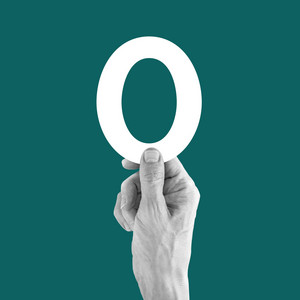
And so we thought what better time than now to focus on the number that signifies origin points, literally starting from nothing, zero.
So zero was invented relatively late in history.
It was first thought to be invented around like 2500 years ago by Babylonian traders in ancient Mesopotamia.
Actually,
That's Yasmin Soplikolu.
She's a science writer at Quantum Magazine.
Back then, they used a symbol like two slanted wedges on clay tablets.
But at the time, it wasn't a number yet.
It was really used as a placeholder so that you can distinguish between different types of numbers, like 20 or 250 or 205.
And Yasmin says that this idea of a placeholder wasn't totally unique.
The ancient Maya, for example, had a little shell symbol that they used in a similar way.
But zero didn't really become a number on its own until around the 7th century.
There were Indian mathematicians who came up with a couple of ways to use zero as a number, and they were the kind of first to figure out that zero could be a digit, just like the other numbers, like one and two and three.
After that, it kind of went out from India to the Arab world.
And then, you know, in the 13th century, Fominachi actually picked up the idea during his travels in North Africa.
And he brought it back to medieval Europe, you know, along with the base 10 number system.
But in medieval Europe, not everyone was thrilled about this concept of zero.
People had difficulty with accepting it.
It was kind of scary.
People were confused by it.
Some thought of it as like the devil's number that challenged like really deeply held ideas.
And you know, because of the influence of the church, like philosophers and theologians associated nothing with like chaos and disorder.
One city, Florence, Italy, actually banned the number zero altogether.
It's a weird concept if you even think too deeply about it.
It's like we're describing something that doesn't exist, right?
We see three chairs or we see four birds and we can count those and they're physically there.
But we don't see zero birds or zero chairs.
We just know that they're absent.
But that is zero.
That's an extra level of abstraction from the other kinds of numbers that we see around us all the time.
And that abstraction actually makes it harder for our brains to process.
So today on the show, the neuroscience of the number zero.
How do humans think about the concept of nothing?
How do we find out?
And what does that mean for our brains?
You're listening to Shortwave, the science podcast from NPR.
Hello and Happy New Year.
It's Michelle Martin from Morning Edition.
Thank you to everyone who donated during our end-of-year fundraising campaign.
2025 dealt a big blow to NPR and local stations with the loss of federal funding for public media, but we are so heartened by the outpouring of support and we will get through this together.
Thank you for keeping NPR strong moving into 2026 and beyond.
AI data centers use a lot of electricity.
And you may be paying for it.
I think it's almost inevitable that ordinary people are going to end up subsidizing the wealthiest industry in the world.
On the latest Planet Money podcast, how data centers might be hijacking your electric bill.
Listen on the NPR app or wherever you get your podcasts.
What's in store for the music, TV and film industries for 2026?
We don't know.
But we're making some fun bold predictions for the new year, plus setting some personal pop culture resolutions.
Listen to Pop Culture Happy Hour in the NPR app or wherever you get your podcasts.
OK Yasmin, before we get into like the complexity of zero, let's just start with like the neuroscience of numbers in general.
You've done some writing about this, like how our brains comprehend small numbers differently than large numbers.
Can you tell us more about that?
Right.
So this is actually kind of cool.
We have what are called number neurons in the brain.
So there are neurons that are tuned to specific numbers.
There are neurons that favor, for example, the number five, and there are other neurons that favor the number seven.
And so on.
So that means that for the neurons that favor the number five, they'll fire more.
Like if it sees five items on a table, it'll fire more than if it sees four or six.
It'll still fire for four and six, but less and then even less for three and seven.
Yeah, so these neurons are specifically for that number.
They really like that number.
Yeah, it's kind of neat that we have all of these.
And there's a lot of questions surrounding it still.
We don't know if there are neurons that fire for 1,505.
That seems like there would be a lot of neurons in the brain then for the various numbers.
I'm sure there's some other kind of mechanism there.
And yeah, there was this research recently that found that the brain actually analyzes small numbers different than it does larger numbers.
So there's a weird boundary around the number four.
There seems to be some sort of double mechanism that's happening.
So the brain processes numbers that are smaller than four in a more precise way than it does for numbers larger than four.
Yeah, we did an episode about this like way back at the beginning of last year.
And like how if you get above four, you're not counting, you're actually comparing.
And when you're below four, that's when you're literally like your brain is counting.
Yeah.
So you're not counting anymore past four.
So interesting, right?
It's like...
I think about this all the time where it's like, why is it four?
Like, why not five?
But it's four.
And when I reported that piece, a couple of experts were talking to me about how it's also weirdly related to working memory or awareness.
So people can only really hold a certain number of objects in their awareness, and that's four.
So they think that maybe there's some sort of connection there between you know how we're processing numbers and working memory.
Yeah, it's like phone numbers, right?
We're in chunks of three and four to like for us to remember.
Same with like, you know, social security number and stuff like that.
Right.
So fairly recently these, like two researchers were like hey, if zero is special, like in math and history, maybe and this is what you were saying maybe it's special in neuroscience.
Maybe we think about it differently.
One group looked at patients with epilepsy.
They already had these like electrodes in their brain.
So the researchers were able to see like how individual neurons were firing.
Yeah.
And the other one?
The other group looked more at populations of neurons.
So it was kind of a larger scale.
They used a magnetoencephalography scanner.
That sounds right.
That was impressive.
Long word.
And basically that means that you know, as the neurons fire, they generate voltages, which creates magnetic fields that the machine can detect.
And by analyzing the magnetic fields the researchers were able to kind of probe what the neurons were doing when the participants were prompted to think about zero.
That's so cool.
Yeah.
So these researchers, they're looking at neurons either specifically or as a group.
You know firing.
What did they find?
Was there like a new discovery on how we think about zero?
So they actually they were looking for something called the numerical distance effect, which is basically a phenomenon that occurs when the brain processes non-zero numbers.
And it means that it can more easily distinguish numbers that are far apart from each other than those that are close together.
So the brain has a little bit more difficulty distinguishing between like seven and eight versus seven and 10, for example, or seven and 11.
Got it.
Okay.
So the idea for both these groups was that we should see if zero also is part of this numerical distance effect, because if it is, then the brain might be seeing zero just as it does the other numbers.
Just a normal number.
Just a normal number.
Yeah.
Probably not.
Kinda.
What happened?
Yeah, so the first group, the one that looked at a bigger scale, found that the brain processes zero, similarly to other numbers,
Basically, it puts zero at the start of a mental number line, like it's before one.
Excellent.
It showed the numerical distance effect, which is what they were looking for.
So their conclusion was there's no difference in the way that the brain sees zero than the other numbers.
Zero in terms of both the digit zero and zero objects.
The second group also found that the brain puts zero before one on the mental number line.
But they found subtle differences that still made zero special in the brain.
So, for example, they found that more neurons had zero as their preferred number than other small numbers.
That suggested to them that the brain might be representing.
You know this empty set with more accuracy than it does for other small quantities.
But this was only true for quantity zero.
For the digit zero, they did not find any difference.
Like the brain saw the digit zero like it does the other digits, like one, two, three.
So, in as you're doing this reporting, do you find that these, like these, conclusions are complimentary?
Do you think that they're like fighting each other?
What do you think?
Yeah.
So I actually it was funny because I had both groups kind of look at each other's results and I was like what's going on here?
It's slightly different.
And they both said that they think, you know, their results are complementary actually.
And the reason for the discrepancy was most likely just scale.
And you know they're hopeful that future experiments will be able to kind of tease apart.
You know what the nuances of this are.
So like what other like research did they?
Did the researchers talk about like that they would like to do?
Yeah, I think that, I mean, there's a lot of directions you can go from here.
Like it's how the brain comprehends zero.
This was kind of the first step into that.
And now you know one of the groups.
Actually they're hoping to go more in the direction of understanding how the brain comprehends absence, right.
Because they think that if they can kind of compare how the brain is processing zero and processing absence, they might be able to see how, like evolutionarily how, the steps toward understanding zero happen.
And then the other group, they're more interested in the numbers aspect of things.
So they are hoping to... look more into some of these maybe stranger numbers.
But, for example, like no one looked at the written word zero, which would be a really interesting thing to look at too.
Like would that look different in the brain than the digit zero or than it would for empty sets?
Right.
What did you like take away from this reporting?
Like you're working on this, you know, you're learning about zero and the history.
Like what was your like big takeaway when you're talking to all of these researchers?
I think my big takeaway is how incredible and complicated and big the brain is.
I just I think my mind is still blown that we have neurons that are attuned to specific numbers and ways to comprehend these abstract things.
You know ideas because numbers, and zero especially, is an abstraction.
And we somehow figured out a way to comprehend it, which is incredible to me.
Yeah.
Yasmin, thank you so much for bringing us the story on zero.
Of course.
Thank you for being interested.
It was super fun to report.
So I'm glad I'm glad others find it cool, too.
If you want to hear more about how numbers can be tricky for us to comprehend.
That episode is called How Big Numbers Break Our Brains.
We'll link to it in our show notes.
This episode was produced by Hannah Chin and edited by showrunner Rebecca Ramirez.
Tyler Jones checked the facts.
Jimmy Keeley was the audio engineer.
Beth Donovan is our senior director and Colin Campbell is our senior vice president of podcasting strategy.
I'm Regina Barber.
Thank you for listening to Shortwave from NPR.
As we say goodbye to 2025, our reporters are looking back at some of the most memorable international stories they covered in the last year.
From a city in Africa emerging from war to resilient Indian turtles, liberated refugees to defiant Austrian nuns.
Global favorites from the last year.
Listen to State of the World on the NPR app or wherever you get your podcasts.
Fall in love with new music every Friday at All Songs Considered.
That's NPR's music recommendation podcast.
Fridays are where we spend our whole show sharing all the greatest new releases of the week.
Make the hunt for new music a part of your life again.
Tap into New Music Friday from All Songs Considered, available wherever you get your podcasts.
This week.
On Trump's terms, a special report five years in the making.
I've got a president that pardoned all the people that assaulted me.
January 6th, why the story isn't over.
I get death threats every single day.
We're still living in the midst of my trauma.
Listen to a special report on January 6th from NPR's investigations team.
This week on the Trump's Terms podcast from NPR.