
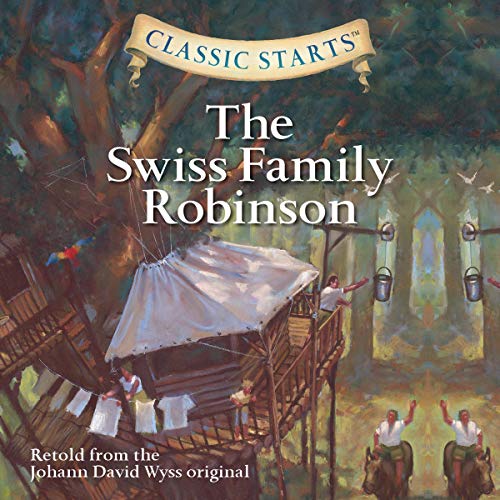
[The Threat of the Serpent: A Tale of Survival and Sacrifice]-[The Swiss Family Robinson - Part 15]
📋 Summary
The Threat of the Serpent: A Tale of Survival and Sacrifice
Playful Beginnings and the Looming Shadow
The narrative begins with a lighthearted domestic scene, as the brothers Fritz and Ernest construct a "basket chair" to be pulled by their animals, Storm and Grumble. This period of joy is described as "short-lived" when a sudden, ominous discovery disrupts their peace. Fritz alerts the family to something "strange and terrible" rising in the distance. Through a telescope, the father identifies the threat as a "giant snake of some kind," specifically a "boa constrictor" estimated to be "more than 30 feet long."
The Siege and the Peril of the Marsh
The serpent's arrival forces the family into a state of confinement. As the beast approaches, "lifting up its massive head almost twenty feet in the air," the family is compelled to retreat. The father wisely notes, "We must find a way to fight it away from here," opting against an immediate confrontation near their home. The tension escalates as the snake glides past their cave into the "marsh." The family remains "trapped," unable to leave their home while the monster lurks nearby, evidenced by the "ducks and geese reacting in fear" and eventually fleeing to "Shark Island."
The Sacrifice of the Donkey
The resolution of the crisis comes through a tragic sacrifice. When the family is forced to let their animals graze, their donkey wanders too close to the marsh. The boa, "reared up, its tongue flicking, jaws wide," lunges at the creature. The father restrains his sons from firing immediately, waiting for the strategic moment when the snake is "almost asleep by the side of the river, bloated" from its meal. This patience proves vital, allowing the family to approach the predator without the immediate danger of an active, hungry beast.
Confrontation and Commemoration
The final assault is swift and decisive. The family members, "scared and excited," fire upon the monster's head until its "eyes went dead." Following the victory, the narrative shifts from survival to education and remembrance. The boys prepare the specimen for their "museum," using "shiny beach stones" to reconstruct its terrifying appearance.
Beyond the physical labor, the family engages in a moment of emotional reflection. Ernest composes a poem to honor "poor Grizzle," the donkey who "gave his life for us." The poem serves as a touching tribute:
"Beneath this stone, poor Grizzle's bones are laid. / A faithful friend he was, and loved by all."
This act of memorializing the donkey on a "flat stone" underscores the family's deep connection to their animals and their collective relief at having survived the encounter with the serpent. The story concludes with the snake preserved as a testament to their harrowing experience, effectively transforming a source of terror into a tool for study and a reminder of their resilience.

Deep Learning with ListenLeap


