
[The Evolution of the Treehouse and Preparing for the Winter Struggle]-[The Swiss Family Robinson - Part 11]
📋 Summary
Architectural Innovations and Domestic Expansion
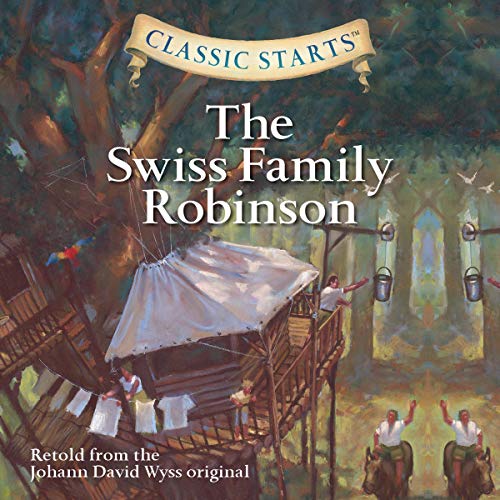
The chapter begins with a practical challenge: improving access to the family's treehouse. The narrator recounts the ingenious process of transforming a hollow tree trunk into a sophisticated living space. After dealing with a dangerous swarm of bees by using "hot coals" and "hollowed bamboo" to smoke them out, the family successfully carved a "full door" using hinges salvaged from their ship. This led to the construction of an interior staircase, complete with a railing, turning the tree trunk into a multi-level home. This period of expansion also saw the family mastering their environment; they "trained our buffalo to till our fields" and tamed a wild jackal, demonstrating their growing self-sufficiency.
The Mystery of the Roaring Beast
The tranquility of their work was interrupted by a "very loud roaring," which caused significant alarm. Fearing a "lion," "gorilla," or "tiger," the family retreated to their house to arm themselves. Fritz and the narrator ventured into the woods, expecting to encounter a "monster beyond our understanding." However, the tension dissolved into laughter when they discovered the source of the noise was simply their own donkey accompanied by a "wild donkey." The narrator describes the grueling process of taming the new animal, noting that he "had to jump on its back and ride it" until it was sufficiently calmed.
Resourcefulness and the Promise of New Clothes
The family’s survival strategy relied heavily on their ability to identify and utilize natural resources. The discovery of "grouse" eggs, which were kept warm by the wife until they "hatched," added to their growing flock of over 40 chickens. A pivotal moment occurred when the father identified that the "thick grass" Ernest had been cutting for Franz’s pretend sword fights was actually "flax." This discovery was met with immense joy, as it provided the raw material to "spin this flax into yarn" and eventually produce "new clothes," a vital necessity for their long-term survival.
Surviving the "Prisoners of the Winter"
As the seasons shifted, the family engaged in a frantic race against time. They worked "extra hard" to build "stables," a "dairy kitchen," and a "dining hall" within their tree structure, while harvesting every available food source, including "potatoes, coconuts, acorns, and sugar cane." When the "fierce" winter rains finally arrived, the family found themselves "prisoners of the winter." Life inside the treehouse became difficult; the air was thick with the "smell of the animals" and smoke, and the weather was "icy cold." To adapt, the wife used "rubber" to create "waterproof suits" for the family. The chapter concludes with a portrait of resilience, as the family passed the long, gloomy days by writing in journals, sewing, sketching, and teaching little Franz to read, waiting for the harsh winter to pass.

Deep Learning with ListenLeap


