
[Exploration and Survival: Life in New Switzerland]-[The Swiss Family Robinson - Part 06]
📋 Summary
Establishing a New Life in New Switzerland
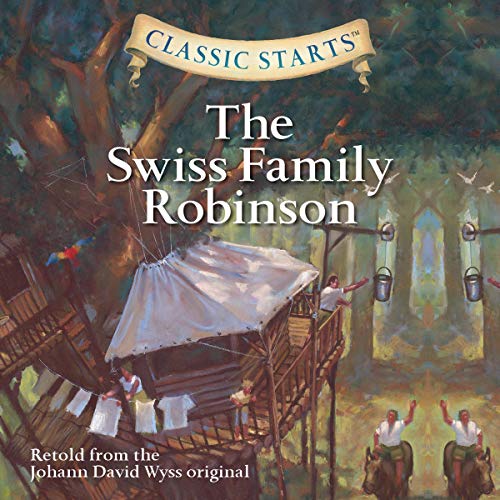
In this chapter, the family transitions from mere survival to establishing a sense of identity and permanence on their island. Following a restful Sunday, the father takes the initiative to craft bows and arrows for his sons, fostering both their skills and their excitement for island life. This period is marked by the intentional act of naming their surroundings—a psychological step toward ownership. By designating locations like "Safety Bay," "Tent Home," "Shark Island," "Flamingo Marsh," and their treehouse dwelling, "Falconhurst," the family transforms the wilderness into a home they call "New Switzerland."
The Bounty of Nature and Practical Skills
As the family explores, they discover the island’s abundant resources. Ernest’s discovery of a vast "field of potatoes" ensures food security, alleviating the fear of starvation. The father emphasizes the importance of practical knowledge, teaching the boys how to utilize "carotid plants" for rope-making and demonstrating how to generate fire by striking plant pits with a rock. These lessons are not merely educational; they are vital for the family's autonomy. Even when faced with unfamiliar flora like "Indian figs," the boys learn to navigate the challenges of the environment, such as the "hard work" of dealing with prickles to access the fruit inside.
Responsibility and Resource Management
As the narrative progresses, the focus shifts to long-term sustainability. The mother wisely suggests building traps to capture rather than kill birds, ensuring a steady food supply for the future. This emphasis on resource management is echoed in the father and Ernest’s efforts to construct a "driftwood sled," which serves as a vital tool for transporting supplies between their various camps. The father’s pride in his sons grows as he observes them taking on more responsibility. A poignant moment occurs when Ernest demonstrates foresight by removing a "beam of the bridge" to prevent the livestock from wandering off, proving his capacity for logical planning.
Unexpected Discoveries and Family Dynamics
Life on the island is full of surprises. Ernest’s successful fishing trip yields a "giant of a fish"—a fifteen-pound salmon—which brings great joy to the family. Furthermore, the encounter with a "giant beast" that the father identifies as a "kangaroo" highlights the exotic nature of their new home. This discovery is a source of both pride and mild sibling rivalry, as Fritz expresses jealousy over Ernest’s hunting luck. The father deftly manages this by validating Fritz’s contributions to the family’s well-being while promising him future opportunities for adventure.
A Strange and Satisfying Conclusion
The chapter concludes with a reflection on the family's transformation. Seeing the boys dressed in clothes salvaged from the shipwreck, looking like "little pirates," underscores how much they have adapted to their new reality. The "delicious and strange meal" of "potatoes, salmon, and kangaroos" serves as a symbol of their resilience. It is a feast that the father admits he "never would have imagined" back in their original home in Switzerland, signifying that while they have lost their past life, they have successfully forged a new, capable, and united future in the wild.
Deep Learning with ListenLeap


