
[A Home Up High: Establishing a New Life in the Treetops]-[The Swiss Family Robinson - Part 05]
📋 Summary
A Home Up High: Establishing a New Life in the Treetops
The Vision of a Tree Palace
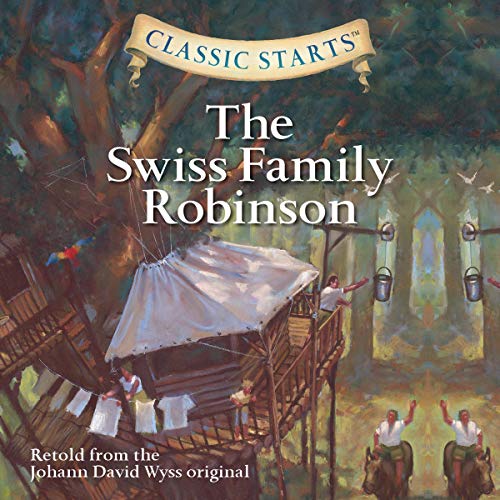
Following the family's initial survival efforts, the narrator and his wife conceive a bold plan to move their living quarters from the ground to the safety of the canopy. After witnessing "amazing birds" living among "giant trees," the narrator proposes, "What if we could build a house in these giants?" This innovative idea is driven by the urgent need to protect the family from local threats, specifically "jackals." By building a "staircase and a nice floor," the family aims to create a sanctuary where they can be "safe at night," effectively living "like birds" to ensure their security.
Infrastructure and Resource Acquisition
To establish this new life, the family undertakes significant engineering projects. The narrator emphasizes that they must "build a bridge across our river" to facilitate movement and logistics. During a return trip to the wrecked ship to salvage materials, the sons Fritz and Ernest discover the "monster" shark that Fritz had previously shot, noting its "rows of shining, terrible teeth." This expedition proves highly successful, as the island is found to be "full of boards and beams from the wreck," which are deemed "perfect for our bridge." Back at the camp, the narrator utilizes a "pulley from a tree" to manage heavy wooden beams, allowing the children to eventually "danced across the river with joy" once the construction is complete.
Relocation and Integration
With the foundation laid, the family begins the arduous task of relocating their world. The narrator issues a stern warning: "even though we are moving to the trees, we are not safe and we still need to be careful." The migration involves moving all their livestock, including chickens, ducks, geese, and the donkey. Upon reaching the site of their future home, the family integrates into the environment; Franz discovers trees "filled with wild figs," which are used to feed the family’s pet monkey, Nips. They also capture a "live flamingo" to add to their collection of animals, showcasing their growing mastery over the local ecosystem.
Constructing the Treetop Sanctuary
To build their elevated dwelling, the family seeks out "bamboo to build platforms," valuing its strength and resistance to rain. They decide to settle "thirty feet off the tree," constructing a ladder as the primary means of access. The process involves "hauling up all that we could" to create "makeshift hammocks" for initial sleeping arrangements. Through persistent effort, they refine the structure by "cutting branches out of the way" and constructing walls using "planks and sails." The narrative concludes with a sense of triumph; as they "pulled up our ladder that night," the family experiences a profound sense of relief, finally feeling "safe and secure" high among the branches, united in their new home.

Deep Learning with ListenLeap


