Hey listeners, Jasmine Morris here.
This week we're bringing you an episode from one of our favorite podcasts, The Longest Shortest Time.
Hilary Frank started the show in 2010 after experiencing a traumatic childbirth.
She wanted to connect with other people about the struggles of becoming a parent.
The show took off and grew to include family stories of every kind, like an episode where W.
Kamau Bell asks his mom about her sex life, or a gay couple who became parents overnight.
Hillary told stories like these for a decade and then put the project to bed because even great podcasts sometimes need an app.
But now, after five years, Hillary is bringing the longest, shortest time back with a new focus, reproductive health.
So much is changing right now with birth control, how babies are made, and how we understand consent.
And in this episode, Hillary tells a personal story about why these things have been on her mind and feeling urgent now that her kid is a teenager.
Here's Hillary. To give you the full context of this story, I need to back up.
Way back to 2010, so 15 years ago.
It was January, the snowiest winter in Philadelphia history.
I was pregnant. So big, I couldn't see my feet while standing.
My daughter was due in just a few weeks, and my husband and I were at the movies.
We saw An Education.
Have you seen it? It's the one where Carey Mulligan plays a cellist, a teenage cellist, and she's seduced by a guy in his 30s, played by Peter Sarsgaard.
In the movie, their names are Jenny and David.
It's 1961. David's charming, sophisticated, drives a cool car that happens to fit a cello.
He convinces Jenny's parents to let him take her to Paris.
While they're there, he proposes.
She says yes. Drops out of high school to be with him.
Spoiler alert, he's already married.
When Jenny figures it out, David disappears, ghosts her.
She's devastated. Now, I'm not usually one to cry at the movies, or I wasn't.
But at this movie, I wept.
I ugly cried. Or silently ugly cried.
I desperately didn't want anyone to hear me.
When the movie ended, I was still crying.
Even after we left the theater, I waddled up the sidewalk, trying to avoid icy patches, tears streaming down my face.
My husband was like, what is wrong?
I pointed at my belly.
People are going to hurt our kid, I said.
She's going to get hurt.
And we won't be able to stop it.
It was hard in the moment to articulate what exactly I found so upsetting.
I wasn't worried specifically that one day my daughter would become a teenager and get her heart broken by a man twice her age.
I was worried about her being approached by the man in the first place, by any man who sees her and at first glance decides he's entitled to her, whether or not it's legal, whether or not she wants it.
my kid is 14 now almost 15 just a year younger than Jenny was in an education when David spotted her in the rain with her cello and offered her a ride and while my daughter has never been approached by a lecherous cello enthusiast she has of course experienced male attention and today I'm going to tell you
about the first time I really noticed it where I noticed it in way that brought back the visceral fear I had in the movie theater when my kid was still living in my belly.
We'll also hear from that kid.
Does she think this is as big a deal as I do?
Stay tuned. We're gonna find out.
Okay, fast forward 13 years from my Carrie Mulligan moment.
It's 2023, and my daughter Sasha is at a bat mitzvah.
The bat mitzvah girl is a camp friend, lives in a different state from us, more than an hour away.
The party is five hours long, so my husband and I drive to a nearby town for dinner.
After dinner, there's still a lot of time to kill.
So we head back to the party venue, a big Mexican restaurant with an upstairs and a downstairs.
The bat mitzvah is downstairs in the basement.
Upstairs is a regular restaurant open to the public.
Jonathan and I decide to hang out there, grab a drink at the bar.
Now, there's no special event happening upstairs, but the place is poppin'.
There's a DJ, a disco ball, dancing.
Drinks are flowing.
People are chowing down on guac and chips, tacos, fajitas, and, of course, the restaurant's signature dessert, a giant tuft of pink cotton candy.
Over to my right at the bar, three women are bopping to the music.
They're facing each other, kind of in a circle, Sipping drinks, laughing.
And then a guy shows up.
Starts dancing at the edge of their circle, hovering.
They shoot each other looks.
Their circle tightens.
The guy tries to talk to the women, but they act like they can't hear him.
He offers to buy one of them a drink.
She shakes her head no.
He offers to buy one of her friends a drink.
This one accepts, but only out of politeness.
Once she's got the drink, she turns back to her friends.
Jonathan leans over to me from his barstool.
Have you seen this guy, he says?
He can't take a hint.
Eventually, the guy does take the hint.
With these women, at least.
He goes and tries his luck with another woman.
Then another. And another.
Woman after woman. Reminder, the Scarlet Letter is about a woman who has an affair with a Puritan minister.
He's still at it. And is forced to wear a big red A on her chest.
What do we do as he gets more desperate?
A, being for adulterer.
We'll never find out.
It's time to get the kid.
12 - and 13 -year -olds start streaming up the stairs.
They're carrying goodie bags stuffed with bat mitzvah swag, flip -flops, plaid pajama bottoms, a hoodie with the bat mitzvah girl's name on it.
Then Sasha appears.
She's easy to spot.
hair down to her armpits, the tips dyed blue.
Like most of the other girls, she's in all black.
But instead of a mini dress, she's wearing pants and a blazer that she borrowed from me because she doesn't like dresses.
She looks so cool, so grown up.
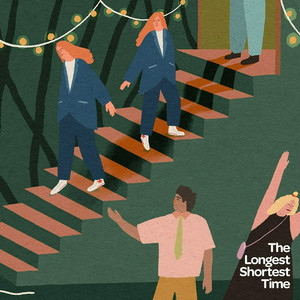
Little do I know, she's a lot more grown up climbing this staircase than she was on her way down.
In the car, I expected Sasha to be beat, maybe fall asleep.
But she was wired, and she only wanted to talk about one thing, or one person.
A boy. She didn't know this boy.
She didn't know most people at the party, just a handful of camp friends.
She spent the night hanging out with them at the camp friends table.
so it was a surprise she said when this random boy came and sat down next to her it was extra surprising when he told her she was pretty Sasha had never had a boy tell her she was pretty and it seemed weird she ignored him kept talking to her camp friends he told her again that she was pretty and at this point
she was starting to get a little freaked out so she turned her back to him He asked for her name.
She didn't give it to him.
As Sasha was telling me this, I could feel my face getting hot, my body filling with rage.
I tried to suppress it.
I didn't want to transfer my feelings to Sasha.
I didn't want to scare her.
But I did want her to know I could relate to what she was saying, that the weird thing she was describing was familiar to me.
So I told her about a realization I had recently.
I'd been out at the grocery store and heard the song No by Meghan Trainor.
You know, the one where she goes, my name is no, my sign is no, my number is no.
When I heard it, I was like, man, pop stars did not talk like this when I was growing up.
I could have used a song like this.
As a teen, I had a talent I was really proud of, coming up with fake names on the spot.
so that when some rando asked me for my name, I could convincingly say, I'm Darcy.
Melanie. Tabitha. Sarah.
It's a game I'd play with my friends.
Go on, ask me what my name is.
And it was fun, I guess.
But in retrospect, I wish I'd saved myself the energy and just said, No.
My name is No. I don't think I realized it was an option.
I shared all of this with Sasha, and she was like, wait, that's what the song is about?
I sang that song all the time when I was little.
I had no idea. I was like, yep.
And then I wish she could go back to not knowing what the song was about.
But I think the message did sink in when she was younger.
Because, unlike me, she did say her name was No or implied it by giving this boy the silent treatment.
This did not dissuade the boy.
He just dug in deeper.
I'm talking to you, he said.
Look at me. Look at me.
This is the line that really got me.
Who was this kid? and what made him think that my kid owed him anything?
Why did he feel entitled to her gaze, to her name?
Why didn't he give up when it was clear she wasn't interested?
Why didn't he slink off in embarrassment?
Sasha had an even more basic question.
Why on earth would he act this way?
Why would a complete stranger tell her she was pretty?
On an average day, Sasha probably asks me at least five questions that I can't possibly answer.
But this question? This one I could answer.
He probably likes you, I said.
This made absolutely no sense to her.
How could he like me, she said.
He doesn't know me.
He doesn't even know my name.
Jonathan jumped in, explained that sometimes people have crushes on people they don't know.
Yeah, I said, like how I have a crush on Steph Curry.
To which Sasha said, Dad, are you okay with that?
To which Jonathan replied, Sure, everyone's got a crush on Steph Curry.
Even I've got a crush on Steph Curry.
Which, of course, just made things worse.
Sasha didn't want to hear about crushes on Steph Curry or anyone's crushes on anyone.
She insisted there was no way the random boy could have had a crush on her.
Once he finally did go away, she had discussed it with one of her camp friends.
They decided the only logical explanation for this kid's behavior was that he did it on a dare.
She sounded so confident.
Mystery solved. He did it on a dare.
But we had barely passed the next exit on the highway before she reopened the case.
Why do you think he did it?
Why was he acting so strange?
Was it because she was dressed differently from the other girls?
Because her hair was blue?
She just could not wrap her head around the truth.
That this kid wanted something from her.
And probably more than just her name.
For the rest of that car ride, I listened to her.
Agreed when she said the kid should have respected her personal space.
Told her I was proud of her for standing her ground.
But inside, I was on fire.
Because this random boy at the Bat Mitzvah, this boy in the basement of the Mexican restaurant, at 12 or 13 years old, he's relatively harmless.
Relatively. But one day, one day he is going to climb that staircase and become the guy upstairs at the bar.
It'll happen in a flash.
Sometime in the next decade, that 13 -year -old will be a grown man hitting on women, buying them drinks, trying to dance his way into their circle.
Just to have his way with one of them.
Any of them. Whether they want it or not.
This transformation feels inevitable.
But is it really? That's what I'll talk about with Sasha when we come back.
Okay, so I just want to do a sound check here.
Tell me what you had for breakfast.
I don't even know what you had.
I had blintzes. I made some blintzes.
How did you make them?
On the stove with a pan and some butter and they were frozen.
so um tell me who you are i'm sasha i'm your daughter and how old are you i'm 14 years old and oh my god 15 next month i wanted to get sasha's take on downstairs boy and upstairs man so i had her come to the attic where i record we sat together on the rug and i ran through the whole thing with her.
Shared my theory on how the guy upstairs was treating women the same way the boy was treating her downstairs.
Yeah, I agree. Yeah, so what do you think about that?
I don't know. What do you mean?
Like, what do you think about the fact that those two things were happening at the same time on different levels in the same building with, like, a kid and a grown man?
I mean, it's fairly common.
Now that I'm older, I know that.
How do you know that?
I don't know. It's just talked about a lot in society.
It is talked about a lot in society, especially since Me Too blew up.
So if it's talked about so much, shouldn't we be able to do something about it?
Shouldn't we be able to interrupt that kid on the staircase, stop him from becoming the guy upstairs?
A lot of schools have a system for this sort of interrupting.
It's called sex ed.
Sasha and her classmates were supposed to be getting sex ed in health classes ever since grade school.
It's a state requirement in New Jersey.
The curriculum isn't required to be comprehensive, but it must be medically accurate, and it must include instruction on a few crucial topics, including consent.
Instead, here's what Sasha remembers being taught in health class in sixth grade.
This one teacher was very fixated on teaching us about drugs.
He taught us what jungle juice was when we were 11 and 12 years old.
He told us that um you mix alcohol this alcohol I think it was called Everclear with like different juices and other things and you put it into a uh bucket or container of some sort and that yeah we had a lesson on that You had a lesson on how to do it?
I guess so. I didn't really think about it too much then.
What did it seem like the point of that was?
I think his goal was to educate us not to over -consume alcohol and to teach us that it can be dangerous.
by telling you exactly what the recipe was?
I guess so. I don't know.
Here's what Sasha remembers from health in seventh grade.
There was a video on a football player who got a concussion, and that was basically to, like, scare us away from getting concussions.
Was it to scare you away from playing football?
Maybe, or, I don't know, just to spread more awareness about what not being safe can do to a person's body.
Notice, none of this has anything to do with sex ed.
It's not that Sasha forgot those lessons.
Sex ed wasn't being taught.
What about eighth grade?
in eighth grade well, I don't think we were going to learn any sex ed and then and then I made a stink at back to school night the health teacher gave an overview of what he was planning to do in class mostly it sounded like free periods these kids were lucky, he said they had health class first quarter
so they could get it over with He asked if we had any questions.
I raised my hand, asked what he was planning to teach.
He said they'd cover the circulatory system, respiratory system, basic anatomy.
I asked a follow -up.
Was he going to cover sex ed?
I only teach it if they seem mature enough, he said.
And how does he determine if they're mature enough?
If they're giggling, he said.
If they're giggling, I don't teach it.
I tried to imagine a room full of eighth graders not giggling over sex ed.
Giggling, it seemed to me, was not a good enough reason to break New Jersey law.
I went to the vice principal, made my case.
And to my surprise, he wholeheartedly agreed.
He was like, if we're deciding what to teach based on giggling, we're in trouble.
Middle schoolers giggle over math.
So the vice principal talked to the teacher, talked to the entire P .E.
staff. Turns out, there's a valid reason for why they hadn't been teaching sex ed.
They had no training.
But the school had no budget to get them training.
In the meantime, the vice principal assured me that Sasha's teacher would do what he could.
A few weeks later, Sasha had something to report.
we learned the different parts about the female and male bodies and the class hated it how do you know the class hated it everyone just was laughing and they were like oh no not this do you think because they were giggling he was right to not want to teach them no of course not if people are uncomfortable
with the topic, it doesn't mean you shouldn't teach it to them.
If people were laughing when kindergarten teachers or pre -K teachers were teaching children just how to interact with people or even about race or anything, any differences, and then people just didn't teach the topic because of that, then that would mean people would hate each other and not know how
to interact with each other.
It would be a much more dangerous place on Earth than it is right now.
Was I glad Sasha's class learned about the different parts on different bodies?
Yes. Did I think it would make the world a less dangerous place?
Maybe. But you know what I thought would make it even less dangerous?
If they learned about consent.
But the class came and went and by the end of the quarter, there was still no mention of consent.
I went back to the vice principal and urged him to comply with the law.
These kids are about to enter high school, I said.
Some of them are already sexually active.
Many more are about to be.
Shouldn't we give them the tools to help keep those encounters safe and healthy?
And in the spring, a guidance counselor at the school, a guy who does have sex ed training, gave the eighth graders a special presentation.
so um we were sitting there and we were at like round tables in our school library and he um the counselor told us about consent he told us about an incident that had happened regarding not respecting consent in our district and he told us about how common it was for people, but more often girls, to
be sexually assaulted in their youth.
And I don't exactly know why he did this, but he went up to one or two of the tables and said something like, two out of all of you girls will be sexually assaulted one day.
How did that make you feel?
I think he was trying to scare us, and maybe that is a statistic, but I don't think that's a way to introduce it.
Do you think it also scared the boys into not wanting to do it?
Maybe. It sounds like he was telling you, you should try not to be sexually assaulted but no matter what you do it's going to happen to like some of you did he also say like and don't be a sexual assaulter I don't exactly remember because it was a few months ago but I think so do you think there are things
that kids could learn when they're like much younger that would help with this kind of stuff?
Is there something that the boy downstairs at the bat mitzvah could have learned before having had that interaction with you?
Tell kids when they're little if you're trying to tell something to someone, have a conversation with someone, but they're not reciprocating, they don't want they seem like they don't want to be involved in the conversation then you shouldn't keep pestering them.
Sasha's in ninth grade now, a freshman in high school.
There's a sex ed curriculum the P .E.
teachers are supposed to follow, which includes lessons on consent.
But Sasha's friends who had health last quarter say they never got any of that.
A teacher even explicitly told Sasha they wouldn't be teaching it this quarter either.
So I complained. The vice principal who oversees the P .E.
department seemed upset about it, too.
So he told me he'd remind the teacher of his responsibilities.
And last week, the health teacher did spend a couple days on sex ed, one on STIs, the other on explaining consent laws.
And knowing the laws is good, but I really hope that at some point, someone gives these kids the message that Sasha wants them to hear.
Don't pester people.
Even better, don't be a predator.
her. In a minute, Sasha talks about the pestering she's experienced, and what she says throws me for a loop.
Sasha's encounter with the boy at the Bat Mitzvah, it felt like such a turning point, like a sudden loss of innocence.
Earlier in the show, I gave you my description of that night.
Here's hers. I don't exactly remember.
Do you remember the boy?
No. I mean, I remember vaguely, but nothing more than just that.
Do you even remember what he looked like?
No. No? Nothing? The incident had only happened a year and a half ago.
At the time, she was outraged, shaken.
But clearly those feelings had passed.
And yet. About a week after we recorded this conversation, Sasha asked me, How do you know when a man is okay to talk to?
I wasn't sure what she meant.
Like that time when she was climbing trees with her friend at the park and a man offered to help them up.
He didn't seem safe, she said.
Yep, I said. Good call.
And then there was the guy who was watching her girls running club, trying to chat them up while they did laps.
Everyone had to run together in a group after that.
And what about the thing that happened to her friend, The one who was heading back to her car from the beach with her parents when a guy on a motorcycle revved his engine at her.
Or her other friend, who was psyched about her new haircut with bangs, but then she went out for a walk and some guy grabbed her ass.
Sasha might not remember the boy downstairs at the bat mitzvah, specifically what he looked like or what he said.
But she's met him in dozens of boys and men since.
Their behavior is so familiar to her that it's become unremarkable.
She's internalized the message that growing up, becoming a woman means living as a moving target for boys who climb the staircase without anyone redirecting them before they reach the top.
So what do you think you're going to do now if you have a situation like that where somebody comes up to you and is telling you you're pretty and you're not interested?
What do you think you'll do?
I think ignoring someone is not the most effective strategy, maybe at first.
But if they persist, then maybe saying, being very direct and saying, hey, I'm not interested.
I'm not interested.
I'm flattered. But no, thank you.
My name is No. I love that Sasha feels capable of asserting herself like that.
I sure didn't at her age.
but it also kind of breaks my heart to hear her include the words flattered and thank you.
This is a start, though.
The good news is there are some great sex educators doing incredible work around consent.
We've got a short list of them in our show notes.
This episode was produced by me, Hillary Frank.
Our technical director is Michael Raphael.
Music composed by Alison Layton Brown and performed by HotMoms .gov.
the gorgeous artwork for today's episode is by lindsey stripling make sure to follow the longest shortest time on apple or spotify or wherever you're listening right now and if you want to suggest story ideas or be a part of our community and generally support our work join us at lst plus it's easy just go to longestshortesttime .com and click join the club Support
for this podcast comes from the Corporation for Public Broadcasting, a private corporation funded by the American people.