NPR.
2025 will be remembered as the year Warren Buffett finally stepped away as CEO of Berkshire Hathaway.
Buffett announced his plans to retire at his shareholder meeting in the spring of 2025.
And when he did announce it, 20,000 people rose to their feet applauding.
And Buffett responded with one of his self-deprecating jokes.
The enthusiasm shown by that response could be interpreted in two ways, but I'll take a surprise.
Okay, we wanted to take a look back at Buffett's career today and tomorrow.
And not just because he got insanely rich.
Around $150 billion.
Yes, but because he changed the way people thought about investing and how public companies operate.
This is The Indicator from Planet Money.
I'm Waylon Wong.
And my co-host today is Robert Smith, longtime Planet Money host and now host of the new podcast Business History.
It's a show about the history of business.
Get it?
You probably know Warren Buffett as a grandfatherly figure spouting wisdom, investing in classic companies like Coca-Cola and Dairy Queen.
But when Warren Buffett was a young man, he was a shark.
Buffett spotted a critical flaw in the Support for NPR and the following message come from Edward Jones
What does it mean to live a rich life?
It means brave first leaps, tearful goodbyes, and everything in between.
With over 100 years of experience navigating the ups and downs of the market and of life, your Edward Jones financial advisor will be there to help you move ahead with confidence.
Because, with all you've done to find your rich, they'll do all they can to help you keep enjoying it.
Edward Jones, member SIPC.
This message comes from Charles Schwab.
When it comes to managing your wealth.
Schwab gives you more choices like full service wealth management and advice when you need it.
You can also invest on your own and trade on Thinkorswim.
Visit Schwab.com to learn more.
This message comes from Capital One with the Capital One Saver Card.
Earn unlimited 3% cash back on dining and entertainment.
Capital One.
What's in your wallet?
Terms apply.
Details at CapitalOne.com.
To understand how young Warren Buffett cracked the code of the stock market, you have to put old Warren Buffett out of your mind.
Yeah, he's not the folksy Oracle of Omaha just yet.
No, picture Warren Buffett, weird, awkward kid.
He was born in 1930, Omaha, Nebraska.
This was after the great stock market crash at the beginning of the Depression.
People were scared.
And his biographer, Alice Schroeder, says that turned young Warren into something of an obsessive.
So he would count things.
He would sell packs of chewing gum, newspapers.
And it was all about accumulating money which he kept like a dragon with a horde, you know, in his closet.
Schroeder spent five years interviewing Buffett for her biography of him called The Snowball.
Schroeder details how young Warren would collect bottle caps and then obsessively order them, sort them.
This is like Bert from Bert and Ernie.
He has a bottle cap collection.
Exactly the same.
What could be more exciting than a parade or a circus or a birthday party, huh, Bert?
My bottle cap collection.
And this is the same focus we would see later in his life Buffett's, not Bert's when it came to collecting companies.
Absolutely.
But there was another side to Warren Buffett in his youth.
He was genuinely curious about how things worked.
When he was in business school, he had heard that one of his professors was on the board of a company called the Government Employees Insurance Company.
Soon to be known as GEICO.
And this is way before the gecko.
Young Warren hears about this company and wonders, hey, how does an insurance company work?
So, at 20 years old, he gets on a train from New York to D.C. and he shows up at the Geico offices.
As Buffett later tells it in a corporate video, it was a Saturday and the doors were locked.
But I pounded on the door and finally a janitor let me in and directed me to Davey, the only other fellow working that day.
Davey is Lorimer Davidson, an executive at the company.
Davey had no reason to talk with me.
And he then spent four or so hours answering unending questions about the insurance industry in general and Geico specifically.
And Buffett would famously buy that company more than 40 years later.
More than that, the biographer Alice Schroeder says that he learned from that very first meeting the hidden superpower of insurance companies.
They collect all this cash up front and don't have to pay out insurance claims until maybe years later, maybe never.
The owner of an insurance company gets free money for a while.
He applied that to lots of kinds of businesses throughout his career.
It was a way of thinking that became embedded in him.
So now we have an obsessive collector who now collects information about companies.
And this was the magic combination.
I guess it helps to remember that in the 1950s and 1960s, when Buffett started in investing, it was really hard to get information about the stock market.
Annual reports were on paper and you had to track them down.
Imagine that.
And young Warren was willing to just show up at a company's headquarters to find out that information.
So Warren eventually goes to work for this classic investor, Benjamin Graham, who knew the proper use of this hidden knowledge that Warren was collecting.
Graham was the father of something called value investing, and his method was to locate cheap companies that he called you're going to love this Waylon cigar butts.
No, not cigarette butts, cigar butts.
Okay, so I guess at that time, people would throw cigar butts into the gutter.
Yeah, it was, I guess, a depression thing, right?
Buffett talked about this during a shareholder meeting.
It was a cigar butt approach to investing, where we would look around for something with a free puff left in it.
You know, it was soggy and kind of disgusting and everything, but it was free.
A cigar butt company.
This metaphor is a company that everyone is ignoring, with a very low stock price that was secretly inside worth a lot of money.
That's the tobacco, right?
This was the flaw in the market that Buffett spotted.
After the Great Depression, a lot of companies would keep large stashes of investments and cash on hand, you know, just in case something went wrong again.
Buffett, the collector, sniffed out these companies.
When he would find these, he wouldn't tell anybody.
He would just start buying their stock.
Until he held enough shares of the company to waltz into the CEO's office and say you should really give that cash back to your shareholders.
You should give it to me is actually what he was saying.
Because he was a shareholder, right?
It was a short-term strategy, but it worked.
Buy the cigar butt, get some value out of it, and then sell the stock.
But Warren Buffett would eventually become famous for long-term investing.
There was a particular turning point in the mid-1960s.
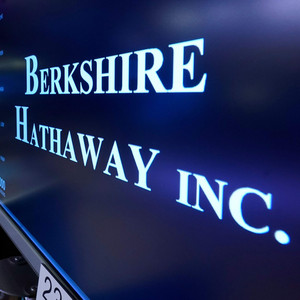
He found a cigar butt company called Berkshire Hathaway, which was a failing textile mill at the time.
Young Warren's plan was to buy some stock in the company and then sell it quickly.
But, as Alice Schroeder writes, Buffett goes to talk to the CEO, a guy named Seabury Stanton, and his plan changed.
Seabury Stanton was a very arrogant person, and yet he was not a good businessman.
And in that sense, he was the opposite of Buffett.
And Buffett immediately decided to wrest control of the entire company from Seabury Stanton based on this personal dislike.
It's not that he wanted a failing fabric manufacturer.
He just didn't want Seabury Stanton to have it.
Correct.
And it became an obsession because he could go around and find shareholders and personally say please sell me your stock.
And they would do it.
And suddenly he owned an entire company, Berkshire Hathaway.
Warren Buffett would later say to his shareholders The original purchase of Berkshire was a terrible mistake.
And my mistake.
No one pushed me into it.
It was a mistake, Buffett says, because textile manufacturing was dying in the United States.
It would mostly go overseas eventually, and Buffett would have to sell off all the mills.
But he did keep the name.
Kept the name for 60 years now, maybe to remind him not to let personal grudges influence his investing decisions.
But Berkshire Hathaway, his biggest mistake would become his greatest triumph.
Now that he owned a whole company, he could use it as a shell to buy more companies.
No more just buying stock and threatening the CEO.
He was the CEO.
By the late 1960s, Warren Buffett is worth about $10 million.
And the amazing thing is, is that almost no one in the industry at this point knows his name.
Yeah, he's not famous and he isn't holding giant shareholder meetings.
He lives in a suburban house in Omaha Nebraska, far from the gaze of the Wall Street Journal and Fortune magazine.
And this, says Alice Schroeder, was part of the bigger plan.
He wanted to fly under the radar because he was looking for things that other people didn't understand, and he did.
Tomorrow on The Indicator, the world finds out about this Warren Buffett guy.
And he uses that fame to become a completely different kind of investor.
I will note that on Business History, we did about two hours on the life of Warren Buffett.
It's part of our series on great investors.
So also check that out, Business History.
It's all you can eat, Buffett.
This episode was produced by Cooper Katz McKim and engineered by Debbie Daughtry.
I found a lot of the quotes today on CNBC's fantastic Buffett Archive.
It was fact-checked by Sierra Juarez.
Kate Kincannon is our editor.
The Indicator is a production of NPR.
This message comes from NPR sponsor Rosetta Stone, an expert in language learning for 30 years.
Right now, NPR listeners can get Rosetta Stone's lifetime membership to 25 different languages for 50 percent off.
Learn more at Rosetta Stone dot com slash NPR.
This message comes from Mint Mobile.
At Mint Mobile, their favorite word is no.
No contracts, no monthly bills, no hidden fees.
Plans start at $15 a month.
Make the switch at mintmobile.com slash switch.
That's mintmobile.com slash switch.
Upfront payment of $45 for 3-month 5GB plan required.
Equivalent to $15 a month.
New customer offer for first 3 months only, then full price plan options available.
Taxes and fees extra.
See Mint Mobile for details.