
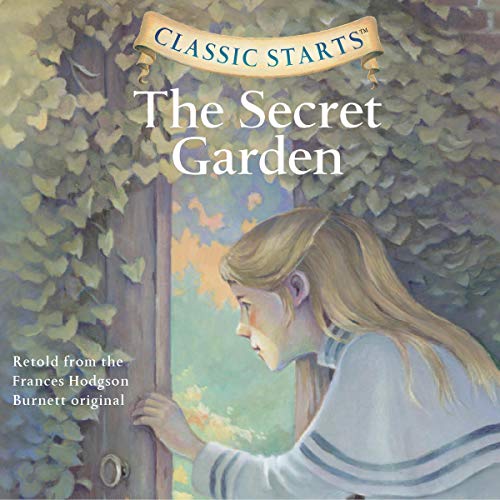
[The Awakening of the Secret Garden: Mary and Dickon's Connection]-[The Secret Garden - Part 11]
📋 Summary
The Transformation of Mary and the Secret Garden
In this chapter, Mary Lennox’s transformation from a sickly, isolated child to a vibrant participant in her environment is vividly illustrated through her relationship with the "secret garden." No longer the pale, "blocked crow" she was upon her arrival at Misselthwaite, Mary has become "wider awake," finding physical strength and a deep, "oddly stubborn" passion for the gardening work that consumes her days.
The Wisdom of Ben Weatherstaff
Mary’s bond with the gardener, Ben Weatherstaff, deepens as she begins to treat him with newfound respect rather than as a "mere servant." Ben, in turn, offers her a "gruff compliment," acknowledging that she is becoming a "credit to Misselthwaite." Their interactions provide a poignant look at the passage of time and the fragility of life. Ben shares his grief over a lost lady who loved her roses "like they were children," noting that without her, the garden has become "overgrown." When Mary asks how to determine if roses are alive, Ben offers the horticultural wisdom of looking for "little bumps on the twigs" after a "warm rain," though he remains suspicious of her curiosity, telling her that "girls shouldn't ask so many questions."
The Arrival of Dickon: A Child of the Moor
Mary’s world expands significantly when she encounters Dickon in the woods. Described as having "rust-colored hair" and "cheeks as red as poppies," Dickon possesses an ethereal, almost magical quality. He is a boy in harmony with nature, surrounded by a squirrel, a pheasant, and rabbits that behave as if attending a "concert." His connection to the wild is profound; he claims that after living on the moor so long, he feels like "a bird or a fox or a badger." He demonstrates an uncanny ability to communicate with the creatures, even engaging in a conversation with Ben Weatherstaff’s robin through a "twitter" that mirrors the bird's own song.
The Burden of the Secret
As their trust grows, Mary shares the tools Dickon brought—a spade, rake, fork, and hoe—and seeks his help. However, the weight of her secret becomes overwhelming. When Dickon asks where her garden is, Mary is initially overcome with anxiety, turning "red, then pale." She eventually confesses, "I've stolen a garden," fearing that if the secret were discovered, she might "die." Her vulnerability is palpable as she explains that she found the space "like the robin" and insists that "nobody can take it from me."
Entering the Sanctuary
Dickon, who is accustomed to keeping "animal secrets" to protect the wildlife on the moor, proves to be a trustworthy companion. He follows Mary to the hidden entrance, and upon stepping into the garden, his reaction confirms the magical nature of their discovery. He describes the space in a "curious whisper" as a "strange, pretty place," noting that it feels "like we're in a dream." This moment marks a turning point, as the garden is no longer a solitary refuge for Mary, but a shared sanctuary that they both hope to revive, ensuring that what was once left to die will finally live again.
Deep Learning with ListenLeap


