You're listening to Roundtable, I'm Steve Hatherly today with Lai Ming and Yohong Lin.
Coming up, have you ever wondered why things taste the way they taste?
Probably not, right?
We tend to just eat the things that we enjoy.
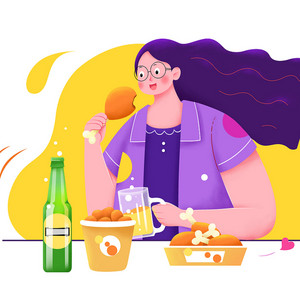
Perhaps you'd be surprised to know one of the reasons we do enjoy the things that we eat is also because of the shape and color.
There's lots going on behind in terms of the reason.
But why is AI getting involved now?
And after that, in our fast paced lives it's easy to forget the small things that make us happy and as a result, our brains can tend to focus on the negative.
If that's you, well firstly it's not your fault.
And secondly, we may have a way to change that.
Our podcast listeners, that's you.
You can find us at Roundtable China on Apple Podcast.
And please don't forget that we want to hear from you as well.
An email, yep that's pretty good, but a voice note is spectacular.
So you can send those our way with your thoughts on any of the issues that we discuss here on the show.
How do you do that, you ask?
Here's the answer. Roundtable podcast at qq .com, one more time that's roundtablepodcast at qq .com.
And now, did you ever think about the connection between the shape and color of foods and how that affects the way that we taste it?
If someone presented you a blue sausage in the shape of a rectangle, could you still enjoy it?
I know one person who couldn't.
How about if your cola was as clear as water, would it still taste the same?
I call it Sprite. This phenomenon that humans, that's not cola technically anymore then, is it?
This phenomenon that humans experience is known as cross -modal correspondence.
It's when your other sensory items, i .e.
auditory, olfactory, tactile, and visual, also show to be involved in the sense of taste.
There's been decades of research done on this topic.
But here we are in 2025, so we have to know how is AI getting involved?
There's lots to discuss here, but I guess we'll start with the blue rectangle sausage.
Do we have to? Not for you, huh?
No, no, please don't.
See, but here's the point though, if it's still a sausage and it still tastes the same as your cucumber, I've got cucumbers on my mind from our first discussion, our typical cucumber -shaped sausages with that darker brown or reddish color, if it still tastes the same, then why not?
Well, blue is questionable.
Number one, because here, I don't know, blue is associated with sudden stams when the food is going through the quarantine, you know.
Let me tell you this.
As a woman, I am always on a diet, or I always claim I'm on a diet.
But when I actually do it, one way of suppressing my urge to eat something is to go online, search for a certain type of short video.
And what the video does is to dial all of the food into green or blue or purple, and you see your favorite food in those colors makes you feel like they are going to poison you.
Interesting, and that's exactly what we're talking about today.
Cross -modal correspondence.
Lai Ming, those are big words.
Yeah, cross -modal, I think you explained it earlier.
I mean, it's a phenomenon that humans experience.
We often associate other sensory results with the one that we are experiencing.
For instance, we associate redness and redness with the taste of apple, we associate yellowness and elongated shape with bananas, and it's how we teach our kids to recognize stuff in the world.
Our brains are being programmed to perceive, recognize, and operate on that basis.
And if you change the premise, if you change the indexes, then our brains might get mixed results.
Yeah, and experimental evidence for this phenomenon.
They started this back in the 1970s with studies that suggested that red and pink hues are associated with sweetness, yellow or green with sourness, white with saltiness, and brown or black with bitterness.
These general patterns have now been replicated many, many, many times over using multiple experimental methods.
Yes, and actually a multi -national collaboration led by Xiao ...
Actually, Xiao An -Wuan at Tsinghua University in China found similar cross -model correspondence in Chinese, Indian, and Malaysian participants.
Similarly, they chose these five basic taste terms and also different colors in, well, actually certain colors and shapes so that these different colors and shapes would be associated with bitter, sour, and sweet taste.
So the results are quite similar, even though actually there is a tiny little point that based on different cultural background, people would have different understandings and different correlation links with these colors and shapes.
For example, white to Chinese people are not that salty.
So what's associated with the color white, then?
Is there any taste associated with that, do you think?
Sweet. Sweet because that's the color of the sugar.
Well, I don't think white ...
You're thinking yogurt now?
Yeah. So I don't think white is ...
Well, definitely it's not associated with bitter, well, with bitter or with salty for many Chinese people.
Right because here in China, we use soy sauce, so we use commonly associated brown or ...
Darker color. Yeah, with salty.
That was one of the interesting takeaways from that study is that cross -model correspondence is different depending on which culture you're talking about here.
But where did this begin with humans?
How did we come to make such associations?
Well, actually that's up for debate.
We have Carl Spence, is the head of the cross -model research laboratory at the University of Oxford.
And he said, well, the safest assumption is that we learn them all, and they could be thought of as kind of the internationalism of the ...
Internalization. Oh, thank you.
Because your brain sort of take the ...
Absorb the statistics that you go through throughout your life, and then it's set in your brain.
And in nature, fruits go from green when they're sour to redder and warmer hues, orange or red or pink when they are sweeter.
So that's how we get the association in our head.
So we see those from kind of the minute we're born.
We grow up seeing that in nature.
Conclusions. We absorb them.
We take them for granted.
Interesting. So therefore, that's how humans have come to make that connection.
So then what's AI's role in this?
Researchers are trying to find out if AI can replicate this or does replicate this?
Well, researchers at the University of Tokyo investigated whether a generative AI trained on human data would report the same associations across model respondents association we mentioned earlier.
And they asked the AI -powered Chatbot chat GPT to answer the same kinds of problems that had previously been given to human participants.
Interesting. Yeah. For instance, to what extent do you associate round shapes with sweet, sour, salty, bitter and umami tastes?
And please answer this question on a seven point from one to seven scale.
And the averaging the results across hundreds of chats in various languages, the researchers found that the AI did indeed reflect the patterns commonly found in human participants.
Though there were some differences between the versions of the AI they use.
So yeah, if it's trained based on human data, then more likely than not, the AI will respond and return with the same results.
So that was kind of predictable, then I guess, even though they got some different responses depending on which AI they were using.
So if that's the case, then what was the point of that?
Is there some sort of practical application for us to take away?
Well, if you well, it's generative AI.
So if we want them to write poems or literature, you don't expect to read about purple bananas, do you?
Because that would be off putting.
Yeah, that's one thing.
And at the same time, I think we're on the edge of learning everything about everything when it comes to artificial intelligence.
We want to know based on its way of growing and learning and getting better, what are some of the correlations that happened in a human brain could be also happening in the algorithm of artificial intelligence.
And if they can't really do a good job, maybe they can think more and more similar to human mind, which means that in the future, maybe for someone who is working in advertising or marketing, they can have the AI helping them to design the packaging or the logo of a certain food, which will sound even,
well, look, will look even tastier.
See, I'm already thinking sound because it's not only color and shape, isn't it?
If you're thinking about advertisement, it can be the jingle of an advertisement.
It can be anything.
They did another study where they wanted to know how much packaging played a role.
So what they did was they took dark, bitter chocolate, which I know Nyo Hong Lin loves very much.
And she learned that I do not like it very much.
She gave it to me as a gift.
But what they did was they took that dark, bitter chocolate and they wrapped it in a pink wrapper.
Now pink in certain cultures around the world is associated with...
Marshmallows. Why were you getting pink marshmallows?
Sweetness, right? Cotton candy, bubble gum, things like that.
And then they asked the people who ate that dark chocolate to report how bitter was it, how sweet was it?
And the people who ate the dark chocolate wrapped in pink wrappers reported that it was sweeter.
So visually, seeing that pink packaging made a difference to the flavor.
And I think that's what researchers are looking for from AI here in terms of cross -modal correspondence.
Yes. What they're getting now is feedback from data that we as humans have been doing research on since the 1970s.
But can it be predictive in the future?
And can it be used in business?
And actually, I have to say, human brains are much more easily manipulated than you could think.
That's the same conclusion I was drawing in preparation for this topic.
I mean, it's kind of sad to realize that how human beings are so easily programmable and suggestible by the things around us.
And then now we're in training the AI to recognize the same kind of cross -modal respondents that human brains might have.
We are giving the AI leverage to program us when they rise above us.
And I even have an example here that is, you know, some people are very picky when it comes to food.
Actually, a picky eater can only accept about 20 types of food in their daily, well, in their lifetime.
So the really picky ones.
So in order to effect or to persuade them to try new food, here is an experiment.
They selected five persons having them try new food, the kind of food that they have never tried before.
And guess what? If the food are put in red, white and blue bowls, apparently they would have different reaction when it comes to trying this new food.
Well, in this particular study, which is done in the UK, the food in the Red Bull are much less accepted because in England, the salty food are usually packaged with blue packages so that the ones in the blue bowls are much more liked.
You can even use color of different of these bowls or place to persuade a picky eater to try more food, easy to persuade.
I wonder if that works on kids too, who are really picky with their vegetables.
I couldn't find any research done on that.
Talking about cross -modal correspondence and the connection between colors and its influence on us, do you remember?
Now, you might not remember this.
This is back in 1992, 1993.
Do you remember Crystal Pepsi, Pepsi, the cola?
Well, they came out with a new product in the early 1990s called Crystal Pepsi.
And they launched it with this massive campaign.
They spent a lot of money on advertising, but Crystal Pepsi was clear and they thought it was going to be a billion dollar idea.
Their slogan was, you've never seen a taste like this.
Less than a year after it hit the airwaves commercially or hit the shelves within stores, it was pulled.
It was considered a massive, massive failure.
One of the biggest failures, according to Time magazine, of all time.
And one of the problems was, I mean, there was a lot of problems with this campaign.
They didn't have a clear target audience.
Branding was a problem.
They said it was healthier but couldn't indicate how it was healthier.
They made it more expensive.
So price strategy was off.
But yes, cross -modal correspondence, because it was clear.
And to the consumers, and everybody was excited to try this, right?
But to the consumers, Cola is not clear.
Pepsi was not clear.
And Pepsi didn't indicate why it was clear.
Not clearly enough to the consumer.
And that's why it failed so horribly.
Why would I spend money on something that tastes the same but looks different?
But that's the thing.
It wouldn't necessarily taste the same because people, when they look at Cola, they expect it to be brown.
But this was clear.
They didn't say why it was clear.
So I did a little bit more digging into that to find out exactly why it failed.
And that's what the Monash Business School Professor in Marketing, Kyle Murray, he said, even simple, superficial changes to food or coloring can be really off -putting to consumers.
And one of the mistakes they made there is that they didn't explain it.
So if a consumer looks at a product and it doesn't make sense to them, they're likely to have a failed product on their hand.
And here's further evidence of that.
This can go right as well, by the way.
They did another experiment with coffee drinkers, 198 coffee drinkers.
And they wanted to test whether they would enjoy vitamin -enriched coffee.
And what they did was they added the color green to the coffee.
So they made the coffee green to make sense of the vitamin.
Right. Now, as it turned out, so then they tested this, right?
They tested black coffee that they said was vitamin -enriched.
They also tested the green coffee that they said was vitamin -enriched.
Guess which one the consumers enjoyed more?
I cannot believe it's the green one.
It is the green one.
Yes. It is the green one because it made sense to their brain.
Ah, it's green because it's vitamin -enriched.
Oh, this black coffee, vitamin -enriched black coffee?
What? No, I don't like this.
It doesn't taste right.
They chose the green one.
I'm further saddened by the fine things because it really reinforces the point that our brains are suggestible.
Well, decisions can be affected by a set of codes.
You have to spell the right incantations into the ears of your recipient.
So it makes sense in their brains.
And then they will be acceptable to whatever you're doing to them.
I don't know. I agree with all that.
And also I've tasted blue cola myself.
I've even used the blue cola to make the blue cola chicken win.
Not so good. I've never heard of that.
No, not good. And also I heard what Steve has said about the green coffee.
But all that being said, I still would like to enjoy my usual color cola and coffee.
Yeah. But I mean, you're right.
And I agree with you as well, Lai Ming, that we're just so easily influenced.
But from a business point of view, that's fascinating and also terrifying.
Because if a business launches a new food or beverage product and one thing is off that doesn't make sense to the human brain, to the consumer's brain, they're doomed.
Million dollar. Exactly.
Oh, brains like computers.
You have to input the right code for it to work.
Indeed we do. You're listening to Roundtable and here's what's coming up next.
It's not easy to be happy all day.
Our lives are filled with different stresses no matter who we are or what we do.
But we may have a way to help you turn your frown upside down.
Stick around. Looking for passion?
How about fiery debate?
Want to hear about current events in China from different perspectives?
Then tune in to Roundtable, where East meets West and understanding is the goal.
You're listening to Roundtable with Steve, Lai Ming, and Yeohong Lin, and finding ways, I think we can agree, to make ourselves feel good about what we do or what we go through on a daily basis sometimes seems harder than it should be.
And perhaps that's because we don't take the time to remind ourselves of the good things that happen to us, but it's not just that.
There's science behind it too.
That said, according to researchers, writing down some of our positive daily experiences can have a positive effect on our overall mood.
So, Yeohong Lin, what's going on here?
Well, actually it's not what's going on.
It's been here for quite a long time.
The research goes back to 2005.
And the reason we're picking this topic is particularly because we want you to have a really good year of 2025.
So we wish by giving you this research result as well as some suggestions helping you to write down your three good things, you can have a really good start.
It's a good New Year resolution to write three good things about your life every day.
Yes, but we understand that your brain is wired the way that we have to give you the reasons and the scientific background of it.
The right code. So we're giving you the information about the initial research, which again happened in 2005.
It investigated whether any of us might use this method in everyday life to improve our well -being was indeed published in that year by Martin Slickman and Chris Peterson, two major figures in the field of positive psychology.
So there are definitely a lot of different names for it.
Three good things, three blessings, we're gratitude list.
And they are variations too in the exact introductions or instructions given.
But essentially, it's about to given precisely and exactly three things that happened to you that has made you happy or made your day.
So here's what they did.
They took 577 people who were assigned to different groups.
And one of the groups was asked to write down three things that had gone well in that day for them personally.
And then over the next few months, the volunteers in all the groups were given scales to measure their happiness.
And the results were pretty impressive.
Notably, within a month, the people who were assigned the three good things task, they began to show improvements in their happiness levels, as well as a decrease in depressive symptoms with the positive effects lasting for the six months of the study.
That's pretty impressive, isn't it?
It is. So why then is this considered to be an effect, have such a positive effect on our mood?
Well, one reason that the three good things strategy can work is because it begins to counter the hardwired tendency we have as humans to register and remember the negative rather than the positive.
It's important for human beings to remember and be careful, be attentive to the negative paths.
In Chinese, we say, we think about the risk and dangers and potential risks.
When even as we are safe, human beings thrive on this planet precisely because we had the intuition to be alert and to prepare for the worst.
That's helped us survive many climate change and glacier age and that kind of thing.
So if you're walking on the street, there is a beautiful flower on the side of the walk.
You might not notice it, but if there is a scary wolf barking at you, you definitely will notice.
And you worry about it.
We're wired to not noticing the good things in our life.
So that makes sense, right?
From that point of view that our brains are primed for danger, I guess.
We're constantly in survival mode.
That's fine. That stayed with us for a long time.
But we also live in a world of division and anger and hate and conflict.
So when we combine that primed danger mode brain, along with the constant, what it seems as constant, feed of negativity in our lives, that's where this negativity bias can start to overwhelm us.
Yes. And that's why the psychologists say that when something good happens to you, you should think about that I have a list of the good things.
For example, if you happen to get a seat on a crowded subway, your brain will start recognizing positive things that happen to you and start searching for more.
And after that, you will start to naturally recognize your happy little moments on a daily basis.
Train our brains. Now, we should say that this is not for everyone.
This isn't guaranteed to pull you out of your depression.
And also, it depends on where you are in the world.
They did this study with Indian students that write down three positive things.
And the Indian students didn't like it because apparently writing homework is really common in Indian high schools.
So the students felt this is just extra homework.
So it's not guaranteed success, but it is a positive exercise.
So I've asked the both of you to write down three positive things that happened to you in the last 24 hours.
So, Lyming, what did you come up with?
I had a play date for my son with his friend, and he seemed to enjoy it.
And I think if he enjoyed it, it made me happy.
And the other important thing in the theory is that we have to find out what caused them to go well.
And I did the other part of the homework as well, as Steve requested.
I realized that what was necessary was the efforts put in to arrange the play date and also communication and planning beforehand to make it work.
Very good. That was one?
Yeah. What were the other two?
Oh, I tinkered on my new Huawei phone, and now I can listen to all the podcasts that I have.
I got a new phone too.
That's awesome. I had it for a few months, but until yesterday, I had the time to tinker with it to get podcasts.
Delightful. Yeah, that was very interesting.
What about you, Nyonglin?
Well, my first one was starting using my 2024 itinerary notebook.
Oh, nice. The start of the day, the start of the year, the start of a new notebook.
You mean your 2025 notebook?
2025, thank you. You're a year late otherwise.
2025 itinerary notebook.
And the second thing is, I got into my son's morning routine of going to the park, having been doing that because I have to work.
And when it's weekends, we don't usually go to the same park.
So for him, it's a surprise that mommy showed up, and that smile on his face, and he's wavering his hands in the air welcoming me was definitely one thing that made me very happy.
Very sweet. For me, I got some new jeans and a new shirt at the mall, which I'm wearing today, which I like very much.
While at the mall, they had, and this is the second thing on my list that made me happy, they had a dancing competition for kids.
We learned that about kid brother, kid sister, on Roundtable talking about kids who are really good at stuff.
They had this break dancing competition for kids, and they were absolutely adorable.
My wife and I, we smiled so much.
It was just a little chubby boy, and he was so good at popping and locking.
There's that. And then after being sick for about two weeks, finally got back into the gym.
That made me feel good as well.
But here's why this is important.
If we start to write down things every single day, three good things every single day, your brain gets used to it.
And then researchers say what will happen is when you wake up in the morning, you'll start looking for those positive things.
You'll start looking for, oh, what can I put on my list today?
So instead of paying attention to the negative, you start to look actively for the positive.
And that is a wonderful thing.
And that will do it for today's Roundtable.
Thank you so much for being with us today.
I am Steve Hatherly.
Thank you to Lai Ming and Yohong Lin as well.
Don't forget, you can find us on Apple Podcasts at Roundtable China.
Thanks for today, and do come back next time.