This is Roundtable!
Hello, welcome to Roundtable, where we serve up piping hot debates on the issues that sizzling China and beyond.
I'm Yeonhan Lin. With China's new wave of vocational ventralers institutions rising, we're here to break down the differences.
What if a general university is like a Swiss Army knife offering a bit of everything, and a vocational university is like a precision tool built do one thing really, really well?
Both are essential but how do you decide which one you need?
With vocational universities now granting Banch Patriots degrees and being hailed as a solution to skill strategies, it's time to unpack what makes them unique.
For today's show, I am joined by Fei -Fei and Steve Heatherly.
Now grab your virtual compass and follow us to the heart of a discussion.
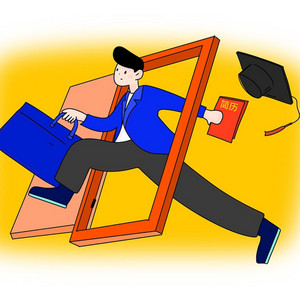
In 2019, the State Council of China launched a pilot program to develop a vocational undergraduate education – a MOVE that has since reshaped the higher education landscape.
Fast forward to 2025, and now there are over 50 vocational universities.
These institutions are challenging traditional builds of higher education, prioritizing hands -on skills and ingestion partnerships.
But what sets them apart from general universities and why are they gaining so much attention?
And what does the establishment of this new wave of vocational universities mean?
Well, I think the first news comes with the latest news actually is with the Ministry of Education plans to approve five new vocational undergrad universities and they are originally vocational schools.
But now, they are being upgraded into a undergrad, they can offer undergraduate educational programs so that means students can actually get a bachelor degree when they graduate.
That's mainly one of the similarities these vocational undergraduate universities have with regular universities.
Students can, as well, get degrees based on their academic disciplines or their scores in the schools, but then the differences would be I think, the courses that are offered in these schools.
And another similarity would be when they graduated and then entered the job market they enjoyed the same level playing field basically that means they face when during the employment they face like the same level of competition while before I would say there There is a lot of stigma surrounding vocational
schools that these students are incompetent in their skills, in their knowledge levels, and cannot be compared to those graduated from regular universities.
And there are also, in some cases, if they wish, the graduates want to enter the civil service exams, you know, to getting into governmental institutions.
students normally graduate from the vocational schools do not have the access to these exams.
So right now with this new round of upgrading to undergraduate universities that means vocational students can also enter exams and get into governmental institution.
Yeah, so the plan is to approve the establishment of five vocational undergraduate universities.
those are five vocational universities upgraded from vocational colleges and the locations are in various regions around the country Beijing, Shandong, Gansu and then in the Xinjiang Uighur Autonomous Region as well, so one example would be the University for Science and Technology based Beijing.
That is based on Beijing Polytechnic which used to be a vocational college.
Back in 2019 that's when the State Council's implementation plan for national vocational education reform.
It explicitly proposed piloting undergraduate level vocational education.
And in that same year, that's when the Ministry of Education approved the first batch of undergraduate vocational education pilot schools.
So this plan has been in the works for quite some time.
Yes, and for those of you who are not that familiar with the education system here in China, actually, the education system is one thing, but the reason we want to make sure students graduated from these different institutions are accepted by different companies, different places, different employers
is that there is always or there has been this kind of understanding of different students.
People would like to assume that those who are going to university's undergraduate degree or undergraduate in the graduate study and then move on to for example, master's degree and then doctor degree, this is not only a sign of the knowledge they gain or they acquire, but also a sign of whether or not they're
smart enough. They can get the higher grade and they accept that education.
Yet now here in China, we're trying to make sure one those who have a very special talent in a certain skill or a certain field, they can get the education they want and also the hands -on skill, they want to study in this kind of vocational school, yet still can get the acceptance and the kind of recognition from employers
knowing that they actively choose these vocational universities instead of because they cannot get into the universities.
So for those of you who are not that familiar with vocational universities, or how does differ from a regular, uh, undergraduate university, there are actually quite, well, several differences here.
Yeah. So vocational undergraduate education and then your regular undergraduate education, those are two distinct types with different focuses, but yet the same quality standards.
Vocational undergraduate programs, they've been incorporated into the national bachelor's degree system, granting degrees based on academic disciplines.
And in terms of certificate utility, vocational and regular undergraduate degrees are equivalent they're about the same carrying the same value for employment in graduate studies and civil service exams and all things applicable that's actually very interesting and very very important because if you
are an employer and you're hiring people of course you're going to receive a lot a lot of CV a lot of personal info and how do you tell which one is good enough to attend for example the writing examination and then meet you in person talk to them the very first step is to see what is their education degree
what is their the level academic degree and some people would choose to just ignore those without a undergraduate certificate so I'm pretty sure this move this upgrading of these five institutions can help those who are actually very talented and a job get the chance yeah absolutely there's an expert
from Ngenzing Vocational University of Industry Technology, and the expert explained it like this, the key difference is that vocational undergraduate programs prioritize vocational first followed by undergraduate.
So the educational model emphasizes industry education integration and collaboration with enterprises, which are deeply involved in designing and implementing talent cultivation plans, practical skills training is a core focus with hands -on practice accounting for 50 % of the total course hours, a standard
regular undergraduate program generally does not meet that level.
So let's say I like the idea I want to be a vocational undergraduate, what what can I do to get enrolled?
Well first of all you can take part in the Gaukou, the college entrance examination examination is basically the primary method.
But there are also other ways of course, involving, like specialised exams, allowing students from for example, vocational schools or colleges or secondary vocational schools, to transit into these undergraduate programmes.
And right now, from the data of 35 vocational universities last year, Oh actually in the year 2023, we're now in 2025.
Yes, we are! So most schools admitted students with scores within 50 points of the undergraduate admission threshold.
So basically the system of gaukao we have a threshold for undergraduate programs.
And if you can reach to that threshold that means you can try to apply to universities.
studies, and if you didn't meet those thresholds, that means you basically have to go to the secondary vocational schools or vocational colleges based on the scores you get.
But I've actually checked that, for example in one of these schools, Nanjing Vacation University of Industry Technology, it was also a vocational colleges, but it was one of the top vocational colleges here in China, so for students taking part in Gao Berger and even they passed the undergraduate admissions
thresholds and if they want to go to Nanji Vocational University, they still have to be 50 plus points above that threshold to be getting into the vocational colleges.
So I don't see that it's a massive change in terms of scores you get in Gal Co.
But by now applying to one of the top vocational colleges now, you can get a bachelor degree, which is a plus point, by entering one of these universities.
Yeah, and the Gal -Co isn't the only way to get into the schools or the programs.
As you mentioned, there are other pathways that involve specialized exams, which is a a good thing, right?
Not all students might succeed to that level on the Galk House.
So there are other ways to get in.
And I think that this is quite significant, the development of these vocational universities here in the country.
Because we're talking about meeting the demands of industrial upgrades and different sorts of economic development.
The manufacturing industry, for example, that's transitioning towards high end intelligent and green production.
And that requires a large pool of really highly -skilled professionals who have very specific skills.
So, vocational universities, they aim to train field engineers who are proficient in both front -line technology and operational skills to meet those demands.
And that's exactly what we're talking about when we're talking about vocational schools, vocational universities, is that, number one, yes there's industry collaboration, but the curriculum is designed to directly prepare students for very specific careers in fields like engineering or technology or business
or healthcare or what have you oh yes i checked out some of the majors they are really really difficult i don't think i qualify if i want to get in i don't think i can get in okay so there are aerospace composite materials intelligent manufacturing engineering technology there are biopharmaceutical
engineering technology there are rural governance technology see not only the so -called science and technology front, but also, when it comes to rural governance technology, you have to learn about rural psych...
canvasology and also rural governance theories and agricultural policies and regulations.
And later on, you're looking at working in local government agencies, rural corporatives, and all the other types of rural revitalization service institutions.
There are also interesting ones like digital fashion design.
Think about it, if you're learning digital fashion design, definitely you would have to learn about 3d printing, you learn about digital marketing you learn about artificial intelligence assisted designing.
These are some of the majors, there are also majors related to the understanding ending, and utilization of tea, as in the beverage tea science, and also the industry involved in it.
So yes, nowadays, when we think about vocational education, it's not what we, like 20 years ago, you used to think vocational education teaches you to fix your car on the side.
Exactly, like the stereotype of mechanics are changing now.
Like it's not the greasy hands -on— expensive grease But I think it depends on the field that you're studying, for example checked on in the province of Hunan they have these railway vocational schools and they are training mechanics engineers specifically on the railway system and their factories are incredibly
clean and smart and intelligent and a lot of the students with that vocational school actually.
A lot of their training programs are taking part in the factory or the workshops of many railway corporations or the factories so that I can see that a lot of the vocational universities and colleges are collaborating with companies and so that they know what jobs they are looking for.
Almost exactly what jobs they're looking for.
So Once the students graduate, they can just straight go to that vacancy that the company will have.
Here's a perfect example of that.
There's a program at Zhiziang Polytechnic University of Mechanical and Electrical Engineering, and it's called the Urban Rail Transit Equipment and Control Technology Program.
And this is really promising.
Not just really promising, this is almost guaranteed employment because they have a graduate, and they've maintained a graduate employment rate of over 98 % in recent years.
So your, if you go into that program, number one, as a student, you feel comfortable and confident for two reasons.
One, you know exactly what you're gonna be learning and number two, you know what, well three reasons.
Number two, you know why you're gonna be learning it.
And number three, you feel comfortable in your the prospects of getting a job with a success rate of 98 % in recent years.
This is a win -win -win.
It's great for the university, and it's great for the university's program and reputation, and great for the students, too.
And the reason we can achieve such positive results is partly because from the designing stage, we know that these vocational undergraduates or just vocational schools are training the talent specifically for a certain position in a certain company.
That is because many of these vocational institutions, especially the good ones, are terms of having or partnering with these different companies.
For example, in 2024, the second national -level industry education integration community, the National Nonferous Metals Industry Education integration committee, was established and this community was jointly led by the Aluminum Corporation of China.
Central South University.
Lanzhou Resource Environmental Vocational Technical University with 157 member units, including key enterprises along the industrial chain.
Regular universities, vocational schools, vocational universities, research institutes and industry organizations.
And with all these organizations, all these companies working together, collaborating with each other.
They talk to each other.
They know what kind of talent they're looking for.
They know what kind of teachers can make sure the talents get the training they need.
They would even bring those students if when they're in junior or senior years to the position they might in the future work to test the water a little bit.
Just in case they don't like it.
And that is a very well -designed route for a talent training, in my opinion.
100%. Vocational universities, they provide broader employment opportunities that's going to attract higher scoring students.
All of the things you just mentioned are very, very attractive things for a potential student.
There's the focus on practical skills, and that makes them better equipped for whatever job it is that they're going to do and there's proof that this is successful from the students point of view, as well, because employment data from Nanjinga Vocational University of Industry Technology.
That data shows that it's undergraduate graduates.
They surpass junior college graduates in job satisfaction, field relevance, job contract fulfillment rates and monthly income.
That's an important thing for people, isn't it?
And all of that highlights the effectiveness of the programs in getting these young people ready for the job market.
As a parent I find it really comforting to realize that children and students now have other options.
Yes. Rather than just getting into the geocow system.
And if you win or you lose.
I was thinking about that because of course these are all rosy pictures we are painting and yes this is also the reality for all the seniors who have graduated, found their position and job yet, what are some challenges we are looking at.
But one thing I can think of is that we, after doing all the research, after knowing the majors and the very high -tech ones, or really, interesting majors that they can get into, we understand that this is a very promising future, ready to embrace whoever is broad enough to choose this path.
Yet, for still, for many parents, for many students, they are still having the stigma, aren't they?
Exactly. They are thinking that vocational colleges and even vocational universities are definitely not good universities.
You can't really get any education in those schools because of the stigma they get.
It's a perception that exists in the West to this kind of, less than...
Mmmmmm ...idea where vocational education is seen as less prestigious perhaps, or less intellectually demanding, maybe on its students compared to your traditional four -year university degree, I think it's often seen as a plan B.
If you don't get into your preferred school, then it's a fallback option that's the stigma that exists as well, and I do think that it will take some time for maybe a generation of people, maybe for those ideas to drift away, but with the success of the programs and then we have living breathing examples
of success from the students who come out of those programs who then will have kids, right?
And then tell their children and tell their friends.
You see what I mean?
It's gonna take some time, but the ball is rolling in the right direction, if you will.
This actually reminds me of when I was choosing for my master's degree study, there was, for my generation and my time the discussion was between the professional studies and d guildmik studies when it comes to master's degree.
You can choose the professional ones, which would require less learning time.
For me, for example, mine was shorter than my peers when they choose the academic studies, yet we learnt different things.
For my master's degree, my major was international journalism and instead of writing papers about how to do international journalism, we were sent as students into the streets to do field reports.
And that was what we were learning because I chose professional studies in the master's degree education.
At that time, was that seen as?
Less good. That's the thing.
Yeah, it's perception, isn't it?
The perception. But now, it's no longer, the perception is not that common or not that special.
serious for our generation.
It might not be that common or that serious in general society.
We need to make sure that the people who are making the decisions about hiring the students who come out of these schools that they don't have that stigma still.
If you're a boss at a company and you have resume A and resume B and they're both equal resumes and resume B came from your traditional four year out and it came from one of the vocational universities, the person making that decision has to look at those resumes as equal.
Not as uhh maybe this one isn't as good because it's a vocational university.
Yes and that leads to my next question that is do you think in the future we can exclude those or exclude those who want to only do academic studies and research into so -called regular universities and have those who wanted to have a job in the market have a specific skill, while having them study in the vocational
universities? Will that, is it a possible solution or a possible future we're looking at, maybe even a long long future, down the road?
I think it depends on the fields.
For example if you want to go to engineering I think it depends on the jobs.
Some requires a lot of hands -on experience, definitely I think then vocational university would be a perfect place for you to get your training but if you are interested in literature I don't think of occasional universities can offer is the perfect place to offer literature English or Chinese literature
training you know it just requires a lot of academic reading and research so I think it really depends on the fields that you want to go in and I think it's also about choices.
For example, if I'm enrolled in one of the vocational universities and I get a perfect well -paying job in a company.
And then after five years I decide I want another degree, because just being an engineer is not satisfying in terms of my career development.
Then I can apply to a regular university and studying, I don't know, chemistry or physics and going into, maybe I'll lead into the academic research field.
Who knows. I think universities have to adapt.
If you look at, pardon me, if you look at statistics from Business Insider, for example, enroll, and this is from America, Enrollment yeah in programs teaching construction, culinary arts, mechanic, repair trades.
They spiked by 19, 13 and 12 percent respectively in 2021 and 2022.
And I can give you a lot more statistics.
But if we just use those that's evidence that people are moving toward vocational education and away from your traditional four -year degree.
We talked about this when we we said that universities are cutting programs arts programs in the United States and in different parts of the world.
Universities need to adapt to stay afloat to reflect the times.
Young people now are worried about their job in the future and their safety in their career and that's why I think we're seeing this trend.
Yes and in the future if we do not see the stigma that much it doesn't really matter whether or or not we separate so -called university or vocational university as long you're getting the knowledge you need, getting skill that it requires you on the job, you will be fine.