You're tuned in to Roundtable.
I'm Steve Hatherly, together today with Fei-Fei and Yushan.
Coming up, pink Himalayan salt can sell for 10 times the price of regular salt.
But is it worth it?
Spoiler, experts say no.
Beyond the pretty color and savvy marketing lies a product of questionable quality, lacking promised nutrients and sometimes containing heavy metals.
We'll dive into the power of the aesthetic economy and share simple ways to see past the packaging and make smarter choices.
After that, we're excited.
We have a brand new segment for you coming up on Roundtable.
It's called The Soapbox.
Stay with us to find out what that's all about our podcast listeners, that you can find us at roundtable china on apple podcasts.
And don't forget, we love hearing from you too, so send your voice notes our way.
Roundtable podcast at qqcom.
Once again roundtable podcast at qqcom, and now Marketed as a luxurious, health-boosting alternative to regular salt, so-called Himalayan rock salt or rose salt claims to be rich in minerals and free from additives.
Its striking pink hue yes, it is indeed pretty paired together with captivating marketing stories has convinced many consumers, myself included, to pay up to 10 times the price of regular salt.
However, experts have revealed that the product lacks real nutritional value and is not up to the quality standards.
Heavy metals have also been detected in some brands.
So how have consumer psychology and the aesthetic economy driven this misleading trend?
How did we all get tricked?
And what can we do to protect ourselves from marketing gimmicks and make better choices in the future?
What happened with my... favorite salt. that looks so pretty on the shelf.
Yeah, exactly.
And it also has a pretty name here in China.
A lot of the brands brand themselves as rose salt.
I thought they really mixed rose in it, no?
No, no.
That's just another example of the marketing doing its job.
You're not really aware of where that beautiful pink hue comes from.
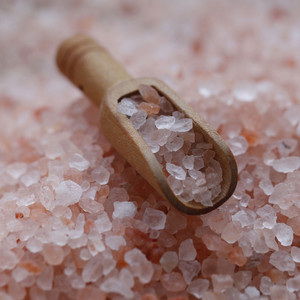
So the rose salt, or some people will call it Himalayan rock salt, is a type of natural rock salt.
In theory, they are supposed to be from this specific mine in Pakistan that has some very traceable minerals.
But when it comes to, for example, the pink colour itself comes from trace amounts of minerals such as iron.
And in recent years it's been really, really popular, not only here in China but, I think globally, that people are willing to pay a lot of money.
And they believe this rose salt or pink salt, whatever name you prefer is natural, additive-free and high in nutritional value.
Well, people see it as a premium product.
Yes, I've seen a lot of these in some really fancy restaurants and they will just put it on the table saying that oh, You can use these things, that we have that premium salt.
And in recent years, pink imported rose salt has also rapidly gained much popularity online, becoming the so-called premium salt in the eyes of many, many of these consumers.
And e-commerce vendors have advertised their rose salt as natural and high in nutritional value.
And some of these sales volumes range from at least 2,000 to over 20,000 units.
Yeah, they're selling a lot.
And the price per about 500 grams generally sits at about 50 yuan, but it can get expensive.
It can go up to about 240 yuan.
Conversely, even expensive domestically produced salt typically sells for 6 to about 7 yuan per 500 grams.
So there's a major price difference there.
So where does all this controversy come from then?
So, first of all, there is a social media account that is dedicated to ensure to report on the safety of products for children.
And they post a video recently and revealing that they found heavy metals within some brands of the rose salt that start to spark public concern.
And then more experts stepping out and sort of clear the air for the consumers that, first of all, when it comes to this rose, salt is natural and additive free.
And some experts are saying that most of the salt are natural and additive free.
So there's nothing special about this pink salt.
Yeah.
There is a chicken restaurant in Korea, I remember.
And part of the title of their name is Rose.
Like we change our oil, our chicken cooking oil, every I don't know 10 times or 15 times or whatever.
And apparently every chicken restaurant changes their oil.
It's the same type of thing.
Yeah.
And when it comes to that high in nutritional value, that people believe that they have a lot of minerals, and an expert here in China and also one from the United States saying that yes, When it comes to pink salt, it does contain some minerals.
But when it comes to the reality, the amount that we consume on a daily basis is just too small to make a real difference.
So you need to intake large loads of this salt to really have that minerals at work in your body.
So that means then that we have better alternatives for minerals.
Yeah, like vegetables.
Yeah, like vegetables.
Or milk would be another good example.
So this is more than just a marketing gimmick then.
This is categorized.
So the categorizations are different too, right?
Edible salt is mainly categorized into sea salt, lake salt, and rock salt. that's sourced respectively from seawater or natural brine or underground salt deposits.
And that means all edible salt is naturally formed.
It's not artificially synthesized.
So the natural and additive-free label is a marketing gimmick on its own for trendy salts.
So if you see that on a label... Natural salt.
You could see it on every single salt label.
Yeah.
Interesting.
A lot of these reports are noting that market regulatory authorities in several regions have issued reminders that in China this rose salt is approved only for industrial use.
It does not meet the national food safety standards for edible salt and must not be circulated or used as such.
Yeah, because according to China's national food safety standards for edible salt, the color needs to be white.
So in theory, the pink salt doesn't meet this standard, this requirement.
So that's why, when imported, a lot of these pink salt or raw salt products are filed under the category of industrial use.
And I checked online before the show that right now you can't find these pink salt products on supermarkets I mean offline, but you can find them online, especially for those that have overseas warehouse that they are shipping this pink salt product directly to the consumers.
And this is sort of a loophole in regulation right now that why consumers are still able to buy them on the market.
Not everyone loves it.
Maybe a little bit divisive.
That could be partly because of the expensive price tag.
Here are some comments from online.
This one's good.
Scientists work hard to remove impurities from salt, and then these people just add them back in.
Here's another one.
The various uses of pink salt don't include eating it.
And here's another one.
Yet it's still being sold in large quantities on e-commerce platforms, suggesting we know the information now.
Why is it still for sale?
But there's a reason that it became... There are reasons, I suppose, that it became so popular.
Well, I think, first of all, it's really pretty.
I mean, it's pink.
And when it comes to, for example, I saw a lot of no matter for restaurants or bloggers or vloggers online that when you have a dish and you sprinkle some of this pink salt on top of it, it's just very pleasing aesthetically.
But when it comes to... The aesthetic economy.
Yeah, yeah.
And that's why a lot of people are willing to pay for this pink product.
For some reason, people starting to think that the salt that you get, like You use a grinder to have that on the table, is the one that is with the high quality.
Because in my childhood, we always use that bag of salt.
You just use your hand to pinch a little bit and put them in the bowl or something.
Soup or water.
Yeah.
But now people just need to have that on table and then think that is fancier or maybe have a better quality.
Yeah.
Or I think another factor is that people right now are willing to pay more for health reasons.
And whenever there is the marketing out there that tells you that you know this thing is good for your health, can do more for you than your regular products.
Sometimes people are willing to try that out.
I think the high price tag too.
Because when we see um a high price tag on a product, we assume well, i shouldn't say we, i assume this is better, particularly when it comes to food.
When i see that eggs are more expensive, i assume they're better than the cheaper eggs.
I don't know why.
I don't have any reason for that.
I assume expensive cheese is better than cheaper cheese, expensive bread better than cheaper bread.
And maybe we've fallen into that trap here as well.
Exactly.
And also the fact that we are willing to pay more for health, but we just have really limited knowledge when it comes to very specific nutrition out there.
Yeah.
And maybe sometimes we need more channels.
We need more ways to get ourselves educated before we're just really willing to pay for that.
Yeah, but I mean I'm glad we're talking about this today, because who educates themselves on pink salt?
Nobody, I would say.
So how can we better prepare ourselves, as customers or as consumers, to know the difference between what's being marketed to us and then what is scientifically true?
Focus on the evidence, not just the sum of the claims by these brands.
Look for scientific evidence or maybe third-part testing behind the product's benefits.
Of course, they're claiming that they have more minerals, but the amount of them is the crucial thing that we need to pay attention to.
And also thinking about getting more minerals by just using salt.
It is not a very reasonable way to do that.
Exactly.
And also, I think right now on the market, when you see words like natural or detox.
The buzzwords.
Yeah, pure or premium.
Premium.
How often do we see the word premium?
This is a premium podcast.
Yeah.
That's actually true, though.
Yeah.
So we start to need to ask ourselves, really, what does that mean?
What does that detoxing juice mean?
Well, what does any marketing term mean?
I remember I watched a really interesting TED talk on a marketing executive who had left the industry and she had worked in the food industry, I believe.
And she was talking about the terms that are used in food to kind of trick us.
And the term that she brought up for her conversation, I think, was farm fresh.
It was kind of this catchy in America and Canada, maybe other parts of the world.
It was kind of this catchy kind of like cool, trendy.
Oh, my chicken's farm fresh.
And it implied that it was the freshest possible chicken you could get, or any other ingredient that happened to have that term on it.
And she said this, she said, do you know what that means, farm fresh?
And she paused and she said, Nothing.
Yeah.
It's pure marketing.
Pure, pure marketing.
So the advice that we're learning today is to watch out for these types of buzzwords or trendy terms on the label.
And I guess, you know, read beyond the packaging to read beyond the front cover.
Turn it over.
See what's on the label.
I know that a lot of people don't do that.
And I'm guilty of that, too.
And I think for many of us, especially from the consumer's point of view.
Just learn some of the basics about nutrition and health.
You will start to see, between the lines of the marketing language out there, that the premium steak may be just a regular steak.
Or think about do you really need these things?
If you're already getting enough nutrition or minerals in your diet, the extra claim of rich in minerals won't make a difference and you won't be just um falling into that yeah, falling into that, uh.
What about regulatory bodies, then?
What can they do?
What can sales platforms do um, if anything, to help us make better decisions?
Well, I think in the case of this pink salt, I think for a lot of the regulatory authorities, they do need to improve the access and circulation management mechanism for these cross-border food products.
And they need to establish traceability and interception systems for this imported product as well.
And I think, according to one expert called Sun Jun Juan, that some departments are working on improving the regulatory system for cross-border e-commerce retail, because that's where for the pink salt products, that's where they come from.
Today was good.
We learned a lot of information that hopefully will help us out and help our audience out too, next time we take a trip to the supermarket to purchase our salt.
You're listening to Roundtable and coming up next the very first edition of our brand new segment called The Soapbox.
Hear ye, hear ye.
Please gather round.
It's time for the Soapbox.
You're listening to Roundtable, and it is time for the very first edition of the Soapbox.
As we wrapped up 2025, we said we had some new segments coming.
This year, and this is the very first one.
So before we begin, let me tell you what this segment is all about.
So once a week we will pick one story from the news of the world that we find interesting and then we'll give you the quick kind of need to know facts to set the stage.
And then one of us it will be me this week, but it will change each week is going to climb up on our little digital soapbox and let loose a heartfelt rant about the topic.
There's no experts here.
There's no deep dive interviews, just pure unfiltered opinion.
Now, if you're not familiar with what the soapbox means, that term comes from a very long time ago.
It's a classic image of a person standing on a wooden crate literally a soapbox in a public square to give an impromptu, passionate speech about something that they care about.
It's very informal.
It's very personal.
But it's all about speaking your mind and giving your opinion.
Back in the 1800s and 1900s, in places like London's Hyde Park or New York City, people would gather in a town square and someone would stand up on a soapbox and give their speech about something they felt passionate about.
So that's the premise for our segment.
And in that spirit, this segment is our digital version.
So let's get started.
And again, I'm going first.
This week we're strapping into the driver's seat of a story that feels ripped right from the future, with a price tag that might make you feel sick.
Literally.
Our subject, Tesla's robo-taxis.
If you want to hail a truly driverless one, there's no steering wheel, no pedals, no human driver.
There's really only one place that you can do that right now, and that is Austin, Texas.
And this is ground zero for Tesla's boldest experiments.
Now, the headline is about how they're handling a very human problem in these inhuman cars.
Tesla has officially put a price tag on bad behavior.
They've rolled out a cleaning fee system.
Have you heard about this?
It's a two-tier system where you have to pay different prices for different things that you do.
You've heard about this before, yeah?
The one is called Spilled My Coffee Fee, and this will cost you about $50.
That's about 350 yuan.
So if you spill some food or have some heavy dirt in the car or some minor stains, then that's going to cost you about 50.
So that's price tag number one.
Okay, I have a question here.
What if it rains outside?
What do you mean?
If it rains outside, you have mud on your shoes.
When you step in the car, you will bring dirt onto the mat of the car.
That will charge me like $50.
If it's excessive.
Wow.
Yeah.
That's tier one.
That's your basic level.
Then there's tier two.
This is called I had too much fun at the club with my friends fee.
So this is a big one.
This is $150.
That's over 1000 yuan.
And this is reserved for what the policy gently calls bio waste.
We're talking about vomit and blood and other bodily fluids or evidence that you smoked in the car.
Now, here's how it works.
So you take the robo taxi and then, after your ride, the empty car will go to the next customer or to a charging station.
And if it's flagged as dirty, Tesla reviews the footage and the sensor data.
And if they think that the car needs extra cleaning.
That fee, either 50 or 150, will show up on your app in the receipt from your trip.
And there's no immediate dispute button.
If you want to appeal it, you have to call Tesla and speak with a person to state your case and argue against it.
Other companies, they do have similar fees, and they've had them for years.
Uber, for example, they have something similar.
But with Uber, there's a driver.
It's a person that can see that you're really not feeling well if you happen to be sick, right?
But with Tesla, it's just the car.
And also I think the price is a lot higher than what you normally pay for just washing your car in general, right.
I pay like $10 to $20.
Yeah, because here in China you have no matter, it's the online hailing app or just the colored perimeter taxis that you hail they will also have the kind of regulations.
If you just vomit in the car, you need to help to clean that and you need to pay for that.
But that's almost around right like 200 yuan yes, from my personal experience.
So uh, we have a fleet of driverless taxis in austin texas.
We have a clear and expensive menu of penalties if you make a mess, and a dispute process where your opponent is a camera and a recording, and that, my friends, is.
The thought of being fined by an empty car is what's got me ready to climb up on my soapbox.
So here we go.
All right, thank you for coming, everyone.
You can quiet down, and let me be clear as I begin.
I'm not ranting about the idea of a cleaning fee.
Of course you should pay if you make a mess, and the tier system makes perfect sense to me.
My problem is with the top tier fee and more specifically the 150 bio-waste fee and, even more specifically, the vomit fee.
Because the unspoken assumption behind that price tag is so glaring that it's almost funny.
The assumption is that anyone who throws up in a robo-taxi is a reckless party animal.
Someone who over-indulged, made poor choices and should be financially scolded for their lack of self-control.
But what if you're just sick?
This is where the fundamental flaw in the driverless model becomes a nauseating reality.
In a car with a human driver, you have recourse.
You feel it coming.
You know it's coming.
You tap the driver's shoulder.
Your voice gets panicky and you say, oh, I need you to pull over right now.
Well, a human will understand you.
A human will understand the urgency and make a judgment call.
They'll find a curb or a side street or maybe a shoulder on the side of the road.
You get out, do what you have to do, and you avoid the $150 fee.
You might even get a bottle of water if your driver is nice.
But in a Tesla robotaxi, you're in a mobile prison cell.
There is no driver to plead with.
There's just you, the sterile interior, and the creeping certainty of disaster.
Now, Tesla has thought of this, in theory.
There is a pullover button in the car, but let me share with you how that works.
Tesla robotaxis have a pullover button and an emergency stop button on the in-car touchscreen and potentially the companion app for passengers to request a stop at the nearest safe location.
These features allow users to safely exit the ride.
If needed.
Although early tests showed the pullover function might sometimes stop the car in suboptimal or unsafe locations,
Suboptimal or unsafe?
No thanks.
Now, back to my bad stomach.
This is a five-second countdown of nausea.
And if you're not fumbling for your phone, you're lurching across the cabin searching for a screen for the right menu, while your world is spinning.
And then if you happen to press it, you wait.
You wait for the car's AI to decide if now is a safe and convenient time to stop.
But your stomach does not care about the routing algorithm.
It's not negotiating.
Let me make this painfully real for you.
When I was in college, one night I ate four expired hot dogs from my refrigerator.
This is a true story.
And I threw up 32 times in 90 minutes.
My friends drove me to the hospital to get some help, but had to stop four times along the way.
Is that four separate $150 charges in a robo-taxi?
Is that a $600 ride to the hospital for me?
And this is the key difference in Uber's policy.
Yes, Uber charges a similar fee, but Uber has a driver and the driver is a witness and the driver can see you're not in good shape.
With Tesla.
Your witness is a camera and your appeal is to a team reviewing footage of you in your most vulnerable state.
That is a terrible customer experience.
I'm not ranting about the money.
I think I'm ranting about a system so rigid, so devoid of mercy or simple human understanding that we can't understand basic human dignity or basic human biology.
We're not just coding cars to drive, we're coding them to be judge, jury and bailiff for our weakest moments.
And for that, I think we deserve a little more than just $150 bill on the map.
Oh, and by the way, never, ever, under any circumstances, eat green hot dogs.
What do you think?
Do you agree with me or disagree with me?
I think it's ludicrous because you're trapped in the car.
Of course, like no matter how many times you're vomiting in the car, you're going to still be charged 150.
But anyway, I understand your point.
Hyperbole.
Yeah, the thing is that they need to identify what kind of situation that is, right?
And also if, for example, I get carsick, I don't have time or the energy to look for the pull of a button.
That's what I mean.
Who's responsible for that carsick?
Is it because of your design of the car?
Yeah, because that's not an exception.
They don't care why you're sick.
I just think they're assuming it's because they think you went out and had a couple of too many with your friends.
And I don't like that part of the policy.
Yeah, exactly.
And I do agree with you 100%.
Yeah.
So there you go.
That's our first edition of the Soapbox.
Send us a message and tell us if you liked it or not.