Hi, it's Lulu.
It's our way of saying thank you to the people whose support makes our journalism possible.
You'll get this automatically as part of your subscription.
So whether you're a longtime subscriber or just about to become one, thank you.
And most of all, thank you for listening to our show.
If you want to learn more, you can go to nytimescom, slash podcasts or subscribe directly on Apple Podcasts or Spotify.
Now, on to our show.
From The New York Times, this is The Interview.
I'm Lulu Garcia Navarro.
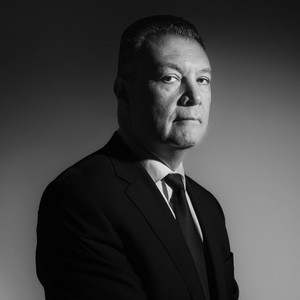
Back in June, Senator Alex Padilla of California found himself at the center of a defining moment in President Trump's second term.
He tried to ask a question at a press conference given by Secretary of Homeland Security, Kristi Noem, when he was grabbed, hustled out of the room, forced to the ground and handcuffed.
I'm Senator Alex Padilla.
I have questions for the Secretary.
That violent removal of a United States senator made headlines all around the world.
It also raised Padilla's profile, who at that point was not really a nationally known figure.
Padilla became a senator in 2021, when he was appointed by Governor Gavin Newsom to replace Kamala Harris, making him the first Latino to hold that office in the history of the state.
The son of Mexican immigrants who worked low-wage jobs, Padilla rose to the ranks of California politics and is now in his second term.
As debates over free speech immigration, states' rights redistricting, just to name a few, are roiling America, California has become ground zero for the fight over the future of this country.
I sat down with Padilla in his Senate office on Monday before the government shutdown to talk about all of it.
But also I asked him if he's considering a run for California governor next year.
Here's my conversation with Senator Alex Padilla.
Senator Padilla, thank you so much for joining the interview.
I really appreciate your time today.
Thank you for inviting me.
Happy to be here.
I wanted to talk to you because California obviously is at the center of so much right now in our current conversation.
Immigration, state power, redistricting.
I'll also add, you know, this is a very tense time, I think, for Democrats across the country.
I'd like to start though, with a moment that I think surprised a lot of people who know you very well, because you're not exactly known as a rabble rouser.
On June 12th, you were briefly handcuffed after trying to ask a question to Secretary of Homeland Security Kristi Noem at a press conference she was giving in LA.
The context was this was during significant protests against ICE in the city.
Can you take me back to that moment?
Why did you interrupt her remarks?
What was going on?
Yeah.
Well, there was never would I have imagined that that would have happened, that that would be a response to a question, especially to a senator trying to ask a question.
The moment in Los Angeles was the militarization of the city of Los Angeles without a clear sort of mission, defined objective et cetera, or justification that had been communicated to Congress, let alone the public.
And so, after numerous attempts to try to obtain that information here in Congress, in committee hearings, via formal inquiries, with no response, I finally had a scheduled briefing, which took place in a federal building.
That's why I was in the building to begin with.
So I think that's important for people to understand.
And as I was waiting in the conference room for the folks who were going to brief me, we learned that Secretary Noem was about to have a press conference down the hall.
And my briefing was now delayed.
And so I asked if I could listen in.
While we were waiting to see if there was any new information that would be provided the people of Los Angeles to liberate the people of California from their duly elected leaders, I felt compelled to speak up and to try to ask some specific questions.
But before I can get a few words out, I mean, you saw what the reaction was.
And so for me, it was important for a couple of reasons.
One was not just what didn't or didn't happen during that press conference because surprise surprise, the administration immediately tried to put out lies and disinformation that I had not introduced myself or identified myself, that I barged in, et cetera.
Nothing could be further from the truth.
But I think more fundamentally, the way the Trump administration had gone about militarizing the city of Los Angeles laid the groundwork for being able to do that anywhere in the country, on any issue right.
And now here we are, months later, looking back at their numerous, numerous efforts as trying to quelch dissent.
They don't like anybody who disagrees with what they're trying to do.
But Los Angeles was sort of the first domino to fall, if you will.
The secretary you talked afterwards, what was that conversation like?
I mean, did she apologize?
No apology, but honestly, not surprised, just given how this administration tends to carry itself.
I wish I could say it was more substantive or more constructive.
She finally did say it was, well, I understand you're asking for more information.
What's your question?
And among the questions that we had is For all their talk about dangerous violent criminals.
If all this administration was doing was targeting, arresting and even deporting dangerous violent criminals, there would be no debate.
There would be no discussion because there would be no disagreement.
But we had been hearing anecdotally up until that point that That was far from the case of what was happening on the ground, what was happening in the streets of Southern California.
Because we kept hearing story after story of people with no violent criminal history being rounded up.
And so I wanted to get some statistics.
I wanted to ask the secretary you put three four, five names up on a slideshow during a press conference, but who are the dozens and dozens of others that have been detained, that have been arrested?
We've come since to learn that the vast majority of people being caught up in these indiscriminate raids and we should talk about that here for a minute don't have a violent criminal history.
And so who are they?
They may be undocumented for a number of reasons.
A lot of people who are undocumented came with TPS, Temporary Protective Status, and Donald Trump has taken that away.
Or maybe they came initially on a work visa and overstayed that visa.
It's not always people who came here unlawfully, but they find themselves after years, if not decades, of working, paying taxes, raising families here, the target of these indiscriminate rates.
I want to talk about immigration, certainly, and what's happening in California.
I want to stick with you, though, for a moment.
You were very emotional afterwards.
You spoke very passionately about what had happened.
We also saw Vice President J.D.
Vance, when referring to you and that incident, use the wrong name.
He called you Jose Padilla.
How did you understand that misnaming of you?
Yeah.
Sadly, not surprised because this is how petty this administration is.
It's not just Trump, not just Vance.
It's the culture that they have created for themselves.
And I knew what he was trying to do, right?
To call a Latino man Jose flippantly.
That's their way of trying to ridicule us.
You know, for a...
Vice President Vance in particular, right?
Let's remember who Jesus' parents were.
They were Jose and Maria, Joseph and Mary.
But for Latinos, look, I take it as a point of pride.
I turn it around because I know a lot of Jose's.
A lot of Jose's are hard workers.
So if that's what you're going to call me, then I'm going to wear it as a point of pride.
But back to the press conference and what happened.
As shaken up as that was, because that was quite the experience it was clear to me that if that's how this administration would respond to a senator with a question, imagine not just how they could treat so many other people, but how they are treating so many other people when the cameras are not on.
This should be a wake-up call.
And it started in Los Angeles.
We've seen National Guard troops now roving the streets of Washington DC, the threats to now be sent into Portland or Memphis or San Francisco, New York, et cetera.
This is a very, very heady time for our country.
What I'm hearing you say is that you felt that what happened to you and to what happened in Los Angeles was the sort of canary in the coal mine, that the way that they were treating a US senator who's Latino, is emblematic of a wider attitude and objective.
Without a doubt.
Without a doubt.
And again going back to the press conference, as I mentioned, we were an FBI office in a federal building and they knew who I was.
I had an escort from the moment I entered the front door.
They knew who I was.
And you think it was deliberate or do you think it was a mistake?
At a minimum, it was a hell of an overreaction.
But they knew who I was, just like Vice President Vance knows my name.
But he chose to call me Jose.
We served together for two years in the Senate, for Christ's sake.
He knows who I am, but it's the way they choose to go about things.
I was thinking about this in the context of your own upbringing, how you got into politics and the things that drew you into this work, because I think there is a through line there.
You grew up in the San Fernando Valley.
Your parents emigrated from Mexico.
They were working class.
Your dad was a short order cook.
Your mom was a housekeeper.
Why did they come to the US and what did they want for you?
Yeah, so you got the beginnings, perfect.
My father's from the state of Jalisco, my mother's from the state of Chihuahua.
They came separately to Los Angeles.
They met, they fell in love, they decided to get married and they applied for green cards in that order.
And I thank the United States government every day for saying yes to those applications because you can imagine if they would have been denied my life journey, opportunities in life would be very different for me than what they have been.
But they became legal residents.
And you're right for 40 years my dad worked as a short order cook.
So i, when i speak at colleges and high schools, i remind the kids, like when you go out to a diner and think of who's scrambling the eggs, who's flipping the pancakes.
That's what my dad did.
And for the same 40 years my mom used to clean houses.
On their modest incomes they raised three of us.
And I have vivid memories of my dad interrupting me studying or doing my homework and telling me in Spanish, Saying I want you to work with your mind and not with your back.
Right, right.
And there's a lot of honor in manual labor, but that was his way of saying, I want better for you.
And so I thought, okay, well, academically, what do I like?
I used to like math, somehow did well in science.
So the advice and counsel you get from teachers and others is you ought to be an engineer.
And you ended up going to MIT and you studied engineering.
And despite some great schools in California, I was introduced to the Massachusetts Institute of Technology.
And so, years before wwwanything, I sent off a letter requesting an application, got on the mailing list and, And by the time the acceptance letter came, I knew that I would have to go, for two reasons.
Number one, yes, it was a chance of a lifetime for me.
But also talk about the fulfillment of my parents' dreams.
So I went, spent four cold winters in Massachusetts, came back with a mechanical engineering degree, kind of ready to start my career.
You got drawn, though, into politics instead of actually going into engineering.
And so that was the setup.
Because think of the excitement, the enthusiasm, and the emotion.
Graduating from MIT, returning home, parents are proud.
And what do I see on television?
The year was 1994.
Republican governor of California at the time, Pete Wilson, was up for reelection down in the polls, championing this Proposition 187, which sought to make immigrant families no longer eligible for public services.
And what was it about that that drew you into politics when you were watching that?
Because of the cruelty of the message.
The cruelty of the message.
The imagery of kind of people crossing the border in big numbers.
The language, the scapegoating, the demonizing of immigrants.
He was talking about my family.
He was talking about my community.
And it was offensive and it was enraging.
And I realized look, that engineering degree looks nice on the wall and I'll at some point come back to that.
But right now I have to get involved.
This is my home.
And if I want California to move in a better direction morally, I can't just sit back and wait for others to do it.
I hadn't really been involved in electoral politics up until that point, but I knew that I could either try to be a part of it or not.
And I chose to be a part of it.
And in fact, you were elected to LA City Council in 1999 at the age of only 26.
Yeah, listen.
Five years later, after a little bit of organizing some voter registration drives, managing some political campaigns, I finally chose to run for office myself.
I want to stay with Prop 187 because it passed but it never took effect because of legal challenges.
However, that particular fight is really credited with giving Democrats their super majority in the state, because Latinos were activated in a huge way for many years.
And you're the perfect example of that.
In that context, I'm wondering how you look at the legacy of Prop 187 now and that fight.
Because over the years, you know, the Democratic Party ended up taking more liberal stances on immigration.
Do you think that Democrats took the wrong lessons from those debates?
I don't think so.
Maybe they're not done reading the lesson plan.
One final note on the proposition itself to underscore the cruelty of it.
There was a clause that would have required school personnel to report to the authorities anybody they suspected guilty of being undocumented, turning teachers and counselors and school personnel into immigration officers.
That's how bad it was.
Part of the reason why it never went into effect.
It was deemed unconstitutional, but it was a heck of a wake up call.
And not just for my generation of young people at the time deciding hey, we gotta get involved somehow.
Some people became activists, some advocates.
Countless numbers of Californians at the time, my parents, legal residents, mind you, but with no sense of urgency or desire to become citizens.
And finally they did so, and not just to sort of protect themselves, but so that they could register to vote.
And they could have a say in our democracy.
And huge numbers of people like them did that, fundamentally changing the electorate in California.
And, as a result, not just who our representatives are, but the political priorities and the political agenda at all levels the congressional delegation, statehouse leadership in counties and cities throughout the state.
I hear you saying that it really was a wake-up call for everyone that they needed to engage in the political project around immigration and California.
But we're still having those debates today.
And part of the lesson one could say of Prop 187 now is that it was really popular.
It passed in California.
People actually wanted to implement some of the things that were in that law.
But think about that.
It was popular.
It was deemed unconstitutional.
And what prevailed?
The Constitution, right?
That's an important lesson.
But, as you know, we are having a wider conversation in this country after the election of Donald Trump on what was a very clearly anti-immigrant platform, about what we owe our undocumented community.
There is a lot of opposition in this country to giving people who are here illegally access to the same rights and privileges that people who are citizens of this country have.
Aren't you worried that Democrats have sort of lost the argument on this?
No, actually, I think the question may be too narrow.
But I think the real question is not just what do we owe undocumented or what do we owe legal immigrants.
Like, what do we owe America?
We owe America a much better immigration system than we have today.
Our immigration system is outdated.
It needs to be modernized.
And let's understand the various components of it.
Democrats and Republicans agree.
We need a safe secure humane, orderly southern border of the United States.
That's one element of it.
Second, let's ask ourselves does everybody who wanna come to United States deserve to just be able to come, no matter what?
Of course not.
But our systems of being able to come on a work visa, on a student visa to seek asylum, et cetera, those are outdated.
They need to be modernized.
And at times there's actually substantive conversation negotiations around how to do that.
But what gets lost in the conversation, what too many of my colleagues seem to quickly forget, is the millions of people who not just are here, but have been here for years, in some cases decades working, paying taxes, raising families, purchasing homes, and are an integral part of communities across the country.
If you're otherwise law-abiding right, not the dangerous violent criminals that Trump likes to talk about, but if you're otherwise law-abiding, I believe they deserve an opportunity to come out of the shadows and take a step towards legal status.
That notion is widely supported by Democrats and Republicans and independents across the board.
Unfortunately, just not at this moment in the halls of Congress.
And I wonder what you make of.
In the last election, a very clear discussion by Vice President Vance articulated to me when I interviewed him and the president that illegal immigration is a drain on this country, that it is taking away jobs from Americans.
And that message not only resonated among swaths of the population, but it also resonated among Latinos.
I mean, we saw Latinos take a big swing to the right and it doesn't seem like that message from you, from others, resonated.
Why do you think that is?
A couple of things.
I mean, I think, number one...
I disagree with the big swing to the right.
I think there was some element of the Latino vote that swang to the right.
More men than women, but a bigger swing to sitting it out.
And we can look at the numbers of turnout.
Turnout was down this last election.
So yes, Democrats have a lot of work to do A to win back some voters that maybe went Republican this last election, but also how to re-engage a lot of voters that decided to sit it out.
That's one.
Number two.
What Trump and Vance campaigned a lot on was this emphasis on the dangerous, violent criminals.
I can't tell you how many times I've heard, not just in California, especially in California but from across the country, voters saying this isn't what I signed up for.
They knew Trump talked a lot about immigration during the course of the campaign.
But the cruelty of these indiscriminate raids, the racial profiling Supported by the Supreme Court, my God saying yes, somebody's appearance alone is enough to arrest or detain somebody, somebody's accent or their perceived occupation.
That's wrong.
You cannot enforce the law by breaking the law.
Part of the reason I think it's been pretty well shown that there was this move to the right by Latinos and others more broadly was because of what happened on the border under President Biden.
Over 250,000 encounters a month at its height.
I think there's no question that the measures that President Trump has taken have been effective.
You opposed asylum restrictions at the border under President Biden.
I'm just wondering if you look back now and you think perhaps you might have taken a different stand on that debate.
Well, what I was waiting for at the moment when those proposals came up for votes.
What was missing then and what's missing now is OK.
Now what?
Because I've had so many conversations with my colleagues both sides of the aisle, by the way, not just Democrats talking to Democrats, but me talking to Republicans.
And they tell me in private, Alex, dreamers deserve better.
I'm with you on that.
But first we have to get the border under control.
Farm workers, they deserve better.
We rely on them.
They help feed the nation.
But first we have to get the border under control.
Okay.
So you're telling me that based on the numbers, the border is now under control.
Now what?
Now, where's the assistance for the dreamers and the farm workers and so many others?
But I want to stay in 2024 because you voted alongside your Republican colleagues to kill the bipartisan border security bill that President Biden had championed and Senator Lankford, whom I also interviewed, had helped craft along with Democrats.
And you not only joined Republicans, but you also helped change the minds of some of your fellow Democratic senators for the reasons that you say that this bill did not allow any sort of path to legalization for DREAMers or do anything more broadly for our immigration system.
I'm wondering now, would you make the same decision to vote against the bill knowing the result?
Because perhaps if that bill had passed and given more security at the border, Democrats might have not lost so badly.
It might have not given President Trump what was a very, very useful issue for him.
On policy.
I still stand by my vote because there was no recognition and no willingness to commit to some relief or assistance for DREAMers, essential workers more broadly, et cetera.
Number two when it comes to the takeaways from the election.
I would argue- As a political matter, do you think you did the right thing?
I would argue that in the election, economic anxiety played a larger role than just the situation at the southern border.
I understand as a policy matter, but as a political matter, do you think you made the right choice in helping to kill that bipartisan bill?
Yeah, because the political leverage that I have I am going to utilize to keep advancing the need to do better by dreamers, by farm workers, by essential workers more broadly, and so many others that deserve to come out of the shadows.
Do you think the border as it is now, the restrictions that are there should remain there?
I think there's a—I know the numbers are the numbers, but there's a much smarter way to go about maintaining a secure humane, orderly southern border.
It does need a lot of investment, but experience tells us that it's not just how many more Border Patrol officers and how many more ICE agents we need to hire—.
Let's invest in technology, surveillance technology, screening technology, ports of entry.
If the concern, as they've painted it and I partially agree it's not just people who come, but if it's drugs or other- But it's the asylum system.
I mean, the thing that's really- And that's part of what needs to be updated.
That's what I'm saying.
But the asylum system itself, why are people coming here to seek asylum?
It's what's happening in their home countries and what's the role or opportunity, if not responsibility, for the United States to engage not just the country of Mexico but other partner countries throughout the hemisphere, to address the migration flow.
People may come here if they're desperate and feel the need to leave their hometowns.
If they had more opportunity, more hope, they wouldn't want to be coming here to begin with.
That's in our interest.
Senator Padilla, I have walked with migrants coming up through Mexico.
I have seen those who have come here because they need asylum, because horrific things have happened to them.
I've also walked with those who have come here because they want more economic opportunity.
They see America as a place that you can work and get ahead as opposed to their own countries.
The asylum system as it had operated put those two people together and gave them access to this country regardless.
And so I think when I hear people talk about this issue, they get frustrated with Democrats because they also know the distinction right.
They know that the asylum system didn't work and that it feels out of control.
So let's talk about both of them.
As you label it.
There's the asylum category and there's the people searching for economic opportunity category.
The asylum category.
To deal with that properly, to maintain sort of due consideration, to be able to grant asylum for those who truly warrant it.
We need more immigration judges, we need more hearing officers, we need more of the capacity in that system to make those determinations more quickly so people get their answer yes or no in a matter of days or weeks, not months or years.
But this administration has starved those departments and agencies of the resources necessary to do so.
So the backlogs are only getting worse.
Now to the category of people wanting to come for economic opportunity.
Again, not everybody who just wants to come to the United States should be able to automatically, but I do hear from a lot of business leaders who are looking for more workers.
And I would imagine, with record sustained low unemployment at least that was the case up until a few months ago that maybe there's a way to match people wanting to work with people looking for workers.
So we're now in a situation and you've made it very clear that you oppose a lot of what is happening with mass deportations and the project that we're seeing across this country.
I am wondering since you got your start in politics at a difficult moment of protest against immigration, what are you seeing in terms of how the community is responding to this moment?
Yeah.
Well, first of all, let me recognize that the fear in a lot of communities is very, very real.
There's a lot of terror being felt in communities throughout California and far beyond.
And when I say the fear is real, I mean, you can see it in the economic impact.
When you go to restaurants that used to be bustling every day in the lunch hour, now half full, maybe in part because some workers are afraid to go to work.
A lot of people are afraid to go out because these raids can take place anywhere.
They've taken place not just at Home Depots and construction sites.
This administration has chosen to try to conduct these raids in hospitals, in schools, in churches, houses of worship.
Really?
Because that's where the worst of the worst tends to hang out.
So it's having that real world impact.
But I say the courage to stand up and speak up is impressive.
That has to continue because this administration is out of control.
I'd also like to ask you about California's new No Secret Police Act, which bans some federal law enforcement from wearing masks in many situations.
This is going to pit state law against federal law because essentially, federal lawmakers and the administration are saying they have a right to mask.
This protects their identity from people filming them, from those who might want to dox them, etc.
While they're just doing their job.
Who do you think federal law enforcement is supposed to listen to?
I mean, and what if they don't comply?
It may very well end up in the courts and maybe it'll take some time to hash out.
But in the meantime, whether it's a city, whether it's a state, dictating the rules of law enforcement in their particular jurisdiction, I believe that is valid.
Number one.
Number two, it's important to remember that, Like this requirement of identifying yourself, of not being masked, you know, with certain necessary exemptions to it.
It's not a new concept.
Other federal law enforcement agencies are required to do so.
State law enforcement agencies are required to do so.
Local police departments and sheriff departments around the country are required to do so.
So how is it that they can go about their law enforcement, public safety duties while identifying themselves, not having to mask up, et cetera?
And ICE doesn't?
Before we move on from immigration, I do want to circle back to the Dreamers, because this is an issue that has had bipartisan support.
This administration has made it pretty clear that they would like to see the Dreamers self-deport, as they put it.
One of the frustrations I've heard from Democrats in particular on this issue is that why hasn't Democratic leadership, when they have had the opportunity to actually make inroads on something that is popular broadly, why haven't they been able to actually help the Dreamers?
Look, I share the frustration.
I can't speak to what the Senate did or didn't do prior to my joining the Senate in January of 2021.
And sadly, knowing the rules of the Senate now You need bipartisan support to move that measure forward.
The encouraging thing is dreamers do enjoy bipartisan support.
The DREAM Act as introduced in a number of Congresses have had Republican names.
But ever since Trump you have too many Republicans afraid to even do that publicly, to support dreamers publicly, let alone cast a vote to give relief to the people that they know deserve it.
It is absolutely frustrating, but we're going to keep pressing because those dreamers deserve nothing less.
And to remind them who it is that's keeping them from having that certainty that they need, whether it's who's not willing to vote for it because Donald Trump tells them no, or who it is that's challenging in a court.
It's Republicans.
Do you think Democrats are afraid of talking about immigration now because of the climate?
Because, I mean, I have to say even some of your fellow senators who are Latino this isn't an issue that they have been standing front and center on.
I'm actually sensing the opposite right now because of the overreach of this administration.
Because the activity is on the uptick in a lot of parts of the country.
And they're now realizing, hearing the stories, right?
It's one thing to talk about immigration broadly or talk about statistics generally.
But most people, when you stop and think about it, you know somebody.
You know somebody.
One, two degrees of separation, maybe.
And there's a real world impact for the fear that's out there.
After the break I talked to Senator Padilla about his own political ambitions and what he makes of the rumors that he'd like to be California's next governor.
I'm just trying to think through where can I be most impactful?
Not just short-term, but mid-term and long-term.
So I want to talk about another national debate that is California-centric, which is redistricting.
Trump has pushed a wave of redistricting in GOP-led states that may mean more Republican congressional seats started in Texas.
It's moved beyond.
In response, California has put forth a ballot initiative known as Prop 50.
And that's going to be voted on in November.
And that would temporarily redraw California's map and possibly add up to five Democratic seats.
And a lot of Democrats are happy to see Democrats employ this strategy.
But of course, as we know, endless gerrymandering is bad for democracy.
It leads to a more polarized Congress because people are in safe seats.
So they don't feel like they need to work across the aisle to advance legislation that perhaps the other side might want to advance.
You used to be against gerrymandering.
You're in support of the measure now.
So can you explain to me your thinking on this?
Sure.
Well, let's make a couple of things very, very clear.
Number one.
We would not be here if it wasn't for the fact that Donald Trump called Governor Abbott in Texas and said find me five more Republican seats.
In a very similar way that he called the Secretary of State in Georgia after losing the 2020 election, saying find me 11000 more votes.
Not just Trump making the call, but the governor and the legislative leadership of Texas saying yes sir.
That's the only reason California is doing what it's doing.
I agree.
Redistricting should be independent, should happen only once every 10 years after the census in all 50 states.
That's the ideal scenario.
But that's not what's happening here.
And the reason they're doing that, I mean, Let's look at a bigger picture.
Under normal times, a political party in power would be more than happy to run on their record in the next election and seek to stay in power right.
Republicans have the majority of the House, the Senate, and they occupy the White House.
Their record has been so bad for American families that they're running from it.
So the only chance they have at holding onto power is to rig the election before it even starts.
And because of the House majority is so thin, so narrow, the only way to try to hold on to their majority is to do this partisan redistricting.
California would not normally do this, but the stakes are so high because of the damage and destructiveness of this administration.
California is fighting back absolutely.
Because you know that it started in Texas and it's not going to end there.
You hear the chatter.
In Indiana, in Missouri, in Florida Ohio, Republicans are playing hardball and Democrats need to do the same.
I want to move to Congress briefly because as we're speaking, today is Monday.
The government looks like it might shut down tomorrow because Democrats aren't going to vote to fund the government over issues to do with health care.
It's a risky move politically.
Having seen other shutdowns, it really can go either way as to who the population blames.
They are, generally speaking, unpopular.
In a similar moment in March, I spoke to Chuck Schumer.
And he changed his mind at the last minute on this issue about a shutdown and voted with Republicans to keep the government open with the rationale that it was going to hurt the American people, that it would hurt the federal workforce.
What is your understanding of what has changed this time around?
Here's one of the most significant things that has changed since March.
Maybe some of my colleagues took Republicans that there were that will continue to negotiate in good faith and work on these issues.
That continuing resolution right keep the government funded and going was met in a matter of months with both a budget reconciliation bill and a budget rescissions bill.
Unilateral partisan cuts to the budget.
So how do you go back into the next round of budget negotiations and say let's do this by partisan, let's do this in good faith, knowing that that there is a 100 chance that Republicans will come back in a matter of weeks, or maybe a couple of months, when Donald Trump tells them to and unilaterally cut Democratic priorities and only keep Republican priorities intact?
Maybe some reassurances that they will honor whatever deal is made, starting with addressing this health care cost spike that's about to hit people across the country.
There's no good option here.
On the one hand, I know who shutdowns hurt the most.
It's the most vulnerable in our country.
Nobody wishes that.
But I also know that who's been hurt systematically since the beginning of this administration is the most vulnerable in our country.
So something's got to change.
We have to exercise any leverage point to try to reel this administration in and protect what safeguards we have.
It's real simple.
It's real simple.
Republicans occupy the White House.
They have majorities in both houses.
It's incumbent upon them.
If they wanted to keep the government open, they know how to do that.
They're choosing not to.
They would rather shut down the government than work with Democrats to address rising health care costs.
But that's not a shocker to me, unfortunately.
On the other side though Democrats, and Democratic leadership is also incredibly unpopular among Democrats.
I mean this is a problem of both parties in that there is a real lack of faith in the leadership across the board in Congress.
And I'm wondering, as a Democrat who sees the poll numbers, sees what people are saying that this is a party that's broken, that the leadership of Chuck Schumer, Hakeem Jeffries, is not meeting the moment what you would say to them?
Yeah, I think the moment is the moment.
Let's just look back over the course of a couple of years and see what's happened.
Because it's been, by and large, the same democratic leadership that passed the measures that got us out of the COVID-19 pandemic.
It's by and large the same democratic leadership that helped us pass the Inflation Reduction Act, the Bipartisan Infrastructure Law, the Chips and Science Act.
But that was under a Democratic president.
Under a Democratic president, but just talk about the same Democratic leaders in Congress.
So we're dealing with a different president right now.
And why?
Because, yeah, we had a tough election cycle last year.
I'm not saying that's not the case.
But I think the values and the principles are still there.
And it's a lot harder to push for them from the position of being in the minority.
But we are.
And people need to see that.
I think earlier in the year, maybe they didn't see the fight was there.
People are very unhappy with Chuck Schumer.
They're very unhappy with Hakeem Jeffries.
They're very unhappy with the Democratic leadership at large.
So maybe earlier in the year, they didn't see the fight as there, as it was.
It's more there now, and they're seeing it more now.
It's going hand in hand.
When people ask me, what can Democrats do?
What can Democrats do?
Look, we're pushing, trying to find these leverage points, being the minority in Congress.
That's important. but it's not in isolation.
Look at what attorneys general and other organizations across the country are doing in terms of litigation, suing this administration at every turn because of their overreach.
But the most important thing that we can do as Democrats is to continue to organize and mobilize, not just in anticipation of the next midterm elections.
In California, it's all about Proposition 50.
The stakes are high, not just for the people of California, but for the country.
Staying in this vein, in many ways, California has sort of become this resistance state, right?
It is the epicenter, as we've discussed, to much of the opposition to President Trump, whether it be immigration or anything else.
Or health care or environmental protection.
All the things.
And I'm just wondering—
If you think that positioning of California as a sort of resistance state is the best thing for the state, because you know fire season, you also have the possibility of earthquakes.
Will the federal government be there the next time you need them?
Is California's position, as a state that is really so visibly standing up in the face of Trump's agenda, the right thing for the people of California?
Yeah.
Right.
First of all, yes, I believe so.
But thankfully, I've had Republican colleagues stand up and say the same.
We should not politicize disaster aid because that's not good for California.
It's not good for Florida.
It's not good for the Carolinas.
It's not good for Texas.
Not good for anybody.
So I think the aid will be there.
At the end of the day, because of that bipartisan responsibility.
But I want to make it clear, it's not resistance for the sake of just resistance.
It's resistance because we know the bad policies, the harm that this administration is championing, but also the better path forward.
I want to end by asking about your own political ambitions, which many people are talking about, your future.
I'm sure, you know, Governor Newsom is term limited.
The race to replace him next year is heating up.
You're close to the governor.
He appointed you to the Senate in the first place.
And in speaking to people in California who know a lot more than I do, they say that you have a real possibility of winning should you put your hat into the ring.
You haven't made an announcement yet, so I'm wondering if you'd like to make it now.
There won't be any such announcements happening right now, but California is home.
I love California.
I miss California when I'm in Washington.
And there's a lot of important work to do there.
And we talked about some of the issues earlier, whether it's economic opportunity for Californians, the future of healthcare, future of education system, on and on and on.
But I also know California plays an important role in the national dialogue.
So I'm enjoying being a senator.
Tough times right now, but important.
I see how some people can find the position of governor of California is attractive in advancing a lot of those same issues.
I'm just trying to think, where can I be most impactful?
Not just short term, but midterm and long term.
Is it from here?
Is it from there?
And or do I have a role to play here in shifting how Democrats look at some of the issues, including but not limited to immigration, or look to some of the diversity that's out there, including but not limited to the Latino community, as a way of continuing to build strong political momentum for a better future for our country?
So you're weighing it.
I am weighing it, but focus first and foremost on encouraging people to vote for Proposition 50.
The other decision, that race is not until next year.
So that decision will come.
Senator Padilla, thank you so much for your time.
I appreciate it.
Thank you.
Thank you.
That's Senator Alex Padilla.
To watch this interview and many others, you can subscribe to our YouTube channel at youtubecom slash at symbol, the interview podcast.
This conversation was produced by Wyatt Orme.
It was edited by Annabelle Bacon, mixing by Sonia Herrero.
Original music by Dan Powell, Pat McCusker, and Marion Lozano.
Photography by Devin Yalkin.
Our senior booker is Priya Matthew, and Seth Kelly is our senior producer.
Our executive producer is Alison Benedict.
Thank you.
We'll be back in two weeks when I talk with Jimmy Wales, the co-founder of Wikipedia, about recent threats to the site's independence from the right.
Facts are threatening.
And if you and your policies are at odds with the facts, then you may find it very uncomfortable for people to simply explain the facts.
And, you know, they're going to have to get over it.
I'm Lulu Garcia Navarro, and this is The Interview from The New York Times.