Hey, it's Noah Chestnut from The Athletic.
If you're into games and sports, pay attention.
I'm going to give you four sports terms. You tell me the common thread.
Ready? Game. Match. Point.
Set. This one's kind of a gimme.
The answer is, how tennis is scored.
Do you want more of a challenge?
Check out Connections Sports Edition.
It's a new daily game for sports fans.
To play now, go to the -athletic .com slash connections.
Hey, everyone, it's Lulu.
Before we get into today's episode, I want to let you know about something really exciting we have coming up here at The Interview.
It's our first ever live show.
It'll be at the Tribeca Festival in New York City on Thursday, June 12.
I'll be talking with actor Sandra Oh.
You might know her, of course, from Grey's Anatomy or Killing Eve.
Really looking forward to it.
and I'm really looking forward to seeing you there.
Tickets are on sale now at tribekafestival .com slash the interview.
Okay, now onto the show.
Here's David. From the New York times, this is The Interview, I'm David Marchese.
I bet we all know plenty of smart, accomplished and ambitious people whose ambitions start and stop with themselves.
For Ruck or Bregman, those people represent a potentially world -changing opportunity.
Bregman is a historian and writer who has written best -selling books arguing that the world is better than we're typically led to believe, and also that making it even better and more equitable is within our reach. Sounds a little off these days, doesn't it?
Even Bregman is willing to admit that the arguments in his first two books—which are 2020's Humankind and 2017's Utopia for Realists—land a little less convincingly today than when they were first published.
But his new book, moral ambition, stop wasting your talent and start making a difference, is his attempt to meet the current moment by redirecting self interest into a kind of social good.
He's trying to incentivize the kind of people I mentioned earlier, society's brightest and most privileged to turn away from what he sees as meaningless and hollow, albeit lucrative, white collar jobs in favor of far more exciting and even self -aggrandizing work that has the possibility of changing the world.
That's also the driving idea behind a school he's co -founded, called The School for Moral Ambition, which you can think of as a kind of incubator for positive social impact.
The big question for me, the source of some real skepticism, is how exactly he plans on convincing people to make that change and rethink their own values.
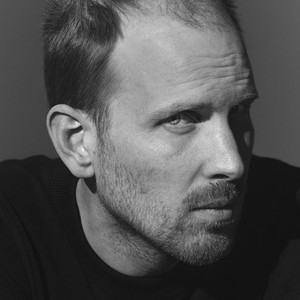
Here's my conversation with Rutger Bregman.
Thank you for taking the time to talk with me today.
I appreciate it. Thanks for having me, David.
So your new book is essentially an argument for why and how talented, high achieving people should direct their energies toward doing more good in the world, towards more morally ambitious behavior.
Do you see your writing as morally ambitious?
Well, look, the reason I wrote this book was that I actually became a little bit frustrated with myself.
I had a little bit of an early midlife crisis because I was mainly spending time in this quote, unquote, awareness business, you know, you write articles, you write books, you try to convince people of certain opinions, and then you hope that some other people do the actual work of making the world a better place.
And at the time, I was working on a new book about the great moral pioneers of the past, the abolitionists, the suffragettes.
I wanted to learn more about them.
But as I was studying some of their biographies, I experienced this emotion that I sometimes like to describe as moral envy, where you're just standing on the sidelines and you're just wasting like, gosh, wouldn't it be awesome to actually be in the arena, to actually have some skin in the game?
So, that's when I quit that project, and I was like, OK, I'm going to write almost like a self -help book that will make my own life more difficult because once I've finished it, you know, I'm going to be the first person who will actually follow its guidance.
So, what steps have you taken since writing the book to get off the sidelines into the arena?
Well, I basically quit my job.
So, I'm now an entrepreneur.
I co -founded the School for Moral Ambition, which is an organization that helps as many people as possible to devote their career to some of the most pressing challenges we face as a species.
So we like to see ourselves as the Robin Hoods of talent.
Robin Hood famously took away the money from the rich. Well, we take away the talent from the rich. So yeah, for example, we were recently invited by a couple of students at Harvard who are excited to start a Harvard chapter around the idea of moral ambition.
And I think that's quite fitting because like, okay, here you have the most prestigious university in the world and 45 % of graduates end up in consultancy or finance.
Right? It's an extraordinary waste of talent.
Because I saw that statistic in your book, I was surprised that the number was as high as 45 percent.
But of course, materialism is real, a desire for status is real, people want to make money, they want to be well financially compensated.
So how do you incentivize someone who might otherwise be tempted to go into a line of work that I think you see is basically morally vacuous at best. How would you incentivize them to instead pick a career that is morally ambitious?
Yeah, well, look, it's a free country.
So if people really desperately want to work for McKinsey, and their main goal in life is to go skiing as often as possible and to have that nice little cottage on the beach, sure, fine, people have the right to be a little bit boring.
But I think there are quite a few people out there who indeed may be working at, say, Goldman Sachs or Boston Consulting Group who have this dang feeling, who are looking for a way out.
One of the case studies in the book is about the British abolitionists.
And it was really surprising for me when I discovered that of the British Society for the Abolition of the Slave Trade, there were 12 founders and 10 out of 12 were entrepreneurs.
So these were people who had climbed the traditional ladder of success.
They were quite wealthy, they were successful.
But the reason we remember them today is because they became very morally ambitious.
And there's another period where this happened in the U .S. The move from the Gilded Era to the Progressive Era is I think a really good example where you really had some figures such as Theodore Roosevelt obviously, Louis Brandis, or I was recently reading about Elva Vanderbilt, fascinating character, who at first was this very decadent woman, incredibly rich, but then later in her life after she divorced her Vanderbilt husband she became a pretty radical suffragette and and one of the main financiers of the Women's Right movement.
She reminded me a little bit of someone like Mackenzie Scott today who divorced Jeff Bezos and now is one of the most morally ambitious philanthropists in the US.
So like a decade ago, people like me were told to check our privilege, right, which is important.
It's important to be aware of how privileged you are.
But I think it's also very important to actually use it.
You know, there's sort of the dismissal of people's career choices as boring.
Or the idea that, you know, if they're pursuing material wealth, you know, you're sort of holding your nose about them.
And there is sort of that tone of light sarcasm or a snide -ness that shows up in the book also.
And I was wondering, why make the choice to communicate that way?
Well, it works quite well, David.
Does it? Yeah. So it's been funny, I've gotten most pushback actually from people on the left. on this book and not so much from, you know, these people stuck in a corporate job.
They very quickly agree, actually.
These are people, you know, who wrote these application essays about how they were gonna solve some of the biggest problems in the world.
You know, they wanted to work at the UN, solving world hunger, but then something happened along the way and many of them really wonder, how do I get out?
What has gone wrong here?
And look, I agree with you that financial incentives obviously play a big role here, but it's not the only thing and I would even argue it's not the most important thing.
So if you go back a couple of decades in American history, students had a very different attitude.
So there's this study called the American Freshman Survey, it's been done since the late 60s, and at that time when students were asked about their most important life goals, about 80 to 90 % said that developing a meaningful philosophy of life was their most important life goal.
And today, that's just 50%.
Now in the 60s, only 50 % said, making as much money as possible was a really important live call to them.
Today, that's 80 -90%.
So the numbers are basically reversed.
For me, that shows that this is not human nature, it is culture.
It can change, and there are examples in history where it has changed.
So that makes me hopeful that we can do it again.
Yeah, what are the metrics you'll use, or how will you determine whether or not your school is successful?
So it begins with selecting CAUSE areas.
In Europe, we started with fighting the tobacco industry, which was a big surprise for me, actually, but our researchers convinced us that this is one of the most neglected challenges we face.
So it's the single largest preventable cause of disease, 8 million deaths still every year, and the number is going up in quite a few lower income countries or middle income countries, and there are very few people working on it.
So, yeah, what does success look like?
Well, making a substantial difference, of course.
Smoking rates have got to go down.
We need stricter, better regulation.
So we did start last year in Brussels and we sent, yeah, like two small SWAT teams of dedicated lobbyists, lawyers, campaigners, to make a big difference there.
And now the plan is to do the same thing here in the U .S. and in Canada.
And how does one determine for themselves what counts as sufficiently ambitious moral behavior?
So, one of the main characters in the book is this guy called Thomas Clarkson.
He's a British abolitionist. Yeah, yeah, yeah.
He's become sort of my personal hero even though he's now dead for two centuries.
He participated in an essay contest at Cambridge University, and just by chance he had to answer this question, is it okay to own other human beings?
He had never really thought about the question, did his research, won first prize, and then after he had attended the prize ceremony in Cambridge, he went back on his horse to London where he lived and he was still thinking about the essay and was like if this is actually true then shouldn't someone do something about it.
And he steps off his horse and he is like well maybe I got to be the one to do it.
And you can clearly see this mix of idealism and vanity within him.
On the one hand yes he deeply cares about the suffering of enslaved people but yeah he is also you know a little bit of a vain man.
You know he likes to see himself as that historical hero who devotes his life to this great quest of abolishing slavery.
And in the first seven years, he traveled 35 ,000 miles across the United Kingdom on horse.
But this guy can't be the benchmark.
That's really the heart of my question.
I was getting there.
So after seven years of doing that, he had an utter and total nervous breakdown, what we would call a burnout today.
So he was really gone basically.
And when I read that I was like, okay, Thomas, you should have done your breathing exercises, right?" So, yeah, he took it a little bit too far.
But let's be honest, today a lot of people get a burnout while they do jobs they don't really like all that much or that don't really contribute all that much to the welfare of the world.
So if we're going to get a burnout anyway, we might as well do something useful.
But I think part of the question is, I'll take myself as an example.
So I do a handful of charitable or altruistic works, you know, all of which I do in my spare time, they don't really impinge on my life in any way.
I am strategic about giving to charity but not at a level where it affects day -to -day purchases I might make or something like that.
And I think presumably, certainly if someone like Thomas Clarkson is the model, that is wildly insufficient if my goal is to in any way help bring about a better world.
Am I really prepared to do more than that?" I don't know, but I would like someone, maybe someone like you, to help me better understand like what is the level at which I can say, I'm doing enough.
Yeah, yeah, I come back to this quote from Margaret Mead again and again, you know the very famous quote, never doubt the power of a small group of thoughtful, committed citizens to change the world.
Indeed, it's the only thing that ever has.
And that quote is usually being used by starry -eyed idealists who say, look, we can do this.
It's only a few of us now, but we can make a difference.
But I always felt that it's a really brutal quote.
Why? Because she's basically saying that the vast majority of people don't change the world.
The vast majority of people are just living their lives and not doing all that much. Look, I used to think about this quite differently.
I used to have a more Marxist approach to history.
if you would have asked me something like, oh, why was slavery abolished in the end?
I would have said, well, yeah, probably the Industrial Revolution, right?
Probably it wasn't profitable anymore.
Well, to the contrary, it was actually abolished at the height of its profitability.
And it was incredibly contingent.
And if a couple of people like Thomas Clarkson would have fallen off their horse in the year 1786 or a little bit earlier, then that would have been very bad news.
The history could have looked very differently.
And you know, the book also has this implicit idea that there is a deficit of moral ambition, but I wanna press on that a little because one could say that the movement to overturn Roe versus Wade was a morally motivated movement.
Or one could also, maybe would take a little fancy footwork, but one could argue that, you know, what happened on January 6th was a morally driven movement.
So, what do you think would account for the possibility that moral ambition on the right seems to be more ascendant at the moment, or maybe more effectively utilized than moral ambition on the left?
So, I've got one chapter in the book about Nader's raiders.
Ralph Nader in the late 60s and the 70s built this incredible movement of young people who were like, we're not going to go work for some boring corporate law firm, we're going to go to Washington to lobby for the good cause.
And there's one historian who estimates that they had their fingerprints on at least 25 pieces of federal legislation, the Clean Air Act, the Clean Water Act, that saved hundreds of thousands of lives.
It's really a beautiful example of what moral ambition can mean in practice.
And at some point a third of Harvard Law School applied to work for Ralph Nader to just go and work a hundred hours a week for a pretty small salary because it was just the very coolest thing you could do.
Now right wingers looked at that model very carefully.
And yeah, some historians would argue that that was the beginning of the corporate takeover of America where they built this huge network of think tanks, you know, the Heritage Foundation and the Federalist Society and the Super PACs and you name it.
And I think it's pretty clear that I disagree with most of their goals, but I'm somewhat in awe of that perseverance because that is really what it takes.
Take the movement against Roe v.
Wade, they built a whole network of 5 ,000 clerks and lawyers and did so many, you know, strategic lawsuits, and that all culminated in the moment of the Dobbs decision, of course.
I mean, that's what it takes.
It's about building a whole ecosystem.
Do you think there are reasons that would explain why the Left still needs to learn the lessons that the Right seems to have learned when it comes to affecting the moral changes it wants to see?
Yes. So I think there's a real lack of ambition among progressives in the Left these days.
Take the environmental movement, for example.
You've got so many people who are obsessed with their own footprint.
And so there are all these commandments, you don't eat meat, you don't fly, you don't even have kids, you don't use plastic straws.
But then in the best possible scenario, you will have reduced your footprint to zero, and you might as well not have existed.
And then death is the highest ideal, not very ambitious in my view.
And the same is true for those who are called quote unquote woke, often accused of going too far.
These people, well I think they don't go nearly far enough.
They're mainly obsessed with policing language and using the right words to describe all the injustices in the world.
And they're very good at going viral, you know, text the rich and kill the patriarchy, gets you a lot of likes on Instagram, I guess.
But do you actually achieve anything?
Do you think there are different ways that the left could be communicating its moral messages that might cut through, particularly for younger people and particularly for younger men in the way that cultural conservatives seem to be reaching that same audience.
Okay, so there's a lot to be said about that.
So our daughter was born almost four years ago now, so obviously we bought all these lovely books about, you know, modern feminism, and girls are smart, girls are powerful, girls are great, girls can be anything, and I love all of that.
Now four months ago our son was born, our second, and I was like, okay, now I want to books about what young men can become, right?
And yeah, you, you really see that there's a lack of that.
We all know about toxic masculinity, which is very real.
I mean, we know about people like Andrew Tate, but then what is the opposite of that?
I think there is something like that.
I would call it heroic masculinity, you know, using what you have, your power, your privilege, whatever, to help others, you know, to help those who need you, um.
And who would examples be?
Well, I would say that, you know, we've got lot of older stories about this.
Joseph Campbell, who wrote the Hero's Journey that inspired Star Wars.
You know, think about the Frodo's, the Luke Skywalker's.
Yeah, these are stories of young men who are – It's a bad sign if we have to point a Frodo and a Luke Skywalker.
Okay. Okay. Well, or take Thomas Clarkson, you know, young men who are motivated by a mix of vanity and idealism, but then do the work.
And I think, yeah, those stories are powerful and we should get much better at telling them on TikTok to young men, because Andrew Tate is giving them a very different definition of success.
You know, for me, sort of one of the more fundamental questions is how might we determine whether or not the moral problem that we want to take on will end up being proved the historically right one.
And you know, so somebody could want to support the cause of Israelis, they They could want to support the cause of Palestinians.
They could be energized morally by Donald Trump.
They could be energized morally by Bernie Sanders.
But insofar as somebody might want to determine whether or not the side that they're energized by is the right side, how might they try to figure that out?
Yeah, well here it is so important to be intellectually honest and if you're really morally serious then you don't care about your own purity or your own opinions, no, you actually want to do good.
So, you always got to be open to the reality that you're working on the wrong things.
Or, your solutions don't work.
I've got one example of a charity that after a big RCT, a Randomised Control Trial, had to conclude that it just wasn't working.
And so, they abandoned the project, which is very courageous and happens not nearly enough.
I think there should be an annual award gala for people who made the biggest mistakes, but were honest enough to admit it.
So, at the same time we also shouldn't lose ourselves in moral relativism.
I think that there are some things that are pretty obvious.
So the way we treat animals, to me it's quite striking.
If you ask people from the left to the right today about, well, don't you think the way we treat animals might be one of the great moral catastrophes of our time?
I'm always surprised how little pushback you get, even from people who eat meat, and eat a lot of meat.
But then they're like, yeah, yeah, yeah, that's probably true, and then they lean back in their chair.
So that is, like for me, one of those clear examples where we've got so much knowledge now about how much suffering is going on in factory farms, how huge this industry is — 70 billion animals slaughtered every year.
At some point you've got to make a choice and be like, okay, well this is pretty clear.
Well, something that I think can complicate the choices that people make is the idea of us versus them.
Very often the moral side we're inclined to take is the side of people like us.
So how do we get around the problem of tribalism?
In the fight against injustice, winning is a moral duty.
So you gotta recognize that building coalitions is absolutely essential to getting things done.
And that is something, again, that leftists and progressives today really need to understand.
I mean, I was posting on social media about, you know, the great speech that Cory Booker gave. And then the comments are full of people.
Well, actually, he's like, pro -Israel.
And like, well, look people, we can keep going on like this, you know, in our little bubbles.
But that's really not the way, how we win next time.
So if you look at the abolitionist movement, initially, it was mainly driven by these Quakers who were very weird. You know, they had this deep belief in the equality of people.
They believed that there's something of God in each and every one of us, so they were also the first who allowed women, actually, to speak in their meeting houses, their churches, and they didn't get much done, to be honest, because they weren't taken seriously.
It was only when they started working together with the evangelicals that it really became a juggernaut for change.
Now, these people, you know, they had to bite their tongue quite often, actually, because they disagreed on so many things.
But that's what it means to be morally serious.
I wanna go back to one of your earlier books for a moment.
So, you wrote Utopia for Realists 10 or 11 years ago and, in my mind, that book fit in with sort of an argument that somebody like Steven Pinker is maybe best known for making, which is, hey, we can do all the doomsaying we want.
We're actually living in the greatest moment in human history to be alive when people are wealthier and healthier than ever before.
You're smiling because you probably know where this question is going.
But then also, in your book, you have a sentence along the lines of, you know, politics has been reduced to problem management.
And the differences between the right and left are really about tax rates, you know?
None of that feels like it particularly describes the world in 2025.
How do you account for the fact that in just 10 years, which is historically minute period of time, the world feels so different than the one that you were describing in Utopia for Realists.
Yeah, it's really a totally different zeitgeist. I mean, I was a millennial writing, indeed, my first book and being mainly frustrated by the fact that politics, and maybe particularly so in the country where I was growing up, in the Netherlands, had become so boring.
It didn't seem like we had big utopian visions anymore.
Every milestone of civilization, the end of slavery, democracy, equal rights for men and women, And I mean, all these things were utopian fantasies once.
And I was like, well, what's the next thing?
Right? Can we abolish poverty, maybe, with the universal basic income?
Can we move towards a much shorter working week?
Like come on, give me a bigger vision.
And yeah, I guess I got what I wished for.
But it's been moving a little bit in the other direction.
I think that still the argument holds that very often idealists mainly know what they're against. You know, they're against Trump, they're against autocracy, they're against austerity, they're But what are we actually for?
So what would you say you stand for?
What do you mean? Well, you said, what do we stand for?
It's not just, what are we against?
Yes, sure. So what are the things that you stand for?
Oh that's a good question.
Like what are the big utopian visions?
A couple of things.
So obviously, I believe we can totally abolish poverty, like we're more than rich enough right now, especially with the rise of AI.
And I think we should use the bounty of AI and distribute it equally.
that will be a dividend for all of us.
It's a little bit like what Alaska has been doing since the eighties.
So Alaska has this - Oh, the sovereign wealth fund?
Yes, exactly. So they recognize that the oil in the ground is owned by everyone in Alaska, right?
And so they've been giving a basic income to everyone ever since.
And I think we should do that in many other respects as well.
And yeah, I think we should revive the dream of moving towards a much shorter working week as well.
Up until the seventies, we were using a lot of our increased productivity, our economic growth, to work less.
And back then, a lot of sociologists and psychologists were saying, Oh, my God, the great challenge of the future is going to be boredom.
What are people going to do with all that?
With all the leisure time.
Yeah. Like, we got to find out, what is the good life?
And I would say that possibility is still there for us, especially now with another wave of automation that is about to happen.
At the same time, we should never underestimate capitalism's extraordinary ability to come up with more BS jobs, right?
I cite one poll that found that around 25 % of people in rich countries think their own job is socially useless.
Well, there's no reason why that can't go up to 30%, to 40%, to 50%.
I guess my point in this long rant is that there's not just a dystopian possibility, there's also a beautiful utopian possibility of how we used our technological capabilities to make a much, much better world.
just, like, honestly, we've done in the past. You know, a couple of weeks ago, after we scheduled this interview, I had emailed your publicist and asked if she could ask you for a selection of books that have been influential on you.
And you were a nice enough to send it out, and I read them.
And one of the books was Peter Thiel's Zero to One.
You know, he says that when he interviews people for positions, you know, the one thing he always asks is, that what's an important truth that you believe that very few people agree with you on?
What's your answer to that question?
I think people find it really uncomfortable to acknowledge that there are these massive differences in how effective people are and how talented they are.
This is something Peter Thiel talks about in his book, that there's this power law distribution going on.
So some people are really a hundred or a thousand or 10 ,000 times as effective as others.
So then, it makes a lot of sense to be hunting for those really talented entrepreneurial people who can get so much done.
And I think that is sometimes uncomfortable for people who really like to believe that we're always in this together, and everyone is equal, and we can all contribute in our own little small ways.
I think that quite a few people in my bubble, they find it hard to acknowledge, And they say, oh, that's the great man theory of history that's been debunked long ago, right?
That's that patriarchal, maybe even almost like racist idea that a couple of white men that they change the world.
Well, it's obviously not just a couple of white men.
It's like everyone can be morally ambitious in that regard. But it is often a small group of thoughtful, committed citizens and not everyone.
I think at the point at the same time we've got to acknowledge that it's very hard to predict in advance, like, who's gonna be that big builder, and moral ambition can be contagious.
But I think that Peter Thiel is basically right that there are very clear power laws in the distribution of talent.
After the break, I talked to Rutger again about what really drives him.
This is what we live in.
It's incredibly unequal and we could fix that.
And even in wealthy countries, We're just at the beginning of history.
We have so much progress ahead of us, possibly, but it's up to us.
for supporting our work.
I gave my brother a New York Times subscription.
She sent me a year -long subscription, so I have access to all the games.
I will do Word. to many spelling bee.
It has given us a personal connection.
We exchange articles.
And so having read the same article, we can discuss it.
The coverage, the options, it's not just news.
Such a diversified gift. I was really excited to give him a New York Times cooking subscription so that we could share recipes, and we even just shared a recipe the other day.
The New York Times contributes to our quality time together.
You have all that information at your fingertips.
It enriches our relationship.
broadening our horizons.
It was such a cool and thoughtful gift. We're reading the same stuff, we're making the same food, we're on the same page.
Connect even more with someone you care about.
Learn more about giving a New York Times subscription as a gift at nytimes .com.
Hey David. Hey, Rutger.
How are you? I'm good.
Good to see you. Good to see you again.
You're smiling impishly.
Why is that? Well, as always with these interviews you, like, you've got a long list of things like, Oh I wish I would have said that and why didn't I say this and blah, blah, blah.
But this is great, you know, we have a rematch. No, no, no, no. That implies a fight.
That was not what this was.
Yeah, yeah, yeah. No, it doesn't feel like that.
Um, so I want to get right into this and I promise that I'm not raising this sarcastically I mean it sincerely so I could imagine someone coming across this interview and thinking alright Rutger the school and your books sound noble and well -intentioned but isn't there something more morally ambitious that you could be doing?
I like that. So I think this is going to be the last book for quite some time actually that I'll write.
As you know, books are a great excuse to go on a publicity tour.
And if you're starting something like the School for Moral Ambition, then yes, a book is very useful to have. It's like this banner, a rally and cry, that helps to bring a lot of people together.
But the main reason why we co -founded the school is indeed we wanted to find the Thomas Clarkson's of our time to work on some of the most pressing issues that we face.
And if you ask me, like, okay, what is the moral equivalent of fighting slavery today?
I guess I would say fighting factory farming.
And a couple of years ago, that's actually what I envisioned doing.
So here I was a relatively successful author and I was like, okay, people like me, I want to burn my reputation on something that's important.
So I spent quite some time in the Netherlands going on talk shows, advocating for farm animals.
And at some point I was like, is this really the most effective thing?
Right. Maybe I could build something much bigger and really scale it up, because now I'm just a one -man's army.
And people like Thomas Clarkson, they got a lot done because they brought many more people into the movement.
So, I honestly feel that I am doing the most ambitious thing I could be doing, but if you have better ideas, David, then please push me.
Yeah, you know, earlier when we were talking about how you would measure the success of the School for Moral Ambition, you talked about how in Europe the organization has chosen in the tobacco industry as a leading cause to fight against. And I have to say that, that surprised me a little because of all the pressing causes in the world.
If I made a list of the most urgent ones, I would think of things like climate change or rising authoritarianism or like increasing oligarchical consolidation of power.
I realize tobacco use is a serious problem, but I don't know that it would've been high on my list. So why is the tobacco industry at the top of your schools list and is there an argument that maybe it could also be aiming higher?
It surprised me a lot as well, honestly.
So I didn't come up with this cause area.
We went to our researchers and we asked them to come up with a list of some of the most tractable, neglected and important issues that we face as a species.
And, yeah, in Europe, fighting big tobacco came out on top.
A lot of people think that we've already won this fight, that you know, that was something we did in the nineties, which is not true at all.
The cigarette is the deadliest artifact that humans have ever invented, you know deadlier than atomic bombs or the machine guns.
So maybe it's not very sexy, maybe it's like, oh, it's a little bit weird. Like why would you choose that?
But for us, that's sort of the point, that's how you can make much more impact by convincing people to work on things that may not be most in fashion, but that are actually super important and very neglected.
Yeah, no, it's interesting, because for me it raises the idea of how one thinks about ambition, because you could think about ambition in terms of what is the most tractable problem to solve that's not being solved, or you could think about ambition in terms of what is the problem that seems like it doesn't have an easy solution, but needs to be solved.
Like, for example, climate change.
It's an interesting question about how to direct one's energies.
Yeah, yeah, sure. So climate change, I would say is super tractable.
We've got the research, we've got the solutions, and luckily we've got many millions of people working on it right now.
I would advise people to really look for the most neglected bits of the fight against climate change.
That's why we chose to work on the food transition because this is extraordinarily neglected.
So look, the fact that it's got to be tractable, that you need to have some idea on how to actually make progress, that does not mean that it needs to be easy.
Actually, if you think that you can achieve your goals in this lifetime, then you're not thinking big enough.
That is really what inspires me about the abolitionists, the suffragettes.
Of the 68 women who came together at Seneca Falls in 1848, the first women's right convention in the United States, Only one was still alive when women finally got the right to vote across the country and she was sick on the day of elections so that Desire and that commitment, you know being part of something that is much greater than you are that is moral ambition But this still raises for me the question with like what is so your issue The equivalent one that you would accept that it was the fight to achieve it would be going on after you died is factory farming?
A couple, a couple.
Look David I'm not going to choose.
I'm not gonna say like this is the one.
I just want to know like what really drives you that's what I'm trying to get at, you know?
Yeah yeah but yeah that's just not I'm not a one issue guy.
We live in a world where kids die from easily preventable disease every single day that's outrageous we could fix that.
We like more than rich enough to fix that we live in a world where 85 % of the world population lives below the US poverty line half of the world population lives on less than $7 a day and yes that is adjusted for purchasing power So don't talk to me about inflation or blah blah blah or that you can buy more here or there No This is the what we live in it's incredibly unequal and we could fix that and even in wealthy countries We're just at the beginning of history.
We have so much progress ahead of this possibly But it's up to us You know, I I think it's fair to say that your target audience for the book and I guess for the in a way for the also it's younger people either early in their career or maybe still in the phase of considering what their career could be and I did one guy can I so that's not true so no no so if we look at our member base we now have 7 ,000 members it's really people from all walks of life in all ages so we've got moral ambition circles of students we also have moral ambition circles of CEOs of of people who have already retired, it's
a very diverse bunch of people.
And sure, it's true that if you're in your 20s, you haven't written the constitution of your whole life yet.
So it's a more flexible period.
You haven't been sucked up by the Bermuda triangle of talent yet.
You haven't become a strategy consultant yet.
So maybe it's easier to make a change.
But there are a lot of people out there.
And that's when we come in, that's when the Robin Hoods come in and say, well, we've got a better idea for you.
So, have you experienced any profound moral shifts in your life?
So, I was a very lazy boy in high school.
My preferred grade was a 5 .5.
We have a grading system from one to ten, and a 5 .5 is a bare pass.
So, I would have done just enough to pass the class.
And, when I became a student, when I was 18 years old, I became a member of this small student society, with a small fraternity.
most of the other guys were quite a bit older than me, 23 -24 years old, and they took me to lectures about anthropology and philosophy, I discovered people like Bertrand Russell and Ludwig Wittgenstein, and that was the first time in my life that my definition of success changed, and I became super curious.
I wanted to read everything.
In our student house, I built this system that you could listen to classes from professors even when you were the shower right so there was a cable going from my room through the attic then through the ceiling to the shower, and then I would always annoy people by putting on lectures from Martin van Rossum who's a famous Dutch historian but I guess my definition of success changed once again once I achieved those first dreams, like I honestly I mean I wanted to become a best -selling author I wanted to write big books.
But then you've done that and you've written a big book about human nature and you're in your early 30s and you're like okay what's the next latter and how can I use what I have to do much more good.
Honestly it was also the experience of becoming a bit more wealthy.
I mean I'm not a billionaire but I am a best -selling author so I became much richer than I ever expected I would.
At first, I thought I would just become a history teacher or something like that.
So, that also caused me to question like, okay, but then what do I actually do with this?
Like, I need to invest it in something.
Like, I already have a house, we have a car, I don't need two cars, I can only drive one car at a time.
I guess that also led me on this journey.
I think undergirding a lot of what we've been talking about is sort of this idea of a shift in cultural values where making money has become increasingly central at the expense of trying to do good in the world or live by greater values.
And I think at the same time there's also a live in the culture, a real sense of burn it all down anger, which is an appealing and seductive feeling.
And so that's a bit of a preamble to something that I want to connect to another one of the books you were able to recommend to me, which was the autobiography of the philosopher and the pacifist Bertrand Russell, and in that book he's writing in the context of public support in Great Britain for World War I.
And he says that, I had supposed that most people liked money better than almost anything else, but I discovered that they liked destruction even better.
Do you think he was wrong?
Well, Bertrand Russell certainly had his cynical moments, and I totally understand that in the fervor of the first World War, where even so many people, you know, who may have described themselves as pacifists not that much earlier, were swept up in this fervor.
Yeah, it's a dark truth about humanity is that we can go nuts.
Sometimes pretty quickly.
Look, I don't know where we'll go from here.
I guess where I find hope is that I know of historical examples, eras in which things got really dark as well, that were incredibly immoral, incredibly unequal, where we just had elites that were incredibly irresponsible and selfish, and then there was a counter movement, a cultural revolution that was actually started by elites, and I think we desperately need that today.
Someone said this to me recently, if you are watching the news right now and you're not terrified for yourself, right, you still have some measure of comfort because you have some savings, because you have a nice job then you are the person who needs to stand up right now.
And we see an enormous amount of cowardice sadly, but I guess I found hope in the simple knowledge that it only takes a small group of people to start spreading a different story and a different mentality.
And I like to see some signs here and there that that may be happening, And I just want to put more oil in that fire.
That's Rutger Bregman.
His new book is Moral Ambition.
Stop wasting your talent and start making a difference.
This conversation was produced by Seth Kelly.
It was edited by Annabel Bacon, mixing by Sonia Herrero.
Original music by Dan Powell, Elisha Paýtup, Lea Shaw Dameron, and Marin Lozano. Photography by Philip Montgomery.
Our senior booker is Priya Mathew.
and Wyatt Orme is our producer.
Our executive producer is Allison Benedict.
Special thanks to Rory Walsh, Renan Borelli, Jeffrey Miranda, Maddie Masiello, Jake Silverstein, Paula Schumann, and Sam Dolnick.
If you like what you're hearing, follow or subscribe to The Interview wherever you get your podcasts.
To read or listen to any of our conversations, you can always go to nytimes .com slash theinterview, and you can email us anytime at theinterviewatnytimes .com.
We'll be back with a new episode in two weeks when Lulu interviews Miley Cyrus.
There's normal people that make normal music for like normal people.
Then there's weird people, and we all know that kind of music, that make weird music for weird people.
So, I think Miley songs are either normal music or weird music.
You know, I don't love the middle.
I'm David Marchese, and this is the Interview from The New York Times.
Paragraph 1.